
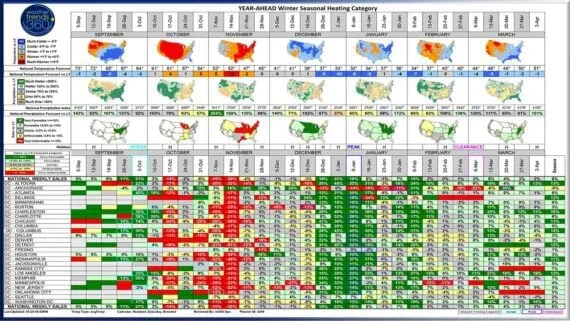
Retailers have long acknowledged the undeniable influence of weather on sales. From the surge in demand for umbrellas during a downpour to the slump in outdoor furniture sales amidst a blizzard, meteorological conditions are a persistent, albeit often unquantifiable, factor in the retail landscape. For decades, companies like Weather Trends have provided long-range forecasts, offering a glimpse into future weather patterns. However, the true challenge has never been in predicting the weather itself, but rather in translating that prediction into actionable business strategies. Now, the advent of Artificial Intelligence (AI) is poised to transform this dynamic, offering retailers unprecedented capabilities to not only anticipate but also to proactively capitalize on weather-driven shifts in consumer behavior.
The Historical Context: Weather as a Wildcard in Retail Planning
Historically, retailers have approached weather forecasting with a degree of caution, often treating it as a probabilistic factor rather than a deterministic one. The understanding that extreme weather events, such as the "snowmageddon" that hit Boise, Idaho, in 2017, could significantly impact sales was present. In that specific instance, a farm and ranch retailer, armed with long-term weather data predicting record snowfall, increased wholesale orders for snow-related merchandise. Yet, the decision was fraught with hesitation. The inherent uncertainty of forecasting and the potential financial repercussions of miscalculation – either through stockouts leading to lost revenue or overstocking resulting in increased carrying costs and markdowns – created a significant dilemma. This struggle to weigh the potential gains against the potential losses highlights a long-standing challenge that AI is now beginning to address. The inability to definitively quantify the risk and reward associated with weather-related inventory decisions meant that opportunities, like those presented by the Boise snow event, were often met with conservatism, leading to missed sales and customer dissatisfaction.
AI’s Intervention: Transforming Weather Data into Strategic Assets
Artificial intelligence is emerging as a powerful solution to a multitude of ecommerce challenges, with weather-related impacts being a particularly fertile ground for its application. AI’s ability to process vast datasets, identify complex patterns, and make predictive inferences is fundamentally changing how retailers interact with meteorological information. Instead of viewing weather as an uncontrollable external force, AI empowers businesses to integrate it as a dynamic variable within their operational strategies.
Demand Forecasting Enhanced by Predictive Analytics
The traditional approach to demand forecasting often relies on historical sales data, seasonality, and planned marketing campaigns. However, these models can falter when confronted with unpredictable weather events. AI, when integrated with meteorological data, can refine these forecasts with remarkable accuracy. For instance, a prolonged heatwave can dramatically increase demand for air conditioners, fans, and cooling beverages, while a sudden cold snap can boost sales of winter apparel and home heating solutions.
AI algorithms can analyze real-time weather data, as well as short-term and long-term forecasts, and correlate these with historical sales patterns for specific product categories and geographic regions. This allows for more precise adjustments to inventory levels. During the Boise "snowmageddon," an AI-powered system might have provided a more granular risk assessment. Instead of a generalized doubt about the data, AI could have modeled the probability of specific product stockouts based on historical sales velocity during similar weather events, coupled with projected transportation delays. This could have led to more confident, data-driven decisions regarding inventory levels, potentially mitigating the stockouts experienced by the farm and ranch retailer. The financial implications are substantial; by reducing both understocking and overstocking, AI can optimize inventory turnover, reduce waste, and improve overall profitability.
Dynamic Pricing Strategies Driven by Localized Conditions
Pricing optimization is intrinsically linked to demand forecasting. Retailers constantly adjust prices and markdown strategies to maximize revenue and minimize losses. Weather introduces a complex layer to this equation. A retailer in a region experiencing unseasonably warm weather in winter might need to discount cold-weather gear, while a competitor in a colder climate might be able to maintain higher prices or even increase them.
AI-powered pricing solutions can address this regional disparity by factoring in local weather conditions. Instead of a one-size-fits-all pricing strategy, AI can enable dynamic pricing that adapts to the specific weather forecast and consumer behavior in different geographic areas. For example, an online merchant can offer different prices for winter coats in Miami versus Minneapolis, with the AI adjusting based on real-time temperature, forecasted changes, and historical purchase data for each location. This hyper-localized approach ensures that pricing is not only competitive but also aligned with the immediate needs and purchasing power of consumers in a given area, thereby optimizing margins and driving sales. Furthermore, AI can help manage promotional pricing, triggering localized discounts on products that are in high demand due to specific weather patterns, rather than broad, potentially unprofitable, site-wide sales.
Personalized Shopping Experiences Tailored by Weather Signals
Personalization is a cornerstone of modern ecommerce, with AI tools analyzing shopper behavior to infer intent and deliver tailored recommendations. Weather adds a powerful new dimension to this personalization. A shopper browsing during a severe storm, for instance, is likely seeking different products than someone browsing on a sunny day. Demand for comfort items, emergency supplies, or even entertainment for indoor activities can surge during adverse weather.
AI-driven personalization engines can leverage weather data, both real-time and forecasted, to enhance the shopper experience. This can manifest in several ways:
- Product Recommendations: An AI might suggest warm blankets and hot beverage mixes to shoppers browsing during a cold snap, or recommend portable fans and sunscreen to those in a region experiencing a heatwave.
- Site Search and Category Emphasis: Search results and the prominence of certain product categories can be dynamically adjusted. During a rainy period, raincoats and umbrellas might be pushed to the forefront, while in dry conditions, outdoor sporting equipment could be highlighted.
- Promotional Messaging: Marketing communications can be tailored to reflect current weather conditions, creating a sense of relevance and immediacy. For example, an email promoting indoor games might be sent to customers in an area experiencing prolonged rainfall.
Unlike pricing, merchandising decisions driven by AI and weather data typically carry lower risk, as they primarily influence what shoppers see rather than committing the retailer to specific inventory levels. This allows for more experimental and agile implementation of weather-informed personalization strategies.

Optimizing Fulfillment and Delivery Expectations in Real-Time
The impact of weather extends beyond consumer demand to the critical area of logistics and fulfillment. Snowstorms, hurricanes, and extreme temperatures can disrupt transportation networks, leading to significant shipping delays. Many ecommerce platforms rely on static assumptions for delivery estimates, which can lead to unmet customer expectations and dissatisfaction. Shoppers today increasingly expect fast and reliable delivery, and delays can result in negative reviews, chargebacks, and a damaged brand reputation.
AI-powered fulfillment models can revolutionize delivery estimations by incorporating a dynamic set of variables. These models can analyze:
- Current Weather Conditions: Real-time weather data along shipping routes.
- Forecasted Weather Events: Anticipated disruptions due to impending storms.
- Carrier Performance: Historical data on how specific carriers have performed under various weather conditions.
- Regional Risk Factors: Identifying areas known to be prone to weather-related delays.
By integrating these factors, AI can provide more accurate and realistic estimated arrival windows, managing customer expectations proactively. This not only improves customer satisfaction but also reduces the operational burden of dealing with delivery exceptions and customer inquiries regarding delays.
Triggered Marketing for Fleeting Weather-Influenced Demand
Certain weather conditions create ephemeral, yet significant, spikes in demand. The need for umbrellas on a rainy day is a prime example. AI agents, when integrated with advertising platforms like Meta Ads, can automatically trigger targeted marketing campaigns in response to these short-lived opportunities.
An AI agent could monitor weather forecasts and consumer sentiment, identifying a potential surge in demand for umbrellas in a specific city experiencing predicted rainfall. The AI could then autonomously:
- Generate Ad Copy and Creatives: Craft compelling advertisements tailored to the weather scenario (e.g., "Don’t let the rain dampen your spirits!").
- Set Campaign Budgets: Allocate advertising spend dynamically based on the predicted demand and the duration of the weather event.
- Target Specific Audiences: Reach consumers in the affected geographic areas.
- Learn and Optimize: Analyze campaign performance to refine future strategies for similar weather-induced demand.
This ability to rapidly deploy and optimize marketing campaigns in response to weather-driven demand allows retailers to capitalize on fleeting opportunities, driving immediate sales and improving marketing ROI.
The Competitive Edge: Navigating the Future of Weather-Informed Retail
The convergence of AI and weather data presents a significant opportunity for retailers to gain a substantial competitive advantage. While the allure of AI can sometimes lead to hype, the practical applications in mitigating weather-related risks and capitalizing on new opportunities are undeniable.
The ability to predict and respond to weather-driven shifts in consumer behavior can lead to:
- Increased Sales and Revenue: By stocking the right products at the right time and pricing them optimally.
- Improved Customer Satisfaction: Through accurate delivery estimates and personalized shopping experiences.
- Reduced Operational Costs: By minimizing inventory losses, markdowns, and the burden of managing delivery exceptions.
- Enhanced Brand Loyalty: By consistently meeting and exceeding customer expectations, even in the face of unpredictable external factors.
However, realizing this advantage requires a commitment to testing and validation. Retailers must move beyond simply subscribing to weather data and actively explore how AI can translate that data into actionable insights. The journey involves integrating AI tools into existing operational frameworks, experimenting with different applications, and continuously refining strategies based on performance data.
In conclusion, weather will always be an unpredictable force. But with the power of AI, retailers are no longer at its mercy. They can now equip themselves with the intelligence to anticipate its impact, adapt their strategies, and ultimately, transform a historical challenge into a significant source of competitive strength in the dynamic world of ecommerce. The era of weather as a mere wildcard is giving way to an era where AI-driven meteorological intelligence becomes a strategic imperative.

