
The smart speaker market, once defined by budget-friendly devices primarily focused on voice command execution, has undergone a significant transformation. Today’s consumers demand a dual focus on both robust audio performance and advanced artificial intelligence capabilities. In this evolving arena, the Amazon Echo Dot Max, powered by Alexa+, and the Google Home Speaker, leveraging Google Gemini for Home, stand as the principal contenders. Having undergone rigorous hands-on testing, a comparative analysis reveals the strengths and weaknesses of each device as they vie for dominance in a discerning market.
The Shifting Sands of Consumer Expectations
For years, the appeal of smart speakers lay in their accessibility and convenience. Devices like early iterations of the Echo Dot and Google Home Mini offered basic voice interaction for setting timers, checking weather, or playing music at an entry-level price point. However, as smart home ecosystems have matured and the power of generative AI has become more widespread, consumer expectations have recalibrated. The "smart" aspect of a smart speaker now encompasses not just the ability to understand and respond to commands, but to do so with greater nuance, context, and intelligence. Furthermore, the auditory experience is no longer a secondary consideration; users expect these compact devices to deliver a listening experience that rivals dedicated audio equipment, particularly at the premium end of the budget segment. This paradigm shift has set the stage for a more sophisticated battle between the leading tech giants.
Design and User Interface: A Tale of Two Approaches
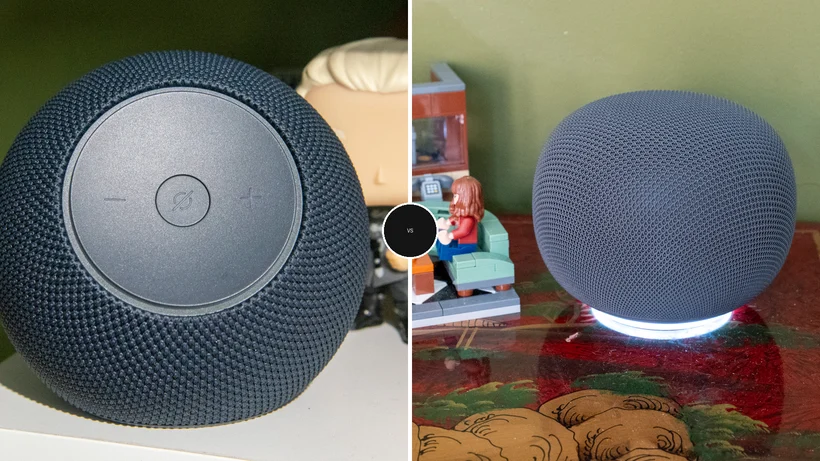
Both the Amazon Echo Dot Max and the Google Home Speaker are positioned at the same price point of $99.99/£99.99, offering compact, shelf-friendly designs that blend seamlessly into modern home décor. Their physical dimensions and outward appearance are remarkably similar, both featuring a fabric mesh exterior. Color options provide a degree of personalization, with the Echo Dot Max available in graphite, amethyst, and glacier white. The Google Home Speaker offers a slightly broader palette of porcelain, hazel, jade, and berry, though availability in the UK is currently limited to porcelain and hazel.
Where the two devices diverge is in their approach to user controls. Amazon has opted for a more traditional and accessible placement of physical buttons on the front of the Echo Dot Max, including easily reachable volume controls and a dedicated mute button. This upfront design ensures that essential functions are always within immediate reach. In contrast, Google has adopted a more minimalist aesthetic with tap controls integrated into the top surface of the Home Speaker. A tap on the top initiates playback, pauses, or stops a response, while subtle side taps adjust volume. However, the mute switch on the Google Home Speaker is less intuitively placed, residing on the rear of the unit, which can be a minor inconvenience for quick muting.
A practical consideration for longevity and user convenience lies in their power delivery. The Echo Dot Max utilizes a standard, removable power adapter, offering flexibility should the cable become damaged. The Google Home Speaker, conversely, features a captive cable that terminates in a USB-C connector. While USB-C is a ubiquitous standard, the fixed nature of the cable means that damage to it would necessitate replacement of the entire unit or a specialized repair. Both devices incorporate status lights that dynamically change color to indicate their operational state, providing visual feedback to the user.
Despite these minor differences in control placement and power cable design, the overall aesthetic and build quality of both speakers are commendable, leading to a draw in the design category.
Winner: Draw
Features and Intelligence: The AI Arms Race
The core of any smart speaker’s functionality lies in its voice assistant. Here, Amazon’s Alexa+ demonstrates a more advanced and sophisticated understanding of natural language and user intent. Alexa+ excels in its ability to construct complex routines, facilitate restaurant bookings, and even extract information from documents such as PDFs and photos. Its conversational fluidity and contextual awareness represent a significant leap forward in human-AI interaction.
Google Gemini for Home, while capable of handling general requests efficiently, exhibits a slightly more rudimentary performance. It can be slower to respond to queries, struggles with processing PDF content, and occasionally delivers responses that lack logical coherence. While it does offer automation capabilities, its overall intelligence and responsiveness lag behind Alexa+.
Amazon’s assistant also shines in its thoughtful "little touches." Alexa+ possesses the ability to retain factual information from previous interactions, using it to refine subsequent responses, creating a more personalized and contextually relevant experience. Furthermore, its "whisper mode" allows users to communicate with the speaker in hushed tones, with Alexa+ responding in kind, a feature that enhances privacy and usability in quiet environments.
Google Gemini for Home does hold an advantage in local business searches, providing more up-to-date information than Alexa+ in this specific domain. However, this localized strength is offset by a lack of advanced features, such as the restaurant booking capability that Alexa+ seamlessly integrates through its OpenTable partnership. This disparity in feature set and AI sophistication gives Amazon a clear edge.
Winner: Amazon Echo Dot Max
Sound Quality: Delivering the Auditory Experience

In the realm of audio performance, the Amazon Echo Dot Max presents a well-engineered package. Its configuration of a 0.8-inch tweeter and a 2.5-inch woofer delivers clean and well-balanced sound. Notably, it handles bass-heavy tracks with impressive composure, as demonstrated by its performance with songs like Rage Against the Machine’s "Bomb Track." While it may not possess the power to "shake the room," its audio output is remarkably robust for its size and price point. A significant advantage is its support for lossless Spotify audio, catering to audiophiles seeking higher fidelity playback.
The Google Home Speaker employs an omnidirectional sound design, which effectively fills a room with audio. It also manages to reproduce heavy bass frequencies adequately. However, its audio performance falters when dealing with quieter, more nuanced material. At higher volumes, particularly with aggressive music, the speaker begins to strain, leading to a degradation in audio quality. Furthermore, lossless Spotify audio is not supported on the Google Home Speaker, a notable omission for discerning listeners.
While neither single unit provides true stereo separation, both speakers can be paired to create a stereo soundstage. However, based on its cleaner and more consistent sound reproduction across a diverse range of musical genres, the Amazon Echo Dot Max emerges as the superior performer in terms of audio quality.
Winner: Amazon Echo Dot Max
Smart Home Integration: Building the Connected Ecosystem
The smart home capabilities of these devices are critical for their long-term utility. The Google Home Speaker distinguishes itself by functioning as a Thread border router with Matter support. This integration allows for direct connection of modern smart home devices that adhere to these standards, streamlining setup and enhancing network performance. The Amazon Echo Dot Max also offers Thread and Matter support, but it further augments its smart home prowess with a built-in Zigbee radio, a temperature sensor, and ultrasound presence detection. These additional hardware components provide a more versatile foundation for creating sophisticated smart home routines and automations.
The ability to create and manage routines is another key differentiator. Alexa+ allows users to establish routines through voice commands, offering a natural and intuitive way to automate home functions. Gemini for Home, while capable of executing complex commands given in a single sentence (such as activating multiple discrete devices), lacks this voice-driven routine creation functionality. The combination of advanced hardware integrations and more flexible routine management positions the Echo Dot Max as the more capable smart home hub.
Winner: Amazon Echo Dot Max
Value Proposition: More Than the Sum of its Parts
At the $99.99/£99.99 price point, the Amazon Echo Dot Max delivers an exceptional value proposition. Its integration of Zigbee, Thread, Matter, a temperature sensor, and ultrasound presence detection into a single, affordable device represents a significant hardware advantage. This comprehensive suite of smart home technologies makes it a powerful and future-proof hub for building a connected home.
The Google Home Speaker, while competitively priced, offers a more limited hardware configuration. Its core strengths lie in its Thread and Matter support, coupled with decent audio. However, the comparative lack of advanced smart home hardware and the limitations of the Gemini for Home AI significantly diminish its overall value when juxtaposed with the Echo Dot Max. The latter’s combination of superior AI, enhanced smart home capabilities, and stronger audio performance solidifies its position as the better overall investment.
Winner: Amazon Echo Dot Max
Specifications Comparison: A Detailed Breakdown
| Spec | Amazon Echo Dot Max | Google Home Speaker |
|---|---|---|
| Price | $99.99 / £99.99 | $99.99 / £99.99 |
| Thread Support | Yes | Yes |
| Matter Support | Yes | Yes |
| Controls | Volume, mute | Tap to play/pause, tap volume controls |
| Microphone Mute | Yes (front-facing button) | Yes (side switch) |
| Captive Power Cable | No (removable) | Yes (USB-C captive) |
| Zigbee Hub | Yes | No |
| Temperature Sensor | Yes | No |
| Voice Assistant | Alexa / Alexa+ | Gemini for Home |
| Color Options | 3 (graphite, white, amethyst) | 4 (porcelain, hazel, jade, berry); UK: porcelain, hazel |
Final Verdict: The Clear Champion in the Evolving Smart Speaker Arena
In the highly competitive landscape of smart speakers, the Amazon Echo Dot Max has demonstrably emerged as the superior choice for consumers seeking a comprehensive and capable device. Its strengths lie in its robust smart home hardware, including integrated Zigbee, Thread, and Matter support, providing unparalleled flexibility for connected home enthusiasts. The Alexa+ voice assistant offers a more natural, intelligent, and feature-rich interaction compared to Google Gemini for Home, excelling in routine creation and contextual understanding. Furthermore, the Echo Dot Max delivers slightly better audio quality, making it a more engaging device for music playback.
While the Google Home Speaker offers commendable hardware, particularly its Thread and Matter compatibility, and decent audio performance, it is ultimately hampered by the limitations of its Gemini for Home AI. For users who prioritize a truly intelligent and responsive voice assistant, extensive smart home integration, and a more refined auditory experience, the Amazon Echo Dot Max presents a compelling and ultimately more rewarding investment. The evolution of the smart speaker market demands devices that are not only voice-controlled but also intelligent, musically adept, and foundational to a connected lifestyle. The Echo Dot Max successfully meets these evolving demands, setting a new benchmark for its segment.

