
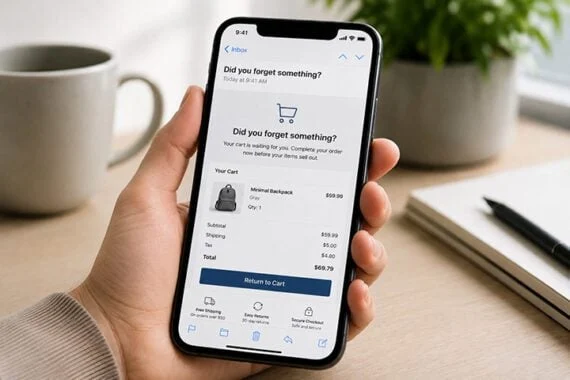
Effective cart abandonment emails and text messages do more than remind shoppers about items left behind. They leverage product details, offer reassurance, and provide strategic incentives to address customer concerns and reopen the conversion path, transforming a potential loss into a valuable sale. In an era where online shopping has become deeply ingrained in consumer behavior, the art of recovering abandoned carts remains a critical, yet often complex, component of e-commerce success.
The Persistent Challenge of Abandoned Carts
The reality for online retailers is stark: a significant portion of potential sales evaporate before checkout. According to the Baymard Institute, a research firm specializing in e-commerce user experience, approximately 70% of online shopping carts are abandoned. This staggering figure represents billions of dollars in lost revenue annually, prompting businesses of all sizes to invest heavily in strategies to recapture these hesitant shoppers. For decades, the primary response has been automated email and SMS campaigns designed to nudge customers back to complete their purchases. However, the effectiveness of these automated systems is often hampered by their inherent limitations.
The core issue lies in the nature of the data captured. When a shopper abandons their cart, the e-commerce platform records an outcome – the items left behind – but not the underlying reason. This lack of granular insight into customer intent poses a significant obstacle for most recovery programs, which tend to rely on fixed, pre-programmed sequences. These sequences, while offering a baseline level of engagement, often fail to differentiate between the diverse array of concerns that lead to cart abandonment.
Unpacking the Obstacles to Conversion
The multifaceted reasons behind cart abandonment can generally be categorized into three primary groups:
- Cost-Related Concerns: This is arguably the most prevalent barrier. Shoppers may encounter unexpected shipping fees that significantly inflate the final price, discover that the total cost exceeds their budget, or simply be seeking a better deal elsewhere. The perceived value proposition diminishes when the final price is higher than anticipated.
- Technical and Usability Issues: A clunky or confusing checkout process can quickly disengage shoppers. This includes issues such as a lengthy registration requirement, a lack of guest checkout options, complicated form fields, unclear navigation, or payment gateway errors. Slow website loading times or a non-mobile-friendly design can also contribute to frustration and abandonment.
- Decision-Making and Trust Factors: Consumers often engage in comparative shopping, adding items to their cart as a way to organize potential purchases before making a final decision. They may also be hesitant due to a lack of trust in the website, concerns about return policies, or a desire for more product information before committing. The absence of clear contact information or customer support can further erode confidence.
Strategic Recovery Tactics: A Multifaceted Approach
Recognizing these common obstacles, e-commerce merchants have developed a range of recovery tactics designed to directly address these potential pain points. These tactics, when integrated into abandonment recovery strategies, aim to re-engage shoppers and guide them back to a successful conversion.
- Reminder Emails/Texts: The most basic form of recovery, these messages simply remind the shopper of the items they left in their cart. They often include images of the products, their names, and a direct link back to the cart. While simple, their effectiveness is rooted in the fact that many abandonments are unintentional or due to distraction.
- Incentive-Based Offers: This tactic involves providing a discount code, free shipping, a gift with purchase, or a loyalty points bonus. These incentives are particularly effective for shoppers who were price-sensitive or looking for a better deal. The strategic timing and value of the incentive can be crucial in swaying a decision.
- Product-Focused Messaging: For shoppers who may have left due to a lack of information or confidence in the product, these messages highlight key features, benefits, and specifications. Including customer reviews, testimonials, or links to detailed product pages can help build trust and provide the necessary assurance.
- Urgency and Scarcity Tactics: Employing phrases like "limited stock" or "offer expires soon" can create a sense of urgency, prompting immediate action. This tactic is most effective when used authentically and not as a perpetual or misleading sales tactic.
- Personalized Recommendations: Based on the items in the abandoned cart, these messages can suggest complementary products or alternatives that might be of greater interest to the shopper. This demonstrates an understanding of their potential needs and can lead to upselling or cross-selling opportunities.
While each of these tactics can contribute to recovering a sale, it’s crucial to understand that no single option is a universal solution. The effectiveness of any given tactic is highly dependent on the individual shopper’s motivations for abandoning their cart.
The Evolution of Cart Recovery: From Fixed Sequences to AI Decisioning
The widespread recognition of cart abandonment’s impact has led most e-commerce marketers to implement some form of automated recovery. The baseline channel remains abandoned cart emails, which, according to Ringly, boast an average open rate of 50.5% and a conversion rate of 10.7%. However, newer channels like SMS and phone outreach are increasingly demonstrating superior engagement and recovery rates, often outperforming email in their ability to capture attention and drive immediate action.
Historically, cart abandonment automations have largely operated on "fixed sequences." These systems are characterized by predefined triggers and branches, where merchants set delays, craft messages, and establish conditions for offers. While this approach makes cart recovery manageable and predictable, it necessitates that merchants attempt to anticipate every possible scenario. This becomes particularly challenging for businesses with large and diverse product catalogs, where margins, consideration periods, and customer concerns can vary dramatically. A single, rigid sequence cannot possibly cater to the nuances of every abandoned cart situation.
Fixed sequences also tend to make broad, often inaccurate, assumptions about shopper behavior. For instance, an automation might unnecessarily offer a discount to a shopper who intended to return later to complete their purchase without any incentive. Conversely, it might focus on product features when the actual reason for abandonment was a prohibitive shipping cost. This lack of personalization and dynamic adaptation can lead to wasted marketing efforts and missed opportunities.
Optimizing Recovery: Manual Refinement vs. AI-Driven Intelligence
In light of these limitations, e-commerce marketers are increasingly faced with two primary paths to improve cart conversions and recovery: manual optimization of existing sequences or the adoption of AI-driven decisioning.
Manual Optimization: A Data-Centric Approach
For merchants opting for a manual approach, optimization efforts typically focus on four key areas:
- Segmentation: Dividing abandoned cart scenarios into logical groups based on factors such as cart value, product category, customer history, or the specific stage of abandonment. This allows for more tailored messaging and offers.
- Testing: Implementing A/B testing for different subject lines, message copy, call-to-action buttons, incentive types, and delivery times. Rigorous testing is essential to identify what resonates best with specific customer segments.
- Personalization: Beyond simply listing items, personalizing messages by referencing specific product details, customer preferences, or past interactions. This can include recommending related items or highlighting benefits tailored to the individual shopper.
- Channel Selection: Strategically choosing the most appropriate channel for each customer segment. While email is a staple, SMS, push notifications, or even personalized retargeting ads can be more effective for certain demographics or situations.
Manual optimization requires a robust measurement framework. Metrics like revenue per recipient provide insight into the financial value generated by each recovery sequence. Crucially, the use of control groups – segments of customers who do not receive abandonment messages – is vital to accurately assess whether the outreach is generating incremental sales or merely capturing sales that would have happened organically. This rigorous data analysis allows for continuous refinement of the recovery strategy.
AI Decisioning: The Future of Personalized Recovery
A more advanced and increasingly prevalent recovery option is what customer engagement platforms refer to as "AI decisioning." This approach leverages artificial intelligence to dynamically select the most effective recovery strategy for each individual shopper.
An AI decision system operates by evaluating a complex array of customer and cart signals in real-time. It then compares these signals against a library of approved recovery tactics, ultimately selecting the message, offer, and timing that are most likely to achieve the merchant’s desired outcome, such as completing a purchase.
Under an AI decisioning model, merchants retain strategic control and define the available "treatments." These treatments can include simple reminders, product reassurance messaging, offers of free shipping, or specific discounts. Merchants also establish crucial parameters, such as acceptable margin limitations, frequency caps on messages, and eligibility criteria for promotional offers.
The AI then takes over the granular decision-making process, determining when and how to deploy each message or offer to each individual shopper. It can consider a multitude of factors, including the cart’s total value, the type of products included, the shopper’s past purchase history, and their real-time behavior leading up to the abandonment.
This approach represents a significant departure from conventional email automation. While fixed sequences execute pre-programmed instructions, AI decisioning actively evaluates those instructions in the context of each unique shopper. It continuously learns from the resulting outcomes – purchases made, messages ignored, and carts ultimately lost – to refine its decision-making algorithms. While an AI model may not explicitly know a shopper’s exact reason for leaving, it can make highly informed attempts based on what has proven most successful for similar shoppers under comparable circumstances.
The Broader Implications of Advanced Cart Recovery
The evolution from simple reminders to sophisticated, AI-driven cart recovery strategies carries significant implications for the e-commerce landscape. As the online retail environment becomes increasingly competitive, the ability to effectively recapture lost sales is no longer a luxury but a necessity for sustainable growth.
For consumers, more intelligent recovery systems can translate into a smoother and more personalized shopping experience. By addressing specific concerns and offering relevant incentives, these systems can alleviate friction points and build greater trust and satisfaction. This can foster stronger customer loyalty and encourage repeat business.
For businesses, the adoption of advanced cart recovery techniques can lead to demonstrably higher conversion rates, increased average order values, and a more efficient allocation of marketing resources. By reducing the number of abandoned carts, companies can maximize their return on investment from website traffic and marketing campaigns.
Ultimately, the goal of any cart recovery strategy, whether achieved through meticulous manual optimization or intelligent AI decisioning, should be to move beyond mere reminders. The true measure of success lies in the ability to identify the most probable obstacle preventing a conversion and then strategically remove it, thereby creating a seamless and compelling path back to purchase for every shopper. This continuous pursuit of understanding and addressing customer hesitation is what will define successful e-commerce operations in the years to come.

