
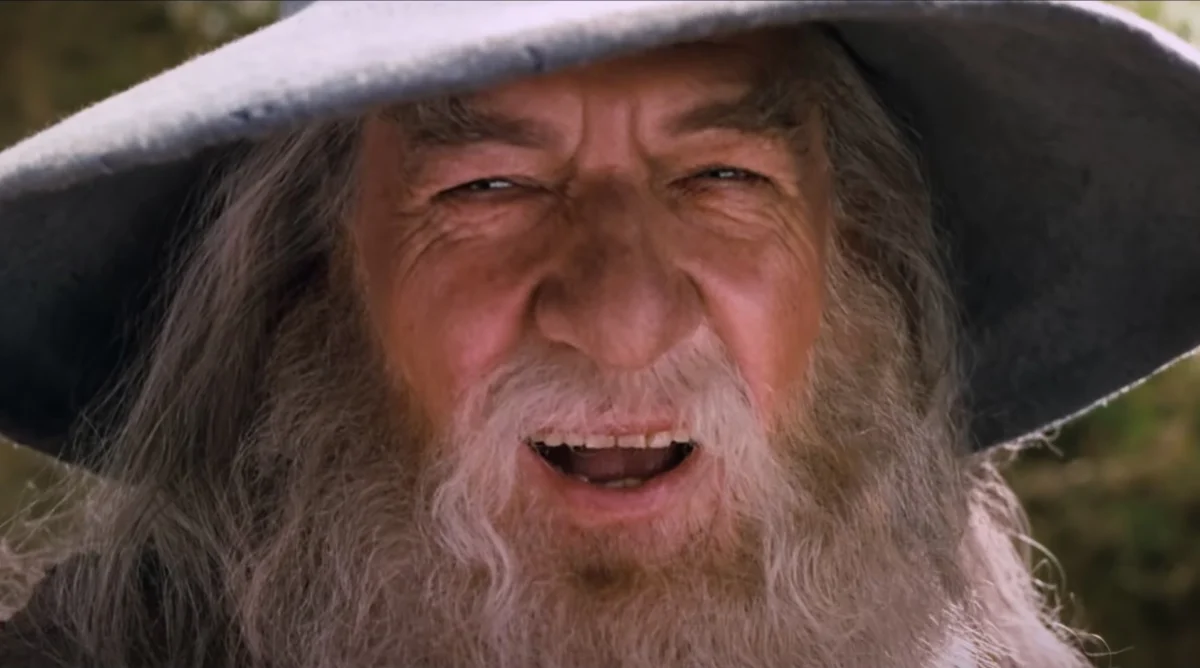
The digital phenomenon known as Gandalf Sax, also frequently referred to as Epic Gandalf Sax, represents a seminal moment in the intersection of high-fantasy cinema and modern internet remix culture. At its core, the meme consists of a visual loop featuring the character Gandalf the Grey, portrayed by Sir Ian McKellen in Peter Jackson’s The Lord of the Rings: The Fellowship of the Ring, nodding his head in rhythmic synchronization with the saxophone solo from the song "Run Away" by the Moldovan group SunStroke Project. Since its emergence in the early 2010s, Gandalf Sax has transitioned from a simple video edit into a cornerstone of internet history, exemplifying the endurance of repetitive media and the global reach of algorithmic content.
The Convergence of Two Cultural Icons
To understand the impact of Gandalf Sax, one must analyze the two distinct cultural pillars that form its foundation. The visual element is extracted from the 2001 film The Fellowship of the Ring, specifically during the sequence of Bilbo Baggins’ 111th birthday party. In the original scene, Gandalf is seen smoking his pipe and nodding along to the festive folk music of the Shire. The character’s expression—one of grandfatherly warmth and quiet contentment—provided the perfect "blank canvas" for internet creators looking to juxtapose high-stakes fantasy with contemporary pop culture.
The auditory component is derived from the 2010 Eurovision Song Contest, where the SunStroke Project represented Moldova. The performance featured a saxophone solo by Sergey Stepanov, who donned sunglasses and performed a highly energetic, repetitive riff that immediately captivated the global audience. Stepanov was quickly dubbed "Epic Sax Guy" by the internet, and his performance became a standalone meme characterized by its infectious energy and earworm quality. The eventual marriage of Gandalf’s serene nodding and Stepanov’s frenetic jazz-pop created a comedic contrast that resonated with millions of viewers.
Chronology and Early Viral Growth
The genesis of the Gandalf Sax meme can be traced back to the late summer of 2012. On September 5, 2012, a YouTuber under the handle tejulaify uploaded the first recorded version of the edit. This initial iteration featured a standard-definition clip of Gandalf smiling and nodding to the looped saxophone riff. While this version laid the groundwork, garnering over 300,000 views in the subsequent decade, it was the technical improvement of the content that catalyzed its true viral status.
On December 1, 2012, the YouTuber Ukes of Hazzard uploaded a high-definition (HD) version of the loop. This version offered a cleaner visual experience and more precise audio-visual synchronization. The HD upload acted as a catalyst, amassing over 3.1 million views and becoming the definitive version used in subsequent remixes. This period marked the transition of Gandalf Sax from a niche joke within Lord of the Rings fandom to a mainstream internet artifact.
The Rise of the Ten-Hour Endurance Video
As YouTube’s algorithm began to favor watch time and long-form engagement in the mid-2010s, a new subgenre of content emerged: the "10-hour loop." These videos were designed as endurance tests, background noise, or humorous displays of digital excess. Gandalf Sax became one of the most prominent subjects of this trend.
On March 22, 2017, the YouTube channel "10 Hours" posted a continuous loop of Gandalf Sax. This specific video achieved massive success, accumulating over 35 million views over the next five years. The sheer scale of the engagement suggested that the meme had evolved into a form of digital wallpaper—something users would play during study sessions, parties, or simply to test the limits of their patience. The trend reached its logical extreme on February 1, 2021, when YouTuber Lukas Pohlreich uploaded a 24-hour version, which, despite its daunting length, secured nearly 300,000 views, proving that the meme’s appeal remained intact nearly a decade after its inception.
Physical Parodies and Multi-Screen Installations
The influence of Gandalf Sax eventually moved beyond the confines of a single browser window. In the mid-2010s, a new wave of parodies emerged involving the physical placement of the video in real-world environments. These "installations" typically featured a person walking through a house or office where every available screen—television, laptop, tablet, and smartphone—was playing the Gandalf Sax loop simultaneously.
The most notable example of this trend was published on October 16, 2016, by YouTuber Hunter Young. The video, titled "Gandalf Sax Guy in every room," showcased a highly coordinated effort to synchronize the meme across multiple devices in a residential setting. The video struck a chord with the public, gaining over 16 million views. This format added a layer of "performance art" to the meme, as creators competed to see who could create the most immersive or absurd Gandalf Sax environment. Earlier versions, such as a 2015 upload by wotservice, paved the way for this style, demonstrating the meme’s ability to inspire creative production beyond simple video editing.
Statistical Analysis and Audience Demographics
Search interest data from Google Trends indicates that Gandalf Sax has experienced several peaks in relevance, often coinciding with broader "meme nostalgia" cycles or the release of new Lord of the Rings media, such as the Hobbit trilogy or the Rings of Power series. The data suggests that the meme’s primary audience consists of "Digital Natives"—Millennials and Gen Z—who grew up during the transition from the early "Wild West" era of YouTube to the more structured, algorithm-driven platform of today.
The engagement metrics are particularly telling. With a combined view count exceeding 50 million across its most popular iterations, Gandalf Sax ranks among the most viewed Lord of the Rings-related fan content in history. Analysts suggest that the meme’s success is due to its "low-friction" humor; it requires no deep knowledge of Tolkien’s lore to enjoy, yet it provides an extra layer of irony for those familiar with Gandalf’s typically grave and serious demeanor.
Implications for Digital Marketing and Remix Culture
The longevity of Gandalf Sax provides valuable insights into the mechanics of viral longevity. Unlike "flash-in-the-pan" memes that disappear within weeks, Gandalf Sax has maintained a consistent presence for over twelve years. This is attributed to its "exploitable" nature—the ease with which the template can be modified. Creators have swapped the "Epic Sax" music for heavy metal, classical music, and hip-hop, ensuring the visual remains fresh for new audiences.
From a journalistic and sociological perspective, Gandalf Sax represents a form of "digital folk culture." It is a collective creation that belongs to the community rather than a single entity. While the intellectual property belongs to New Line Cinema (visuals) and SunStroke Project (audio), the "meme" itself exists in a legal and cultural gray area where transformative use is the norm. This phenomenon highlights the challenges and opportunities in managing intellectual property in an age where fan-made remixes can achieve greater cultural penetration than the original marketing materials.
Legacy and Concluding Observations
As the internet continues to evolve toward short-form vertical content like TikTok and Instagram Reels, Gandalf Sax has once again adapted. Clips of the nodding wizard frequently appear as background elements or "reaction" stickers in modern social media posts. Its transition from a 10-hour desktop experience to a 5-second mobile clip demonstrates the versatility of the original edit.
The enduring popularity of Gandalf Sax serves as a testament to the power of simple, rhythmic repetition in human psychology. Much like the "Leekspin" or "Nyan Cat" memes that preceded it, Gandalf Sax taps into a primal appreciation for synchronized audio and visual patterns. It remains a definitive example of how internet subcultures can take disparate elements of global media and forge them into a new, universally recognized language of humor.
In the broader context of the 2010s, Gandalf Sax is more than just a video; it is a digital artifact that captured a specific moment in the history of the social web—a time when the internet was becoming increasingly centralized, yet still capable of producing moments of pure, unadulterated absurdity. As long as there are screens to display it and audiences to watch, the Grey Wizard will likely continue his rhythmic nod, a silent guardian of the internet’s most whimsical traditions.

