
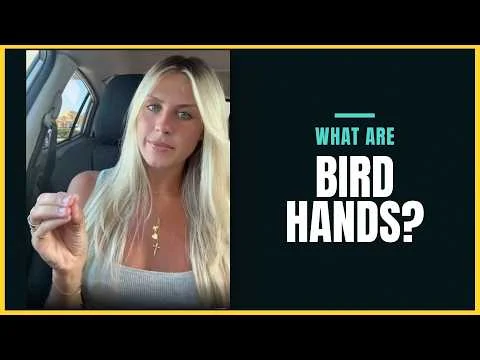
The Digital Evolution of the Bird Hands Slang and Its Emergence as a Cultural Signifier in Online Dating Discourse has become a focal point of sociological study and digital trend analysis as of October 2026. The term "bird hands," which originally surfaced in niche internet circles to describe a specific aesthetic hand gesture frequently utilized by women in social media photography, has transitioned into a broader cultural lexicon. This transition, documented extensively by digital archivists such as Zach Sweat, highlights the intersection of aesthetic trends, gendered discourse, and the burgeoning influence of the "manosphere" on mainstream dating perceptions. As the gesture gains traction on platforms like YouTube and TikTok, it has increasingly been categorized by certain online subcultures as a "red flag," sparking a wider debate regarding the hyper-scrutiny of non-verbal cues in the digital age.
The Definition and Aesthetic Roots of Bird Hands
At its core, the "bird hands" gesture involves a specific positioning of the fingers, often characterized by slightly spread, curved, or "talon-like" movements, frequently accentuated by long acrylic or gel nail extensions. In the context of digital photography and short-form video content, the gesture is often used to frame the face, showcase jewelry, or simply provide a sense of motion and "daintiness" to a pose.
From an aesthetic standpoint, the gesture emerged alongside the "baddie" and "Instagram face" trends of the early 2020s. It was initially viewed as a neutral or even aspirational component of a curated online persona. However, as digital trends are wont to do, the meaning of the gesture began to shift as it was adopted by various demographics. By 2025, the term "bird hands" began to appear in comment sections and "get ready with me" (GRWM) videos, initially as a descriptor for the way influencers handled products or adjusted their hair. The term is evocative, drawing a direct visual parallel between the delicate, articulated movements of a bird’s feet and the precision required to navigate touchscreens and makeup applications with elongated fingernails.
Chronology of the Trend: From Aesthetic to Alleged Red Flag
The evolution of "bird hands" follows a distinct timeline that mirrors the lifecycle of many contemporary internet memes.
- Phase One: The Aesthetic Emergence (2021–2023): Long nails and specific hand poses become a staple of the "influencer" look. The gestures are functional, designed to avoid smudging makeup or to better display accessories. There is no negative connotation associated with the movement at this stage.
- Phase Two: Linguistic Labeling (2024–Early 2025): The term "bird hands" is coined in the depths of TikTok and Reddit. It is used descriptively to mock the perceived "artificiality" of influencer poses. Users begin to notice a pattern in how certain creators move their hands, leading to the first wave of compilation videos.
- Phase Three: Manosphere Appropriation (Late 2025–Early 2026): The term is picked up by "red pill" and "manosphere" creators. These influencers begin to analyze "bird hands" through a lens of behavioral psychology, claiming that the gesture is a subconscious indicator of certain personality traits. This is the period when the term becomes synonymous with the phrase "red flag."
- Phase Four: Mainstream Archival and Analysis (October 2026): Major digital culture outlets, including Know Your Meme, officially catalog the trend. Reporters like Zach Sweat document the surge in search queries and the YouTube-led proliferation of the term, noting its shift from a simple descriptor to a complex cultural signifier.
The Role of the Manosphere and the Red Flag Narrative
The categorization of "bird hands" as a "red flag" is perhaps the most significant development in its history. The manosphere—a collection of websites, blogs, and online forums promoting masculinity, often in opposition to modern feminism—has a long history of "decoding" female behavior. Within these circles, "bird hands" are often presented as a sign of vanity, high-maintenance personalities, or a preoccupation with social media validation.
According to proponents of this view, the gesture is a performative act that signals a woman’s alignment with "influencer culture," which they argue is incompatible with traditional relationship values. This analysis often relies on anecdotal evidence and confirmation bias, yet it has proven highly effective in generating engagement. By labeling a common aesthetic choice as a psychological "tell," these creators tap into the anxieties of modern daters who are looking for shortcuts to vet potential partners in an increasingly complex digital landscape.
The viral nature of this discourse is supported by YouTube’s recommendation algorithms. Videos titled "Why Bird Hands Are a Major Red Flag" or "The Hidden Meaning Behind Her Hand Gestures" have seen a 400% increase in view counts over the third quarter of 2026. This algorithmic amplification ensures that even those who do not subscribe to manosphere ideologies are exposed to the terminology, eventually leading to its adoption in general dating humor and "memeified" content.
Supporting Data and Social Media Metrics
Data gathered from social media monitoring tools indicates a sharp rise in the mention of "bird hands" across various platforms. On TikTok, the hashtag #birdhands has amassed over 150 million views, with a significant portion of the content appearing within the last six months. On YouTube, the specific video referenced in recent reports (3MKVfwYMlz4) has served as a primary source for the trend’s "meaning" and its association with hand gestures and slang.
Search engine data reveals that queries for "bird hands meaning" peaked in September 2026, suggesting that the term has moved beyond niche circles and into the general public’s curiosity. Demographically, the interest is highest among users aged 18 to 34, a group that is most active in the digital dating market and most likely to encounter the term on social media.
Furthermore, the "red flag" association has led to a counter-trend. Women and feminist creators have begun to "reclaim" the term, using it ironically to mock the absurdity of hyper-analyzing hand movements. This "trend-counter-trend" cycle is a hallmark of modern internet culture, where the reaction to a meme often becomes more influential than the meme itself.
Sociological Analysis: The Hyper-Scrutiny of the Digital Self
The "bird hands" phenomenon is indicative of a broader trend in the 2020s: the hyper-scrutiny of the digital self. In an era where a person’s entire personality is often reduced to a series of images and 15-second clips, every movement becomes subject to intense analysis. Sociologists suggest that this is a byproduct of "choice overload" in dating apps. When faced with an infinite number of potential partners, individuals look for "micro-signals" to help them make quick decisions.
"Bird hands" joins a long list of digital-era "tells," ranging from "duck face" in the 2010s to the "soft launch" of partners in the early 2020s. However, unlike previous trends, the discourse around "bird hands" is notably more gendered and adversarial. It reflects a growing divide in how different genders navigate online spaces and how aesthetic choices are weaponized in the "gender wars" that permeate modern social media.
Psychologists have noted that the fixation on such specific, often involuntary or purely aesthetic gestures can lead to "confirmation bias" in dating. If an individual is told that "bird hands" signify a negative trait, they will subconsciously look for that trait in anyone who makes the gesture, regardless of the person’s actual character. This creates a feedback loop where slang terms dictate social reality.
Broader Implications and Future Outlook
The rise of "bird hands" as a cultural signifier highlights the power of internet slang to shape perception. What begins as a visual observation on a platform like YouTube can quickly evolve into a diagnostic tool for social interaction. As we move further into 2026 and beyond, it is likely that more of these "micro-red flags" will emerge, fueled by the need for viral content and the human desire to categorize others.
For digital marketers and influencers, the "bird hands" trend serves as a cautionary tale about the volatility of personal branding. An aesthetic choice made today can become a social liability tomorrow, depending on how it is framed by the internet’s various subcultures. For the average user, it serves as a reminder of the importance of media literacy and the need to question the origins of the "red flags" they are taught to avoid.
In conclusion, the story of "bird hands" is more than just a passing internet meme. It is a complex intersection of fashion, technology, and social politics. As documented by Zach Sweat and others, the term’s journey from the fingertips of influencers to the analytical videos of the manosphere provides a unique window into the mechanics of 21st-century cultural evolution. Whether the term will persist or be replaced by a new aesthetic "tell" remains to be seen, but its impact on the current digital discourse is undeniable.

