
The e-commerce sector continues its rapid evolution, with a constant influx of innovative services designed to empower merchants, streamline operations, and enhance customer experiences. This comprehensive overview details the latest product releases and updates across critical areas such as payments, shipping, affiliate marketing, agentic AI, e-commerce acceleration, customer management, and specialized platform applications for Shopify and Amazon. These advancements signal a maturing industry where technology is increasingly leveraged to overcome complex operational hurdles and unlock new avenues for growth.
Revolutionizing Global Reach: Merchant of Record Services Gain Traction
In an effort to simplify international expansion for e-commerce businesses, several key players are enhancing their Merchant of Record (MoR) offerings. This complex role involves taking on legal responsibility for transactions, including tax collection, compliance, and payment processing, thereby alleviating significant administrative burdens for merchants aiming to sell globally.
dLocal Launches dMoRe to Bridge Emerging Market Gaps
dLocal, a prominent payments platform specializing in emerging markets, has introduced dMoRe, a comprehensive Merchant of Record service. This new offering is engineered to assist enterprises in scaling their operations worldwide by acting as the local seller of record. dMoRe strategically integrates dLocal’s established direct payment rails with a robust legal framework. This integration allows businesses to navigate the complexities of international commerce by leveraging dLocal’s extensive network of banking partnerships, localized payment methods preferred by consumers in specific regions, and dedicated local compliance teams. The result is a unified, end-to-end platform designed to remove operational barriers and facilitate seamless cross-border sales.
The demand for such services is driven by the increasing globalization of e-commerce. According to Statista, cross-border e-commerce sales are projected to reach $2.4 trillion by 2027, underscoring the immense opportunity and the associated regulatory complexities that MoR services aim to simplify. By assuming the role of the local seller, dMoRe allows merchants to focus on their core competencies, such as product development and marketing, while dLocal handles the intricacies of local taxation, consumer protection laws, and payment regulations. This strategic move by dLocal reflects a growing trend where specialized providers are offering integrated solutions to de-risk and simplify international expansion for businesses of all sizes.
Paysafe Partners with FastSpring to Enhance Global Payment Solutions
Complementing this trend, Paysafe, a global payments platform, has launched its own Merchant of Record service in collaboration with FastSpring, a leading MoR provider for digital goods, software, and SaaS businesses. This co-branded solution is powered by FastSpring’s robust infrastructure and is specifically designed to help businesses sell internationally without the need to manage the myriad operational, regulatory, and administrative requirements. These include the meticulous collection, calculation, and remittance of taxes across different jurisdictions, ensuring payment localization and compliance with diverse financial regulations, and effectively managing chargebacks. The partnership leverages FastSpring’s established expertise in handling complex digital product sales, an area that often presents unique tax and compliance challenges due to its global and intangible nature.

The increasing complexity of global tax regulations, particularly with the rise of digital services, makes an MoR solution invaluable. For instance, Value Added Tax (VAT) or Goods and Services Tax (GST) regulations vary significantly by country, and staying compliant requires constant monitoring and adaptation. By partnering with FastSpring, Paysafe aims to offer its existing merchant base a streamlined path to global sales, enhancing their ability to reach new markets and diversify revenue streams. This strategic alliance underscores the growing recognition that robust payment and compliance infrastructure is fundamental to successful international e-commerce.
Affiliate Marketing and Creator Commerce: Tapping into New Audiences
The integration of affiliate marketing into social media platforms continues to expand, offering creators new ways to monetize their content and brands to reach targeted audiences.
YouTube Shopping Integrates Amazon Products for Creator Affiliates
YouTube is enhancing its creator monetization tools by enabling U.S.-based creators to tag Amazon products directly within their short-form videos, long-form content, and livestreams. This integration into the YouTube Shopping Affiliate Program allows creators to earn commissions on sales generated from these tagged products. After linking their Amazon Associates accounts, creators can utilize a product picker tool within the YouTube Studio to select and tag relevant Amazon items. The platform also offers an auto-tagging feature, where YouTube can review recent uploads and automatically identify and tag eligible Amazon products, simplifying the process for creators.
This move is significant for both Amazon and YouTube, as it taps into the massive creator economy. YouTube’s extensive reach, coupled with Amazon’s vast product catalog, creates a powerful synergy. For creators, this provides a direct and seamless way to generate income by recommending products their audience trusts and desires. For Amazon, it opens up a new, highly influential channel for product discovery and sales, leveraging the authentic recommendations of content creators who have built strong relationships with their viewers. The increasing adoption of shoppable content across social platforms signals a shift in consumer behavior, where product discovery is becoming more integrated into entertainment and information consumption.
LTK Embraces Agentic AI for Enhanced Creator Commerce
LTK, a prominent creator commerce platform, has introduced agentic AI capabilities designed to revolutionize how brands build and scale their marketing campaigns. This new experience empowers brands to articulate their campaign objectives, and LTK’s AI intelligence then takes over to plan campaigns, identify the most suitable creators, manage program launches and optimizations, and provide ongoing recommendations for future actions. The AI operates proactively in the background, continuously surfacing emerging opportunities and trends, and suggesting strategic actions for brands.
The introduction of agentic AI in creator commerce signifies a move towards more sophisticated, data-driven campaign management. Instead of manual selection and optimization, brands can leverage AI to achieve greater efficiency and effectiveness. This technology can analyze vast amounts of data on creator performance, audience engagement, and market trends to make more informed decisions, leading to higher return on investment for brands. For creators, this could mean more targeted collaborations that align better with their content and audience, leading to more sustainable partnerships.
Streamlining Shipping and Logistics: Innovations in Freight and Delivery
The logistics sector is witnessing significant technological advancements aimed at improving efficiency, reducing costs, and enhancing the speed and reliability of deliveries for e-commerce merchants.
ShipStation Integrates Less-Than-Truckload (LTL) Freight Shipping
ShipStation, a well-established shipping and logistics platform catering to small and mid-sized merchants, has announced the integration of Less-Than-Truckload (LTL) freight shipping capabilities directly within its platform. This development allows customers to access real-time LTL rate quotes, book shipments, and track freight alongside their parcel shipments, all within a single, integrated workflow. This is a significant product integration following the merger of Auctane and WWEX Group, which formed ShipStation Global.
The inclusion of LTL freight shipping addresses a critical need for merchants who handle larger, heavier, or palletized goods that do not fill an entire truck. Previously, these merchants often had to use separate systems or manual processes for freight shipments, adding complexity and potential for error. By consolidating LTL and parcel shipping into one platform, ShipStation streamlines operations, saves time, and provides better visibility across all shipping activities. This move is particularly beneficial for businesses dealing with furniture, appliances, or wholesale orders, enabling them to compete more effectively in a market where efficient logistics are paramount. The market for LTL freight is substantial, with industry reports indicating it constitutes a significant portion of the overall freight market, highlighting the importance of this integration.
OneRail Launches AI-Powered Delivery Decisioning Platform with NVIDIA
OneRail, a leading platform for last-mile delivery orchestration, has unveiled OmniSTAR, an AI-powered delivery decisioning platform developed in collaboration with NVIDIA. OmniSTAR is designed to empower enterprise retailers, wholesalers, and distributors by enabling them to dynamically evaluate every available delivery option for each order. This includes owned fleet, courier services, parcel carriers, and other delivery modes. The platform intelligently selects the most cost-effective option that meets specific service requirements in real-time.
The integration of NVIDIA’s advanced AI technology into OmniSTAR promises significant improvements in delivery efficiency and cost optimization. In an era where customer expectations for fast and affordable delivery are constantly rising, the ability to make intelligent, real-time decisions about delivery routing is crucial. OmniSTAR’s AI can process vast amounts of data, including traffic conditions, driver availability, carrier performance metrics, and customer delivery preferences, to make optimal choices. This level of sophisticated decision-making can lead to substantial savings on delivery costs, reduced transit times, and improved customer satisfaction, particularly for businesses managing complex, high-volume delivery networks. The last-mile delivery market is valued in the hundreds of billions of dollars globally, and innovative solutions like OmniSTAR are poised to capture a significant share by offering tangible operational improvements.
Enhancing Customer Finance and Management: Buy Now, Pay Later and CRM Innovations
The availability of flexible payment options and sophisticated customer management tools continues to shape the e-commerce landscape, influencing purchasing decisions and customer loyalty.
Affirm and Shopify Expand Buy Now, Pay Later to Australia
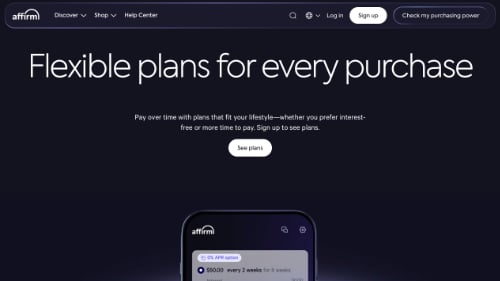
Affirm, a prominent buy-now, pay-later (BNPL) platform, has extended its partnership with Shopify to launch "Shop Pay Installments" in Australia. This new offering allows eligible Australian shoppers to split their purchases into manageable fortnightly or monthly payments, making larger purchases more accessible. Shopify merchants in Australia can easily activate Shop Pay Installments through their admin dashboard with just a few clicks.
The expansion of BNPL services into new markets like Australia is a testament to the growing consumer adoption and acceptance of these payment methods. BNPL services have seen rapid growth, driven by their ability to offer consumers immediate gratification with flexible repayment terms, often without interest if paid on time. For merchants, offering BNPL can lead to increased conversion rates, higher average order values, and improved customer loyalty. Shopify’s integration with Affirm further simplifies the adoption process for its vast network of merchants, making it easier for them to cater to evolving consumer preferences for payment flexibility. The global BNPL market is projected to continue its strong growth trajectory, exceeding $3.5 trillion in the coming years, indicating its enduring impact on e-commerce.
HoneyBook CRM Introduces Business Phone & SMS for Independent Businesses
HoneyBook, a customer relationship management (CRM) platform designed for independent businesses and freelancers, has launched "Business Phone & SMS" as a paid add-on service. This new feature provides users with a dedicated toll-free number for making and receiving calls and text messages directly through the HoneyBook application. The service aims to consolidate all client communications—calls, texts, and emails—into a single client record, alongside proposals, contracts, invoices, and project files. Users can select a toll-free number for both inbound and outbound voice calls, with automatic transcription services available, and engage in two-way SMS conversations with clients.
The integration of a dedicated business phone and SMS line within a CRM platform offers significant benefits for independent professionals. It helps to maintain a professional image by separating business communications from personal lines, while simultaneously streamlining client management. By centralizing all client interactions and project-related documents, HoneyBook’s new feature enhances organization, improves response times, and fosters stronger client relationships. This is particularly valuable for service-based businesses where clear and efficient communication is critical for project success and client retention. The demand for integrated business communication tools is growing as freelancers and small businesses increasingly adopt digital solutions to manage their operations.
The Rise of Agentic AI in E-commerce: Automating Complex Operations
Agentic AI, which refers to AI systems capable of acting autonomously to achieve specific goals, is rapidly being integrated into e-commerce platforms to automate a wide range of operational tasks.
Ship.com Unveils AI Shipping Manager and Agentic Commerce Tools
Ship.com, a delivery platform serving e-commerce businesses, marketplaces, and commerce providers, has announced the release of two key tools designed to streamline shipping processes. Ship AI acts as a proactive shipping manager for online sellers, automating and optimizing shipping operations. Additionally, Ship MCP integrates Ship.com’s capabilities into the Claude AI model, enabling developers to incorporate shipping functionalities into their AI applications and agentic commerce workflows.
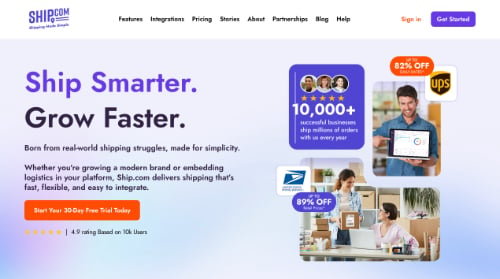
The introduction of Ship AI signifies a significant step towards intelligent automation in e-commerce logistics. By acting proactively, the AI can anticipate shipping needs, optimize carrier selection based on cost and delivery speed, manage shipments, and potentially handle customer inquiries related to shipping. This frees up valuable time for merchants and reduces the likelihood of errors. The Ship MCP integration further demonstrates the trend of embedding e-commerce functionalities into broader AI frameworks, allowing for more sophisticated and integrated agentic commerce solutions. As e-commerce volumes continue to grow, the need for AI-driven automation to manage the complexities of shipping and fulfillment becomes increasingly critical.
Helium 10 Launches Commerce AI Agent for Amazon Business Management
Helium 10, a comprehensive multichannel management tool and part of Pacvue, has launched Helium, an AI automation platform specifically designed for Amazon brands. Helium functions as an AI agent that actively diagnoses issues, identifies growth opportunities, and recommends actionable steps across an Amazon operation in real-time. Furthermore, Helium 10 has introduced a model-context-protocol (MCP) connector, designed to facilitate the integration of brand data with existing AI tools such as Claude, ChatGPT, and Gemini, among others.
Helium’s ability to provide real-time diagnostics and actionable recommendations on an Amazon platform is a game-changer for sellers. Amazon’s marketplace is notoriously competitive and complex, with constantly changing algorithms and customer behaviors. An AI agent like Helium can analyze sales data, keyword performance, competitor strategies, and customer reviews to provide insights that might otherwise be missed. The MCP connector further enhances its utility by allowing brands to leverage their existing AI investments and data within a specialized e-commerce context. This move reflects the growing demand for AI-powered solutions that can navigate the intricacies of large online marketplaces, helping sellers optimize their performance and profitability. The Amazon marketplace alone accounts for a significant portion of global e-commerce sales, making tools that enhance seller success highly valuable.
Runable Secures $21 Million to Scale AI Business Operations Platform
Runable, an AI agent platform designed to automate business operations, has successfully raised $21 million in a Series A funding round co-led by Susquehanna Venture Capital and Nexus Venture Partners. The company’s platform is built to manage the end-to-end lifecycle of a business, encompassing crucial functions such as shipping products, executing marketing campaigns, monitoring competitors and brand sentiment, optimizing for search and AI engines, and providing customer support. Runable plans to utilize the capital infusion to expand its team, enhance its platform capabilities, and grow its free Runable Academy, which offers educational resources for small businesses.
This significant funding round highlights the growing investor confidence in AI-driven business management solutions. Runable’s approach of offering a comprehensive suite of AI agents that can autonomously handle diverse operational tasks addresses a critical need for small and medium-sized businesses (SMBs) that often lack the resources to manage these functions effectively. By automating repetitive and complex tasks, Runable empowers entrepreneurs to focus on strategic growth and innovation. The platform’s ability to integrate with search and AI engines also positions it at the forefront of leveraging emerging technologies for business optimization. The SMB market is vast, and solutions that offer scalable and intelligent operational support are poised for substantial growth.
Blue Yonder Enhances Supply Chain Solutions with Agentic AI for Retail
Blue Yonder, a provider of supply chain tools, has incorporated agentic AI features into its Cognitive Solutions portfolio, specifically targeting retail operations. These enhancements aim to create a more tightly aligned ecosystem across forecasting, inventory planning, fulfillment, customer service, and returns management within the platform. The update introduces predictive intelligence and enhanced network visibility for order management. Additionally, a unified workspace for customer service and assisted selling is designed to streamline customer identification, product discovery, and other client-facing interactions.

The application of agentic AI in the supply chain and retail sectors is crucial for addressing persistent challenges like stockouts and excessive returns, which are significant cost drivers for retailers. By improving the accuracy of forecasting and inventory planning, Blue Yonder’s AI can help reduce instances of overstocking and understocking. The enhanced order management capabilities, coupled with improved customer service workflows, can lead to a more seamless customer experience from purchase to post-sale support. As retailers face increasing pressure to optimize their operations and adapt to dynamic market conditions, AI-powered solutions that offer end-to-end visibility and control are becoming indispensable. The global supply chain management market is projected to continue its robust growth, fueled by the increasing adoption of advanced technologies like AI.
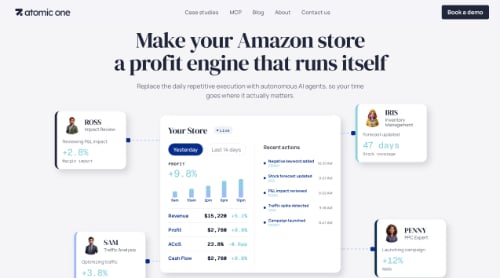
Atomic One Deploys Autonomous AI Agents for Amazon Store Operations
Atomic One, a platform dedicated to managing businesses on Amazon, has launched a suite of autonomous agents designed to oversee critical aspects of Amazon store operations. These agents cover advertising, inventory management, pricing strategies, and ranking optimization. The platform also includes a Model-Context-Protocol (MCP) tool that enables sellers to query their store data using natural language and connects this data to compatible generative AI providers.
The introduction of autonomous agents for specific functions like advertising and inventory management on Amazon signifies a new level of automation for marketplace sellers. These agents can continuously monitor performance metrics, adjust bids in advertising campaigns, reorder inventory based on sales velocity and stock levels, and implement dynamic pricing strategies to optimize sales and profitability. The MCP tool further empowers sellers by making complex data analysis accessible through simple language queries and integrating with leading generative AI models, allowing for more sophisticated insights and strategy development. For Amazon sellers, who operate in one of the most competitive e-commerce environments, these advanced AI tools offer a significant competitive advantage.
Nitro Commerce Empowers Shopify Merchants with App Development via Prompting
Nitro Commerce, an e-commerce acceleration platform, has launched "Apps," an AI-powered tool that allows Shopify merchants to build private applications using natural language prompts. Merchants can describe their specific requirements, and Nitro Apps will generate and install the application directly onto their Shopify backend. Importantly, these applications remain private to the merchant, who retains full ownership of the underlying code.
This innovative approach democratizes app development for Shopify merchants. Traditionally, creating custom applications required specialized coding skills and significant development investment. Nitro Apps lowers this barrier by enabling merchants to leverage AI to translate their business needs into functional applications. This can range from custom inventory management tools to unique customer loyalty programs. The ability to build private apps also ensures that merchants can tailor solutions precisely to their unique workflows without relying on generic third-party apps. This empowers them to create a more personalized and efficient e-commerce experience. The Shopify app ecosystem is a vital component of its success, and tools that facilitate easier and more customized app creation are likely to see widespread adoption.
Cashfree Payments Deploys AI Agents for Payment Operations
Cashfree Payments, an India-based technology company, has introduced Relay, an AI-powered application designed to manage payment operations for businesses. According to the company, Relay’s AI agents operate with merchant approval to perform a range of tasks, including reading transaction records, contacting buyers with abandoned carts, retrying failed payments, confirming cash-on-delivery orders before dispatch, and other payment-related automations.
The deployment of AI agents by Cashfree Payments addresses the often-complex and time-consuming nature of payment operations. By automating tasks such as abandoned cart recovery and failed payment retries, Relay can significantly improve conversion rates and reduce revenue leakage for merchants. The ability to confirm cash-on-delivery orders before shipping also helps mitigate risks associated with non-payment for businesses operating in markets where this payment method is prevalent. This innovation underscores the growing role of AI in optimizing core financial processes within e-commerce, leading to greater efficiency and improved financial outcomes for businesses.
Expanding E-commerce Reach: New Apps and Platform Integrations
The integration of new applications and enhancements to existing platforms continues to provide merchants with more tools to manage and grow their businesses.
YouTube Shopping and Amazon Creator Affiliates Enhance Monetization
The integration of Amazon products into the YouTube Shopping Affiliate Program represents a significant evolution in creator monetization. Previously, creators relied on external links or less integrated methods to promote products. Now, with direct tagging capabilities, the shopping experience is more seamless for viewers, and the revenue generation potential for creators is enhanced. This strategic move by YouTube and Amazon capitalizes on the growing trend of social commerce, where product discovery and purchasing are increasingly intertwined with content consumption. For U.S. creators, this offers a direct pathway to leverage their audience and influence for financial gain, turning their content into a direct sales channel. The program’s auto-tagging feature further simplifies adoption, ensuring that even creators who may not be tech-savvy can benefit from the integration.
ShipStation’s LTL Freight Integration Broadens Shipping Options
The addition of Less-Than-Truckload (LTL) freight capabilities by ShipStation is a critical development for a segment of the e-commerce market that has historically faced more complex logistics. Prior to this integration, merchants dealing with larger shipments often had to manage separate software and processes for LTL freight, creating inefficiencies and potential for errors. By bringing LTL rate quoting, booking, and tracking into the same platform as parcel shipping, ShipStation offers a unified solution that simplifies operations. This is particularly impactful for businesses that ship furniture, appliances, or wholesale orders, enabling them to manage their entire shipping operation from a single interface. The merger that formed ShipStation Global likely provided the scale and resources necessary to undertake such a significant integration, reinforcing its position as a comprehensive shipping solution provider.
Affirm and Shopify’s BNPL Expansion in Australia Signals Market Maturity
The launch of Shop Pay Installments by Affirm and Shopify in Australia reflects the increasing maturity and global acceptance of Buy Now, Pay Later (BNPL) services. As consumers become more accustomed to flexible payment options, merchants are compelled to offer them to remain competitive. Australia has emerged as a significant market for BNPL, with a growing number of consumers utilizing these services for both small and large purchases. This expansion not only provides Australian consumers with more convenient payment choices but also enables Shopify merchants in the region to potentially increase their sales and average order values by catering to this demand. The ease of activation for Shopify merchants underscores the platform’s commitment to providing accessible tools for its user base.
Agentic AI’s Transformative Potential in E-commerce Operations
The emergence of agentic AI across various e-commerce service providers signals a paradigm shift in how businesses will operate. Platforms like Ship.com, Helium 10, Runable, Blue Yonder, Atomic One, and Nitro Commerce are leveraging AI to automate complex tasks, from shipping and inventory management to marketing and customer service. This automation not only increases efficiency and reduces costs but also allows human teams to focus on higher-value strategic initiatives. The ability of these AI agents to learn, adapt, and make autonomous decisions based on real-time data is a testament to the rapid advancements in artificial intelligence. As these technologies mature, we can expect to see even more sophisticated applications that will fundamentally reshape the e-commerce landscape, making operations more intelligent, agile, and customer-centric. The substantial funding raised by companies like Runable further validates the market’s belief in the transformative power of AI in business operations.

