
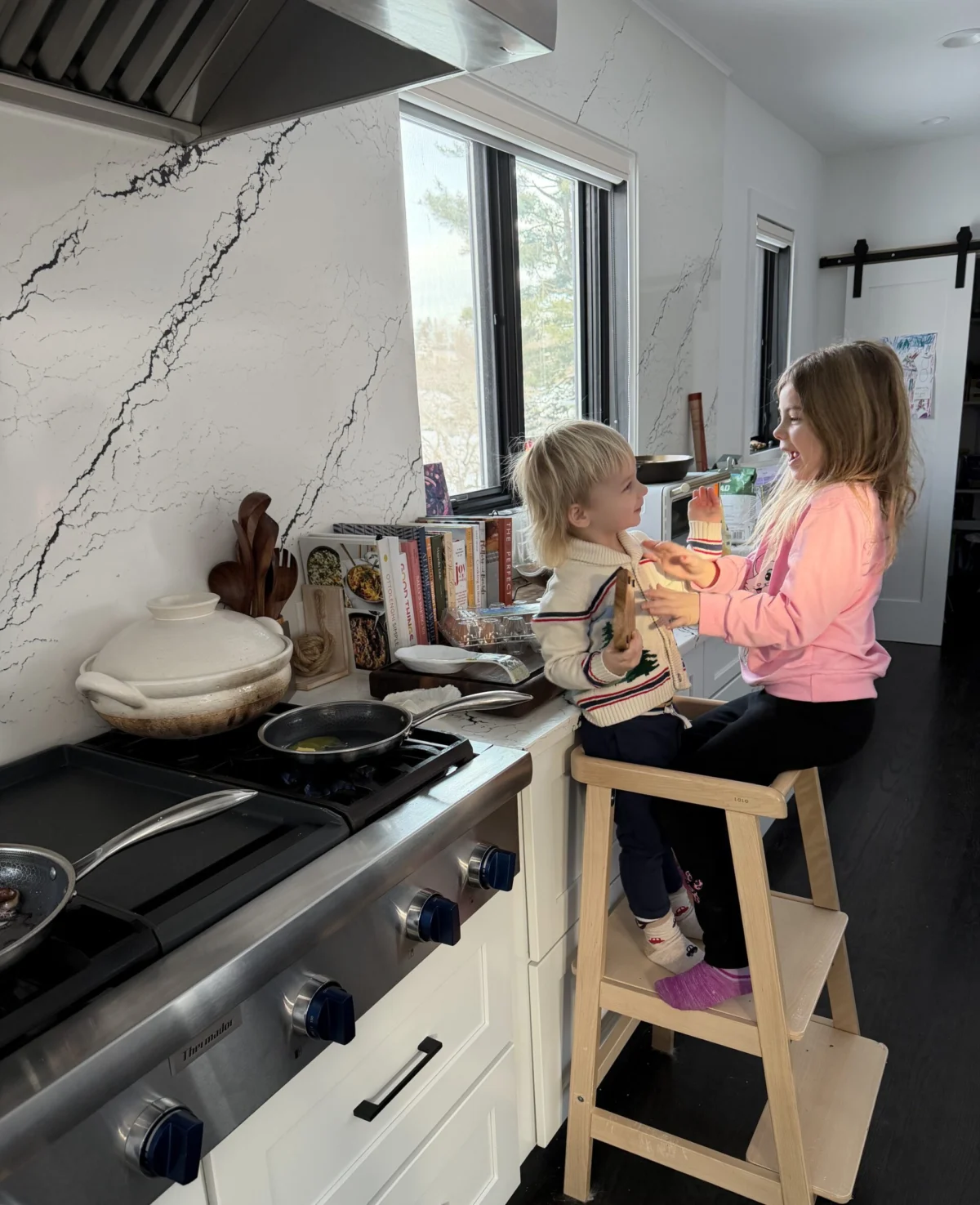
The kitchen, often considered the heart of the home, increasingly serves as a crucial laboratory for child development and family bonding, transc transcending its primary function as a place for meal preparation. Insights from public figures, such as ESPN anchor Laura Rutledge, underscore a growing recognition of the profound, multifaceted benefits derived from involving children in the culinary process. Rutledge, known for her demanding professional schedule, articulates how the act of cooking with her children, Reese and Jack, has evolved from a practical necessity—often performed one-handed with a baby on her hip—into a cherished routine that offers invaluable lessons and strengthens familial ties. This personal reflection echoes broader expert consensus and empirical data highlighting the significant cognitive, emotional, and social advantages of shared culinary experiences.
The Foundational Role of Early Culinary Engagement
From the earliest stages of infancy, children are naturally drawn to sensory exploration, and the kitchen provides a rich, dynamic environment for this. Rutledge’s account of her children, Reese and Jack, being present in the kitchen from their earliest days, stirring alongside her, illustrates a common trajectory. This initial, often passive, exposure gradually transitions into active participation as children develop. Child development specialists emphasize that even simple presence in the kitchen, observing parents and experiencing the sights, sounds, and smells of cooking, lays a critical foundation for future learning and positive associations with food. This early immersion normalizes the kitchen as a place of activity, creativity, and connection, rather than merely a utilitarian space.
As children grow, their involvement can evolve. For infants, being held while a parent stirs a pot offers tactile and visual stimulation. Toddlers, with their burgeoning independence, can be introduced to simple, safe tasks like washing vegetables or stirring cold ingredients. Preschoolers, like Rutledge’s son Jack, begin to grasp sequential steps, such as spooning sauce or cracking eggs, albeit with varying degrees of success and mess. This progression, from observation to active, age-appropriate participation, is a key element in making cooking a sustained and enriching family activity.
Cultivating Connection: Beyond the Recipe
One of the most frequently cited benefits of cooking with children is its unparalleled capacity to foster genuine quality time and open communication. In an era increasingly dominated by digital distractions and structured activities, the kitchen offers a low-pressure, natural setting for conversation. Rutledge notes how standing side-by-side at the counter, with children on step stools measuring ingredients, spontaneously sparks discussions about their day, their ideas, or even humorous anecdotes about pets. This unstructured interaction is precisely what child psychologists advocate for in strengthening family bonds.
Research consistently demonstrates that frequent family meals are correlated with improved academic performance, enhanced psychological adjustment, and lower rates of substance abuse in adolescents. While merely eating together is beneficial, the act of preparing the meal together amplifies these positive effects. It transforms a routine into a collaborative project, where conversation flows organically without the forced formality of a "check-in." The absence of an explicit agenda allows children to express themselves freely, and parents to listen actively, creating a shared experience that builds emotional intimacy. The informal, often joyful atmosphere, sometimes punctuated by "song and dance moves," as Rutledge describes, reduces stress and encourages authentic engagement, reinforcing the idea that perfection is secondary to participation and connection.
From Picky Eaters to Eager Tasters: The Power of Ownership
A common challenge for parents is encouraging children to eat a diverse and nutritious diet. The phenomenon of "picky eating" often stems from a lack of familiarity or control over food choices. Insights from parents like Rutledge reveal a powerful antidote: involving children in the preparation process. When children help make dinner, they develop a sense of ownership and investment in the meal, dramatically increasing their willingness to taste and enjoy what they have created. This observation is strongly supported by nutritional science.
Pediatric nutritionists and dietitians explain that children are more likely to try new foods when they have been exposed to them repeatedly and when they feel a sense of agency. Allowing children to stir soup, sprinkle cheese, or carefully pour pasta transforms a passive consumption experience into an active, creative one. Even a small task, like choosing an ingredient or plating their portion, can make a significant difference. This hands-on involvement demystifies food, reduces apprehension, and fosters a positive relationship with eating. Studies have shown that children who regularly participate in meal preparation tend to consume more fruits and vegetables and exhibit healthier eating patterns in the long term, directly countering the common struggle with vegetable aversion. The concept of "ownership" acts as a potent motivator, turning a hesitant preschooler into an enthusiastic eater of dishes they previously shunned.
A Classroom in the Kitchen: Developing Essential Life Skills
Beyond immediate culinary outcomes, the kitchen serves as a dynamic, practical classroom for a wide array of essential life skills and cognitive development. Children engaged in cooking are, often unknowingly, practicing fundamental academic and practical competencies. Measuring ingredients teaches basic mathematics, fractions, and volume. Following a recipe develops reading comprehension, sequencing, and problem-solving abilities. Mixing, pouring, and stirring enhance fine motor skills and hand-eye coordination.
Rutledge’s observations highlight this incidental learning: Jack learning gentleness while cracking an egg, and Reese developing confidence in following a recipe. While initial attempts may be messy (e.g., eggshells in the bowl), these are invaluable learning opportunities. Educational specialists emphasize that experiential learning, where children actively manipulate objects and follow instructions in a real-world context, leads to deeper understanding and retention than abstract classroom instruction alone. Furthermore, the process of cooking involves executive functions such as planning, organization, attention to detail, and delayed gratification. Learning to manage tools, understand safety precautions, and see a project through from start to finish instills a sense of capability and responsibility. Investing in kid-safe tools, such as blunted knives, sturdy mixing bowls, and reliable step stools, significantly enhances safety and manageability, allowing parents to focus on the learning process rather than constant supervision of hazards. This shift in parental mindset, from worrying about every sharp edge to embracing the shared experience, unlocks the full educational potential of the kitchen.
The Art of Slowing Down: Mindfulness in Modern Parenthood
For professionals operating in high-pressure environments, such as sports broadcasting, the pace of life can be relentlessly fast. Laura Rutledge openly shares how her professional life at ESPN demands speed, quick thinking, and constant readiness. Paradoxically, cooking with children forces a necessary deceleration, offering a crucial counterpoint to the demands of modern life. You cannot rush a toddler meticulously spooning tomato sauce into a pot one tiny spoonful at a time.
This enforced slowness is not merely a logistical challenge but a profound opportunity for mindfulness and presence. In following a child’s deliberate pace, celebrating small achievements like remembering to "stir slowly," parents are compelled to disengage from external pressures—the next work segment, an urgent email—and fully immerse themselves in the present moment. This deliberate act of slowing down has significant psychological benefits, reducing parental stress and fostering a deeper connection with the immediate family experience. Psychologists specializing in family well-being often recommend activities that encourage shared, unhurried time as a powerful antidote to the fragmentation of modern family life. These "tiny wins"—trying a new food, mastering a small skill—become cherished memories and reinforce the value of being fully present. The apparent chaos and mess of cooking with kids, as Rutledge points out, are often outweighed by the sheer joy and "dang fun" of these authentic, unscripted moments.
Building Blocks of Confidence: Recognizing Children as Contributors
Perhaps one of the most impactful outcomes of involving children in cooking is the profound sense of competence and importance it instills. When children are given real responsibilities in the kitchen—not merely "pretend" tasks—they experience the satisfaction of genuine contribution. Whether it’s slicing fruit, squeezing tomatoes for a sauce, or assembling a salad, these actions have tangible results that directly contribute to a family meal.
Developmental psychologists emphasize the critical role of autonomy and competence in building a child’s self-esteem and self-efficacy. Allowing children to "own their task completely," even if the outcome isn’t perfectly restaurant-quality, validates their efforts and builds confidence. A slightly overcooked scrambled egg, made by a child beaming with pride, is often more valuable than a perfectly prepared dish delivered without their involvement. This principle extends beyond the kitchen; providing children with authentic responsibilities teaches them accountability, problem-solving, and the value of their contributions to a collective effort. The kitchen, with its clear goals and immediate outcomes, offers an ideal environment for nurturing this foundational aspect of personal development. Empowering children to contribute meaningfully to the household not only lightens the parental load but also cultivates independent, capable individuals.
Practical Strategies for Successful Shared Cooking
To maximize the benefits of cooking with children, parents can adopt several practical strategies. Firstly, managing expectations is key. Embracing imperfection and prioritizing the process over a flawless end product reduces stress for both parents and children. Secondly, age-appropriate task assignment is crucial; toddlers can wash, preschoolers can stir, and older children can chop or read recipes. Thirdly, investing in child-friendly tools enhances safety and empowers children. Lastly, fostering a positive, encouraging atmosphere, celebrating effort rather than just results, ensures the experience remains enjoyable and educational. Regularly incorporating new, simple recipes, such as Rutledge’s suggested kid-friendly spaghetti carbonara, keeps the activity fresh and engaging.
Broader Societal Implications and Future Outlook
The increasing emphasis on family-centered culinary activities reflects broader societal trends towards valuing holistic child development, mindful living, and sustainable food practices. As societies grapple with rising rates of childhood obesity, declining culinary skills, and the impact of fast-food culture, a return to home cooking, particularly with children, offers a powerful counter-narrative. It re-establishes the kitchen as a place of cultural transmission, where family traditions, recipes, and values are passed down through generations.
Furthermore, equipping children with culinary skills fosters greater food literacy and an understanding of where food comes from, potentially leading to more informed and healthier dietary choices in adulthood. This investment in shared kitchen time is not merely about preparing meals; it is about nurturing well-rounded individuals, strengthening family units, and building healthier, more connected communities for the future. The simple act of cooking together, as highlighted by personal narratives and corroborated by extensive research, stands as a fundamental pillar in the architecture of a thriving family life.

