
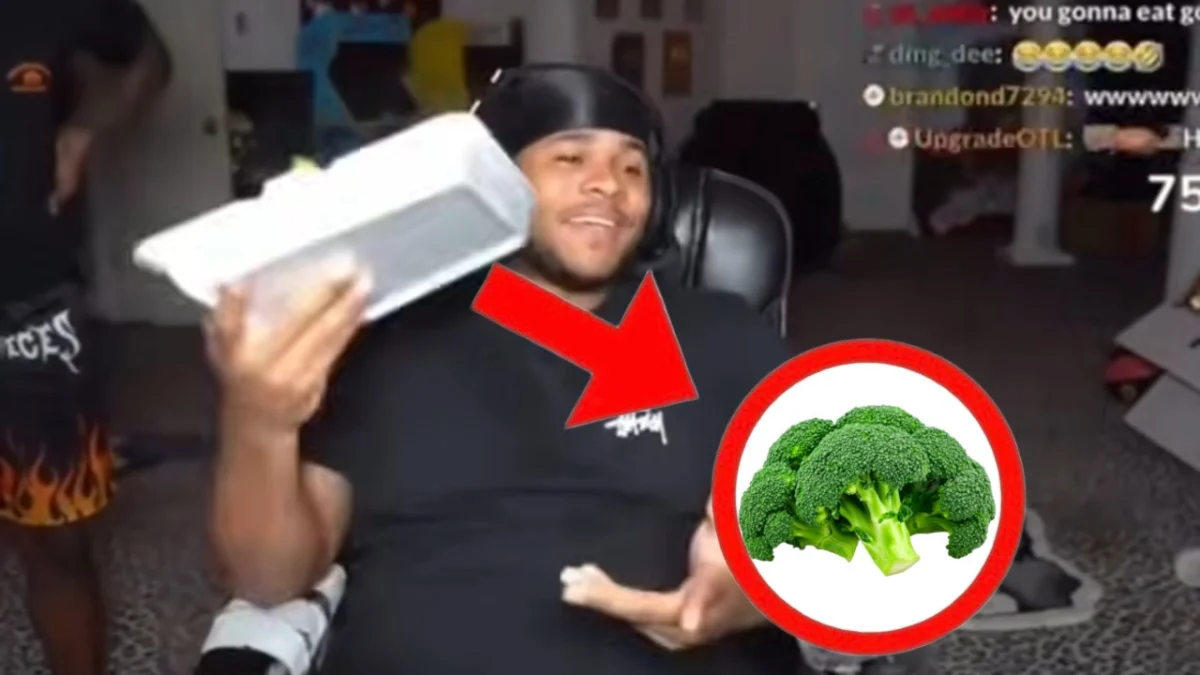
The digital landscape of 2026 has been significantly shaped by the resurgence and transformation of a three-year-old video clip involving two of the internet’s most prominent content creators. Known colloquially as the Fanum Throwing Broccoli meme, this phenomenon represents a complex intersection of streamer culture, high-end video editing, and the universal relatability of procrastination. What began as a spontaneous moment of frustration during a live broadcast in May 2023 has evolved into a sophisticated "exploitable" format, garnering hundreds of millions of cumulative views across TikTok, YouTube, and X (formerly Twitter). To understand the magnitude of this trend, one must analyze the origins of the creators involved, the technical evolution of the meme, and the socio-cultural factors that allowed a plate of vegetables to become a symbol of modern internet humor.
The Principal Figures: Fanum, Kai Cenat, and the AMP Era
At the heart of the meme are Roberto "Fanum" Silva and Kai Cenat, two pillars of the "Any Means Possible" (AMP) content collective. Based in Atlanta, AMP revolutionized the streaming industry by blending traditional reality television dynamics with the raw, unfiltered nature of live broadcasting. Kai Cenat, a multi-award-winning Streamer of the Year, is known for his high-energy "subathons" and celebrity guest appearances. Fanum, conversely, carved out a niche through his charismatic personality and a running gag involving food, which eventually birthed the "Fanum Tax"—a slang term used by Gen Z and Alpha to describe the act of taking a portion of someone else’s meal.
The synergy between these two creators provided the perfect environment for viral moments. By 2023, the "Fanum Tax" was already a staple of internet vernacular, establishing Fanum as a character whose relationship with food was both a source of comedy and a central theme of his brand. This context is vital to understanding why the broccoli incident resonated so deeply with their core audience; it wasn’t just a man throwing food, it was a subversion of the established "Fanum Tax" narrative.
Chronology of an Outburst: The May 2023 Origin
The specific event occurred on May 31, 2023, during a collaborative stream at the AMP house. In an attempt to prank or perhaps "troll" his colleague, Kai Cenat presented Fanum with a plate of steamed broccoli. Given Fanum’s public persona—which often prioritized indulgent "soul food" or fast food—the offering of a healthy green vegetable was viewed as a comedic affront.
In the original footage, Fanum’s reaction is instantaneous. Upon seeing the plate, he experiences a moment of visible "rage," grabs the plate, and hurls it behind him with significant force, narrowly missing Cenat. He then storms out of the room, leaving Cenat in a fit of laughter. The clip was immediately uploaded to the Fanum Live YouTube channel, where it served as a highlight for the community. For several years, the video remained a popular "inside joke" among fans, accumulating approximately 7.6 million views. Fanum would later lean into the moment during subsequent streams, jokingly stating that "you do not need to eat vegetables," further cementing the clip’s legendary status within his community.
Technical Transformation: The 2026 Resurgence
While the original clip was successful, its transition from a "fandom highlight" to a "universal meme" did not occur until mid-2026. The catalyst for this shift was the application of high-quality visual effects (VFX) to the footage. On July 18, 2026, a TikTok creator known as @..krome posted an edited version of the broccoli toss. Using software such as Adobe After Effects, the creator added a massive, cinematic explosion that triggered the moment the broccoli plate made contact with the floor or the wall behind Cenat.
This "Exploding Broccoli" edit changed the DNA of the meme. It transformed a simple physical comedy bit into a "punchline" format. The explosion provided a visual exclamation point that made the clip a perfect "exploitable"—a template that other creators could use to represent an extreme reaction to a specific situation. The @..krome edit gained 1.1 million views in a short window, providing the blueprint for what would become the dominant meme of September 2026.
The "Exploitable" Era: September 2026 Viral Spread
By September 2026, the meme had moved beyond the streamer community and into the mainstream. It found a specific niche in "relatability" content. Creators began pairing the exploding broccoli clip with captions regarding tasks, responsibilities, or news that they wished to dismiss or destroy.
On September 8, 2026, the user @user543148335 applied the clip to an academic context. The caption "The test will not be graded" paired with Fanum’s explosive rejection of the broccoli perfectly captured the relief and immediate dismissal of effort felt by students. This video alone garnered over 170,000 views in less than a month, signaling that the meme had found a home in "Student TikTok."
The momentum continued on September 12, when YouTuber juggerNOT posted a version titled "When I open the assignment and it isn’t due tomorrow." This iteration struck a chord with a global audience, amassing 2.4 million views in a mere two weeks. The broccoli plate became a metaphor for any unwanted responsibility; the act of throwing it represented the psychological relief of procrastination.
Other variations began to emerge, showcasing the versatility of the format:
- The Reverse Meme: On September 13, YouTuber RickOps reversed the footage, showing Fanum "summoning" the broccoli and the explosion into his hand. This was used to describe situations where someone is "born" with a specific trait or "receives" a burden, such as a "crippling gambling addiction."
- The Spite Meme: On September 27, TikToker @camro.kam used the clip to illustrate the "spite" felt when a parent asks a child to do something they were already planning to do. The caption "wanting to study but deciding not to after your mother asks you to study" resonated with 3.3 million viewers in 48 hours.
Statistical Analysis and Engagement Metrics
The "Fanum Throwing Broccoli" meme’s success can be quantified through engagement data across multiple platforms. As of late September 2026, search interest for "Fanum," "Kai Cenat Broccoli," and "Exploding Broccoli Meme" reached an all-time high.
Data suggests that the meme’s primary demographic consists of individuals aged 13 to 24, a group that heavily consumes both Twitch highlights and short-form TikTok content. The use of specific audio tracks, such as "Jumper" by Waterflame or slowed-down versions of Coldplay’s "Hymn for the Weekend," further boosted the meme’s reach by allowing it to enter different "audio ecosystems" on TikTok’s algorithm. The @camro.kam video, for instance, utilized a specific sound that helped it reach over 3.3 million views, demonstrating how audio-visual synergy is essential for meme longevity.
Cultural Implications and Streamer Influence
The explosion of this meme highlights the shifting nature of celebrity and entertainment. In previous decades, mainstream memes often originated from film or scripted television. Today, the "streamer-to-meme" pipeline is the dominant force in digital culture. Creators like Fanum and Kai Cenat provide hours of unscripted, raw footage daily, providing a nearly infinite supply of "raw materials" for meme-makers.
Furthermore, the "Fanum Throwing Broccoli" phenomenon illustrates the concept of "context collapse." Many users who share and laugh at the exploding broccoli clip may not know who Fanum is, or that the original event happened three years ago. In the meme economy, the original context is often secondary to the immediate emotional resonance of the image. The broccoli has been abstracted; it is no longer a vegetable, but a symbol of "the unwanted."
Impact on the Creators
For Fanum and the AMP collective, the resurgence of the 2023 clip has served as a powerful marketing tool. It reinforces the longevity of their content and keeps them at the forefront of the cultural conversation without requiring new, high-effort productions. This "evergreen" nature of streamer highlights allows creators to maintain relevance even during breaks or lulls in their streaming schedules.
Industry analysts point out that memes like these act as "passive discovery" mechanisms. A viewer who finds the broccoli meme funny is likely to search for the original clip, leading them to Fanum’s YouTube channel and potentially converting them into a long-term subscriber. This creates a feedback loop where old content fuels new growth, a vital strategy in the hyper-competitive attention economy of 2026.
Conclusion: The Future of the Format
As of late 2026, the Fanum Throwing Broccoli meme shows no signs of immediate decay. Its evolution from a simple prank to a high-octane VFX exploitable demonstrates the creative ingenuity of the modern internet user. By taking a moment of genuine human emotion—frustration—and amplifying it through digital effects and relatable captions, the community has created a piece of content that is both specific to its origin and universal in its application.
The meme stands as a testament to the power of streamer culture and the enduring appeal of physical comedy in a digital age. Whether it is being used to joke about school assignments, household chores, or internal impulses, Fanum’s rejection of the broccoli has become a definitive visual shorthand for the collective desire to toss away the things we simply do not want to deal with. As long as there are students avoiding homework and employees avoiding emails, the image of a man throwing a plate of greens into a fiery explosion will likely remain a staple of the internet’s visual vocabulary.

