
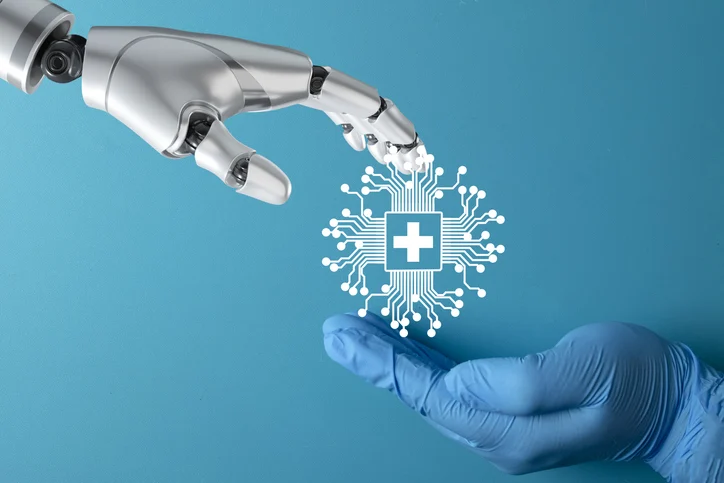
The landscape of healthcare investment is undergoing a seismic shift as artificial intelligence (AI) transitions from a supportive administrative tool to a core clinical necessity. According to the 17th Healthcare Investments and Exits report released by Silicon Valley Bank, AI-driven initiatives accounted for nearly half of all healthcare investment activity entering 2025. This surge in capital reflects a growing consensus among founders and institutional investors that the next frontier of medical innovation lies not in the "plumbing" of the healthcare system—such as scheduling and revenue cycle management—but in the biological signals that define human health and longevity. As the industry moves past the initial wave of operational AI, a new model of "signal catching" is emerging, promising to bridge the widening gap between human lifespan and healthspan.
The Current State of AI Integration in Clinical Workflows
For the past decade, the integration of AI into the healthcare sector has been characterized by an emphasis on productivity and efficiency. These applications, while vital for the sustainability of a strained medical infrastructure, have largely focused on the periphery of patient care. Ambient notetaking, automated billing, and optimized scheduling have become the hallmarks of the first generation of healthcare AI. These tools address the "broken" elements of the system—reducing burnout for providers and streamlining the patient experience—but they do little to fundamentally alter clinical outcomes or the progression of chronic diseases.
The Silicon Valley Bank data suggests that while these administrative tools provided the proof of concept for AI’s reliability, the investment community is now pivoting toward "anticipatory medicine." This shift is driven by the realization that the most significant costs in healthcare—both financial and human—stem from the failure to recognize disease signals until they have reached advanced, often irreversible, stages. The transition from operational AI to clinical AI represents an evolution from managing the delivery of care to transforming the nature of care itself.
The Longevity Paradox: Potential vs. Reality
A central theme in the current healthcare discourse is the discrepancy between biological potential and observed life expectancy. In a recent fireside chat, former U.S. Surgeon General Dr. Rich Carmona noted that a healthy infant born in the United States today possesses the biological potential to live to 120 years. However, current actuarial data places the life expectancy of that same infant closer to 80 years. This "longevity gap" means that, on average, individuals are forfeiting approximately one-third of their potential lifespan.
The historical context of life expectancy provides a sobering view of current progress. Over the last twenty years, global life expectancy has increased by approximately five years. While this appears to be a positive trend, a deeper analysis reveals that much of this gain is attributed to the decline in infant mortality. When infant mortality is removed from the equation, the improvement in adult longevity drops to roughly 1.5 years per decade—a slower rate of progress than that seen throughout much of the 20th century.
Furthermore, the ratio of healthspan—the period of life spent in good health—to total lifespan has remained stagnant or, in some regions, declined. The World Health Organization’s Health Adjusted Life Expectancy (HALE) metrics indicate that the average person spends their final dozen years in a state of diminished health. The objective of the next wave of AI innovation is to not only extend the years of life but to "square the curve," ensuring that the period of morbidity is compressed and that healthspan more closely mirrors lifespan.
The Crisis in Maternal Health and the Failure of Traditional Models
The urgency for AI-driven clinical intervention is perhaps most visible in the field of maternal health. Despite the United States spending more on healthcare per capita than any other nation, maternal mortality rates are higher today than they were two decades ago. Data published in the journal JAMA highlights a distressing trend: severe complications during childbirth are rising, and the rate of C-sections continues to climb without a corresponding improvement in neonatal outcomes.
This stagnation suggests that traditional medical models and existing technologies have reached a point of diminishing returns. The "signal catching" model of AI aims to address this by identifying fetal hypoxia and other neonatal complications in real-time, allowing for interventions that prevent permanent brain injuries and reduce the necessity for emergency surgical procedures. By interpreting subtle physiological patterns that escape human observation, AI acts as a safeguard against the "twin cliffs" of preventable disease and early death.
Emerging Breakthroughs in Signal Detection
The transition toward clinical AI is being led by academic medical centers and early-stage ventures that are developing "signal catchers"—technologies designed to intercept and interpret biological data at its earliest stages. Several key areas of innovation are currently attracting significant investment and research focus:
1. Early Detection of Pancreatic Cancer
One of the most significant recent breakthroughs came from the Mayo Clinic, which published a landmark validation study in the journal Gut. Researchers developed an AI model capable of detecting pancreatic cancer on routine abdominal CT scans up to three years before a clinical diagnosis would typically occur. Because pancreatic cancer is often asymptomatic in its early stages, it is usually diagnosed at Stage 3 or 4, when treatment options are limited. By "catching the signal" years earlier, AI provides a window for surgical intervention that could drastically improve survival rates.
2. The Ocular Window to Systemic Health
The eye is increasingly viewed by AI developers as a non-invasive window into the body’s internal state. AI algorithms are now being trained to analyze retinal images to identify biomarkers for cardiovascular disease, kidney disease, and even neurodegenerative conditions like Alzheimer’s. These signals, often too subtle for a human ophthalmologist to correlate with systemic health, allow for a "check-up" that requires nothing more than a high-resolution photograph of the eye.
3. Voice as a Digital Biomarker
Voice analysis is emerging as a powerful tool for monitoring mental health and neurological status. Changes in vocal cadence, tone, and syntax can serve as early indicators of depression, PTSD, or the onset of Parkinson’s disease. By treating the voice as a biomarker, AI platforms can provide ongoing, passive monitoring of patients, alerting providers to shifts in a patient’s condition before a crisis occurs.
4. Advanced Fetal Monitoring
In labor and delivery wards, AI is being applied to interpret complex heart rate patterns in fetuses. Traditional monitoring often leads to "false positives," resulting in unnecessary C-sections, or "false negatives," where fetal distress is missed. AI models trained on millions of birth outcomes can distinguish between normal stress and genuine danger, providing clinicians with actionable intelligence to improve birth safety.
A Chronology of Diagnostic Innovation
To understand the magnitude of the AI revolution, it is helpful to view it within the broader chronology of medical history. Each major leap in medicine has been defined by the development of a new "sensory apparatus" that allowed humans to detect previously invisible signals:
- The 19th Century (The Stethoscope): Allowed physicians to hear the internal sounds of the heart and lungs, moving diagnosis beyond external observation.
- The Early 20th Century (X-Rays): Provided the first non-invasive look at the internal structure of the body, specifically bone and dense tissue.
- The Mid-20th Century (Ultrasound): Utilized high-frequency sound waves to capture real-time signals from soft tissues and developing fetuses.
- The Late 20th Century (MRI and CT): Offered multi-dimensional, high-resolution views of internal anatomy.
- The 21st Century (Artificial Intelligence): AI does not just see or hear; it interprets. It identifies patterns across multidimensional data sets—genomic, proteomic, and physiological—that are too complex for the human brain to process.
Market Implications and the Shift in Venture Capital
The pivot toward clinical AI is fundamentally changing the venture capital landscape. Investors are moving away from "SaaS-lite" healthcare companies—those that offer minor workflow improvements—in favor of "deep-tech" companies that possess proprietary datasets and validated clinical endpoints.
This shift has significant implications for the valuation of healthcare startups. Companies that can demonstrate a "signal catching" capability are being valued at a premium because they offer a solution to the most expensive problem in healthcare: late-stage disease management. For insurance providers and self-insured employers, the ability to prevent a Stage 4 cancer diagnosis or a premature birth represents a massive reduction in long-term liability. Consequently, the collaboration between venture studios, such as Aegis Ventures, and leading health systems is accelerating the commercialization of these technologies.
Conclusion: Toward an Age of Anticipatory Medicine
The integration of AI into healthcare is moving from an evolution in delivery to a revolution in health. By shifting the focus from administrative "plumbing" to biological "signals," the industry is entering an age of anticipatory medicine. This era will be defined by the ability to read the body’s messages in real-time, catching the precursors of disease before they manifest as catastrophic events.
The ultimate goal of this technological surge is to reconcile the 40-year gap between our current life expectancy and our biological potential. As AI continues to refine its ability to detect, improve, and interpret the signals that have always been present but remained hidden, the shape of human health will fundamentally change. The "catcher in the rye" model of AI offers a future where healthcare is no longer a reactive response to failure, but a proactive preservation of life and vitality. This transformation is not merely a matter of convenience or cost-savings; it is the essential next step in the pursuit of a longer, healthier human experience.

