
The landscape of User Experience (UX) design has undergone a profound transformation over the last decade, transitioning from a narrow focus on usability and friction reduction to a complex, psychology-driven discipline known as behavioral design. Ten years after the initial surge of interest in "persuasive design," industry experts, led by practitioner Anders Toxboe, are redefining how product teams approach user motivation, activation, and long-term retention. This evolution marks a shift away from isolated "growth hacks" toward a systematic, ethical framework that aligns business objectives with genuine user value.
The Decade-Long Transition: From Persuasion to Behavioral Strategy
In 2015, the conversation around persuasive design centered on leveraging psychological patterns to guide users toward specific outcomes, such as signing up for a service or completing a profile. At the time, the methodology was seen as a frontier for moving "beyond usability." However, the intervening decade has revealed the limitations of this approach. Many product teams found that while usability improvements could remove barriers, they often failed to address the underlying behavioral gaps that lead to high bounce rates and low feature adoption.
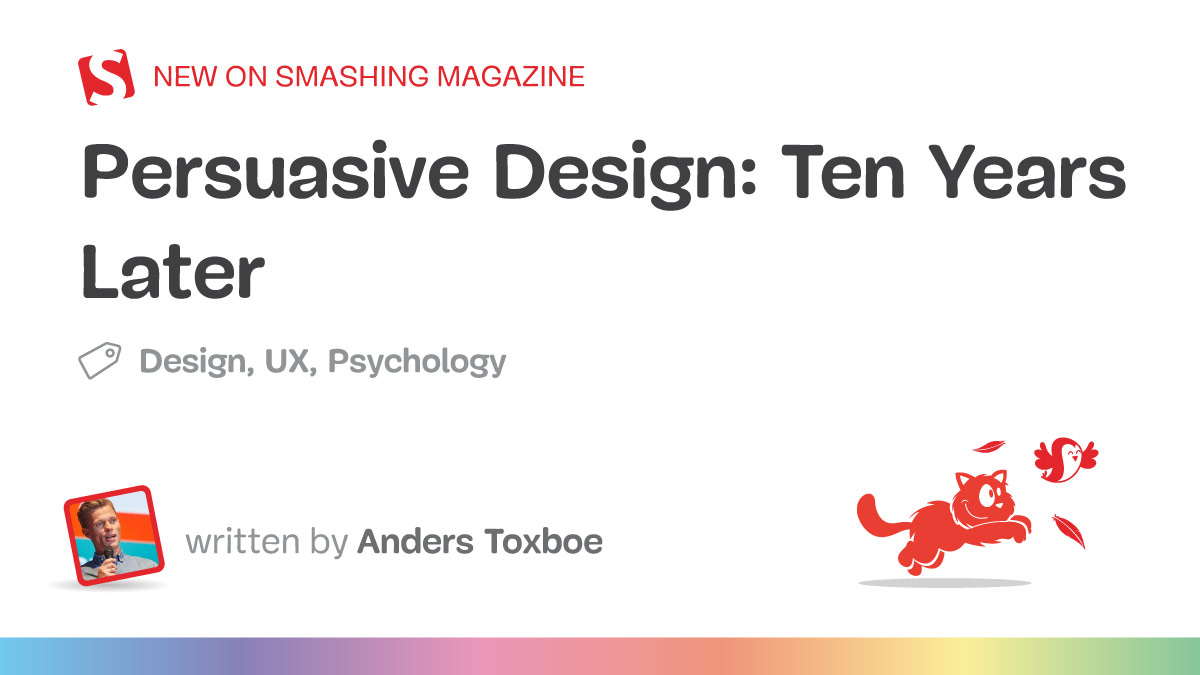
The early 2010s were characterized by an obsession with gamification—the application of game-design elements like points, badges, and leaderboards to non-game contexts. While these tactics often produced short-term spikes in engagement, they frequently resulted in "shallow gamification." As the novelty wore off, users began to ignore arbitrary streaks and rewards that lacked intrinsic value. This realization has led to the maturation of the field, moving from "persuasive design" to the more robust "behavioral design," which focuses on the real drivers of human behavior rather than superficial mechanics.
Theoretical Foundations: Moving Beyond the Fogg Model
For years, the Fogg Behavior Model (FBM) served as the primary blueprint for digital persuasion. Developed by Dr. BJ Fogg, the model posits that behavior (B) occurs when motivation (M), ability (A), and a prompt (P) converge at the same moment. While the FBM remains a foundational tool, modern behavioral designers are increasingly turning to the COM-B model for a more comprehensive understanding of user action.
The COM-B model, frequently utilized in public health and policy making, breaks behavior down into three essential components:

- Capability: Does the user have the physical and psychological skills to perform the action?
- Opportunity: Does the environment (social and physical) allow the behavior to happen?
- Motivation: Does the user have the conscious or unconscious desire to perform the action?
Industry analysis suggests that the shift toward COM-B allows for a more holistic view of the user journey. Unlike simple "triggers" or "prompts," which can often feel like "random nags," the COM-B framework encourages teams to diagnose whether a failure in the user journey is a lack of skill (Capability), a lack of access (Opportunity), or a lack of alignment with the user’s goals (Motivation).
The Strategic Shift: Intrinsic vs. Extrinsic Drivers
A critical component of modern behavioral design is the application of Self-Determination Theory (SDT). This psychological framework distinguishes between extrinsic motivators—such as rewards, prizes, or status—and intrinsic drivers, which include autonomy, competence, and relatedness.
Data from a decade of product development shows that interventions supporting intrinsic needs have significantly higher survival rates. For instance, a language-learning app that uses a "streak" to help a user feel more competent in their progress is leveraging an intrinsic driver. Conversely, a badge that exists solely to inflate a company’s engagement metrics is often perceived as "noise" and eventually leads to user fatigue. Toxboe and other experts argue that behavioral design is at its most effective when it moves beyond quick fixes to become a deliberate strategy for helping users succeed in their own goals.

The Ethical Mandate: Persuasion vs. Deception
As behavioral design tools have become more powerful, the industry has faced a reckoning regarding "deceptive patterns" (formerly known as dark patterns). The distinction between ethical persuasion and manipulation lies in the intention of the designer and the transparency of the outcome.
Behavioral design aims to bridge the gap between what users want (achieving a goal) and what businesses need (retention and revenue). When these two align, it creates a "win-win" scenario. However, designers are increasingly warned that failing to understand the psychological tools they use can lead to the mindless promotion of unethical practices. The industry consensus is shifting toward a model of accountability, where designers must be "enlightened" enough to spot their own biases and understand the systemic impact of their choices.
Implementation: A Structured Methodology for Product Teams
To move behavioral design from theory into practice, a series of structured workshop exercises have emerged as the industry standard. These exercises are designed to help cross-functional teams—comprising product managers, designers, and engineers—align on behavioral diagnoses.

Phase 1: Behavioral Empathy and Journey Mapping
Teams begin by creating Behavioral Empathy Maps, which go beyond traditional empathy mapping by focusing on what users avoid, postpone, or feel uncertain about. This is followed by Behavioral Journey Mapping, which identifies specific moments where capability breaks down or motivation fades. Unlike traditional maps, this version highlights where the product environment actively works against the user.
Phase 2: Behavior Scoring and Prioritization
Not all behaviors are worth influencing. Teams utilize a scoring system to evaluate potential target behaviors based on three criteria:
- Impact: How much will this change affect the bottom line or user success?
- Ease of Change: How difficult is it to influence this behavior through design?
- Ease of Measurement: Can the team reliably track the change?
This data-driven approach ensures that resources are allocated to high-leverage interventions, such as completing an onboarding checklist, rather than low-impact actions like watching a non-essential product tour.

Phase 3: Context-First Ideation and Ethical Stress-Testing
The final stage of the methodology involves generating solutions grounded in user context before applying psychological patterns. This prevents "pattern-first design," where teams try to force-fit a psychological trick into a situation where it doesn’t belong. Finally, every proposed solution undergoes a "Dark Reality" exercise—a pre-mortem designed to surface potential ethical risks or unintended consequences before a feature is shipped.
Chronology of the Behavioral Design Movement
- 2008: Publication of Nudge by Richard Thaler and Cass Sunstein, popularizing the concept of choice architecture.
- 2009: Introduction of the Fogg Behavior Model, providing a simplified framework for digital triggers.
- 2011: The COM-B model is formalized by Susan Michie and colleagues, offering a more robust alternative for behavior change.
- 2015: Early frameworks for "Persuasive Design" in UX are published, focusing on friction removal and psychological patterns.
- 2018-2020: Growing backlash against "Dark Patterns" leads to increased scrutiny of growth-hacking tactics.
- 2024: Behavioral design matures into a strategic, cross-functional discipline focused on ethical alignment and intrinsic motivation.
Broader Impact and Industry Implications
The transition to a mature behavioral design practice has significant implications for the tech industry. First, it necessitates a shift from linear "funnel" thinking to "systems thinking." Designers are beginning to recognize that a "conversion win" in one part of the product may lead to increased churn or support tickets elsewhere—a phenomenon known as a negative feedback loop.
Second, behavioral design is becoming a shared language for cross-functional teams. When product, marketing, and data teams share a common vocabulary around Capability, Opportunity, and Motivation, they can collaborate more effectively. Designers shape perceived capability through the interface, while marketing shapes motivational framing, and operations address structural opportunities.

Finally, the shift toward behavioral design reflects a broader trend in the digital economy: the move from the "attention economy" to the "value economy." As users become more savvy and sensitive to manipulative tactics, products that prioritize long-term user success over short-term clicks are likely to see more sustainable growth. The next decade of UX will not be defined by who can shout the loudest with prompts, but by who can most effectively shape the conditions where meaningful action feels natural and rewarding.

