
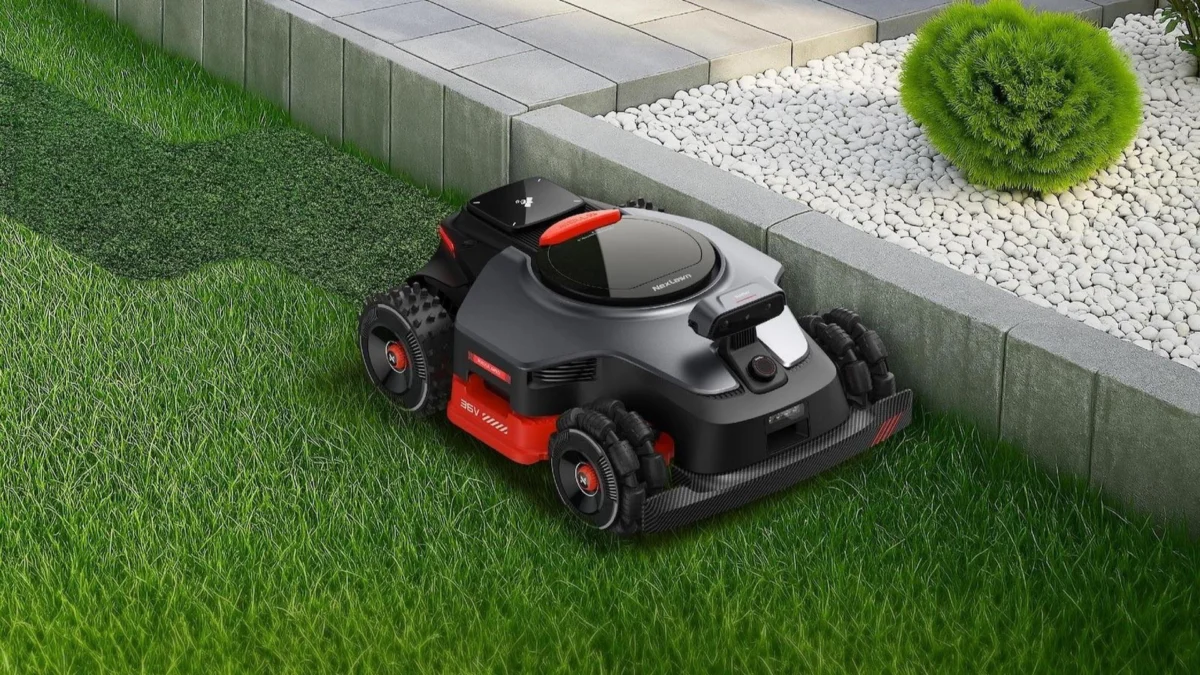
Robot lawn mowers represent a significant leap forward in domestic automation, transforming the age-old chore of lawn maintenance into a hands-off, technologically driven experience. These autonomous, battery-powered machines are designed to meticulously cut grass without human intervention, following pre-set schedules and intelligently navigating garden spaces. Unlike their traditional counterparts, robot mowers operate on a "little and often" principle, making frequent, small cuts. This method encourages a healthier lawn by allowing fine clippings to decompose and act as natural fertilizer, a process known as mulching, thereby eliminating the need for grass bag collection. The sophistication of these devices lies in their diverse navigation technologies, each offering unique advantages and addressing different garden complexities.
The Pillars of Robotic Navigation: From Wires to Lasers
The core challenge for any autonomous robot mower is accurately delineating its operational area and avoiding unintended excursions or collisions. Over time, several primary navigation methodologies have emerged, often used in combination to enhance precision and adaptability.

Boundary Wires: The Traditional Perimeter
The earliest and still widely used method involves a physical boundary wire. This low-voltage wire is installed around the perimeter of the lawn and can also be strategically routed to exclude specific garden features like flowerbeds, vegetable patches, or ponds. The robot mower detects the electromagnetic field generated by the wire, treating it as an invisible fence.
- Installation and Drawbacks: The primary hurdle with boundary wire systems is the installation process, which can be labor-intensive, requiring digging trenches or securing the wire to the surface. Furthermore, the wire’s integrity is vulnerable. Accidental damage from gardening tools, burrowing animals, or harsh weather can disrupt the mower’s operation, necessitating repairs. Any significant redesign of the garden layout will likely require reinstallation or modification of the boundary wire, adding an element of inflexibility. Despite these challenges, many entry-level and established models, such as the Husqvarna Automower Aspire A4, continue to rely on this robust and reliable, albeit less adaptable, system.
GPS/RTK Positioning: The Wireless Frontier
A significant advancement in wire-free navigation is the integration of GPS with Real-Time Kinematic (RTK) positioning. RTK technology enhances standard GPS accuracy by using a fixed base station to correct satellite positioning data. This allows compatible mowers to determine their location with centimeter-level precision under optimal conditions.
- Virtual Boundaries and Flexibility: With RTK, users can establish virtual boundaries and define mowing zones through a smartphone app, eliminating the need for physical wiring. This offers unparalleled flexibility, allowing for quick adjustments to mowing areas as garden designs evolve. The reference station can be a physical unit installed in the garden or an internet-based cloud service. Cloud RTK systems, which require a constant internet connection for the mower via Wi-Fi or cellular data, are gaining traction due to their reduced hardware requirements and increased convenience. The Mammotion Luba 3 AWD exemplifies this approach, offering substantial freedom in managing mowing areas.
- Limitations: While offering significant advantages, satellite-based navigation can be susceptible to environmental interference. Tall buildings, dense tree canopies, and other substantial obstacles can degrade the GPS signal, potentially impacting the mower’s positional accuracy and operational efficiency.
Camera-Based Vision AI: The Intelligent Observer
Emerging as a powerful navigational tool, camera-based vision AI systems allow robot mowers to "see" and interpret their surroundings. These advanced mowers utilize cameras to understand their environment, identify objects, and navigate autonomously, often reducing reliance on physical boundaries or solely on satellite positioning.

- Perception and Object Recognition: While simpler camera-based systems may suffice for basic gardens, they are less suited for complex terrains. More sophisticated AI-powered cameras are crucial for obstacle detection and avoidance. They can distinguish between different types of objects – such as a garden gnome versus a fallen branch – and adapt their behavior accordingly. This technology is increasingly being integrated to assist navigation when RTK signals are weak or lost, providing a crucial layer of redundancy.
LiDAR: Precision Through Light Detection and Ranging
LiDAR (Light Detection and Ranging) represents another cutting-edge navigation technology. Similar to sensors found in advanced robot vacuum cleaners and autonomous vehicles, LiDAR uses laser pulses to create highly detailed 3D maps of the surrounding environment.
- Mapping and Precision: LiDAR enables precise navigation and obstacle mapping. Mowers like the Ecovacs GOAT O1200 can operate using LiDAR alone, building a comprehensive understanding of the lawn’s topography and any obstructions. For even greater accuracy, some models, including the Mammotion Luba 3 AWD, combine LiDAR with RTK, leveraging the strengths of both technologies for superior navigation and mapping capabilities. This fusion of sensor data offers a robust solution for complex garden layouts and dynamic environments.
Navigating Obstacles: A Multi-Sensory Approach
Beyond defining the mowing area, robot mowers must adeptly handle unexpected obstructions. The sophistication of their obstacle avoidance systems directly impacts their safety and efficiency.
- Sensor Fusion: Advanced models employ a combination of sensors, including ultrasonic sensors, bump sensors, cameras, and LiDAR. These sensors work in concert to detect objects in the mower’s path. Upon detection, the mower can be programmed to slow down, come to a complete stop, or alter its course to navigate around the obstacle.
- Intelligent Response: LiDAR’s ability to create detailed 3D maps allows for precise identification and avoidance of objects. Similarly, computer vision employed by cameras can help distinguish between static and dynamic obstacles, enabling more nuanced responses. However, even with advanced technology, maintaining a reasonably clear lawn by removing loose items like toys or garden furniture before operation is still recommended to ensure optimal performance and prevent potential damage.
The Art of Robotic Grass Cutting: Mulching for a Healthier Lawn
The fundamental difference in how robot mowers cut grass is key to their effectiveness and the ecological benefits they offer.

- Continuous Maintenance: Instead of waiting for grass to grow long and then cutting a significant portion, robot mowers operate on a schedule of frequent, short mowing cycles. They remove only a tiny fraction of the grass blade with each pass.
- The Mulching Advantage: These fine clippings are immediately mulched and left on the lawn. This process not only eliminates the need to empty a grass bag but also enriches the soil. The mulched grass decomposes, releasing nutrients that feed the lawn, promoting denser growth and a healthier ecosystem. This continuous maintenance approach results in a consistently manicured appearance, akin to a professional lawn service.
- Complementary Tools: While highly effective for routine maintenance, robot mowers may not entirely replace all traditional lawn equipment. Areas along walls, fences, or intricate garden edges might still require a string trimmer or edger. For severely overgrown lawns, an initial cut with a conventional mower may be necessary before the robot can take over regular upkeep.
Self-Sufficiency: The Automated Charging Cycle
A hallmark of robotic lawn care is the mower’s ability to manage its own power needs.
- Automatic Docking and Recharging: When the battery level drops below a predetermined threshold, the robot mower automatically navigates back to its charging station. It precisely docks itself, initiates the recharging process, and, once fully charged, can resume its mowing schedule from where it left off.
- Unattended Operation: This autonomous charging capability means users are typically freed from monitoring battery levels or manually returning the mower to its charger. This feature is integral to the "set it and forget it" promise of robotic lawn maintenance. The specific behaviors surrounding charging and mowing can vary between models, but the core principle of self-sufficiency remains consistent.
Adapting to Terrain and Weather: Capabilities and Considerations
The operational capabilities of robot mowers extend to various environmental conditions, though certain limitations exist.
- Slope Performance: Robot mowers are designed to handle varying degrees of inclines. However, their suitability for slopes is highly model-dependent. While standard models are designed for relatively gentle slopes, premium machines often feature enhanced traction and motor power to manage steeper terrain. For gardens with significant inclines or uneven ground, models equipped with All-Wheel Drive (AWD) are generally the most effective.
- Rain and Wet Conditions: The ability of robot mowers to operate in rain varies. Some advanced models are equipped with rain sensors that detect wet conditions and prompt the mower to return to its charging station. Whether a specific mower is designed for use in wet grass depends on its waterproofing, the type of cutting blades, and the manufacturer’s recommendations. Operating a mower not designed for wet conditions can potentially lead to performance issues or damage.
The Investment in Autonomy: Value and Considerations
The decision to invest in a robot lawn mower involves weighing its benefits against practical and financial considerations.
- Time Savings and Convenience: The primary appeal of robot mowers is the liberation from routine mowing. For homeowners with suitable lawns, the ability to delegate this task to an autonomous machine can significantly free up weekends and leisure time. The robot can maintain the lawn consistently while the owner attends to other garden tasks or enjoys personal pursuits.
- Garden Suitability: The "hands-off" experience is heavily contingent on the garden’s characteristics. Open, relatively flat, and unobstructed lawns are ideal for autonomous operation. Gardens with intricate pathways, narrow passages, numerous obstacles, or complex elevation changes may present challenges that require more advanced navigation systems or even supplementary manual maintenance.
- Security and Longevity: Robot mowers represent a significant financial investment. As they often operate outdoors, security is a crucial consideration. While GPS tracking is a feature on many models, it’s important to note that stolen mowers may lose power or their signal, potentially rendering tracking ineffective. Furthermore, like any outdoor equipment, durability and resistance to the elements are important factors in long-term value.
- The Future of Lawn Care: The evolution of robot lawn mower technology, particularly in navigation and sensing, continues to push the boundaries of what is possible in home automation. As these systems become more sophisticated, they are poised to become an increasingly integral part of smart home ecosystems, offering a glimpse into a future where domestic chores are managed with unprecedented levels of autonomy. The key to realizing the full potential of these devices lies in selecting a model whose navigation system is best suited to the unique demands of an individual garden.

