
The smart speaker market, long dominated by established players like Amazon and Apple, has seen a new contender emerge with the launch of the Google Home Speaker. This device marks Google’s first significant foray into dedicated smart speakers in nearly six years, aiming to re-establish its presence with an updated design and the integration of its nascent AI assistant, Gemini for Home. While the hardware boasts impressive audio capabilities and a future-proofed smart home hub design, the accompanying software, Gemini for Home, significantly hinders its overall appeal, failing to match the sophistication and responsiveness of its competitors.
Google’s strategic shift away from the "Nest" branding signifies a renewed focus on its core identity, presenting the Google Home Speaker as a standalone product designed to showcase the potential of its next-generation artificial intelligence. Priced at $99.99 (£99.99), it positions itself directly against formidable rivals such as the Amazon Echo Dot Max and the Apple HomePod mini, entering a competitive landscape where user experience and AI performance are paramount. The device’s introduction comes at a time when the smart home ecosystem is rapidly evolving, with an increasing demand for seamless integration and intelligent automation.
Design and Build: Understated Elegance Meets Practicality
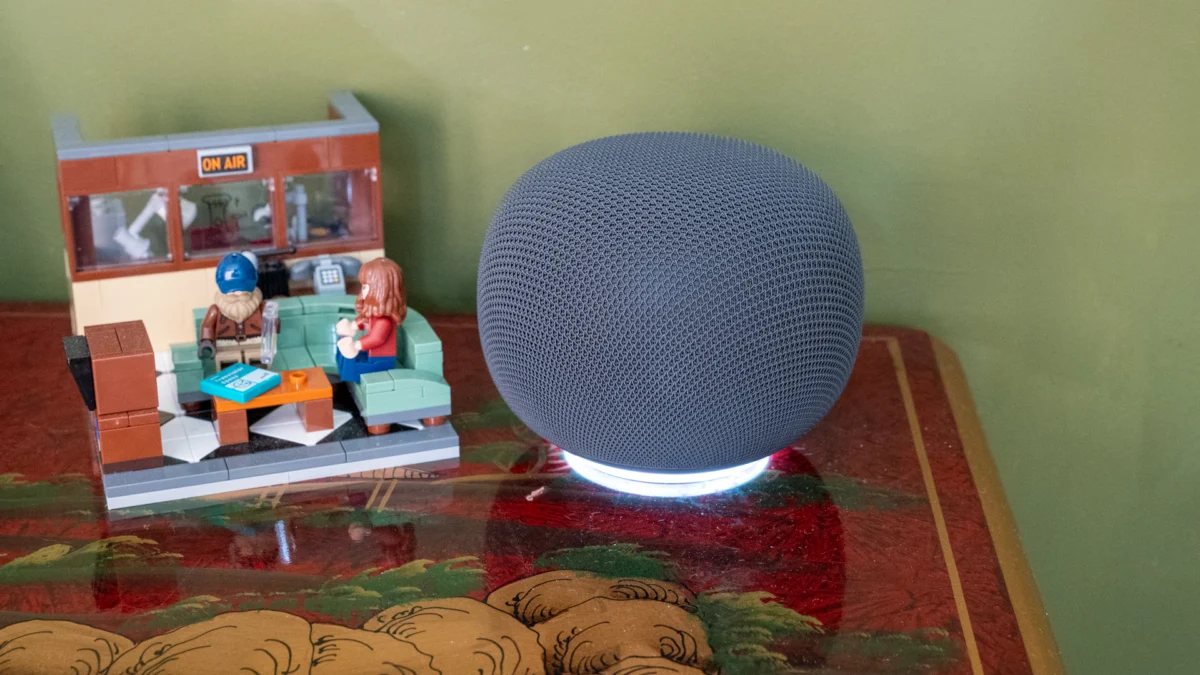
The Google Home Speaker adopts a familiar, understated aesthetic, characterized by a soft mesh fabric finish that envelops a mushroom-shaped chassis. This design language closely aligns with current market trends, evoking a sense of refined simplicity that allows it to blend unobtrusively into various home decors. Measuring 107 x 107 x 86mm and weighing 408g, the speaker offers a compact footprint, making it suitable for placement on shelves, countertops, or bedside tables.

Available in a palette of four colors in the US – red, green, white, and grey – the speaker offers a degree of personalization. However, the UK market sees a more limited selection, with only white and grey options provided, a choice that may prove less appealing to consumers seeking more vibrant aesthetics. This difference in regional color availability could be perceived as a minor oversight by Google, particularly for a product aiming for broad international appeal.
Functionality is integrated through a combination of touch controls and a subtle light ring. The top surface allows for tap gestures to control playback, silence alarms, and pause responses. Volume adjustments are managed via touch-sensitive areas on either side, indicated by small LED lights. The main light bar, located around the base, provides visual cues for the speaker’s status: glowing white when listening, blue when responding, and yellow when the microphone is muted. This intuitive visual feedback system enhances user interaction, offering clear confirmation of the speaker’s operational state.
A point of contention in the design is the captive power cable, which terminates in a USB-C connector. While USB-C is a modern standard, the integrated nature of the cable limits user flexibility for replacement or extension. In contrast, the microphone mute switch, while functional, is positioned somewhat awkwardly, requiring a more deliberate reach compared to the more accessible privacy controls found on competing devices. This minor ergonomic detail, while not a dealbreaker, detracts slightly from the overall polished user experience.
Features and Performance: The Gemini Conundrum
The core of the Google Home Speaker’s functionality lies in its integration with Gemini for Home, Google’s advanced AI assistant. The device comes bundled with six months of Google Home Standard, a subscription service that unlocks features such as 30 days of Nest camera history, intelligent alerts, and in-app routine creation assistance. Higher tiers, like Google Home Advanced, offer extended camera history, 24/7 recording, and AI-powered video search capabilities, underscoring Google’s strategy of integrating AI services with hardware offerings.

However, the practical implementation of Gemini for Home presents significant challenges. Despite its advanced architecture, the AI assistant demonstrably lags behind established competitors like Amazon Alexa+. A crucial feature for any voice assistant, Continued Conversation, is available and recommended, as Gemini often requires follow-up prompts to complete tasks or provide comprehensive answers. This lack of inherent conversational depth necessitates more user intervention, diminishing the perceived intelligence of the assistant.
A notable deficiency is Gemini’s lack of localized tuning. When prompted with general queries, such as "Hey Google, what can you do?", the assistant has been observed to provide contextually inappropriate suggestions, such as setting thermostats to Fahrenheit when the user operates in a Celsius environment. This suggests a need for more granular adaptation to regional settings and user preferences.
Furthermore, Gemini’s memory and contextual recall have proven inconsistent. While initial tests showed an ability to remember personal details, such as dietary preferences, subsequent interactions have revealed a sporadic tendency to "forget" this information. This unreliability in maintaining personal context undermines the trust and seamlessness expected from a smart home assistant.
The assistant’s capabilities in handling more complex data formats, such as documents, also fall short. Unlike Alexa+, which can process PDFs and other document types, Gemini’s response has been to suggest uploading files into chat or reading them aloud – a cumbersome and impractical workaround. This limitation restricts its utility for users who rely on smart assistants for information retrieval from various sources.
The user experience is further hampered by instances of the AI misinterpreting commands or providing nonsensical responses. A particularly illustrative example involved a query about the number of letters in a word, which resulted in a bizarre and irrelevant answer about "megaseconds." This highlights a fundamental issue with Gemini’s current understanding and processing of language, especially when dealing with abstract or playful queries.

Despite these shortcomings, Gemini for Home is not entirely devoid of utility. It can effectively retrieve information from the web, a task at which Google traditionally excels. For instance, it accurately provided information on upcoming sporting events and could initiate calendar entries, albeit with a potentially inaccurate duration for events like football matches. However, the restriction to only Google Calendars and the exclusion of Workspace accounts present further integration hurdles for many professional users.
Smart home control, while functional for basic commands, also suffers from inconsistency. Complex instructions, such as activating a device and then setting a timer, can lead to misinterpretations, with the assistant executing only one part of the command or performing an unintended action. While breaking down commands into simpler steps yields better results, this adds to the overall friction of using the device. The ability to string together multiple actions, such as turning on a light and a fan simultaneously, is a positive, but the unreliability of contextual triggers, like responding to "It’s hot in here," diminishes its practicality.
The absence of voice-based routine creation, a feature readily available on Alexa+, is a significant oversight. This feature allows users to automate sequences of actions with a single voice command, a core benefit of smart assistant technology. Moreover, the speed of Gemini’s responses can be frustratingly slow, particularly when cloud processing is required, leading to noticeable delays that disrupt the natural flow of interaction.
The speaker’s ability to search video history from compatible cameras is contingent on specific subscription tiers and remains less integrated than smart display solutions. While Thread support is a welcome addition, enabling the speaker to function as a Thread Border Router for Matter devices, this hardware advantage is significantly overshadowed by the software limitations.
In comparison, Amazon’s Alexa+ offers a more mature and responsive voice assistant, coupled with a wider array of hardware options, including smart displays. Apple’s Siri, while not without its own limitations for complex queries, powers the HomePod mini, which offers superior audio quality and seamless integration with the Apple ecosystem, including unique handoff features and a robust smart home app.

Sound Quality: A Capable Performer in a Crowded Field
The Google Home Speaker is equipped with a 58mm full-range driver, engineered for omnidirectional sound dispersion. This design aims to fill a room with balanced audio, a characteristic that largely succeeds. When tested with Spotify casting, the audio quality was satisfactory, though it capped at "High" quality, falling short of the "Lossless" audio support offered by competitors like the HomePod mini.
The omnidirectional tuning effectively distributes sound, avoiding the concentrated, directional output often found in smaller speakers. This results in a more natural and immersive listening experience. However, for true stereo separation, pairing two speakers is necessary. In single-speaker use, complex audio passages, like the guitar movements in Foo Fighters’ "Open Space," are not rendered with the left-to-right clarity achieved by some competitors, with the volume appearing to shift rather than distinct channel separation.
Bass performance is commendable, delivering a solid punch with tracks like Rage Against the Machine’s "Bombtrack" and maintaining control without distortion on OK Go’s "This Too Shall Pass." However, the speaker struggles with more delicate audio material. Frank Sinatra’s "That’s Life" exhibits an overly pronounced upper register, and at higher volumes, Hell Is for Heroes’ "You Drove Me To It" can sound harsh.
Notably, the Google Home Speaker does not surpass the audio performance of its predecessor, the Nest Audio, which remains a benchmark for Google’s smart speaker audio quality. This is a missed opportunity, especially considering the absence of a direct successor to the Nest Audio in Google’s current product lineup, while rivals like Apple and Amazon offer multiple tiers of audio hardware.

Conclusion: A Promising Hardware Shell with an Underdeveloped Core
The Google Home Speaker represents a long-awaited return for Google to the dedicated smart speaker market. The hardware itself is well-designed, offering competent audio performance and future-ready smart home capabilities with Thread support. However, the overarching experience is significantly undermined by the underperformance of Gemini for Home. The AI assistant’s slowness, inconsistency, and lack of crucial features found in competing platforms make it a frustrating companion.
As of its release in July 2026, the Google Home Speaker faces stiff competition. Amazon Alexa+ remains the benchmark for smart home AI, offering a more refined and versatile experience. Apple users will likely find the HomePod mini a more cohesive and sonically superior option within their existing ecosystem. Given that Gemini for Home is already accessible on existing Google smart speakers, the marginal gains offered by this dedicated hardware, coupled with its significant AI shortcomings, make the Google Home Speaker a difficult product to recommend for the average consumer seeking a seamless and intelligent smart home experience. The potential is evident in the hardware, but the software foundation requires substantial development before this speaker can truly contend with the market leaders.

