
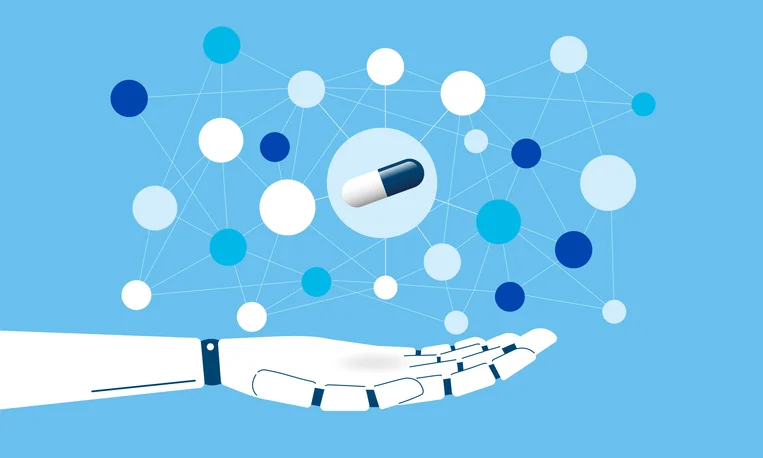
The pharmaceutical and biotechnology sectors are currently undergoing a fundamental transformation driven by the integration of Real-World Evidence (RWE) and Machine Learning (ML). As of late 2024, RWE has transitioned from a supplementary data source to a primary pillar of the drug development lifecycle, appearing in approximately 70 percent of all new drug and biologic regulatory submissions to the U.S. Food and Drug Administration (FDA). This shift represents a departure from the traditional reliance on centralized clinical trials toward a more holistic view of how medical products perform in diverse, everyday patient populations.
As life sciences organizations face an unprecedented influx of Real-World Data (RWD) from electronic health records (EHRs), insurance claims, wearable devices, and pharmacy records, the industry has reached a tipping point. Manual, human-driven analysis—long characterized by labor-intensive SAS scripting and ad-hoc queries—is increasingly viewed as unsustainable. To remain competitive and compliant, the industry is pivoting toward ML models as the essential mechanism for wrangling and interpreting complex datasets at scale.
The Evolution of Real-World Evidence and the Regulatory Timeline
The journey of RWE from a niche research interest to a regulatory requirement has been shaped by over a decade of legislative and technological milestones. Historically, the pharmaceutical industry relied almost exclusively on Randomized Controlled Trials (RCTs). While RCTs remain the gold standard for establishing efficacy, they often fail to capture the complexities of real-world patient behavior, comorbidities, and long-term side effects.
The formalization of RWE began in earnest with the passage of the 21st Century Cures Act in 2016. This landmark legislation mandated that the FDA establish a framework to evaluate the potential use of RWE to support the approval of new indications for previously approved drugs and to satisfy post-approval study requirements. Following this mandate, the FDA released its "Framework for FDA’s Real-World Evidence Program" in December 2018, providing a roadmap for how data from outside the clinical trial setting could be utilized.
By 2021, the agency began issuing specific guidance on the use of EHRs and medical claims data. The most significant recent development occurred in 2024, when the FDA released comprehensive guidance regarding the use of Artificial Intelligence (AI) and Machine Learning in support of regulatory approvals. This was accompanied by an updated discussion paper focusing on AI/ML in the drug development lifecycle, signaling that regulators now view these technologies not as experimental novelties, but as critical infrastructure for the future of medicine.
The Technological Imperative: Why Machine Learning is Essential
The sheer volume of RWD available today is staggering. Estimates suggest that the global healthcare data volume is growing at a compound annual rate of 36 percent. For life sciences organizations, this data represents a "digital gold mine," but only if it can be refined. Machine learning provides the high-performance computing (HPC) and cloud-based scalability necessary to process petabytes of information that would take human researchers decades to analyze.
ML models excel in identifying patterns within heterogeneous data sources. Unlike traditional statistical methods, which often require a pre-defined hypothesis, ML can uncover non-linear relationships between variables that might be invisible to the human eye. This capability is particularly vital for conducting ongoing, longitudinal analyses of patient outcomes across various demographics.
Furthermore, the move toward ML is a response to the "Variety" aspect of big data. RWD is inherently "noisy" and unstructured. Notes from physicians, social media sentiment, and imaging data require Natural Language Processing (NLP) and computer vision—subsets of ML—to be converted into usable evidence. By leveraging these tools, life sciences firms can carry out more complex analyses, such as multi-omic integration, which combines genomic data with clinical outcomes to provide a 360-degree view of patient health.
Quantifiable Benefits: Efficiency, Cost, and Patient Access
The marriage of ML and RWE is delivering tangible economic and clinical results. One of the most impactful applications is the creation of synthetic control arms (SCAs). Traditionally, clinical trials require a control group of patients who receive a placebo or the standard of care. Recruiting these patients is often the most time-consuming and expensive part of a trial.
By using ML to mine historical RWD, researchers can create a "digital twin" or a synthetic control group that mirrors the characteristics of the active treatment group. According to recent industry data, SCAs can reduce patient recruitment demands by 20 to 50 percent. This not only accelerates research timelines by months or years but also addresses ethical concerns in trials for terminal illnesses, where providing a placebo may be problematic.
Beyond recruitment, ML-powered RWE is revolutionizing patient safety and precision medicine:
- Subpopulation Identification: ML models can segment patient populations to identify those most likely to respond to a specific therapy, allowing for more targeted and effective treatments.
- Adverse Event Prediction: By continuously monitoring systems like the FDA’s Sentinel Initiative—a national electronic system for medical product safety surveillance—ML can identify potential safety signals and adverse events exponentially faster than manual queries.
- Risk Stratification: ML can predict which patients are at the highest risk for adverse reactions based on their unique clinical and genomic profiles, enabling proactive intervention.
Framework for Implementation: Making RWE "ML-Ready"
For life sciences organizations to harness these benefits, they must shift their internal culture to treat RWE as a strategic product rather than a one-off report. This requires a three-pillar approach: planning, deployment, and ongoing governance.
1. Strategic Planning and Governance
The foundation of ML-ready RWE is a robust data governance framework. This involves defining clear ownership, access controls, and usage policies to ensure compliance with global privacy regulations such as HIPAA in the United States and GDPR in Europe. Organizations must also adopt standardized data models. Common models like OMOP (Observational Medical Outcomes Partnership), FHIR (Fast Healthcare Interoperability Resources), and SDTM (Study Data Tabulation Model) ensure that data from disparate sources can be integrated seamlessly. Quality frameworks focusing on completeness, conformance, and timeliness are essential to ensure the ML models are trained on reliable information.
2. Standardized Deployment
Deployment must occur in an environment that prioritizes validation and reproducibility. Historically, data science in life sciences was often siloed, with teams working in non-validated environments using uncontrolled codebases. This "shadow IT" approach often fails when subjected to regulatory audits. Modern deployment requires a standardized environment that supports GxP (Good Practice) standards. This environment must allow for the transformation of RWD without compromising data integrity, while facilitating collaboration between quality assurance, data science, and clinical teams.
3. Ensuring Stakeholder Satisfaction and Model Integrity
In this context, "customer satisfaction" refers to the utility of the ML models for the business and clinical teams who make life-altering decisions. These stakeholders need transparent mechanisms to view model outputs and provide feedback. Crucially, as real-world data evolves, models are susceptible to "drift"—a phenomenon where the model’s predictive accuracy degrades over time because the underlying data has changed. Continuous monitoring for drift and bias is mandatory to maintain the clinical validity of the evidence generated.
Operationalizing ML in GxP-Compliant Environments
The most significant hurdle to the widespread adoption of ML in life sciences is the requirement for GxP compliance. GxP refers to the various "good practice" regulations (Good Clinical Practice, Good Manufacturing Practice, etc.) that ensure medical products are safe and effective.
Legacy approaches to data science often attempt to "wrap" validation around a final output after the analysis is complete. Regulators, however, are increasingly demanding that compliance and governance be "baked in" from the start. This has led to the rise of GxP-ready data science platforms. These platforms provide automated audit trails, version control for code, and model management tools that allow every step of the evidence-generation process to be reconstructed during a regulatory inspection.
By using these specialized platforms, life sciences organizations can connect to external data sources via APIs and conduct exploratory analysis within a controlled framework. This reduces the need for extensive pipeline engineering and allows for the rapid creation of visualizations that help non-technical business users understand complex ML insights.
Broader Impact and Future Implications
The integration of ML and RWE is not merely a technical upgrade; it is a fundamental shift in the social contract between the pharmaceutical industry and the public. By moving toward a model of continuous evidence generation, the industry can move closer to the ideal of "learning healthcare systems."
The implications are far-reaching. For patients, this means faster access to breakthrough therapies and a higher likelihood that those therapies will work for their specific biological profile. For payers and healthcare providers, it offers a more accurate way to measure the value of treatments, potentially leading to more sustainable drug pricing models based on real-world outcomes rather than trial data alone.
As the FDA continues to refine its stance on AI and ML, the burden of proof will remain high. Organizations that fail to modernize their data infrastructure risk falling behind as competitors use ML to shave years off the drug development cycle. The transition from "interesting experiment" to "operational necessity" is complete. The future of life sciences innovation now depends on the ability to turn the vast ocean of real-world data into actionable, ML-driven evidence that can withstand the rigors of regulatory scrutiny and improve patient lives globally.

