
The landscape of e-commerce is in a perpetual state of evolution, with technological advancements continually reshaping how businesses connect with consumers and manage operations. This week, a significant surge of new products and services aimed at empowering merchants has been unveiled, underscoring a clear industry pivot towards AI-driven solutions, streamlined digital payment systems, and more sophisticated customer relationship management. From OpenAI’s innovative approach to advertising within ChatGPT to the European Central Bank’s pilot program for a digital euro, the news signals a dynamic period of growth and adaptation for online retailers.
AI Revolutionizes Advertising and Customer Interaction
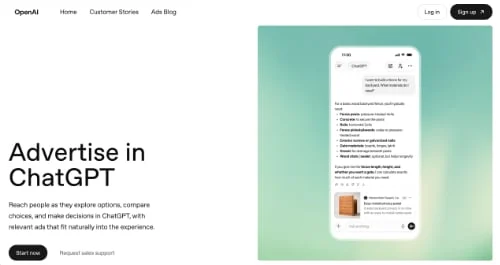
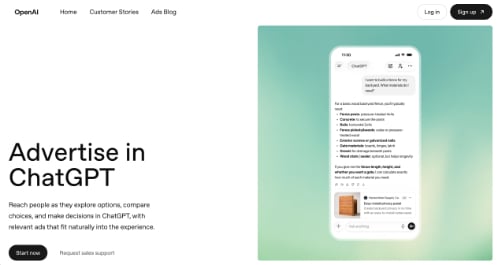
OpenAI has taken a bold step into the advertising realm with the debut of Sponsored Agents within ChatGPT Ads. This groundbreaking feature allows users to initiate conversations with business-sponsored AI agents directly after clicking an ad within the ChatGPT interface. The move signifies a departure from traditional banner ads, offering a more interactive and personalized advertising experience. According to OpenAI, the creation of these ads is being simplified through prompts within ChatGPT Work, with the company also bolstering its Ads Manager with new AI-powered creative tools. Crucially, OpenAI is integrating ChatGPT Ads with existing business tools through partnerships with HubSpot, its first CRM partner, and Shopify, its inaugural e-commerce partner. This integration aims to seamlessly embed advertising capabilities into the workflows that businesses already utilize, potentially increasing ad visibility and engagement. The rationale behind this approach is to leverage the conversational power of AI to provide more relevant and immediate customer support or product information directly within the ad experience. This could translate to higher conversion rates as potential customers receive instant answers and guidance.

In parallel, Pinterest is enhancing its visual discovery platform with the introduction of Visual Search Ads. These new ad units will appear directly within Pinterest’s search results and on pin close-ups, merging keyword relevance with an immersive visual format. As users search for inspiration, compare products, and inch closer to purchasing decisions, these ads are designed to capture their attention. Visual Search Ads are set to be compatible with Performance+, Pinterest’s AI-driven advertising suite, and are expected to enter beta testing soon. This development is particularly significant for visually driven industries like fashion, home decor, and DIY, where product aesthetics play a crucial role in consumer choice. By placing ads within the context of visual searches, Pinterest aims to provide a more intuitive and effective way for brands to reach consumers at the moment of inspiration.
Digital Payments and Logistics Undergo Transformation
The financial sector is also witnessing a significant shift with the European Central Bank launching a pilot program for the digital euro. The Eurosystem, the collective of the European Union’s central banks, has extended an invitation to e-commerce merchants operating within the euro area to participate in this pilot. This initiative, in collaboration with national central banks, is poised to shape the future of digital payments across Europe. The introduction of a digital euro could offer a more efficient, secure, and potentially lower-cost alternative to existing payment methods for both consumers and businesses. For merchants, it could mean faster settlement times and reduced transaction fees, especially for cross-border transactions within the eurozone. The pilot’s success will be closely watched by global financial institutions and technology providers as it sets a precedent for central bank digital currencies (CBDCs) in major economic blocs.
In the realm of logistics and supply chain management, Maersk, a global leader in integrated container logistics, has announced a strategic partnership with Shipstore. This collaboration aims to expand e-commerce delivery access in North America. Shipstore, an automation platform designed for high-volume parcel shippers, will now provide its customers with access to Maersk’s extensive North American delivery network. Shipstore’s platform offers a unified control layer for high-volume shippers, allowing them to apply custom rules to every order, generate labels, and manage documentation and tracking within a single, streamlined workflow. This partnership is expected to benefit e-commerce businesses by offering more robust and efficient fulfillment options, particularly for those managing significant shipping volumes. The integration of Maersk’s global reach with Shipstore’s automation capabilities addresses the growing demand for reliable and scalable last-mile delivery solutions in the competitive North American market.
Enhanced Customer Engagement and Data Integration
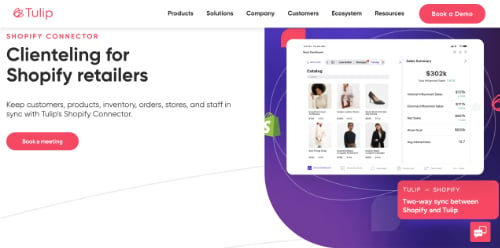
Tulip, a prominent provider of retail customer engagement tools, has launched its AI-assisted Integration Builder and expanded its Shopify connectivity. The Integration Builder is designed to facilitate direct connections between multi-source data environments and various APIs, flat files, and cloud data platforms such as Snowflake, Databricks, and BigQuery. This tool is capable of adapting to the unique taxonomies and schemas of individual retailers, enabling more sophisticated data aggregation and analysis. Complementing this, the expanded Shopify Connector allows brands to consolidate regional storefronts into a single Tulip environment while preserving distinct product catalogs, pricing, and language settings. These advancements are crucial for retailers seeking to create a unified view of their customer interactions and inventory across diverse channels and markets, enhancing both operational efficiency and the customer experience.
Salesforce, a titan in customer relationship management, has introduced Koa, its first CRM reasoning model, developed in collaboration with Nvidia. Koa is engineered for Agentforce, Salesforce’s AI-powered assistant for customer service and sales teams. The model’s training corpus is built upon synthetic scenarios designed to mimic the reasoning, tool usage, and decision-making processes that Agentforce agents undertake across various CRM workflows, including lead generation, opportunity qualification, and service case resolution throughout the customer lifecycle. Salesforce asserts that Koa is grounded in the practical realities of business processes, workflows, and operational policies, suggesting a significant step towards more intelligent and context-aware CRM operations. This development could empower sales and service agents with more accurate insights and proactive assistance, ultimately improving customer satisfaction and driving revenue.
Optimizing Bidding, Payments, and Product Feedback
Google Ads is reportedly beta testing a new feature called Product Value Optimization. This enhancement aims to allow advertisers to adjust the perceived value of specific products, feeding these adjustments directly into automated bidding strategies. Advertisers will gain the ability to create product-level value adjustments, utilize product attributes to prioritize certain items, multiply conversion values for selected products, and apply these adjustments at the campaign level rather than solely at the account level. This granular control over bidding based on product value could lead to more efficient ad spend and a higher return on investment for e-commerce businesses, especially those with diverse product portfolios.
In the burgeoning field of agentic commerce, Alchemy is set to support AI agent purchases via Mastercard. Alchemy, a platform for developing and deploying AI agents, announced that its AgentCard will integrate with Mastercard payment credentials through Mastercard Agent Pay. This integration aims to empower developers to build AI agents capable of completing purchases on behalf of human users. By combining Alchemy’s agent infrastructure with Mastercard’s payment network, the solution promises to enable agents to act with user authorization, issuer controls, payment protections, and verifiable proof of intent. This development signals a significant stride towards realizing the potential of AI agents in facilitating seamless and secure online transactions.
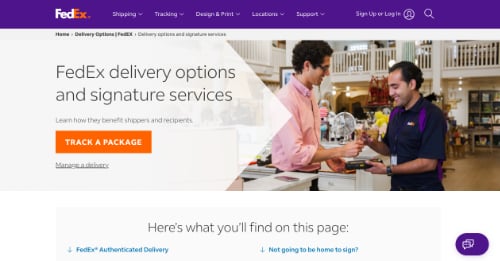
FedEx has launched Authenticated Delivery, a new service designed to enhance security for high-value and sensitive shipments across North America. This service utilizes secure QR code authentication, ensuring that packages are released only to authorized recipients. Upon delivery, the recipient must present a QR code, provided by the sender or recipient, to the FedEx driver for scanning and validation before the package is handed over. This initiative addresses growing concerns about package theft and ensures greater peace of mind for both businesses and consumers shipping or receiving valuable items.
The commerce optimization platform MikMak has rolled out significant enhancements, including new capabilities powered by Spins’ point-of-sale data, designed to boost brand sales across various channels. The platform’s AI commerce features focus on conversion, forecasting, and workflow intelligence. Aura, a new component, provides predictive intelligence by combining point-of-sale data with first-party signals from over 8,000 retailers. Datasembly offers store-level inventory intelligence, while Build with Mak enables conversational AI experiences. Analyze with Mak enhances conversational analytics, and Insights MCP integrates MikMak’s commerce intelligence into AI tools like OpenAI, Claude, and Microsoft Copilot. These comprehensive upgrades aim to equip brands with deeper insights and more effective tools for managing their omnichannel sales strategies.
Worldline, a European payment provider, has integrated the Universal Commerce Protocol (UCP) into its services. UCP, an open standard for agentic commerce co-developed by Google and industry partners, provides a common language that allows AI agents to discover products and execute purchases directly. This new capability enables merchants to configure their payment preferences once and accept a wide range of payment methods, including card payments and mobile wallets, across any UCP-connected platform. This standardization is a critical step in enabling frictionless commerce powered by AI agents.
Customer feedback platform Marvin has launched Live Intercept, a new feature within its research tools suite that conducts AI-moderated interviews to gather in-the-moment feedback. Marvin’s AI Interviewer is programmed to follow custom discussion guides, ask relevant follow-up questions, and adapt to conversations in real time. Teams can control when and where these intercepts appear and customize the questions asked, with support for over 40 languages. This tool offers a dynamic and efficient way for businesses to collect qualitative customer insights directly within their digital customer experience.
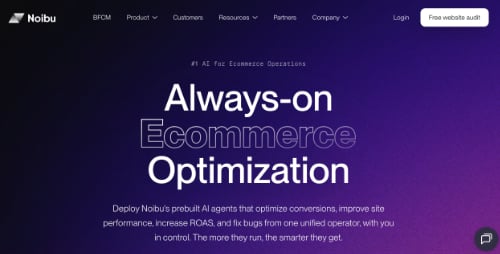
Noibu, a conversion optimization platform, has introduced six AI agents designed to continuously improve e-commerce stores. These agents analyze store data, diagnose glitches, draft fixes, deploy them upon human approval, and measure the results. Each deployment feeds shopper response data back into the system, informing the next iteration of improvements. The agents leverage a range of optimization strategies, including conversion rate optimization, A/B testing, ADA compliance, bug resolution, site speed performance, and return on ad spend. This continuous, data-driven approach promises to systematically enhance online store performance.
Affiliate Marketing and AI-Powered Promotions
Euka AI, an affiliate marketing platform operating on TikTok Shop, has launched an integration with Instagram, further expanding its reach and capabilities. This integration, which includes Shopify-connected fulfillment, allows merchants to discover creators across both TikTok and Instagram based on product, audience, and performance metrics. Furthermore, Euka AI leverages AI to automate invitations, follow-ups, and approvals, consolidating all creator conversations in one centralized location across TikTok Shop, Instagram, and direct messages. This development, following a substantial seed funding round, underscores the growing importance of AI in streamlining affiliate marketing operations and forging stronger brand-creator partnerships.
Snipp Interactive, a specialist in shopper marketing and loyalty technology, has released plugins for both ChatGPT and Claude. The $nipp ChatGPT plugin and $nipp Connector for Claude enable brands to make their promotions, rebates, and loyalty programs discoverable through AI-powered conversational interfaces. These connectors provide a unified link to Snipp’s data intelligence platform, which includes services like receipt optical character recognition, SKU-level validation, fraud risk scoring, offer rule engines, automated reward fulfillment, identity resolution, campaign analytics, and compliance audit logging. This integration allows brands to leverage the power of conversational AI to enhance customer engagement with their marketing and loyalty initiatives.
AIQ has introduced Astro, an AI operating system designed specifically for retailers. Astro aims to consolidate AI-powered campaign creation, analytics, shared business memory, customer conversations, and onboarding into a single intelligence layer. According to AIQ, Astro operates across its ecosystem, utilizing a retailer’s customer, transaction, loyalty, marketing, and operational data to drive actionable insights and automated processes. This unified approach promises to simplify the complex landscape of retail AI, enabling merchants to more effectively leverage their data for strategic decision-making and personalized customer experiences.

