
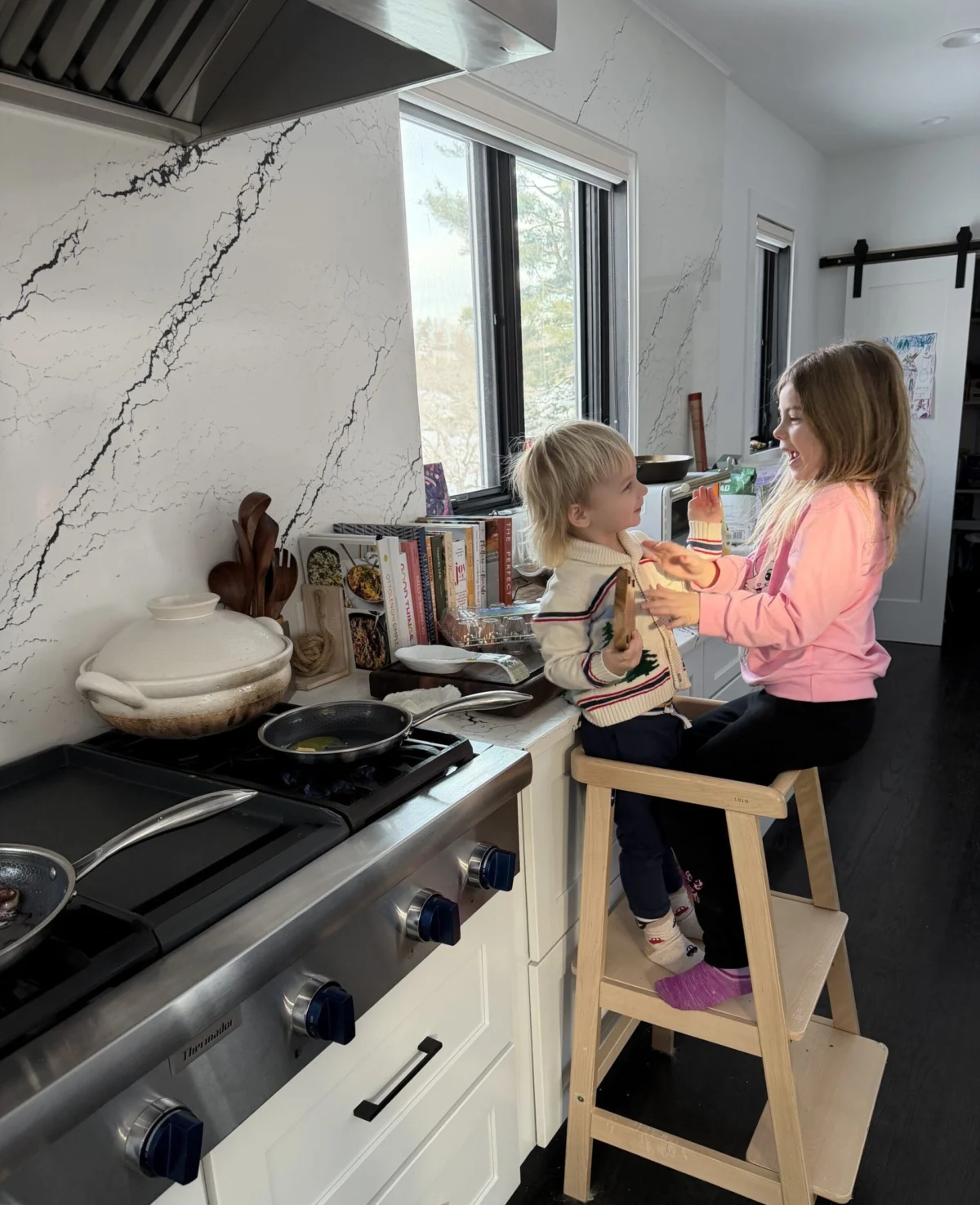
The kitchen, traditionally the heart of the home, is increasingly recognized not just as a place for sustenance but as a vibrant educational laboratory and a nexus for family bonding. In an era dominated by digital distractions and fast-paced lifestyles, the deliberate act of involving children in meal preparation offers a wealth of developmental, nutritional, and emotional advantages. This growing recognition is echoed by various public figures, including ESPN anchor Laura Rutledge, who recently shared her personal experiences highlighting the profound value she finds in cooking alongside her children, Reese and Jack. Her anecdotes resonate with broader expert findings, underscoring that the seemingly mundane act of cooking with children transcends mere meal preparation, transforming into a powerful tool for holistic development and family cohesion.
The Evolution of Family Kitchen Dynamics and the Rise of Intentional Engagement
Historically, children’s roles in the kitchen were often an unspoken part of daily life, particularly in agrarian societies where food preparation was a collective family endeavor. As societies industrialized and gender roles shifted, the kitchen became a more specialized domain, sometimes excluding children due to safety concerns or time constraints. However, the late 20th and early 21st centuries have witnessed a renewed emphasis on family engagement and practical life skills. Educational philosophies like Montessori have long advocated for involving children in practical activities, including food preparation, to foster independence and cognitive development. This perspective has gained mainstream traction, supported by research indicating the myriad benefits. The "event" in this context is not a singular occurrence but an ongoing societal shift toward prioritizing hands-on learning and family interaction in a world that often pulls families in disparate directions. Laura Rutledge’s public sharing of her experiences, from stirring one-handed with a baby on her hip to navigating flour-dusted surfaces, serves as a contemporary illustration of how even busy professionals are deliberately integrating these practices into their family routines, acknowledging the long-term dividends despite the immediate chaos.
Cultivating Connections: The Kitchen as a Space for Natural Quality Time
One of the most profound benefits of involving children in cooking, as observed by Rutledge and corroborated by family therapists, is its unique ability to foster quality time that feels organic and unforced. Unlike structured activities or direct questioning, the shared task of preparing a meal creates an environment where conversation flows naturally. Children, whether standing on a step stool to reach the counter or meticulously measuring ingredients, are engaged side-by-side with their parents, offering a low-pressure setting for communication. This informal interaction often leads to discussions about their day, their burgeoning ideas, or simple observations about pets, as Rutledge notes regarding her children.
Psychologists emphasize that this type of "parallel play" or "parallel activity" between children and adults strengthens emotional bonds without the intensity of direct eye contact or interrogation that can sometimes make children withdraw. The focus on a common goal — creating a meal — allows for shared laughter, problem-solving, and a sense of collective accomplishment. This relaxed atmosphere is crucial for developing secure attachment and open communication within families. Furthermore, the act of "throwing in some song and dance moves," as Rutledge describes, highlights the playful, joyful aspect that can transform a chore into a cherished memory, reinforcing the idea that shared experiences, even imperfect ones, are invaluable for family cohesion. The departure from the expectation of "restaurant-quality" outcomes, as Rutledge wisely points out, is key to unlocking this relaxed and genuinely connective experience, allowing both parents and children to fully embrace the process over the product.
Nourishing Palates and Promoting Health: The Power of Ownership in Eating Habits
A persistent challenge for many parents is encouraging children to eat a varied and healthy diet. The "picky eater" phenomenon is well-documented, often leading to mealtime frustrations. However, research consistently demonstrates that children are significantly more inclined to try and enjoy foods they have actively participated in preparing. This phenomenon, highlighted by Rutledge’s observation that her children are "way more invested in actually eating" what they’ve helped make, is rooted in the psychological principle of ownership and agency.
When children stir the soup, sprinkle the cheese, or carefully pour pasta into a pot, they develop a personal stake in the meal. This sense of contribution transforms food from something presented to them into something they have created. Nutritionists and child development specialists often recommend involving children in every stage, from selecting ingredients at the grocery store to plating the final dish, to maximize this effect. Studies published in journals like Appetite have shown that children who regularly cook with their families exhibit greater willingness to taste new foods, consume more fruits and vegetables, and possess a better understanding of healthy eating principles. For a child who previously "swore they didn’t like vegetables," the act of washing, chopping, or even just touching those vegetables during preparation can reduce neophobia (fear of new foods) and increase acceptance. This hands-on involvement demystifies food, making it less intimidating and more appealing, thereby contributing to healthier dietary habits from a young age and potentially combating the rising rates of childhood obesity.
Beyond the Recipe: Sneaking in Real-Life Skills and Cognitive Development
The kitchen is a fertile ground for practical education, serving as an organic classroom where children acquire a wide array of real-life skills without even realizing they are learning. Rutledge aptly notes that "measuring, mixing, pouring, and following steps in order are all skills my kids are picking up." These activities directly translate to foundational academic and life competencies.
- Mathematics: Measuring ingredients (cups, teaspoons, grams) provides practical experience with fractions, volume, and basic arithmetic. Counting eggs or identifying quantities reinforces number sense.
- Literacy: Reading and following a recipe enhances comprehension, sequencing skills, and vocabulary development. Understanding instructions and predicting outcomes are critical cognitive functions.
- Science: Observing physical and chemical changes (e.g., dough rising, eggs cooking, ingredients dissolving) introduces basic scientific principles in an engaging context.
- Fine Motor Skills: Tasks like stirring, kneading, chopping (with kid-safe tools), peeling, and sifting require precision and coordination, refining dexterity.
- Gross Motor Skills: Carrying bowls, reaching for ingredients, and moving around the kitchen contribute to spatial awareness and balance.
- Patience and Problem-Solving: Waiting for dough to rise, adjusting ingredients, or troubleshooting a culinary mishap teaches patience, adaptability, and critical thinking.
- Responsibility and Independence: Assigning specific tasks fosters a sense of responsibility. As children master skills, their confidence grows, leading to greater independence. Rutledge’s observation of Jack learning "gentleness every time he cracks an egg" (even if imperfectly) and Reese developing "confidence in her ability to follow a recipe" exemplifies this gradual skill acquisition and the corresponding boost in self-efficacy.
Investing in appropriate tools, such as kid-safe knives, sturdy mixing bowls, and reliable step stools, as Rutledge suggests, is crucial. These tools not only ensure safety but also empower children to contribute effectively, transforming potential hazards into manageable learning opportunities and enabling parents to share their passion for cooking more freely. Educational psychologists advocate for such hands-on, experiential learning as it creates deeper understanding and retention compared to abstract instruction.
The Gift of Slowness: Cultivating Mindfulness in a Hectic World
In an age characterized by relentless speed and constant demands, the kitchen, particularly when shared with children, offers a unique opportunity to decelerate. For professionals like Laura Rutledge, whose work at ESPN requires rapid thought and constant readiness, cooking with her children "forces me to do the opposite." The inherent slowness of a toddler meticulously spooning tomato sauce or carefully cracking an egg becomes a meditative practice for the parent.
This enforced deceleration is not a drawback but a profound benefit. It cultivates mindfulness, pulling parents away from external pressures and into the present moment. Focusing on a child’s pace, celebrating their small victories — remembering to "stir slowly" or trying a new food — shifts mental gears from future-oriented planning to present-moment appreciation. This mindful engagement has well-documented benefits for mental well-being, reducing stress and enhancing emotional regulation for parents. It creates a space for genuine connection and observation, allowing parents to witness and cherish the "tiny wins" that often go unnoticed in a hurried schedule. The "chaos" and "mess" that Rutledge acknowledges are, paradoxically, part of this liberating slowness, allowing for spontaneity and joy rather than rigid adherence to perfection. These moments, documented or simply remembered, form the fabric of cherished family life, providing a much-needed counterpoint to the demands of modern living.
Empowerment and Contribution: Fostering Self-Worth and Practical Efficacy
Perhaps one of the most heartwarming outcomes of involving children in cooking is the profound sense of importance and contribution it instills. When a child slices fruit or enthusiastically squeezes tomatoes for a sauce, they are not merely playing; they are genuinely participating in a meaningful household task. This authentic contribution is vital for developing a child’s self-esteem and confidence. As Rutledge articulates, "There is nothing quite like watching your child stand a little taller because she did something real."
Developmental psychology emphasizes the importance of giving children real responsibilities, not just pretend ones. Tasks in the kitchen, tailored to their age and capabilities, provide tangible evidence of their competence and value to the family unit. Allowing them to "own their task completely," even if the outcome isn’t perfect — such as "slightly overcooked scrambled eggs made by a child who is beaming with pride" — sends a powerful message of trust and capability. This autonomy fosters initiative, problem-solving skills, and a strong sense of self-efficacy. Children learn that their actions have an impact, that their efforts are appreciated, and that they are integral members of the family team. The kitchen, therefore, becomes a foundational space where confidence is built through practical application, preparing children for future challenges and responsibilities both within and outside the home.
Broader Implications and the Future of Family Kitchens
The insights gleaned from personal accounts like Laura Rutledge’s, coupled with extensive research, point to significant broader implications for child development, public health, and family well-being.
- Educational Integration: The demonstrable benefits of culinary activities suggest a stronger case for integrating practical life skills, including cooking, into school curricula. Such programs can complement academic learning, addressing critical gaps in practical knowledge and fostering holistic development.
- Public Health Initiatives: Promoting family cooking can be a powerful strategy in public health campaigns aimed at combating childhood obesity and encouraging healthier eating habits. By empowering children and families with culinary skills, communities can foster greater food literacy and reduce reliance on processed foods.
- Family Strengthening: In an increasingly fragmented society, shared activities like cooking serve as vital anchors for family cohesion. Policies and community programs that support and encourage family meal preparation can contribute to stronger family units and, by extension, more resilient communities.
- Economic Benefits: Home cooking often proves more cost-effective than frequent dining out or relying on convenience foods, offering an economic advantage for families, particularly in challenging financial times.
The modern kitchen, with its potential for educational enrichment and emotional connection, is more than just a place to prepare meals; it is a dynamic environment where memories are made, skills are honed, and family bonds are deepened. As Laura Rutledge’s experiences vividly illustrate, embracing the delightful chaos of cooking with children, despite the occasional mess or delay, yields invaluable dividends that extend far beyond the dinner table, shaping competent, confident, and connected individuals. The ongoing conversation about the value of such practices underscores a growing societal appreciation for the simple, yet profound, act of breaking bread together.

