
The Ring Wired Video Doorbell Elite (2nd Gen) emerges as Ring’s most advanced video doorbell, boasting exceptional 4K image quality, reliable Power over Ethernet (PoE) connectivity, precise motion detection, and impressive low-light performance. These attributes combine to deliver the premium security experience expected from a flagship device. However, this high-end offering is not designed for the average homeowner. Instead, it targets luxury residences, professionally integrated smart homes, and discerning buyers who prioritize seamless installations and enterprise-grade dependability. The primary concern surrounding this device lies in its value proposition. While the hardware is undoubtedly outstanding, its eye-watering price point, coupled with the requirement for an additional subscription to unlock many of its premium features, significantly impacts its overall recommendation.

A Long-Awaited Evolution in Premium Doorbell Technology
The original Ring Elite carved out a distinct niche within Ring’s product portfolio by offering Power over Ethernet connectivity at a time when most video doorbells were solely reliant on Wi-Fi. This installation method, which provides both power and data through a single Ethernet cable, proved highly appealing to those seeking robust and stable performance. However, over the years, the camera hardware of the initial Elite model began to lag behind the advancements seen in newer Ring products.
Eight years after its initial release, Ring has finally addressed this gap with a comprehensive overhaul of its premium PoE doorbell. The Ring Wired Video Doorbell Elite (2nd Gen) integrates the company’s latest imaging technology, including a 4K sensor, with radar-based motion detection, enhanced low-light capabilities, and support for gated properties requiring remote access control. This significant upgrade aims to restore the "Elite" moniker to its former glory, positioning it once again as a top-tier security solution.

This ambition, however, comes with a commensurate price tag. The hardware alone represents a substantial investment, and unlocking many of the device’s most compelling software features necessitates a Ring Home subscription. This review will delve into the specifics of these costs and assess whether the Elite (2nd Gen) ultimately justifies its premium positioning.
Design and Installation: Refined Aesthetics and Robust Connectivity
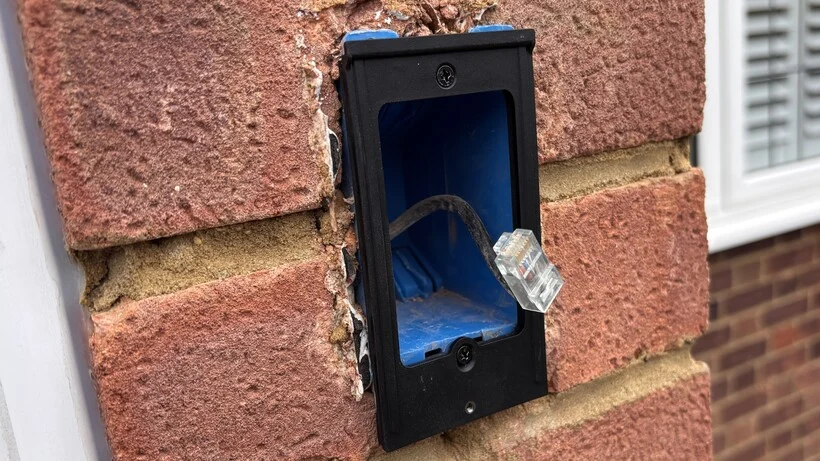
At first glance, the Elite (2nd Gen) retains a familiar aesthetic, but a closer inspection reveals thoughtful engineering enhancements. Ring provides two distinct mounting systems within the packaging: one designed for in-wall installation to achieve a cleaner, more integrated look, and another for surface mounting. Both solutions incorporate rubber seals to effectively ward off moisture and ensure a secure, flush fit against the wall.

For existing owners of the original Ring Elite, a welcome continuity lies in the retention of the familiar blue back box design. This standardization significantly simplifies the upgrade process, potentially allowing for the reuse of much of the previous installation hardware. This consideration is crucial for a product targeting users who value established infrastructure and minimal disruption.
Ring has also transitioned away from traditional security screws for accessing the unit, opting instead for a dedicated removal tool. This subtle change contributes to a more streamlined and less obtrusive final installation.

While the Elite (2nd Gen) presents a premium appearance once installed, it does not sit quite as flush against the wall as its first-generation predecessor. This slight protrusion is likely attributable to the larger internal hardware required to accommodate the 4K video processing capabilities and the advanced imaging technologies packed within.
A paramount advantage of the Elite (2nd Gen) is its implementation of true Power over Ethernet. Unlike alternative solutions that may rely on power adapters or USB workarounds, this doorbell utilizes genuine PoE connectivity, delivering both power and data via a single Ethernet cable. This approach guarantees a cleaner installation aesthetic and, more importantly, ensures consistent and reliable performance, mitigating the potential dropouts or instability sometimes associated with Wi-Fi-dependent devices. Traditional chime support remains integrated, though PoE connectivity is a prerequisite for the doorbell’s overall operation.

The setup process is designed to be intuitive. After scanning a QR code within the Ring app, users are guided through essential configurations, including the definition of motion zones, privacy settings, and notification preferences. The Ring app itself continues to be a significant asset, offering a user-friendly interface for fine-tuning settings post-installation. Revisiting motion zones or adjusting alert preferences is straightforward, avoiding the labyrinthine menus often found in competing applications.
Features and Software: A Premium Experience with Subscription Caveats
Out of the box, the Elite (2nd Gen) covers fundamental video doorbell functionalities without requiring a subscription. Live View, motion notifications, and two-way audio communication are operational immediately after setup, providing essential security monitoring.

However, the device’s most compelling features are contingent upon additional monthly payments. Continuous 24/7 recording, a critical function for comprehensive surveillance, is exclusively available to Ring Home Pro subscribers. Similarly, advanced AI-powered capabilities, such as smart search tools, Video Descriptions, and the Familiar Faces beta feature, are locked behind various subscription tiers.
Ring’s Smart Responses feature, designed to handle visitors and deliveries when users are unavailable, remains a useful tool within the platform. This feature allows for automated responses to doorbell rings, providing a level of convenience for busy households.

The management of recorded footage is an area where Ring consistently excels. The Event History interface presents recordings in a well-organized thumbnail layout, offering adjustable views and effective filtering options. Coupled with a timeline-based playback mode, locating and reviewing specific video clips is both quick and intuitive.
Despite these strengths, Ring increasingly positions itself as a service-first platform. Consumers are expected to make a substantial upfront investment in hardware, only to face recurring fees to unlock the full potential of the system’s advanced software features. This model stands in contrast to competitors like Reolink and Aqara, which now offer local storage, advanced detection features, and robust image quality at considerably lower price points, often without mandatory subscriptions.

The Elite (2nd Gen) is clearly engineered for a segment of the market that prioritizes seamless integration, unwavering reliability, and high-end installations. Nevertheless, the persistent requirement for ongoing subscription fees remains a significant factor that is difficult for consumers to overlook.
Video Quality and Performance: A Clear Advantage in Detail and Clarity
The performance of the Elite (2nd Gen) is where it truly distinguishes itself from the majority of its competitors. The 4K "Retinal" camera delivers exceptional daytime footage, characterized by remarkably sharp details, natural color reproduction, and sufficient resolution to render the zoom functionality genuinely useful, rather than a mere marketing ploy.

During testing, the 10x zoom proved to be far more practical than initially anticipated. It was possible to zoom in sufficiently to verify the presence of a cat on a distant wall across the street, and the enhanced detail facilitated the identification of a delivery van’s license plate that had left a package without activating the doorbell.
Nighttime performance is equally commendable. Ring’s Low-Light Sight technology enables the capture of color footage in conditions where many competing doorbells have already reverted to monochrome infrared video. This capability significantly improves the ability to identify individuals and details in low-light scenarios.

Occasional switching between color night vision and infrared mode was observed. Adjusting the mounting angle, potentially through the use of a larger wedge mount, may help mitigate this behavior in specific installations.
Ring also offers a "Retinal Tuning" AI enhancement feature, intended to smooth out visual artifacts and further improve video quality. In practical use, the combination of the 4K sensor and the stable Ethernet connection already produced such high-quality footage that the need for this AI enhancement was rarely felt. As expected, access to this feature is also dependent on a subscription.

Motion detection performance was consistently excellent throughout the testing period. The radar-assisted 3D Motion Detection system proved adept at generating accurate alerts while effectively minimizing unnecessary notifications. This intelligent detection is crucial for reducing user fatigue from constant false alarms.
Audio quality is also a strong suit. Conversations conducted through the doorbell were consistently clear and natural, upholding Ring’s reputation for delivering reliable two-way communication. This is vital for effective visitor interaction and security monitoring.

Final Thoughts: Premium Hardware Meets Premium Pricing
The Ring Wired Video Doorbell Elite (2nd Gen) represents a significant and overdue upgrade for Ring’s premium PoE lineup. Its exceptional image quality, class-leading low-light performance, and the unwavering reliability of its Power over Ethernet connection address shortcomings that many Wi-Fi-based systems continue to struggle with. For owners of the original Ring Elite, the advancements are substantial and immediately apparent, offering a markedly improved user experience.
However, the primary hurdle remains the cost. The Elite (2nd Gen) is an expensive piece of hardware even before factoring in subscription fees. When the recurring costs necessary to unlock the platform’s most advanced features are considered, the overall investment becomes difficult to justify for a broad segment of the consumer market.

This critique does not diminish the device’s capabilities. The Elite (2nd Gen) stands as one of the finest professionally installed video doorbells currently available. Its robust performance and advanced features are undeniable. The crucial caveat for potential buyers is to be prepared for a significant financial outlay, both initially and on an ongoing basis, to fully leverage its premium offering.
How We Test: A Rigorous Approach to Smart Home Evaluation
Our reviews are the product of extensive, long-term testing. Smart video doorbells, by their nature, are integrated components of a larger smart home ecosystem. Therefore, a cursory evaluation over a week is insufficient to provide a comprehensive verdict. As dedicated smart home technology reviewers, we understand the critical factors that matter and how a particular device compares to its alternatives. Our reviews are characterized by their thoroughness, objectivity, and impartiality, and we maintain a strict policy of not accepting direct payment for device reviews. For a detailed understanding of our evaluation process for video doorbells, please refer to our dedicated review guide.

FAQs
Do you have to power the Ring Wired Video Doorbell Elite (2nd-gen) with PoE?
Yes, the Ring Wired Video Doorbell Elite (2nd Gen) requires an Ethernet connection that supports Power over Ethernet (PoE) for both power and data transmission.

Score
[Insert Score Here]

