
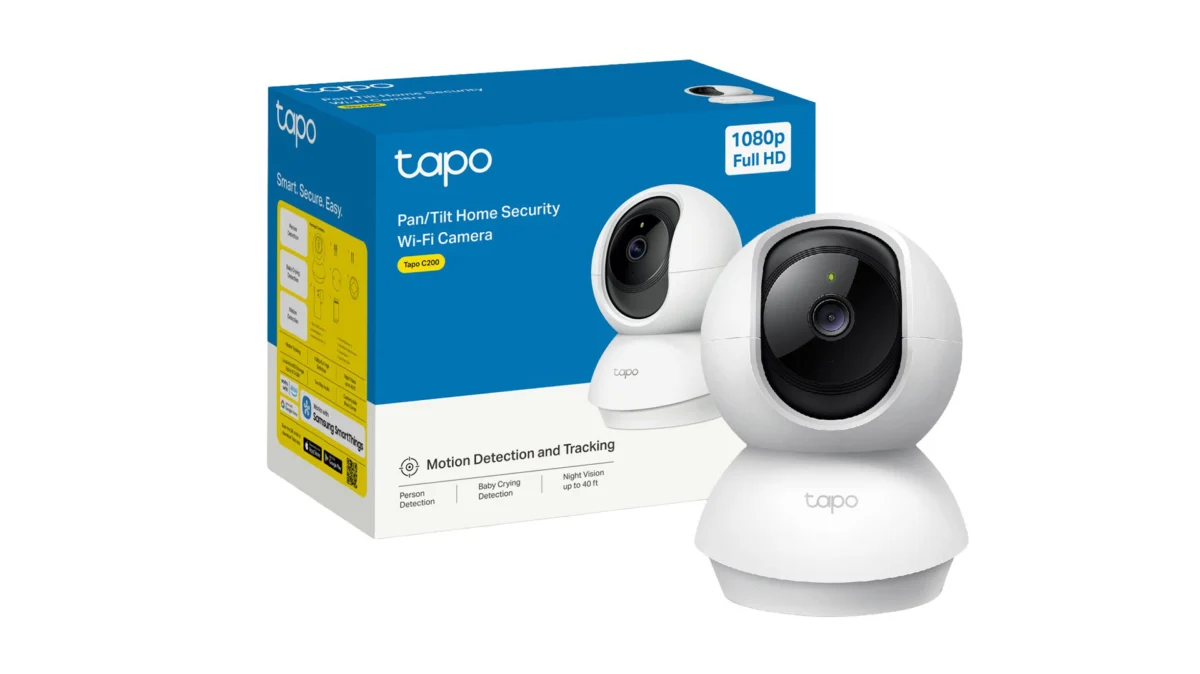
Security researchers at OPSWAT have identified and disclosed two significant security vulnerabilities affecting TP-Link’s popular Tapo C200 and C120 home security cameras. The most critical of these flaws, designated CVE-2026-15315, allows unauthorized individuals on the same local network to gain administrative access to the cameras without needing any credentials. This effectively grants them the ability to view live video feeds, access recorded footage, and alter camera settings, posing a considerable privacy and security risk for unsuspecting users. A second vulnerability, CVE-2026-15316, affects only the Tapo C200 model and can lead to a denial-of-service (DoS) condition, potentially crashing the camera’s management service or forcing a device restart. TP-Link has since released firmware updates to address these issues, urging users to apply them promptly.
The discovery and subsequent disclosure of these vulnerabilities highlight the ongoing challenges in securing the rapidly expanding Internet of Things (IoT) landscape. As more households integrate smart devices, including security cameras, into their networks, the potential attack surface for malicious actors widens. The ease with which an attacker can exploit CVE-2026-15315 underscores the critical importance of robust authentication mechanisms in consumer-grade smart home devices.
Genesis of the Vulnerability Discovery
The vulnerabilities were uncovered by OPSWAT’s dedicated security research team, comprising researchers Khoi Tran and Thai Do. Their in-depth analysis focused on the web-based management interface that these TP-Link Tapo cameras utilize for configuration and operation. This interface, accessible via HTTPS, is the primary gateway for users to interact with their cameras. During their examination, Tran and Do identified a critical oversight in the authentication process.
Specifically, CVE-2026-15315 was found to exist within this management interface. The researchers discovered a secondary authentication pathway that bypassed the standard login procedures. This bypass mechanism ingeniously exploited a value that the camera itself provides to a legitimate user during the initial login sequence. By intercepting and manipulating this value, an attacker could trick the camera into believing they were an authenticated administrator. The process, according to OPSWAT’s findings, requires only a minimal number of network requests and does not necessitate the knowledge of any passwords or the existence of a pre-established session. This effectively circumvents the intended security controls, granting unrestricted access.
The implications of such a bypass are far-reaching. For a device like a home security camera, which is often positioned to monitor sensitive areas, gaining administrative control means access to live video streams, stored recordings, and the ability to reconfigure the device’s settings. This could include disabling motion detection, altering network configurations, or even redirecting camera feeds.
The Wider Impact: From Privacy to Parental Concerns
The Tapo C200 and C120 cameras are marketed as user-friendly solutions for home security and monitoring. They are frequently employed as baby monitors, pet cameras, and general surveillance devices within residential settings. The exploitation of CVE-2026-15315 in such contexts presents particularly alarming scenarios.
In the case of a baby monitor, an attacker gaining administrative access could potentially view live video feeds of infants, access any recorded footage, and even eavesdrop on conversations through the camera’s two-way audio feature. OPSWAT explicitly noted that "live video, night vision, crying detection and two-way audio" could be exposed to an attacker. This level of access represents a profound breach of privacy and could have devastating emotional and psychological consequences for families. Similarly, for users relying on these cameras for pet monitoring or general home security, the compromise could lead to the theft of personal information or provide a foothold for further intrusion into the home network.
The second identified vulnerability, CVE-2026-15316, while less severe in terms of direct unauthorized access, still poses a significant risk. This flaw, affecting only the Tapo C200 model, allows an attacker to trigger a denial-of-service condition by sending an oversized chunk of encrypted Wi-Fi credential data. The consequence is a crash of the HTTPS service, rendering the camera’s management interface inaccessible, or in more severe cases, forcing a device restart. While this does not grant access to data, it effectively incapacitates the security camera, leaving the user vulnerable and unaware of the disruption.
It is crucial to note that both of these vulnerabilities require the attacker to be present on the same local network as the affected cameras. This means the attacker must either be connected to the same Wi-Fi network or have already gained some level of access to the user’s trusted network ecosystem. This prerequisite, while limiting the immediate threat to individuals with existing network compromises, still represents a significant risk for households with multiple connected devices and potentially weaker network security.
A Chronology of Discovery and Remediation
While the exact timeline of the discovery process by OPSWAT is not publicly detailed, the typical lifecycle of such vulnerability disclosures involves several stages:
- Initial Discovery: Researchers identify the potential flaw through code analysis, penetration testing, or other security auditing methods. This phase likely occurred sometime prior to the public disclosure.
- Vulnerability Confirmation and Exploitation: OPSWAT researchers would have rigorously tested their findings to confirm the existence and exploitability of the vulnerabilities, developing proof-of-concept exploits.
- Responsible Disclosure to Vendor: A critical step in cybersecurity is responsible disclosure. OPSWAT would have contacted TP-Link privately, providing them with detailed information about the vulnerabilities and a reasonable timeframe to develop and deploy a fix. This process is designed to prevent widespread public exploitation before a patch is available. Based on TP-Link’s advisory, this communication likely took place several weeks or months before the public announcement.
- Vendor Development of Patch: TP-Link engineers would have worked to develop and test firmware updates designed to close the identified security gaps. This involves understanding the root cause of the flaws and implementing robust solutions.
- Public Disclosure and Patch Release: Once the patches were developed and tested, TP-Link would have released the updated firmware. Simultaneously, OPSWAT, in coordination with TP-Link, would have publicly disclosed the details of the vulnerabilities, often including their CVE (Common Vulnerabilities and Exposures) identifiers. This allows users to be aware of the risks and the available solutions. The public disclosure, as indicated by the article, followed the release of the patches.
The article mentions TP-Link’s advisory, which lists affected hardware versions. The Tapo C120 is noted as being affected in its V1 hardware version, indicating that newer revisions or other camera models may not be susceptible to the same specific flaws. This level of detail is crucial for users to identify if their devices are at risk.
Technical Depth of the Exploits
CVE-2026-15315: The Authentication Bypass
The core of this vulnerability lies in the way the camera’s management interface handles user authentication over HTTPS. Researchers Khoi Tran and Thai Do pinpointed a flaw in the sequence of verification steps. Typically, a user logs in with credentials, and the server issues a session token or cookie to maintain that authenticated state. However, in this case, the researchers discovered a secondary verification path. This path was susceptible to accepting a specific value that the camera itself would issue during the legitimate login process as a valid authentication response.
Imagine a scenario where a legitimate user logs in. The camera might send a temporary, seemingly innocuous code as part of its response. An attacker, positioned on the same network, could intercept this code and then present it back to the camera through a specially crafted request on this secondary verification path. Because this path did not have sufficiently robust checks, it would erroneously accept this code as proof of administrative authorization, thereby granting the attacker an administrative session. This process bypasses the need for a password entirely, making it a particularly dangerous exploit. The ease of exploitation, requiring only a few network requests, suggests a fundamental design flaw in the authentication logic.
CVE-2026-15316: The Denial-of-Service (DoS) Flaw
This vulnerability, exclusive to the Tapo C200, targets the camera’s ability to process incoming data, specifically related to Wi-Fi credentials. The flaw arises from the camera’s handling of an "oversized chunk of encrypted Wi-Fi credential data." When such excessively large data is sent, it overwhelms or corrupts the camera’s processing capabilities for its HTTPS service.
The result is either a crash of the HTTPS service itself, meaning the camera’s web interface becomes unresponsive and inaccessible, or a complete device restart. While this attack doesn’t directly expose data, it effectively renders the camera useless for its intended security purpose. A determined attacker could repeatedly trigger this DoS condition, causing significant disruption and potentially masking other malicious activities on the network. This type of vulnerability is often exploited to disable security measures or to probe for further weaknesses under the guise of a temporary system failure.
Official Responses and User Guidance
TP-Link, upon being notified of these vulnerabilities through responsible disclosure, acted swiftly to address the security concerns. Their immediate response involved the development and release of firmware updates for the affected Tapo C200 and C120 camera models.
In their official advisory, TP-Link explicitly states the need for users to install the latest firmware version. This is a critical instruction, as applying the update is the primary mechanism by which users can mitigate the risks associated with both CVE-2026-15315 and CVE-2026-15316. The company’s support pages, linked within the original article, provide detailed instructions on how to check the current firmware version and how to perform the update process, typically through the Tapo mobile application or the camera’s web interface.
While TP-Link has not released public statements beyond their advisories, their actions—developing and distributing patches—demonstrate their commitment to user security. Industry best practices dictate that vendors should inform their user base about such critical vulnerabilities and provide clear guidance on remediation. TP-Link’s provision of advisories and support materials aligns with these expectations.
Broader Implications for the IoT Security Landscape
The vulnerabilities discovered in TP-Link’s Tapo cameras are not isolated incidents but rather symptomatic of broader challenges within the Internet of Things (IoT) security ecosystem. The rapid proliferation of smart devices, often manufactured with cost and convenience as primary drivers, can sometimes lead to security being an afterthought.
Key Implications:
- The Need for Secure Design Principles: This event underscores the necessity for manufacturers to embed security considerations from the earliest stages of product design. This includes robust authentication, secure coding practices, and regular security audits. Relying solely on post-release patching is a reactive approach that leaves users vulnerable during the interim.
- The "Same Network" Attack Vector: While the requirement for an attacker to be on the same network might seem to limit the scope, it is a realistic scenario for many home users. Compromised routers, weak Wi-Fi passwords, or the presence of guest networks that are not properly isolated can all provide entry points for attackers to gain access to the local network.
- The Importance of Firmware Updates: This incident highlights the critical role of firmware updates. Users must be educated on the importance of keeping their smart devices updated and provided with straightforward methods to do so. Many users, however, remain unaware or negligent regarding these updates, leaving their devices perpetually vulnerable.
- The Growing Threat of IoT Botnets: Devices with compromised security can be co-opted into botnets, such as the Mirai botnet, which leverage vast numbers of unsecured IoT devices for distributed denial-of-service (DDoS) attacks. While these specific vulnerabilities might not directly lead to botnet enrollment, they contribute to the overall landscape of insecure devices that can be exploited.
- Privacy Concerns in Smart Homes: As more devices collect sensitive data (video, audio, usage patterns), the implications of security breaches extend beyond mere data theft to profound privacy violations. The potential for surveillance through compromised security cameras is a significant concern for individuals and families.
The disclosure of CVE-2026-15315 and CVE-2026-15316 serves as a potent reminder for both manufacturers and consumers. Manufacturers must prioritize security in their product development and ongoing support. Consumers, in turn, must be vigilant, ensuring they purchase devices from reputable brands, secure their home networks diligently, and keep all connected devices updated with the latest firmware to safeguard their privacy and security in an increasingly interconnected world. The continued evolution of smart home technology necessitates a parallel evolution in security awareness and implementation.

