
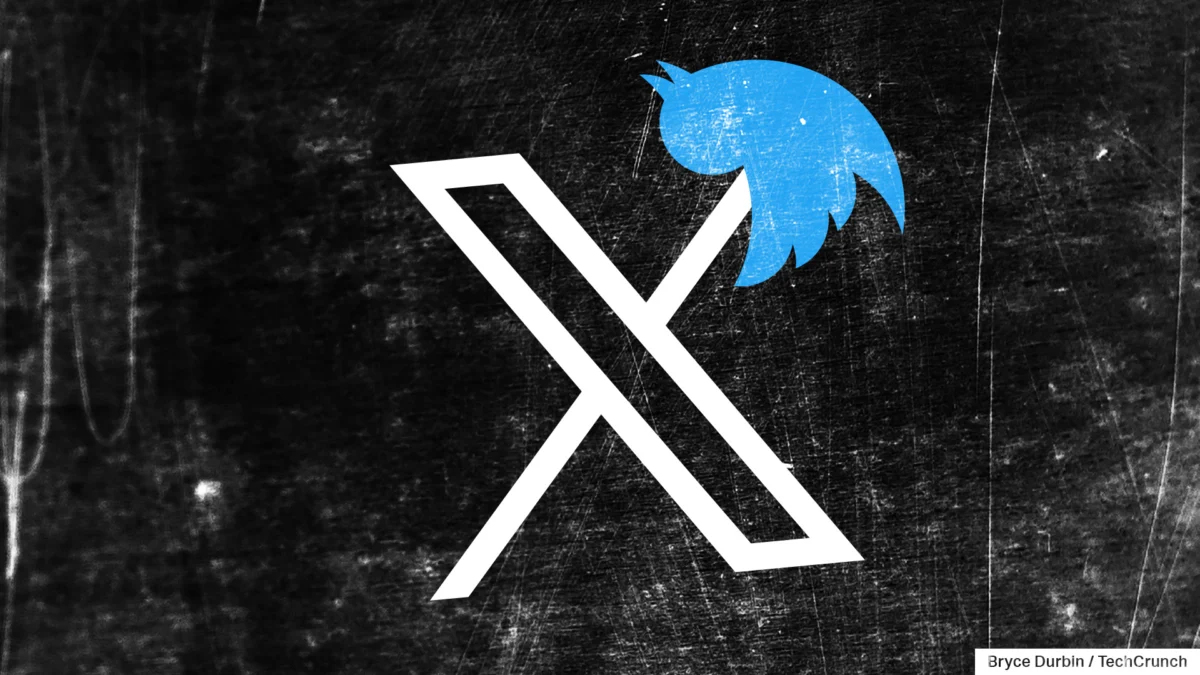
A federal court in Delaware has issued a significant split ruling in the high-stakes trademark dispute between Elon Musk’s social media giant, X Corp., and a tenacious startup named Operation Bluebird. While the court sided with X in barring the startup from using the core "Twitter" name, it delivered a surprising blow to Musk’s company by finding that X had likely abandoned two of its most iconic related trademarks: the word "tweet" and the distinctive Twitter bird logo. This pivotal decision has paved the way for Operation Bluebird to launch its rival social network under the new banner of Tweet.app, effectively reclaiming a significant piece of the digital legacy that X had discarded.
The ruling, issued by U.S. District Court Judge Colm F. Connolly, represents a complex legal victory for Operation Bluebird, a Virginia-based entity that explicitly formed with the strategic intent of capitalizing on X’s abandonment of its former branding. Initially attempting to launch as "Twitter.now," the startup was swiftly met with legal challenge from X. The court’s subsequent injunction prohibited Operation Bluebird from using any direct variation of the "Twitter" name, affirming X’s rights to its primary identifier. However, the judge’s assessment that X Corp. had likely "discontinued the bona fide use of the Tweet mark and Bird logo and that it intends not to resume the use of the marks" opened a crucial avenue for the challenger. This finding, though preliminary, allowed Operation Bluebird to immediately rebrand its platform as Tweet.app and commence its public rollout, directly utilizing the freed-up intellectual property.
The Genesis of X and the Great Rebrand
To fully appreciate the gravity of this legal skirmish, one must rewind to the tumultuous acquisition of Twitter by Elon Musk in October 2022. The $44 billion takeover was immediately followed by a period of profound operational and strategic upheaval. Musk, known for his ambitious and often unconventional vision, articulated his intent to transform Twitter from a microblogging platform into an "everything app" – a comprehensive digital ecosystem offering payments, messaging, and a myriad of other services, akin to China’s WeChat. This grand ambition necessitated a radical rebranding.
In July 2023, less than a year after the acquisition, Twitter officially ceased to exist. The iconic blue bird logo, which had become synonymous with real-time global communication for over a decade, was replaced by a stark white ‘X’ against a black background. The familiar terms "tweet" and "retweet" were systematically phased out in official communications and product interfaces, replaced by generic terms like "post" and "repost." This dramatic shift was not merely cosmetic; it signaled a fundamental departure from the platform’s established identity and cultural footprint.
The rebranding was met with a mixed, though largely critical, reception. Long-time users expressed confusion, nostalgia, and outright rejection of the new identity. Brand experts questioned the wisdom of discarding an internationally recognized and highly valuable brand name, estimated by some analysts to be worth between $4 billion and $20 billion prior to the rebrand. The move was widely seen as a deliberate attempt by Musk to sever ties with the platform’s past and align it more closely with his broader "X" vision, which encompasses various ventures from SpaceX to xAI. However, this radical shift also created a legal vulnerability, particularly concerning trademark law.
Trademark Law in Focus: The Principle of Abandonment
At the heart of the X-Operation Bluebird dispute lies the complex legal principle of trademark abandonment. In U.S. trademark law, a trademark owner can lose rights to a mark if they discontinue its use with an intent not to resume use. While non-use for three consecutive years creates a legal presumption of abandonment, intent is a critical factor, and abandonment can be argued even before the three-year mark if there is clear evidence of intent to cease use permanently.
For a trademark to be valid and enforceable, it must be actively used in commerce to identify the source of goods or services. When Twitter rebranded to X, it actively removed the "Twitter" name, the bird logo, and the term "tweet" from its primary branding, marketing, and user interface elements. This intentional cessation of use, coupled with public statements from Elon Musk and X Corp. leadership indicating a complete pivot away from the old identity, laid the groundwork for Operation Bluebird’s legal strategy.
Legal scholars often point to the inherent tension between a company’s right to rebrand and the public’s right to use descriptive terms or reclaim abandoned intellectual property. The value of a trademark is intrinsically linked to its recognition and association in the public mind. When that association is deliberately severed by the original owner, the law provides mechanisms for others to potentially step in, especially if the original owner has no intention of ever returning to that mark. The "tweet" mark, in particular, presented a unique challenge, as it had evolved beyond a mere corporate identifier to become a widely adopted verb and noun in common parlance.
Operation Bluebird’s Strategic Playbook: A Calculated Revival
Operation Bluebird is far from a typical startup; it is a meticulously calculated legal and branding endeavor. The company’s very existence is predicated on exploiting the legal vulnerabilities created by X’s rebrand. The effort is spearheaded by two lawyers: Michael Peroff, the founder, based in Illinois, and Stephen Coates, who serves as president of Operation Bluebird and notably, was previously a trademark lawyer at Twitter itself. This insider knowledge and deep understanding of intellectual property law provided Operation Bluebird with a distinct advantage in identifying and pursuing potentially abandoned marks.
Their explicit mission, as stated on their website, is to "go back and pick up what Elon Musk dropped when he renamed the town square as X, and threw the bird away on his way out." This clear declaration underscores their strategic intent to reclaim the cultural and brand equity that X willingly relinquished. Their initial attempt to launch as "Twitter.now" was a direct challenge, testing the boundaries of X’s remaining trademark protections. While the court ruled against them on the direct use of "Twitter," it confirmed their legal hypothesis regarding "tweet" and the bird logo.
Coates, in an announcement regarding the rebrand to Tweet.app, articulated the philosophical underpinnings of their mission: "They kept the word. They let go of the bird, and they let go of the tweet… A tweet was never a corporation. It’s one person saying something. That word survived three years of a company trying to replace it, because the public declined to stop using it. We think that tells you who it belongs to." This statement highlights a key aspect of trademark law: marks are granted to protect commercial identity, but their meaning and public perception can evolve, sometimes surpassing the original owner’s control, especially if the owner actively disavows them. Operation Bluebird is positioning itself not just as a competitor, but as a custodian of a beloved digital lexicon.
The Court’s Deliberation: Judge Colm F. Connolly’s Split Ruling
The legal proceedings leading to this split decision began with X’s request for a preliminary injunction against Operation Bluebird. X sought to prevent the startup from using a series of Twitter-related trademarks that Operation Bluebird contended had been abandoned. Judge Colm F. Connolly, presiding over the U.S. District Court for the District of Delaware, meticulously reviewed the arguments presented by both parties.
The judge granted X’s motion for a preliminary injunction regarding eight specific Twitter-related marks, signifying that X successfully demonstrated a likelihood of success in proving its continued rights to these identifiers. These likely included various forms of the "Twitter" word mark itself and possibly certain related phrases or visual elements directly tied to the brand name. This part of the ruling confirmed that X retains substantial protection over its primary former brand name, making it difficult for any competitor to directly usurp the "Twitter" moniker.
However, the pivotal aspect of the ruling came with the denial of X’s injunction request concerning the "Tweet" mark and the Twitter bird logo. Judge Connolly’s opinion clearly stated that Operation Bluebird was "likely to succeed in proving both that X Corp. discontinued the bona fide use of the Tweet mark and Bird logo and that it intends not to resume the use of the marks." This finding is crucial because a preliminary injunction is often a strong indicator of how a court might rule in a full trial. For Operation Bluebird to demonstrate a "likelihood of success" on the merits of its abandonment claim suggests the evidence of X’s intent to abandon these specific marks was compelling.
It is important to note that this is a preliminary injunction, not a final judgment on the merits of the case. The legal battle is far from over. The case will now proceed to determine definitively whether X ultimately still retains rights to any of the contested Twitter marks. This next phase will likely involve extensive discovery, expert testimony, and potentially a full trial, which could stretch for months or even years, incurring significant legal costs for both parties.
User Engagement and Business Model: The Allure of Nostalgia
In the wake of the preliminary ruling, Operation Bluebird swiftly launched Tweet.app to the public. The company reported a remarkable level of pre-launch interest, with more than 172,000 people requesting a handle on the site. This substantial early engagement underscores the enduring affinity many users still hold for the "Twitter" brand, its associated lexicon, and its iconic imagery. Despite X’s efforts to erase its predecessor, the collective memory of the internet user base proves resilient.
Operation Bluebird’s business model for Tweet.app is also noteworthy. The startup is charging users a $20 fee to reserve their handle and join the social network. This strategy serves multiple purposes. Firstly, it acts as a direct revenue stream, crucial for funding the ongoing legal battle against X, which is undoubtedly expensive. Litigation of this scale, especially involving corporate giants, can easily run into millions of dollars in legal fees. Secondly, it creates a barrier to entry, potentially attracting a more committed user base and deterring spam or casual sign-ups, which can be a significant challenge for new social platforms. Thirdly, it could be seen as a premium offering, leveraging the nostalgia and perceived exclusivity of reclaiming a piece of internet history.
This monetization strategy stands in contrast to the typical free-to-use model of most new social media platforms, which often rely on advertising revenue or venture capital funding for initial growth. However, given the unique circumstances of Operation Bluebird’s inception and its explicit legal agenda, a direct-to-consumer revenue model makes strategic sense. It allows the company to maintain a degree of financial independence while pursuing its objectives, without being solely beholden to advertisers or investors who might prioritize rapid user acquisition over legal battles.
Broader Implications for Social Media and Branding
The X-Operation Bluebird dispute and its preliminary ruling carry profound implications for the social media landscape, corporate branding strategies, and intellectual property law.
Legal Precedent: This case could set a significant precedent regarding trademark abandonment in the context of radical corporate rebrands. It highlights the potential legal risks companies face when completely discarding established, highly recognized brand assets. It suggests that even a powerful entity like X cannot simply jettison popular trademarks without consequence, particularly if a rival is poised to claim them. Companies undergoing similar transformations in the future may need to implement more nuanced strategies to protect dormant trademarks, such as maintaining minimal "token use" or explicitly licensing them, rather than outright abandoning them.
Brand Value and Nostalgia: The case starkly illustrates the immense, enduring value of brand equity and the power of user nostalgia. Even after a corporate decision to move on, the public’s attachment to names like "Twitter" and "tweet" remains potent. This sentiment has been successfully leveraged by Operation Bluebird, demonstrating that brand value resides not just in corporate ownership but also in collective memory and cultural relevance. This phenomenon could inspire other "revivalist" startups to target other abandoned or neglected intellectual property in the tech sector.
Competitive Landscape: The emergence of Tweet.app, armed with the "tweet" mark and the bird logo, adds a unique dynamic to the already fragmented social media landscape. While it remains to be seen if Tweet.app can build a robust, scalable, and engaging platform, its very existence, coupled with its reclaimed branding, offers a distinct alternative for users disaffected by X’s changes. It presents a potential challenge to X’s narrative of a complete break from its past, as a piece of that past now lives on under a rival’s banner.
Strategic Foresight: For X, the ruling raises questions about the strategic foresight involved in its rebrand. While the vision for X as an "everything app" is ambitious, the decision to completely abandon deeply entrenched and globally recognized trademarks like "tweet" and the bird logo appears, in retrospect, to have been a significant oversight from an intellectual property protection standpoint. The cost of this oversight could be substantial, not just in legal fees but in allowing a competitor to capitalize on the very brand equity X sought to leave behind.
Statements and Reactions
Stephen Coates, as president of Operation Bluebird, has been vocal about the implications of the ruling, framing it as a victory for the public and the enduring legacy of the "tweet." His statements emphasize the organic nature of the term "tweet" and its adoption by users, suggesting a form of public ownership that transcends corporate rebranding efforts.
From X’s perspective, while no direct official statement on this specific preliminary ruling has been widely publicized, it can be inferred that the company remains committed to its rebrand and its vision for X. X’s legal team is likely preparing for the next phases of the litigation, asserting its continued rights to its current brand and any remaining elements of the former Twitter identity not deemed abandoned. Their argument would likely center on the comprehensive nature of the rebrand and the intent to move forward, perhaps arguing that minimal residual use or ongoing legal defense of the marks demonstrates an intent not to abandon them entirely.
Legal experts, while commenting on the preliminary nature of the ruling, have acknowledged its significance. "Trademark abandonment cases are notoriously complex, balancing the owner’s intent with actual commercial use," explains Sarah Jenkins, an intellectual property lawyer specializing in tech. "This ruling suggests that X’s actions post-rebrand were sufficiently definitive for the court to find a high likelihood of abandonment for ‘tweet’ and the bird. It’s a stark reminder that even powerful brands need to be careful when discarding valuable IP." Branding consultants echo this sentiment, with one, Mark Thompson, stating, "The Twitter bird and the word ‘tweet’ had decades of emotional connection and brand equity. To discard them so completely was a bold, but perhaps legally naive, move. This case proves that sometimes, the public’s perception of a brand can be more powerful than a CEO’s decree."
The Road Ahead: Ongoing Legal Battles and the Future of Tweet.app
The preliminary injunction ruling is merely a battle won, not the war. The case will now proceed, likely involving a full trial where Operation Bluebird will need to definitively prove its claim of trademark abandonment, and X will attempt to demonstrate its continued rights or argue against the finding of abandonment. This process could involve further appeals and protracted legal maneuvering, making it a costly and time-consuming endeavor for both parties.
For Tweet.app, the legal victory, however partial, provides a critical foundation. With the legal right to use "tweet" and the bird logo, it possesses a powerful marketing asset that taps into widespread nostalgia and brand recognition. However, the challenge for Operation Bluebird extends far beyond legal victories. Building a successful social network requires robust infrastructure, innovative features, effective content moderation, and the ability to attract and retain a vibrant user base. The initial influx of 172,000 handle requests is promising, but converting that interest into active, engaged users will be the true test.
The saga of X versus Operation Bluebird is a compelling narrative about the intersection of corporate ambition, legal strategy, and the enduring power of brand identity in the digital age. It serves as a potent reminder that in the fast-evolving world of technology, even the most radical transformations can come with unforeseen consequences, and that some legacies are harder to erase than others. The outcome of the ongoing litigation will not only shape the future of Tweet.app but could also redefine how companies approach branding and intellectual property in an era of rapid digital evolution.

