
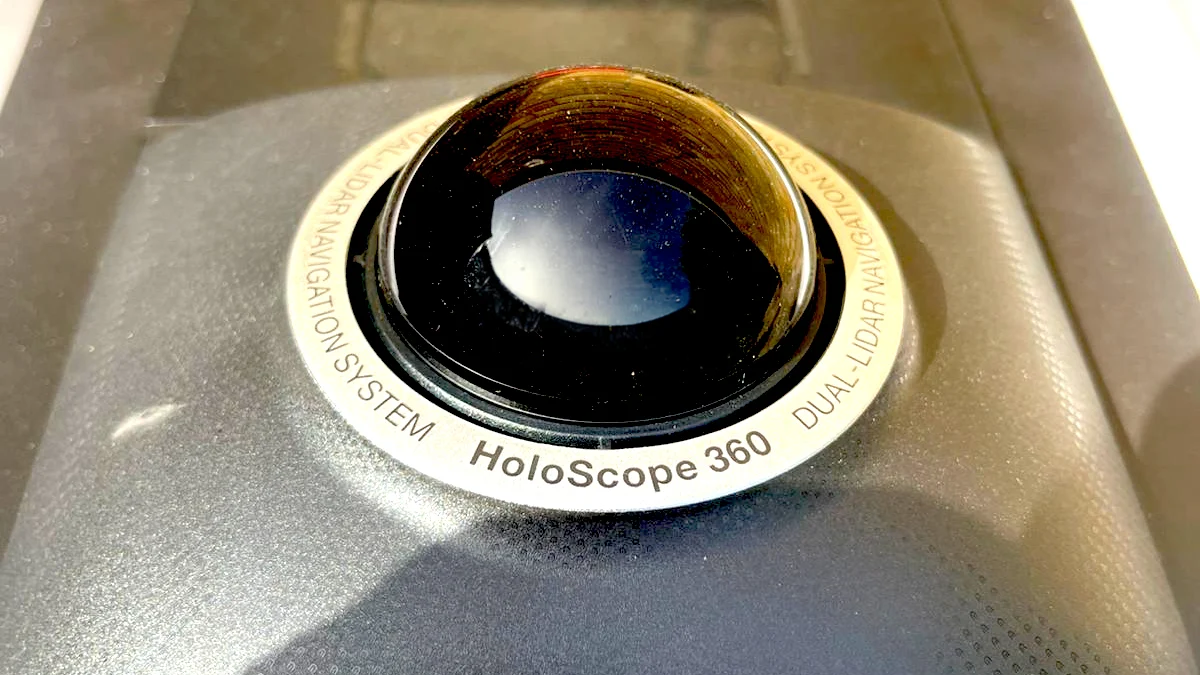
The landscape of automated lawn maintenance is undergoing a profound transformation, moving beyond the limitations of traditional boundary wires and even GPS-dependent systems. At the forefront of this evolution is LiDAR (Light Detection and Ranging) technology, a sophisticated sensor system increasingly being integrated into robot lawn mowers. This advanced navigation method promises a future of "drop-and-mow" convenience, offering enhanced precision, adaptability, and a significant reduction in user setup time. While GPS-based models have liberated homeowners from the tedious task of burying perimeter wires, they often still necessitate considerable initial configuration. LiDAR, a technology already well-established in the realm of robot vacuums, is poised to simplify this process further, leading to more intelligent and capable robotic lawn caretakers. The growing adoption of this technology is evidenced by a surge of new product launches from prominent manufacturers including Segway, Mammotion, Ecovacs, and Roborock, signalling a clear industry trend towards more sophisticated, wire-free navigation solutions.
Understanding LiDAR: A Deeper Dive into the Technology
At its core, LiDAR operates on a principle familiar to owners of advanced robot vacuums. The system emits rapid pulses of laser light and meticulously measures the time it takes for these pulses to reflect off surrounding objects. This "time-of-flight" data is then processed to construct a highly accurate, real-time 3D map of the mower’s environment. Unlike GPS, which relies on external satellite signals, LiDAR builds its understanding of the world by constantly scanning and re-scanning its immediate surroundings, enabling it to pinpoint its location relative to the physical features of the garden.
Early iterations of LiDAR sensors often featured a spinning dome that rotated 360 degrees to capture environmental data, a design commonly seen in earlier robot vacuums. However, the latest advancements have introduced solid-state LiDAR units. These innovative designs incorporate no moving parts, allowing them to be seamlessly integrated into the mower’s chassis. This architectural shift not only contributes to a more streamlined aesthetic but also significantly reduces manufacturing costs and enhances the overall reliability and durability of the device. This technological refinement is a key driver behind the increasing affordability and accessibility of LiDAR-equipped mowers.
The Navigation Nexus: LiDAR vs. RTK vs. Boundary Wire
The robot lawn mower market now primarily features three competing navigation paradigms, each with its distinct advantages and drawbacks:
-
Boundary Wire: This is the oldest and most straightforward method. A low-voltage cable is installed around the perimeter of the lawn, either buried underground or secured with stakes. The mower detects this wire and operates strictly within the designated boundaries, never crossing the invisible line. While effective and reliable for defining mowing areas, the primary disadvantage is the labour-intensive and time-consuming installation process. Any modifications to the lawn’s layout, such as adding new flowerbeds or altering pathways, necessitate reconfiguring the boundary wire.
-
RTK (Real-Time Kinematic) Positioning: RTK technology leverages satellite signals to achieve highly precise location tracking, often accurate to within a few centimetres. This enhanced accuracy is crucial for efficient mowing patterns. However, RTK systems are highly dependent on a clear view of the sky. Obstructions such as dense tree canopies, tall buildings, or even heavy cloud cover can degrade signal quality and impact accuracy. RTK systems typically require either a dedicated base station installed in the garden to augment the satellite signal, or they rely on internet-based "Cloud RTK" services, which necessitate a constant Wi-Fi or cellular connection for the mower. This reliance on external infrastructure can make RTK systems susceptible to signal loss in certain environments.
-
LiDAR Navigation: As detailed above, LiDAR operates independently of external satellite signals. Its active laser scanning system builds a dynamic, internal map of the environment. Ecovacs, a leading manufacturer, highlights this key differentiator, stating that while RTK relies on external positioning infrastructure that can be compromised by obstructions, LiDAR’s active scanning "remains consistent" as it is not dependent on any signals originating from outside the garden’s confines. This intrinsic self-reliance makes LiDAR a compelling alternative, particularly in gardens where GPS or RTK signals may be unreliable.
The "Drop-and-Mow" Revolution: LiDAR’s Killer App
The most significant selling point of LiDAR technology in robot lawn mowers is the elimination of the laborious setup associated with older technologies. Tony Ho, Vice President of Business Development at Segway Navimow, articulated this advantage with stark clarity when discussing the company’s new i2 LiDAR model. He emphasized that users "won’t need to find somewhere for an RTK station to live; you won’t have to deal with your robot getting lost whenever there’s a tree blocking the satellite signal; and you definitely won’t need to lay any boundary wires."
Ho further drew an analogy between LiDAR’s functionality and human spatial awareness, suggesting that the mower effectively uses its surroundings as "landmarks," much like people navigate by recognizing familiar features. This allows for an unprecedented level of ease of use. The Segway i2 LiDAR model exemplifies this rapid deployment capability. Utilizing its solid-state LiDAR and integrated vision systems, it can map a garden in mere seconds, enabling a user to unbox the mower and have it operational on the same afternoon. This "drop-and-mow" philosophy represents a paradigm shift in user experience, democratizing robotic lawn care for a wider audience. As observed in reviews of models like the Ecovacs GOAT O1200 LiDAR Pro, the setup process facilitated by LiDAR is indeed remarkably swift.
Where LiDAR Truly Shines: Navigating Complex Environments
The true value proposition of LiDAR becomes apparent in gardens that present challenges for satellite-only navigation systems. Its resilience to signal obstructions makes it a superior choice for properties with specific geographical characteristics. This capability is further enhanced when LiDAR is integrated with other navigation technologies, creating hybrid systems that offer robust performance across diverse scenarios.
The Mammotion Luba 3 AWD is a prime example of this synergistic approach. It combines 360-degree LiDAR scanning with network RTK. This integration ensures that the mower "keeps moving even when GPS reception drops off," functioning akin to a robot vacuum navigating a particularly intricate room. Such hybrid systems are invaluable in environments with:
- Dense Tree Canopies: Areas where the sky is heavily obscured by foliage, preventing reliable satellite signal reception.
- Narrow Walled Corridors: Confined passages where GPS signals can bounce off walls, leading to inaccurate positioning.
- Urban Canyons: Gardens surrounded by tall buildings that create signal-blocking "canyon" effects, disrupting satellite communication.
In these challenging scenarios, LiDAR’s ability to create a detailed internal map provides a critical fallback and an indispensable primary navigation method, ensuring consistent and reliable lawn maintenance.

LiDAR’s Limitations: Understanding the Boundaries
Despite its significant advantages, LiDAR is not a universal panacea for all robotic lawn mowing challenges. It’s important to acknowledge its limitations and understand when it may not be the optimal solution on its own.
-
Garden Size and Feature Density: LiDAR performs optimally in gardens where it has sufficient physical reference points within its sensing range. For extremely large, open, and largely featureless lawns, LiDAR alone can encounter difficulties. The system requires physical landmarks within approximately 75 meters to accurately triangulate its position. In such vast expanses, RTK systems, with their broader coverage, may still offer superior performance.
-
Obstacle Detection: While LiDAR excels at mapping the environment and identifying larger structures, it can sometimes struggle to detect small, low-lying obstacles such as fallen branches, toys, or garden gnomes. To address this, most manufacturers are increasingly pairing LiDAR with cameras. These vision systems are far more adept at identifying and classifying smaller objects, providing a crucial layer of safety and preventing potential collisions or damage.
The Evolving Landscape: Brands and Models Embracing LiDAR
The integration of LiDAR into robot lawn mowers is rapidly accelerating, with major players introducing sophisticated models that leverage this technology.
-
Segway Navimow: Unveiled at CES 2026, Segway’s Navimow range showcases a tiered approach. The compact i2 series features solid-state LiDAR, making it ideal for small to mid-sized gardens. For more complex layouts and demanding applications, the flagship X4 and the H2 models offer advanced navigation capabilities. Segway’s proprietary "multi-modal navigation" system intelligently blends network RTK, visual SLAM (Simultaneous Localization and Mapping), and, in select models, solid-state LiDAR, creating a robust and adaptable solution.
-
Mammotion: Mammotion employs a similar layered strategy with its Luba 3 AWD and Luba mini AWD LiDAR models. These mowers integrate LiDAR, RTK, and dual-camera vision under their "Tri-Fusion" navigation system, emphasizing comprehensive environmental sensing.
-
Ecovacs: Ecovacs has expanded its GOAT range to include LiDAR-equipped models, bringing the technology to a wider consumer base.
-
Roborock: Roborock has incorporated LiDAR into its X1 and Z1 mower series, further solidifying its presence in the intelligent home robotics market.
-
Anthbot: A newer entrant, Anthbot, has built LiDAR directly into its M5 model, signalling the technology’s growing appeal across the industry.
A common theme across nearly all these offerings is that LiDAR is typically deployed as an integral component of a hybrid navigation system rather than a standalone replacement for RTK or camera-based solutions. This multi-technology approach is proving to be the most effective for navigating the complexities of real-world gardens.
The Verdict: Is LiDAR Worth the Investment?
The ultimate decision of whether LiDAR technology is a worthwhile investment hinges heavily on the specific characteristics of an individual garden, rather than solely on the brand or model.
-
For Open, Unobstructed Lawns: Gardens with wide-open spaces and a clear view of the sky rarely necessitate the advanced capabilities of LiDAR. A well-configured RTK system, combined with robust vision sensors, can often provide equally reliable performance at a potentially lower cost.
-
For Challenging Environments: Conversely, gardens characterized by dense foliage, narrow access points, or surrounded by tall structures present a compelling case for LiDAR. In these scenarios, where satellite signals are prone to disruption, LiDAR is reported to deliver the most significant practical improvements in navigation and operational consistency.
The emerging consensus among current robot mower owners, frequently discussed on online forums and in user reviews, is that no single navigation technology reigns supreme. The most capable and versatile robotic lawn mowers are those that intelligently combine multiple technologies. Systems that integrate RTK, LiDAR, and cameras are proving to be the most adept at handling the widest array of real-world garden environments, offering a robust and adaptable solution for automated lawn care. As manufacturers continue to refine these hybrid systems, consumers can anticipate even more intelligent, reliable, and user-friendly robotic lawn mowers in the coming years, ushering in an era of truly effortless lawn maintenance. Readers are encouraged to consult updated reviews to identify the best-performing models, regardless of their underlying navigation technology.

