
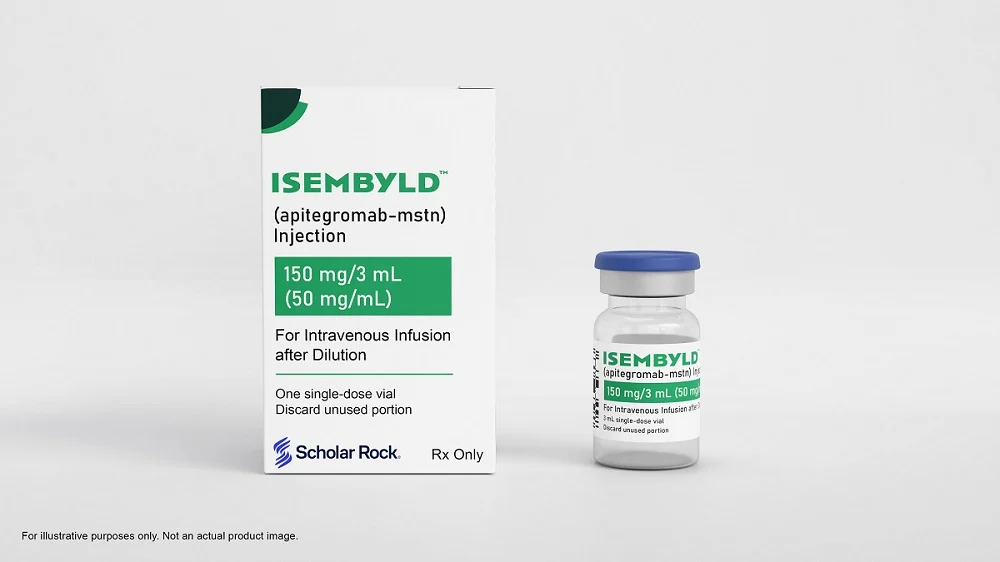
The U.S. Food and Drug Administration (FDA) has granted approval to Isembyld (apitegromab), a monoclonal antibody developed by Scholar Rock, as an adjunctive treatment for patients with spinal muscular atrophy (SMA). This landmark decision, announced following the close of market on Friday, establishes Isembyld as the first and only therapy designed specifically to target muscle tissue rather than the genetic drivers of the disease. The approval applies to adults and pediatric patients aged two years and older who are already receiving a background SMN-dependent therapy.
The authorization of Isembyld represents a significant shift in the treatment paradigm for SMA, a rare and often fatal neuromuscular disorder. For the past decade, therapeutic innovations have focused almost exclusively on increasing the production of the survival motor neuron (SMN) protein. While these genetic therapies have transformed the prognosis for many patients, they often leave a gap in addressing the progressive muscle atrophy and weakness that persist even when protein levels are stabilized. Isembyld seeks to fill this gap by acting directly on the skeletal muscle to improve physical function and mobility.
Understanding the Pathophysiology of Spinal Muscular Atrophy
Spinal muscular atrophy is an autosomal recessive genetic disorder characterized by the loss of motor neurons in the spinal cord and lower brain stem. This loss leads to severe and progressive muscular atrophy and weakness. The condition is primarily caused by mutations in the SMN1 gene, which is responsible for producing the SMN protein essential for motor neuron survival. Without sufficient levels of this protein, motor neurons die, and the signals between the brain and the muscles are severed.
The severity of the disease is often mediated by the number of copies of a "backup gene" known as SMN2. While SMN2 produces some functional protein, it is generally insufficient to prevent the onset of symptoms. Traditionally, SMA has been classified into types based on the age of onset and the maximum motor milestones achieved, ranging from Type 1 (infantile-onset, most severe) to Type 4 (adult-onset). Regardless of the type, the clinical hallmark is a relentless decline in muscle mass, which eventually compromises the patient’s ability to walk, swallow, and breathe.
Until the mid-2010s, there were no approved treatments for SMA. The landscape changed with the introduction of Biogen’s Spinraza (nusinersen), an antisense oligonucleotide; Novartis’s Zolgensma (onasemnogene abeparvovec-xioi), a one-time gene therapy; and Roche’s Evrysdi (risdiplam), an oral small molecule. While these treatments have been life-saving, many patients—particularly those who began treatment after significant motor neuron loss had already occurred—continue to experience muscle weakness that limits their independence and quality of life.
Mechanism of Action: The Science of Myostatin Inhibition
Isembyld introduces a novel mechanism of action to the SMA treatment landscape. Unlike existing therapies that target the genetic root cause, Isembyld is a selective inhibitor of myostatin activation. Myostatin is a member of the TGF-beta superfamily of growth factors and acts as a potent negative regulator of skeletal muscle mass. In essence, myostatin serves as a biological "brake" that prevents muscles from growing too large.
In the context of a wasting disease like SMA, this natural regulatory mechanism becomes detrimental. By blocking the activation of pro-myostatin and latent myostatin, Isembyld effectively releases this brake, allowing for the preservation and potential improvement of muscle volume and strength. Scholar Rock’s approach is unique because it targets the precursor forms of myostatin, which helps avoid the "off-target" effects seen in earlier generations of myostatin inhibitors that targeted the mature protein or the receptor.
During a conference call on Monday morning, Scholar Rock CEO David Hallal emphasized the importance of this dual-targeted approach. He noted that while SMN-upregulating therapies stabilize the motor neurons, Isembyld provides the necessary support for the muscles themselves, creating a comprehensive treatment strategy that addresses both the "engine" (the nerves) and the "chassis" (the muscles).
Clinical Evidence: The SAPPHIRE Phase 3 Trial
The FDA’s approval was supported by data from the pivotal Phase 3 SAPPHIRE clinical trial. This global, randomized, double-blind, placebo-controlled study evaluated the efficacy and safety of apitegromab in patients with Type 2 and Type 3 SMA who were already being treated with either Spinraza or Evrysdi.
The primary endpoint of the trial was the change from baseline in the Hammersmith Functional Motor Scale Expanded (HFMSE), a validated tool used by clinicians to assess motor function in patients with SMA. After 12 months of treatment, patients receiving Isembyld demonstrated a statistically significant and clinically meaningful improvement in their HFMSE scores compared to those in the placebo group. Specifically, data showed that while the placebo group (those on SMN therapy alone) continued to experience a slow decline in motor function, the Isembyld group showed stabilization and improvement.
In terms of safety, Isembyld was generally well-tolerated. The most frequently reported adverse events included upper respiratory tract infections, cough, and vomiting—events that are common in the pediatric SMA population. The drug’s label includes a warning regarding the risk of serious fractures, though the company’s R&D leadership noted that the incidence of fractures in the trial was consistent with the high baseline risk of fractures in patients with restricted mobility and low bone density. Importantly, no patients discontinued the trial due to fracture-related issues, and all injuries resolved while treatment continued.
Commercial Launch and Market Dynamics
Scholar Rock has confirmed that Isembyld will be available in the United States within days. The drug is administered via intravenous (IV) infusion every four weeks, typically in a clinical setting or infusion center. The company has set the wholesale acquisition cost (WAC) at $11,659 per vial. Because dosing is based on the patient’s weight, the total cost per infusion will vary.
Taking into account mandatory government rebates, payer discounts, and patient compliance rates, Scholar Rock estimates the annual net price of Isembyld will be approximately $310,000. This pricing strategy places Isembyld in a competitive position within the orphan drug market, where annual costs for chronic therapies often exceed $400,000.
Industry analysts at Leerink Partners have projected that Isembyld could achieve "blockbuster" status, with peak U.S. sales estimated at $1.4 billion by 2040. The global market potential is equally significant, with international peak sales forecasted at $1.35 billion. While the current approval is limited to the U.S., Scholar Rock is preparing for regulatory submissions in Europe and other major markets.
Overcoming Regulatory and Manufacturing Challenges
The path to approval was not without hurdles. In late 2024, the FDA issued a Complete Response Letter (CRL) regarding Scholar Rock’s initial application. The agency’s concerns were not related to the clinical efficacy or safety of apitegromab but were focused on manufacturing deficiencies at a third-party "fill-finish" facility owned by Novo Nordisk (formerly a Catalent site).
To resolve the issue, Scholar Rock took the strategic step of removing the problematic facility from its Biologics License Application (BLA) and transitioning its commercial supply chain to an alternative, FDA-approved site. This pivot delayed the launch by nearly a year but ultimately ensured that the company could meet the agency’s rigorous quality standards.
Expansion Potential: From SMA to Obesity and Beyond
While the current approval focuses on SMA, Scholar Rock is aggressively pursuing additional indications for apitegromab. The company is currently conducting a Phase 2 study in infants and toddlers under the age of two to determine if earlier intervention can further improve developmental milestones. Additionally, a mid-stage trial is investigating the drug’s efficacy in facioscapulohumeral muscular dystrophy (FSHD), another rare muscle-wasting condition.
Perhaps the most high-profile expansion opportunity lies in the field of metabolic health. As the use of GLP-1 receptor agonists (such as Zepbound and Wegovy) for weight loss has skyrocketed, a significant clinical concern has emerged: the loss of lean muscle mass alongside fat loss. Preliminary data from Scholar Rock’s Phase 2 EMBRAZE trial showed that when apitegromab was used in combination with Eli Lilly’s Zepbound (tirzepatide), it helped preserve lean mass significantly better than tirzepatide alone.
While the company intends to seek a strategic partner to fund the massive clinical trials required for the obesity market, the potential for Isembyld to serve as a "muscle-protective" companion to weight-loss drugs represents a multi-billion-dollar upside.
Financial Position and Strategic Outlook
As of the second quarter of 2026, Scholar Rock reported a robust cash position of $492 million. This capital provides a significant runway for the commercial launch of Isembyld and the continuation of its pipeline development. Furthermore, the FDA approval was accompanied by a Rare Pediatric Disease Priority Review Voucher (PRV).
These vouchers are highly valuable assets in the pharmaceutical industry, as they can be used to accelerate the FDA review timeline for a future drug or sold to another company. Recent transactions for PRVs have commanded prices near $200 million. Scholar Rock’s management has indicated they intend to sell the voucher to further bolster their balance sheet, providing non-dilutive capital to support the Isembyld rollout.
The approval of Isembyld marks a maturation point for Scholar Rock, transitioning the Cambridge-based firm from a clinical-stage biotech to a commercial-stage biopharmaceutical company. For the SMA community, it offers a long-awaited solution to the problem of muscle weakness, providing a new layer of hope for thousands of patients striving for improved physical function and a more active life.

