
The Digital Genesis of a Crossover Event
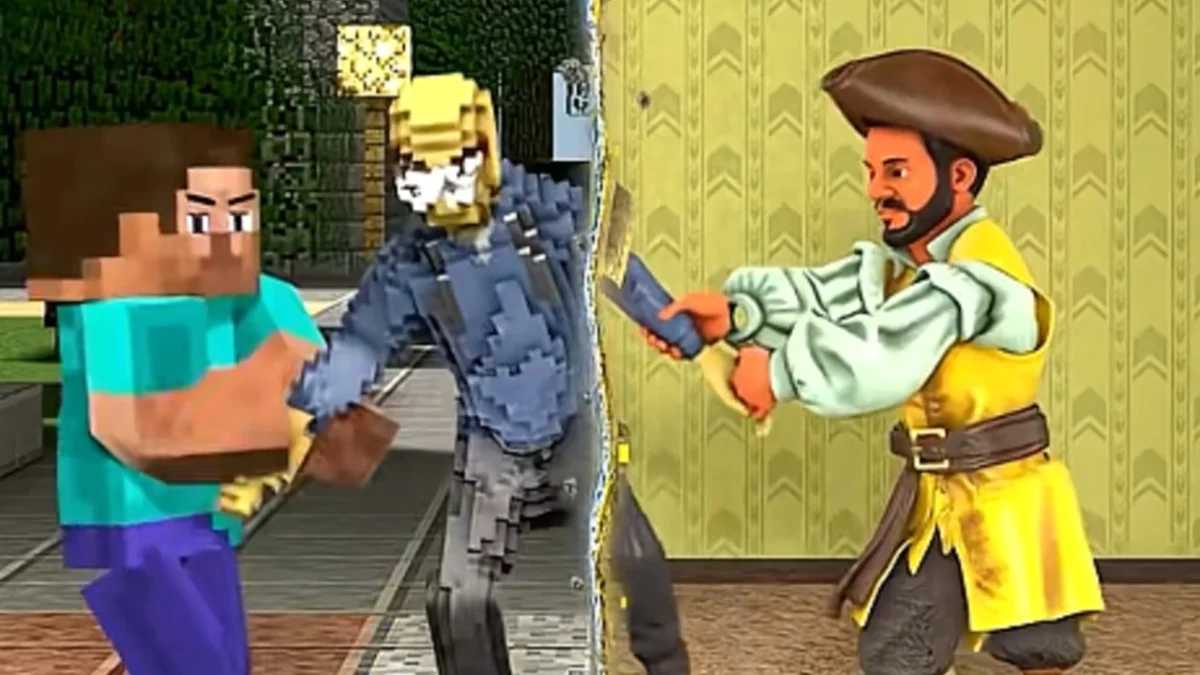
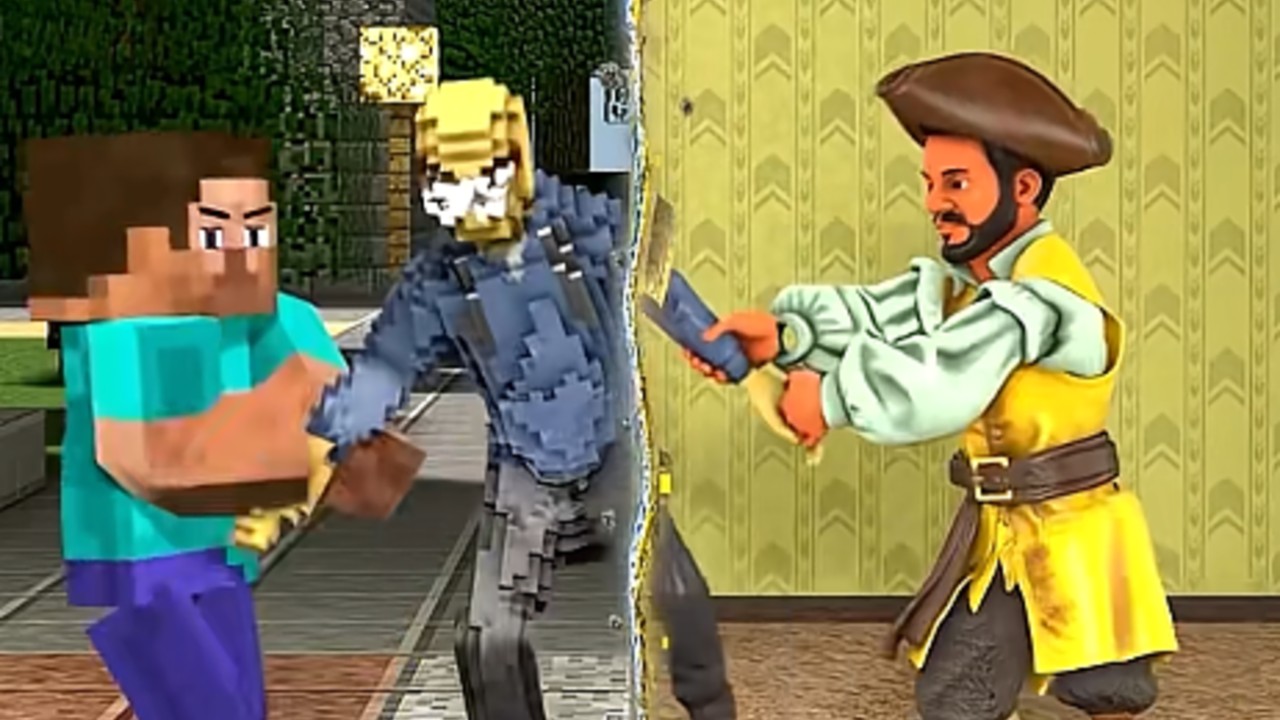
The origin of this viral cycle can be traced back to August 31, 2026, when the TikTok creator @web24535 uploaded a short-form animation that would serve as the template for the entire movement. In the video, Pirate Clark—a character popularized through the Backrooms horror lore—and Steve, the protagonist of Mojang’s Minecraft, are depicted in a stylized tug-of-war. The prize of their struggle is Verity, a character whose visual design shifts dynamically depending on which side is winning the struggle. When pulled toward Steve, Verity adopts a blocky, pixelated aesthetic consistent with Minecraft’s engine; when pulled toward Pirate Clark, the character takes on a more weathered, eerie appearance suitable for the yellow-walled corridors of the Backrooms.
The animation was accompanied by a catchy, rhythmic vocal track that repeatedly asserts, "Verity’s from Minecraft, he belongs to Backrooms." This audio component proved to be the catalyst for the meme’s expansion. Within three weeks of its initial publication, the original video surpassed 400,000 views, a figure that would soon be eclipsed by the sheer volume of user-generated content that utilized the soundbite.
Understanding the Components: Verity, Steve, and Pirate Clark
To understand the resonance of this meme, one must analyze the three distinct digital pillars it rests upon. Minecraft, a global gaming juggernaut, provides the character of Steve, representing the creative and adventurous side of internet culture. Conversely, the Backrooms represents a more modern, internet-native horror genre. Originally stemming from a 4chan post about "noclip-ing" out of reality into an endless maze of empty office rooms, the Backrooms has evolved into a massive collaborative fiction project. Pirate Clark is a character that emerged from the cinematic expansions of this lore, often associated with the high-production-value YouTube series that brought the concept into the mainstream.
The third element, Verity, is the most niche. Verity is a central figure in the "Verity Minecraft ARG," a community-driven mystery where players uncover cryptic messages and "haunted" modifications within the game. By positioning Verity as the object of a custody battle between two massive franchises, the meme acknowledges the character’s dual nature: he is technically a Minecraft entity, but his unsettling, "glitch-in-the-matrix" behavior makes him a natural fit for the existential horror of the Backrooms.
Chronology of Viral Proliferation
Following the initial upload in late August, the meme underwent a period of rapid evolution during the first three weeks of September 2026.
On September 19, 2026, the trend migrated to Instagram. A user known as @tgpu posted a satirical video that superimposed the "Verity" animation over a screen-recorded argument in a YouTube comment section. The argument featured fans debating the "true" home of the character, with the meme serving as a meta-commentary on the intensity of fandom disputes. This post garnered nearly 4,000 likes in 48 hours, signaling that the meme had successfully transitioned from a simple animation to a versatile tool for social commentary.
The following day, September 20, marked the peak of the meme’s creative diversification. Three distinct types of content emerged almost simultaneously:
- Geopolitical Satire: TikToker @her.7hme4b applied the "Verity’s from Minecraft" template to a map of the Balkans. In this version, the nation of Kosovo was labeled as "Verity," while Serbia and Albania were represented by Steve and Pirate Clark, respectively. The video used the tug-of-war metaphor to represent the complex territorial and cultural tensions in the region. This abstract application demonstrated the meme’s "brain rot" potential—a term used by Gen Z and Gen Alpha to describe memes that are nonsensical yet oddly applicable to serious topics. This specific iteration gained over 187,000 views in a single day.
- Atmospheric Remixes: As is common with viral audio, the "slowed + reverb" community quickly adopted the track. TikToker @dihpressed.bobby released a version of the song with a lowered pitch and heavy echo, transforming the upbeat jingle into a melancholic, "liminal" anthem. This version appealed to the "aesthetic" side of TikTok, garnering 350,000 views in 24 hours.
- Lip Dubs and Performance: Influencers such as @ojsthename began performing lip-syncs to the audio, often using the video to ask their followers to "choose a side." These engagement-focused posts pushed the audio into the TikTok "For You" page (FYP) algorithm, leading to an additional 366,000 views for that single creator.
Statistical Analysis and Search Interest
Data from digital trend trackers indicates that search interest for "Verity Minecraft" and "Pirate Clark Backrooms" saw a 450% increase between September 1st and September 21st, 2026. The demographic engaging with the content is primarily aged 13 to 24, a group that grew up with both Minecraft as a creative tool and the Backrooms as a foundational horror mythos.
The engagement rate for videos featuring the "Verity" audio track is notably high, with a comment-to-view ratio that suggests active debate. Users frequently participate in "roleplay" within the comments, pretending to be representatives of the Minecraft or Backrooms universes. This level of participation is a hallmark of "lore-heavy" memes, where the audience is already familiar with the backstories of the characters involved.
Broader Implications for Internet Culture
The success of Verity’s From Minecraft, He Belongs To Backrooms highlights several emerging trends in digital media:
1. The Rise of Intertextual Memes: Modern internet users no longer consume media in silos. This meme thrives on the "crossover" appeal, much like the "Super Smash Bros." of internet subcultures. The ability to recognize three different sources (Minecraft, Backrooms, and the Verity ARG) creates a sense of "in-group" belonging for the viewer.
2. Animation as a Meme Catalyst: While many memes rely on real-life footage or movie clips, the "Verity" trend was driven by original, independent animation. This suggests that low-to-medium fidelity 3D animation (often created in software like Blender or MikuMikuDance) is becoming a dominant language for viral content, allowing creators to manipulate characters in ways that live-action cannot.
3. The "Liminal" Aesthetic: The continued obsession with the Backrooms suggests that the "liminal space" aesthetic—images of empty, familiar places that feel "off"—remains a powerful psychological draw. By pulling a Minecraft character into this space, the meme taps into the "Uncanny Valley" effect, where something familiar becomes frightening.
Official Responses and Fandom Impact
While Mojang (the developers of Minecraft) and the various copyright holders of Backrooms-related media rarely comment on specific memes, the community impact has been profound. Discord servers dedicated to the Verity ARG saw a massive influx of new members, many of whom were introduced to the mystery through the TikTok jingle.
Some fans of the original Verity ARG have expressed concern that the meme "oversimplifies" the character’s complex lore, turning a sophisticated mystery into a "brain rot" catchphrase. However, others argue that the visibility provided by the meme has revitalized interest in the ARG, which had previously been a relatively obscure corner of the Minecraft community.
Conclusion: The Future of the Verity Narrative
As the meme enters its late-cycle phase, it continues to evolve through increasingly abstract iterations. From "Verity" being used as a metaphor for international relations to the audio being layered into complex electronic dance music (EDM) tracks, the reach of the original August 31st animation has far exceeded its initial scope.
Verity’s From Minecraft, He Belongs To Backrooms serves as a case study in how modern digital folklore is constructed. It is a story told through 15-second clips, driven by a catchy rhythm, and sustained by a community that delights in the intersection of the playful and the macabre. Whether Verity "belongs" to the world of Minecraft or the depths of the Backrooms remains a point of playful contention, but his place in the history of 2026 internet culture is firmly established. As the digital landscape continues to favor short-form, high-concept crossovers, it is likely that Verity will not be the last character to find himself caught in a tug-of-war between two of the internet’s most enduring mythologies.

