
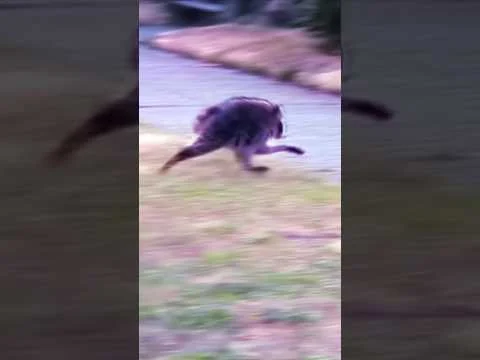
The digital landscape has recently been captivated by the emergence of a unique biological phenomenon in the form of Jimothy, a wild raccoon residing in the Seattle metropolitan area whose distinct physical appearance has sparked a global viral trend. Jimothy is characterized by a rare congenital condition known as Short Spine Syndrome, which gives him an unusually compact, "round" silhouette that deviates significantly from the typical physiology of the North American raccoon (Procyon lotor). While the internet has historically embraced "chonky" or aesthetically unique animals, the case of Jimothy represents a convergence of wildlife biology, urban ecology, and the rapid-fire nature of social media memetics. By July 2026, Jimothy had transitioned from a local curiosity to a central figure in internet culture, prompting discussions among veterinarians, wildlife experts, and digital anthropologists regarding the ethics of viral wildlife and the realities of genetic mutations in urban environments.
The Discovery and Identification of Jimothy
The narrative of Jimothy began in the early summer of 2026, when residents in the Queen Anne and Capitol Hill neighborhoods of Seattle began sharing photographs of a "disproportionately short" raccoon frequenting backyard gardens and communal waste bins. Initially dismissed by some as a digital hoax or a product of generative AI, the legitimacy of the animal was confirmed through high-resolution video footage uploaded to platforms like YouTube and TikTok. These videos depicted a raccoon that appeared to lack a traditional neck and midsection, with its head seemingly fused directly to its shoulders and its hindquarters positioned much closer to its forelimbs than is biologically standard.
The name "Jimothy" was bestowed upon the creature by a group of local enthusiasts, a linguistic play on the name Timothy that fits within a broader internet trend of giving animals human-like, slightly archaic monikers. As documented by digital culture analysts at Know Your Meme, the fascination with Jimothy peaked in late July 2026, following a comprehensive video report by Zach Sweat that detailed the animal’s movements and the specific nature of his condition.
Medical Analysis: Understanding Short Spine Syndrome
To understand the public’s obsession with Jimothy, one must first understand the medical reality of his appearance. Short Spine Syndrome is an exceptionally rare genetic mutation that results in the severe shortening of the spinal column. The condition is characterized by the compression or fusion of the vertebrae, leading to a hunchbacked appearance and a significant reduction in the animal’s overall length. While the head and limbs typically grow to a normal size, the torso remains stunted, creating a compressed, "squashed" aesthetic.
Historically, Short Spine Syndrome has been most documented in domestic dogs. Famous cases such as "Quasi Modo," a mixed-breed dog that won the World’s Ugliest Dog contest in 2015, and "Pig the Unusual Dog," helped bring the condition to the public eye. However, its occurrence in wild populations, particularly in procyonids like raccoons, is significantly less common or, at the very least, less frequently documented.
Veterinary experts suggest that the mutation occurs during embryonic development. The vertebrae do not harden into individual bones but rather fuse into a singular, twisted mass. This affects the animal’s mobility; creatures with Short Spine Syndrome often cannot turn their heads and must move their entire bodies to change their field of vision. In Jimothy’s case, his ability to navigate the vertical terrain of Seattle—climbing fences and trees—indicates a high level of adaptation despite these physical constraints.
A Timeline of the Viral Phenomenon
The trajectory of Jimothy’s fame follows a standard but accelerated model of viral growth:
- Early June 2026: First "sighting" posts appear on Seattle-based Reddit threads and Nextdoor communities. Users speculate on whether the animal is injured or a new "breed" of urban raccoon.
- Late June 2026: A TikTok user captures a 15-second clip of Jimothy successfully navigating a suburban bird feeder. The video garners 5 million views in 48 hours, with the soundtrack "Just a Cloud Away" by Pharrell Williams becoming synonymous with the animal.
- July 10, 2026: Local news outlets in Washington state run "Human Interest" segments on the raccoon, interviewing residents who have spotted him. This legitimizes the story beyond social media circles.
- July 15-20, 2026: International meme accounts begin sharing Jimothy’s likeness, often comparing him to "borbs" (birds that appear perfectly round) and other "round" animal archetypes.
- July 23, 2026: Major digital culture archives and news platforms, including Know Your Meme, publish definitive guides on the "Jimothy the Raccoon" phenomenon, cementing his status as a 2026 cultural milestone.
Urban Ecology and Wildlife Adaptability
The survival of an animal like Jimothy in a wild or semi-wild environment is a testament to the resourcefulness of urban wildlife. Raccoons are known for their high intelligence and manual dexterity, traits that have allowed them to thrive in human-dominated landscapes. In the case of Jimothy, his physical limitations are mitigated by the abundance of resources in a city like Seattle.
Unlike a raccoon in a deep forest that must travel long distances and maintain high speeds to evade predators like cougars or wolves, an urban raccoon primarily contends with traffic and domestic pets. Jimothy’s "round" stature may actually provide a lower center of gravity, and his reliance on high-calorie human refuse means he does not need the same level of athletic prowess required for traditional hunting.
Wildlife biologists from the University of Washington have noted that while Jimothy is a biological anomaly, his presence highlights the "sheltered" nature of urban ecosystems. In a more hostile environment, the natural selection process would likely have prevented an animal with such severe skeletal deformities from reaching adulthood. In Seattle, however, Jimothy has become an apex scavenger, thriving on the periphery of human society.
Public Reaction and the "Cuteness" Factor
The psychological basis for Jimothy’s popularity lies in the concept of neoteny—the retention of juvenile features in adult animals. The shortening of the spine gives Jimothy a compact, large-headed appearance that mimics the proportions of infants or cartoon characters. This triggers a "baby schema" response in the human brain, leading to feelings of affection and a desire to protect the creature.
However, the viral fame has also brought about a debate regarding the "spectacularization" of animal disabilities. While many find Jimothy "delightfully round," some animal rights advocates argue that the meme-ification of his condition overlooks the potential physical discomfort the animal may face.
Statements from wildlife rehabilitators in the Pacific Northwest have urged the public to maintain a respectful distance. "While Jimothy appears to be healthy and well-fed, he is still a wild animal," stated a representative from a regional wildlife center. "The public fascination is understandable, but it is imperative that residents do not attempt to capture, touch, or overfeed him in hopes of generating social media content."
Data and Engagement Metrics
The impact of Jimothy on digital trends is quantifiable. Data from social media analytics firms indicate that between July 1 and July 23, 2026:
- Search queries for "Short Spine Syndrome" increased by over 1,200% globally.
- The hashtag #JimothyTheRaccoon amassed over 450 million views across major platforms.
- Merchandise featuring stylized "round raccoon" illustrations began appearing on third-party retail sites, though none are officially affiliated with the animal’s "management," as he remains a wild entity.
These metrics suggest that Jimothy has surpassed the typical shelf-life of a "funny animal video," entering the realm of a sustained internet subculture.
Ethical Implications and Official Responses
As the phenomenon continues to grow, city officials in Seattle have had to address the practical implications of a "celebrity" raccoon. There are concerns that fans may flock to specific neighborhoods, leading to increased human-wildlife conflict. The Seattle Department of Fish and Wildlife has issued a general advisory reminding citizens that feeding raccoons can lead to habituation, which often ends poorly for the animal.
Furthermore, the "Jimothy effect" has prompted a broader discussion on how we perceive genetic mutations. By framing Jimothy’s condition as a "cute" trait rather than a "disability," the internet has inadvertently fostered a more inclusive, albeit superficial, appreciation for biological diversity. However, experts warn against the romanticization of such conditions, noting that in domestic breeding, seeking out "short spine" traits would be considered highly unethical and a form of "extreme breeding" that compromises animal welfare.
Conclusion: The Legacy of Jimothy
Jimothy the Raccoon remains a symbol of the unpredictable intersections between the natural world and the digital age. His existence challenges our standard definitions of wildlife beauty and highlights the unique pressures and opportunities of urban living for non-human species. As he continues to roam the streets of Seattle, his digital shadow grows ever larger, serving as a reminder of the power of social media to turn a singular, anomalous life into a global conversation.
Whether Jimothy will remain a fleeting meme or become a permanent fixture of Seattle folklore remains to be seen. For now, he stands—albeit with a very short back—as a testament to the resilience of nature and the enduring human fascination with the unusual, the round, and the wild. The story of Jimothy is more than just a viral video; it is a complex narrative involving genetics, urban planning, and the collective psychology of a world that finds joy in a delightfully round raccoon.

