
The Genesis of the Controversy: The MetLife Performance
The tension began on September 4, 2026, during the New Jersey leg of Ed Sheeran’s world tour. Macklemore, who was serving as the primary opening act, utilized a portion of his set at MetLife Stadium to address the ongoing Israel-Palestine conflict. The rapper, whose legal name is Ben Haggerty, delivered an impassioned speech calling for a "Free Palestine" and criticizing the humanitarian toll of the conflict. Following the speech, he performed "Hind’s Hall," a protest song he released in May 2024 dedicated to the student activists at Columbia University and the memory of Hind Rajab, a six-year-old Palestinian girl killed in Gaza.
While Macklemore has been a consistent voice for Palestinian rights since 2023, the venue—a stadium with a capacity of over 80,000—provided a massive platform that drew immediate scrutiny. The performance was captured by thousands of fans and went viral on social media platforms like TikTok and X (formerly Twitter), sparking a divide between those who lauded his courage and those who viewed the stage as an inappropriate venue for political discourse.
The Rapid Escalation: Petitions and Corporate Pressure
The fallout from the New Jersey performance was nearly instantaneous. On September 6, 2026, the Israeli American Council (IAC) launched a formal petition calling for Macklemore’s removal from the remainder of the tour. The organization argued that the rapper was using his platform to spread "one-sided political propaganda" that they claimed could incite hostility toward Jewish concertgoers.
The controversy deepened when other prominent figures in the music industry began to weigh in. On September 11, the singer Pink published a lengthy statement on Instagram that garnered over 564,000 likes within days. While expressing general support for Palestinian freedom, Pink sharply criticized Macklemore’s delivery. She argued that Macklemore’s rhetoric was exclusionary, stating that he did not have the right to tell Jewish audience members that the conflict "wasn’t about them." Pink also referenced a 2014 incident in which Macklemore wore a costume that many perceived as an antisemitic caricature—an incident for which the rapper had apologized years prior, but which resurfaced as a focal point for his critics in 2026.
The Intervention of Robert Kraft and Gillette Stadium
The most significant turning point occurred as the tour prepared for its upcoming dates at Gillette Stadium in Foxborough, Massachusetts. Robert Kraft, the billionaire CEO of the Kraft Group and owner of both Gillette Stadium and the New England Patriots, reportedly intervened. Kraft, a well-known philanthropist and advocate for Jewish causes through his Foundation to Combat Antisemitism, took a hardline stance against Macklemore’s participation.
On September 14, Macklemore confirmed via social media that he had been officially removed from the tour. In a subsequent statement, Kraft’s representatives clarified the decision, citing "antisemitic rhetoric and imagery" that the venue ownership deemed "deeply offensive and hurtful." The statement made it clear that Sheeran would not be permitted to perform at Gillette Stadium on September 25 and 26 if Macklemore remained on the bill. This move highlighted the significant power that venue owners and stadium moguls hold over the logistics and content of international music tours.
Ed Sheeran’s Response and the "Neutrality" Backlash
Ed Sheeran, who had remained largely silent during the initial week of the controversy, released a formal statement on September 15, 2026. Sheeran’s response was characterized by an attempt to balance his personal views with his professional obligations. He described the Israel-Palestine conflict as a "human tragedy" and expressed his personal devastation over the suffering on both sides.
However, Sheeran’s explanation for the removal of Macklemore focused primarily on the logistics of the tour and the expectations of his audience. He noted that his concerts are designed for "unity, joy, and escapism" and are frequented by "young people, often children." Sheeran claimed that the decision to remove Macklemore was ultimately made by the promoters and the venues, rather than himself, though he admitted to speaking at length with Robert Kraft to try and "build a bridge."
The statement was met with significant backlash from the pro-Palestine community and Macklemore’s supporters. Critics accused Sheeran of "corporate complicity" and argued that by citing the presence of children as a reason to avoid politics, he was effectively silencing a call for human rights. On social media, the hashtag #ShapeOfNetanyahu began to trend, a derisive play on Sheeran’s hit song "Shape of You," suggesting that his silence or neutrality was an implicit endorsement of the status quo.
The Domino Effect: Supporting Acts Resign
The controversy reached a fever pitch on the evening of September 15, when the remaining supporting acts on the tour announced their resignation in solidarity with Macklemore. Within hours of Sheeran’s statement, artists Aaron Rowe, Lukas Graham, Beoga, and Finneas (the Oscar-winning producer and brother of Billie Eilish) all withdrew from the tour.
Finneas’s departure was particularly notable given his significant influence in the modern pop landscape. The mass exodus of the supporting cast left Sheeran’s upcoming stadium dates in a state of logistical chaos. This collective action by the supporting artists was viewed as a rare moment of industry-wide solidarity, signaling that younger artists were increasingly unwilling to remain silent in the face of what they perceived as the censorship of a peer.
Digital Discourse and the "Meme-ification" of the Feud
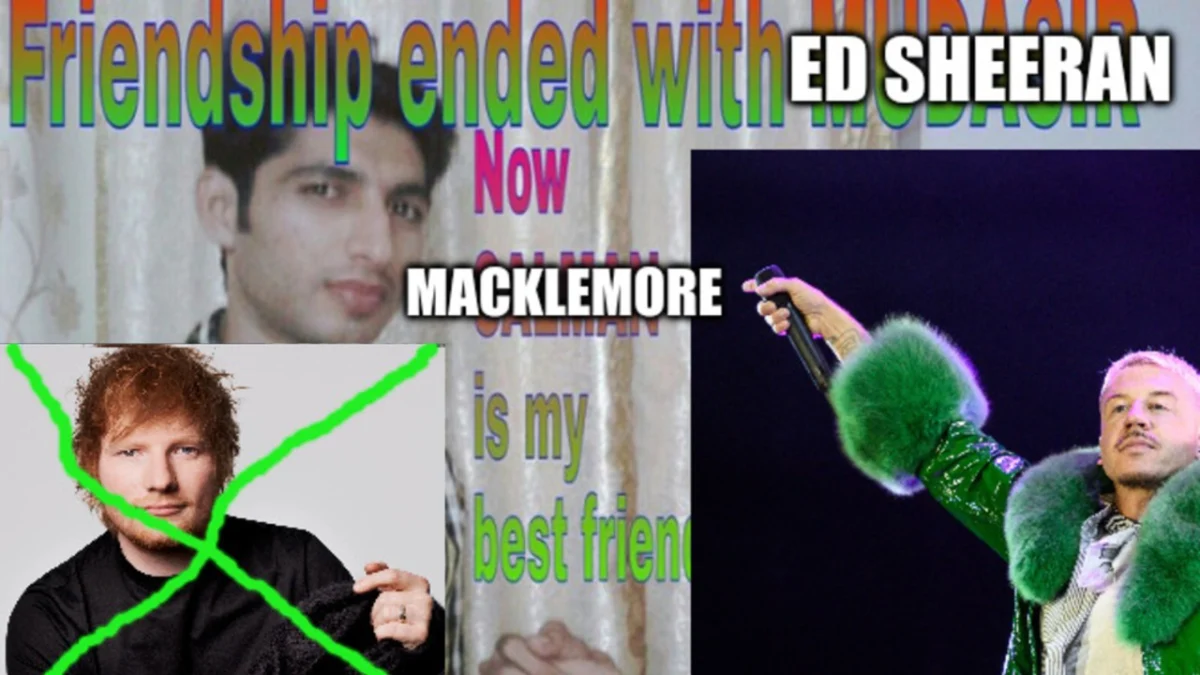
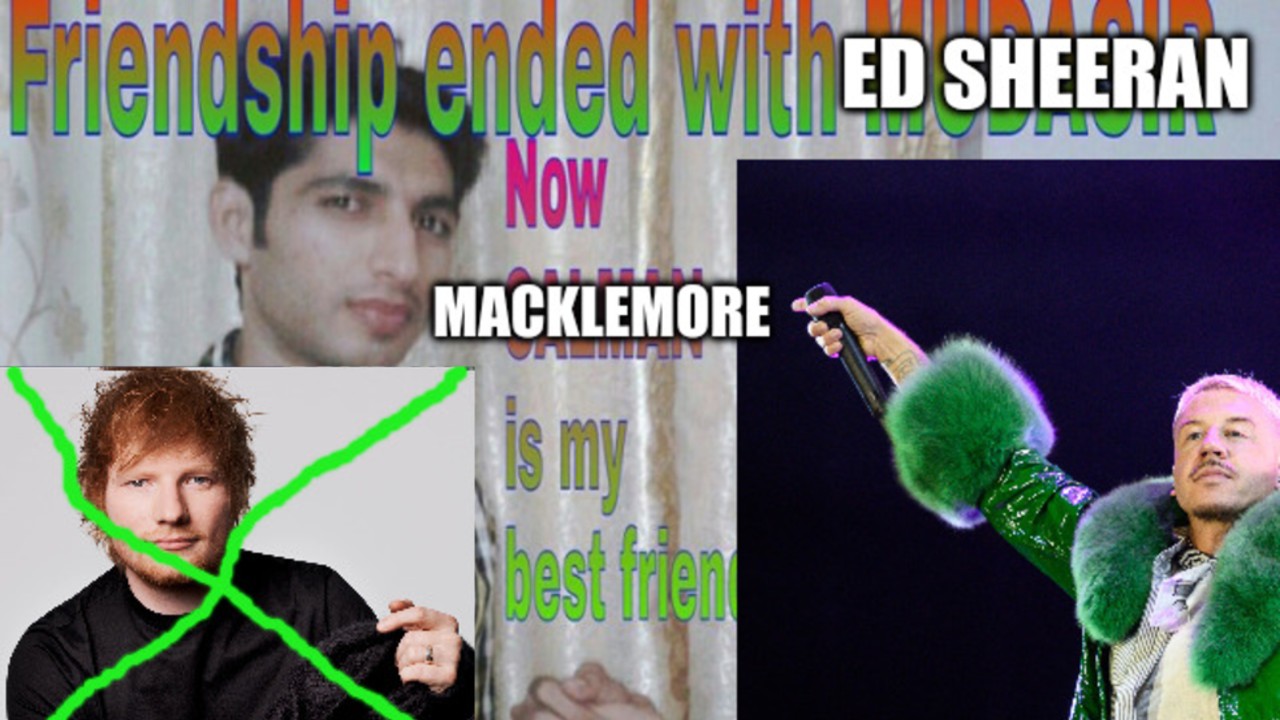
As the professional relationships crumbled, the internet became a battleground for memes and social commentary. On Reddit and X, users created satirical content that contrasted Macklemore’s outspoken activism with Sheeran’s carefully managed public image. One viral meme utilized the "Friendship Ended with Mudasir" format, declaring that Sheeran had been replaced by Macklemore as the "best friend" of the internet’s progressive wing.
The digital reaction also underscored a generational divide in how fans consume music and politics. While older demographics and some industry veterans defended Sheeran’s right to keep his concerts "apolitical," Gen Z and Millennial fans largely rallied behind Macklemore. The "Free Palestine" movement, which had already seen significant mobilization on college campuses earlier in the decade, found a new focal point in the music industry drama.
Fact-Based Analysis of the Implications
The Ed Sheeran and Macklemore controversy of 2026 serves as a landmark case study for several emerging trends in the entertainment industry:
- The Power of Venue Owners: The role of Robert Kraft in this incident illustrates that the "gatekeepers" of live music are no longer just record labels or promoters, but the owners of the physical infrastructure where music is performed.
- The Failure of Neutrality: In a hyper-polarized political environment, Sheeran’s attempt to maintain a "neutral" or "safe" space for his audience was interpreted by many as a political choice in itself. This suggests that the "shut up and sing" era is increasingly incompatible with modern fan expectations.
- The Rise of Peer Solidarity: The decision by Finneas and others to drop out of a lucrative stadium tour demonstrates that social and political alignment is becoming a significant factor in professional collaborations within the music industry.
- The Limits of Corporate Sponsorship: As tours become more expensive and reliant on billionaire backing and massive stadium deals, the tension between artistic expression and corporate brand safety is likely to intensify.
Conclusion
By late September 2026, the Ed Sheeran tour continued, but under a heavy cloud of scrutiny and with a completely restructured lineup. Macklemore, meanwhile, saw a surge in streaming numbers for "Hind’s Hall" and became a symbol for artistic defiance. The controversy remains a pivotal moment in the intersection of celebrity, corporate power, and the global movement for Palestinian rights, highlighting the difficulty of maintaining a middle ground in a world where the personal, the professional, and the political are inextricably linked.

