
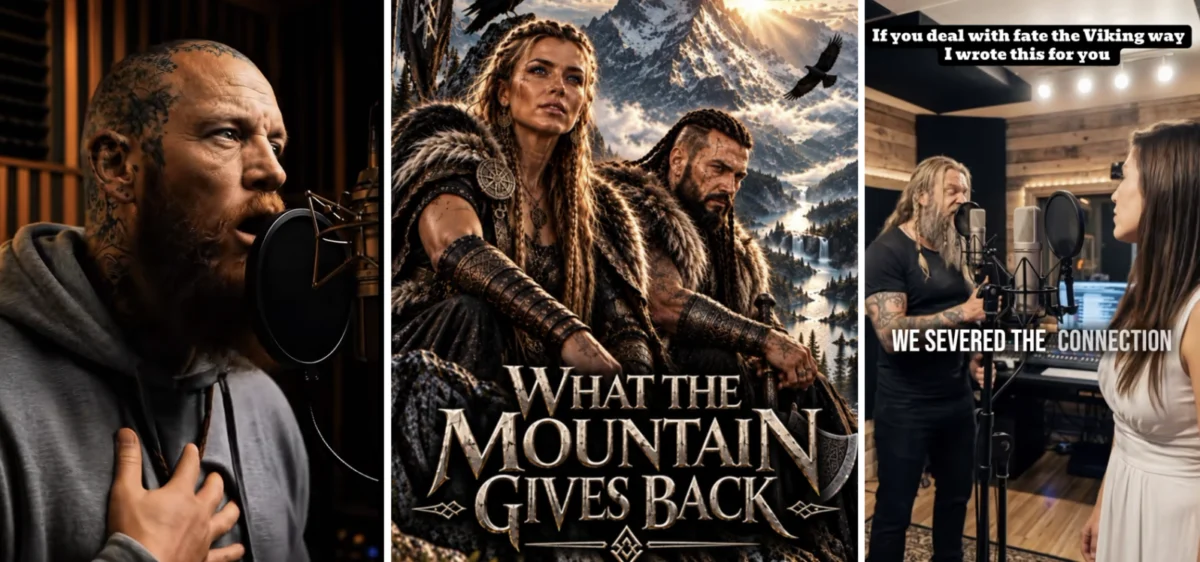
The Rise and Controversy of AI Viking Rap and the Digital Transformation of Norse Mythology in Modern Hip-Hop represents a significant shift in the landscape of digital content creation, signaling the arrival of fully automated musical subgenres that achieved mainstream visibility throughout 2026. This phenomenon, colloquially labeled by critics as AI Viking Music Slop and by enthusiasts as Viking Hip-Hop, involves the synthesis of aggressive trap beats with lyrics centered on Norse mythology, Valhalla, and warrior culture, all generated through sophisticated artificial intelligence tools. While the trend has garnered millions of views across TikTok, Spotify, and YouTube, it has also ignited a fierce debate regarding the authenticity of art, the ethics of generative media, and the saturation of streaming platforms with algorithmic content.
The Aesthetic and Sonic Foundations of AI Viking Rap
The AI Viking Rap movement is defined by a rigid set of visual and auditory conventions that prioritize high-impact, archetypal imagery over nuanced artistic expression. Sonically, the genre typically features heavy 808 basslines, rapid-fire hi-hats characteristic of modern trap music, and gravelly, hyper-masculine AI-generated vocals. The lyrical content is almost exclusively focused on themes of Norse heritage, including blood oaths, the "call of the north wind," the guidance of Odin, and the glory of battle. Frequent references to "Viking Hip Hop Queens and Kings" serve as a recurring lyrical motif, aiming to bridge the gap between ancient warrior tropes and contemporary rap bravado.
Visually, the movement relies on AI-generated imagery and video that depicts a stylized, often historically inaccurate version of Norse culture. These visuals frequently feature hyper-muscular men covered in intricate runic tattoos, alongside blonde women portrayed as shieldmaidens or Valkyries. The settings are almost always dramatic, utilizing AI video generators to create backdrops of mist-covered mountains, burning battlefields, and modern recording studios where the fictional Viking personas appear to be performing. This blend of ancient mythology and modern "flex" culture has become the hallmark of the genre, designed specifically to capture the attention of social media users through high-contrast, fast-paced visuals.
A Chronology of the 2026 Viral Surge
The emergence of AI Viking Rap was not the result of a single artist’s vision but rather the output of several large-scale digital operations and independent creators leveraging generative tools. The timeline of the genre’s dominance in 2026 illustrates a rapid ascent from niche experimental content to a pervasive social media trend.
The first major milestone occurred on February 21, 2026, when the AI-generated persona Draugr Balled released "Raven Calls / Vikings song." Initially uploaded to YouTube, the track quickly migrated to TikTok, where it served as a proof-of-concept for the genre. Within seven months, the song had accumulated over 660,000 views on TikTok, demonstrating an appetite for the "Viking flow."
The movement reached its peak on April 4, 2026, with the release of "North Wind Calls" by the same account. This track became the definitive anthem of the AI Viking Rap trend, garnering 8.5 million views and over 315,000 likes in five months. The success of "North Wind Calls" was amplified by a strategy of frequent re-uploads; versions posted in late May 2026 each secured an additional 5 million views, proving that the TikTok algorithm favored the repetitive, high-energy nature of the content.
By mid-summer 2026, other creators and "studios" entered the fray. On June 10, the account @ragalor released "RAISE THE BANNER," a collaboration between fictional AI entities Laga and Ragalor, which secured 3.2 million views. Shortly thereafter, on July 12, Black Crown Studio released "IRON IN MY VEINS (Pt. 1)," further diversifying the "Viking-core" output. The momentum continued into late August 2026 with releases like "In The Breach" by Viggo Ironside and "To My Mother" by Sigr Icefang, the latter of which attempted to inject emotional themes into the otherwise aggressive genre, earning 1.7 million views in just four weeks.
Technological Enablers: Suno and the Democratization of Production
The proliferation of AI Viking Rap is inextricably linked to the advancement of generative audio platforms, most notably Suno AI. These tools allow users to input text prompts—such as "aggressive Viking trap song about Ragnarok"—and receive a fully mastered audio track with vocals and instrumentation in under sixty seconds. The ease of production eliminated the traditional barriers to entry for music creation, such as instrumental proficiency, vocal talent, or recording equipment.
Furthermore, the integration of AI video generators allowed these "artists" to maintain a consistent visual identity without ever appearing on camera. By creating fictional personas like Draugr Balled or Valrya, creators could build "brands" that functioned like real musicians. This high-volume production model allowed for the release of entire albums, such as Valrya’s Rúnatal, which was marketed as an "Old Norse" experience despite its synthetic origins. The ability to flood streaming services like Spotify and Apple Music with dozens of tracks per month allowed these AI entities to capture hundreds of thousands of monthly listeners, siphoning attention and revenue from human creators.
Public Reception: Genuine Fandom vs. The "Music Slop" Critique
The reaction to AI Viking Rap has been deeply polarized, reflecting broader societal anxieties about the role of AI in the arts. On one side of the spectrum, a significant audience—often described by analysts as including "ironic" Gen Z listeners and "sincere" older demographics—embraced the music. For some, the tracks served as high-energy workout music or background noise for gaming. Data suggests that older social media users on platforms like Facebook were more likely to believe these personas were real performers, often leaving supportive comments praising the "warrior spirit" of the fictional artists.
Conversely, a large segment of the internet labeled the trend "AI Viking Music Slop." This term is used to describe low-effort, algorithmically generated content designed to exploit platform metrics rather than provide artistic value. Critics argue that the music is "cringe," citing the repetitive lyrics, the "uncanny valley" quality of the AI vocals, and the generic nature of the beats. Memes mocking the trend often feature parodies of the hyper-masculine visuals or jokes about how the lyrics sound like a parody of a Viking-themed television show.
Cultural historians and practitioners of Nordic folk music have also raised concerns. They argue that AI Viking Rap flattens complex Norse traditions into a caricature of "muscles and wolves," diluting the cultural heritage it claims to celebrate. The term "slop" reflects the sentiment that these tracks are the digital equivalent of fast food: mass-produced, lacking in nutritional value, and designed for immediate, thoughtless consumption.
Economic Implications and the "Dead Internet" Theory
The success of AI Viking Rap has significant implications for the music industry’s economic model. Because AI tracks can be produced at near-zero cost, they represent a high-profit margin for the entities controlling the accounts. When an AI song like "North Wind Calls" reaches millions of streams, it generates thousands of dollars in royalties that would otherwise go to human artists who invest months or years into their craft. This has led to calls for streaming platforms to implement clearer labeling for AI-generated content and to adjust royalty structures to protect human musicians.
Furthermore, the dominance of this genre is often cited as evidence of the "Dead Internet Theory"—the idea that a majority of internet traffic and content is now generated by and for bots. The fact that an entirely fictional subgenre could dominate the "For You" pages of millions of users suggests that algorithms are increasingly prioritizing content that is "optimized" for engagement rather than "authentic" human expression.
Analysis of Long-term Cultural Impact
As the AI Viking Rap trend persists, its long-term impact on the music industry remains a subject of intense study. One possible outcome is the "genre-fication" of AI, where synthetic music becomes its own recognized category, separate from human-led art. This would allow listeners to choose between "artisanal" human music and "functional" AI music.
However, the more concerning implication is the potential for cultural homogenization. Because AI models are trained on existing data, they tend to produce results that are an "average" of everything that came before. This leads to a feedback loop where the most generic versions of a culture—in this case, the Viking aesthetic—become the most visible. If the digital landscape continues to be flooded with "slop," the nuanced and experimental edges of human creativity may be buried under a mountain of algorithmic noise.
In conclusion, the AI Viking Rap phenomenon of 2026 serves as a case study for the future of digital media. It demonstrates the power of generative AI to create entire cultures from scratch, the speed at which algorithmic trends can achieve global reach, and the deep cultural fractures that occur when technology disrupts the traditional definitions of art and artist. Whether seen as a harmless viral trend or a threat to the integrity of the music industry, AI Viking Rap has undeniably altered the digital zeitgeist, leaving a trail of "warrior" anthems in its wake.

