
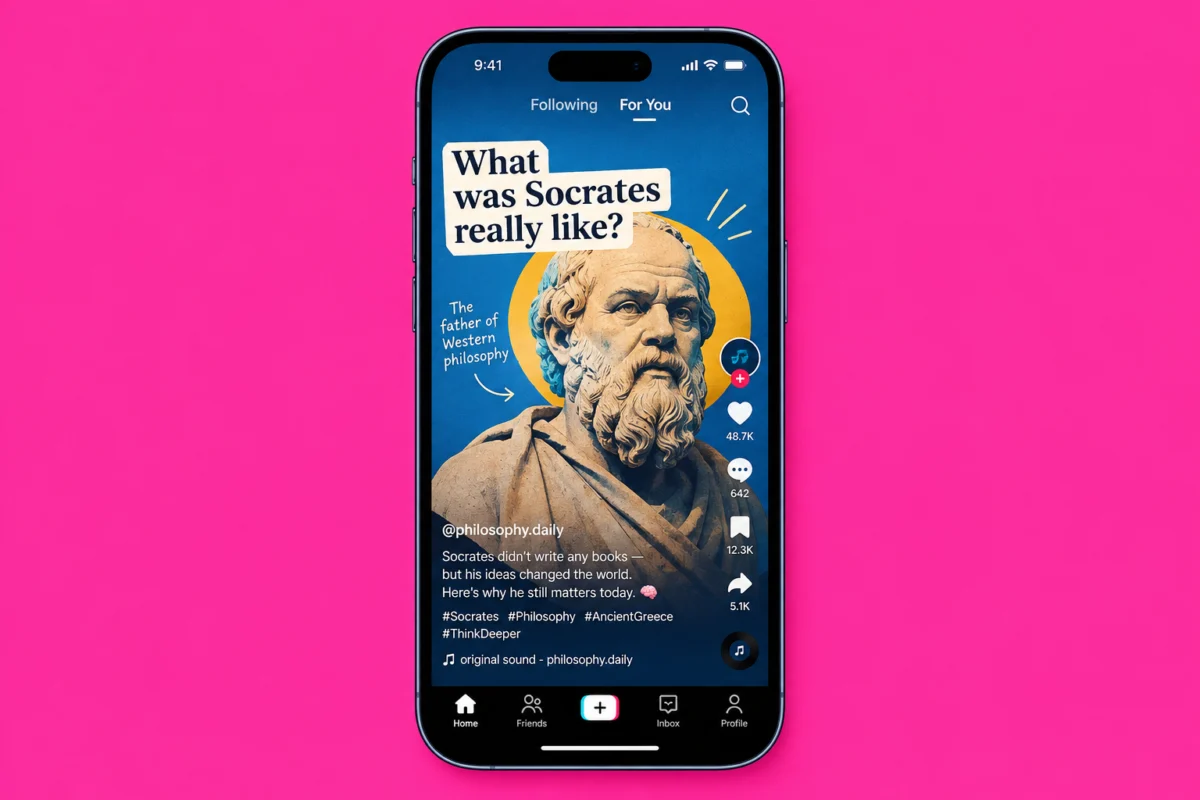
In an era increasingly defined by rapid digital consumption and dwindling attention spans, a Palo Alto-based startup, ScrollEd, is poised to disrupt traditional learning paradigms by transforming static educational content into dynamic, engaging scrollable feeds. The company is set to debut its innovative solution at the prestigious TechCrunch Disrupt Startup Battlefield 200 competition, presenting a novel approach that seeks to bridge the gap between contemporary digital habits and the imperative for deep, focused learning. ScrollEd’s core premise challenges the conventional wisdom that digital scrolling inherently detracts from intellectual engagement, proposing instead that the medium itself can be harnessed for profound educational benefit if reimagined with purpose.
The Digital Dilemma: Attention Spans and the Quest for Engagement
For years, society has grappled with the pervasive impact of digital technology on cognitive functions, particularly concerning attention and concentration. The ubiquitous smartphone, while a gateway to information, has also been blamed for cultivating "goldfish-like attention spans" and fostering habits like "doomscrolling," where users passively consume endless streams of often-negative content. This phenomenon has led to widespread concern among educators, parents, and even individuals themselves, who find it increasingly difficult to engage with long-form content like books or focus on complex academic tasks.
Studies from various research institutions, including a well-cited 2015 Microsoft Canada study, have indicated a measurable decline in human attention spans, reportedly dropping from 12 seconds in 2000 to just 8 seconds. While the precise figures remain a subject of ongoing debate, the anecdotal evidence is compelling: younger generations, having grown up immersed in platforms like TikTok, Instagram Reels, and YouTube Shorts, are demonstrably more accustomed to consuming information in bite-sized, vertically oriented formats. This shift presents significant challenges for educational institutions that largely rely on traditional textbooks, lectures, and lengthy research papers—formats that demand sustained attention and deep cognitive processing. The average daily screen time for adults, often exceeding several hours, underscores the sheer volume of digital interaction, much of which is dedicated to short-form social media. This landscape creates a powerful dichotomy: a generation highly proficient in digital navigation but potentially less adept at prolonged, linear engagement required for academic success. The critical question, then, becomes not how to eliminate digital engagement, but how to channel it constructively.
ScrollEd’s Innovative Approach: Learning Meets the Feed
ScrollEd’s solution directly addresses this modern educational predicament by proposing a fundamental re-evaluation of how learning materials are presented. Instead of fighting against the ingrained habit of scrolling, the startup embraces it, aiming to transform any text file—from dense PDFs to comprehensive textbooks—into an interactive, social media-like feed. The app’s interface is meticulously designed to mimic the familiar user experience of platforms like Instagram Reels or TikTok, making the transition from leisure scrolling to educational scrolling feel seamless and intuitive.
Upon converting a text file, the content unfurls as a rich, multi-modal stream featuring AI-generated video, audio, text snippets, and interactive quizzes. This diverse presentation caters to various learning styles, allowing users to absorb information visually, audibly, or textually, depending on their preference and the specific content. A core aspect of ScrollEd’s design is its navigational structure: a simple swipe up introduces a new topic, akin to moving to the next video in a social media feed. Crucially, a horizontal swipe allows users to delve deeper into the current topic, providing additional context, supplementary materials, or alternative explanations. This innovative depth mechanism ensures that while the initial engagement is short-form and dynamic, the opportunity for comprehensive understanding and exploration is always present, culminating in a quiz designed to reinforce learning and assess comprehension.
Utsav Gupta, co-founder of ScrollEd, articulated the company’s philosophy in an email to TechCrunch: "The younger generation is increasingly going short form, vertical feed only (especially the 18-year-olds we’ve spoken to!), and this poses challenges for any kind of media that requires depth. We want to meet them where they are." This statement highlights a pragmatic acceptance of current digital consumption trends rather than a utopian desire to reverse them. Gupta further elaborated on the deliberate design choice to prioritize learning over mere engagement maximization, stating, "We just have to be deliberate about how we use it and choose not to maximize engagement on the platform." This distinguishes ScrollEd from many social media platforms whose algorithms are often optimized for time spent on the app, sometimes at the expense of user well-being or productive outcomes. The goal, as Gupta emphasized, is to make "going deeper as easy as moving to the next video," thereby transforming casual curiosity sparked by a short video into structured, accessible learning.
The Founders’ Vision and Genesis
The genesis of ScrollEd is rooted in a shared personal experience of its co-founders, Utsav Gupta and his wife Rebecca Neff. Both are students themselves—Gupta pursuing studies in AI and human purpose at Stanford University, and Neff in computer science at the University of Pennsylvania. Their journey began with a relatable dissatisfaction: the feeling of mental exhaustion and unfulfillment after succumbing to "doomscrolling" before bedtime. This common modern predicament spurred them to consider how the addictive mechanics of social media could be repurposed for productive, meaningful engagement rather than passive consumption.
Bootstrapping the startup this year, Gupta and Neff leveraged their respective academic backgrounds and personal insights to develop ScrollEd. Their understanding of artificial intelligence, human-computer interaction, and the challenges faced by contemporary students provided a solid foundation for their venture. Their decision to self-fund the initial development phases underscores a lean, founder-led approach, driven by conviction in their product’s potential to address a significant societal need. This hands-on involvement from conception to execution has allowed them to rapidly iterate and refine their platform, ensuring it aligns with their core vision of making learning more accessible and engaging for the digital native generation.
Target Markets and Business Model: A Holistic Approach
ScrollEd is strategically positioning itself to serve a diverse range of users, from formal educational institutions to corporate training programs, and even individual learners seeking a more enriching digital experience. Gupta outlined the primary target audiences, stating the platform is for "educational institutions, corporate training programs, and individuals who just want something better to scroll on." This multi-pronged approach allows ScrollEd to tap into several burgeoning markets within the broader EdTech landscape.
For educational institutions, ScrollEd offers a compelling solution to the challenge of engaging students who are accustomed to dynamic digital content. Universities, colleges, and K-12 schools are constantly seeking innovative tools to supplement traditional curricula, improve student retention, and adapt to evolving learning preferences. ScrollEd could serve as a vital bridge, transforming lengthy academic texts into digestible, interactive modules that resonate with students’ digital fluency. The platform’s ability to provide data on engagement and lesson progress is particularly valuable for educators, offering insights into student comprehension and participation that traditional methods often lack.
Corporate training programs represent another significant market opportunity. Businesses are increasingly investing in continuous learning and development for their employees, often seeking efficient, engaging, and scalable solutions. ScrollEd’s microlearning approach, delivered through a familiar scrollable interface, is ideally suited for busy professionals who need to acquire new skills or refresh existing knowledge without committing to lengthy, disruptive training sessions. The institutional licenses would provide companies with the tools to deliver proprietary training materials, track employee progress, and ensure compliance in an engaging format.
Finally, the segment of individual learners encompasses a vast demographic of lifelong learners, self-improvers, and curious minds who are simply looking for a more meaningful way to spend their screen time. In a world saturated with ephemeral content, ScrollEd offers an alternative: an engaging platform where scrolling leads to genuine knowledge acquisition and intellectual growth. This consumer-facing aspect aligns with the founders’ personal motivation for creating a "better" scrolling experience.
ScrollEd’s business model is structured around a freemium approach, designed to encourage broad adoption while generating sustainable revenue. A free consumer feed allows individuals to experience the platform’s core benefits, potentially drawing in a large user base. For more advanced features and an ad-free experience, a paid ScrollEd Pro subscription is available. The primary revenue driver for institutional clients will be annual institutional licenses, which provide access to the platform for delivering educational material and, crucially, offer comprehensive reports on engagement, lesson progress, and other valuable data analytics. This data-driven insight into learner behavior is a significant selling point for institutions seeking to optimize their educational strategies. The global EdTech market, valued at over $250 billion in 2022 and projected to grow significantly, presents a robust environment for ScrollEd’s entry, particularly given the increasing demand for personalized and engaging digital learning solutions.
The Road Ahead: Future Development and Vision
The immediate future for ScrollEd is packed with critical milestones. The company plans a major consumer launch at TechCrunch Disrupt, an event Gupta lightheartedly described as an opportunity to "disrupt social media and short form!" This launch will be crucial for establishing ScrollEd’s brand and attracting its initial wave of individual users. Concurrently, the team will focus on building its lesson library, a foundational element that will determine the breadth and depth of educational content available on the platform. This effort will likely involve partnerships with content creators, educators, and publishers, alongside the continued development of their AI content generation capabilities.
A key aspect of this content development will be the source-checking workflow. Given the reliance on AI-generated content and the potential for misinformation, especially in an educational context, establishing rigorous fact-checking and content verification processes will be paramount to maintaining academic integrity and user trust. This is a significant challenge for any AI-driven content platform, and ScrollEd’s approach to it will be closely watched.
In parallel with the consumer launch, ScrollEd intends to develop pilots for institutions. These early partnerships with schools, universities, or corporations will be vital for demonstrating the platform’s efficacy in real-world educational settings, gathering feedback, and refining the institutional offerings. Such pilots often pave the way for broader adoption and larger-scale deployments.
Looking further ahead, ScrollEd harbors an ambitious vision: to develop infrastructure that enables adaptive learning. This advanced capability would allow the platform to assess individual learners’ needs, strengths, and weaknesses, and then dynamically adapt the content, pace, and presentation style to optimize their learning experience. Imagine an AI tutor that understands precisely when a student needs more foundational context, a different explanation, or a more challenging quiz, all delivered seamlessly within the scrollable feed. This level of personalization represents the frontier of educational technology and holds immense promise for maximizing learning outcomes.
Ultimately, Gupta encapsulates ScrollEd’s grand ambition: "The ambition is a social network that’s better for you." This statement transcends merely an EdTech platform; it speaks to a broader societal goal of transforming digital interaction from a passive, potentially detrimental activity into an actively beneficial and enriching one. It envisions a future where the addictive qualities of social media are redirected towards intellectual curiosity, knowledge acquisition, and personal growth, fundamentally redefining what a "healthy" social network can be. This includes combating the negative aspects often associated with current platforms, such as the spread of misinformation, the creation of echo chambers, and the fostering of digital addiction, by designing an ecosystem where engagement inherently leads to positive educational outcomes.
Broader Implications and Challenges
ScrollEd’s innovative model carries significant implications for the future of education and digital engagement. If successful, it could fundamentally shift how educational content is created, delivered, and consumed, particularly for a generation that has grown up with short-form video as their primary mode of information intake. It offers a potential pathway to reconcile the digital habits of modern learners with the enduring need for deep, substantive knowledge.
For education, ScrollEd could democratize access to high-quality learning materials by making them more engaging and accessible. It could also empower educators with new tools to personalize instruction and gain deeper insights into student learning patterns. The adaptive learning capabilities, once fully developed, could herald a new era of truly individualized education, where every learner’s journey is tailored to their specific needs and pace.
From a technological perspective, ScrollEd pushes the boundaries of AI in content generation and personalization within the EdTech sector. It demonstrates how AI can be leveraged not just for efficiency, but for creating more effective and human-centric learning experiences. Its success could inspire a wave of similar innovations aimed at repurposing existing digital behaviors for constructive purposes.
Societally, ScrollEd represents a hopeful model for more mindful and productive digital interactions. It challenges the narrative that digital platforms are inherently detrimental to cognitive function, instead suggesting that thoughtful design can transform them into powerful tools for personal and intellectual development. In a world increasingly concerned with digital well-being, ScrollEd’s vision of a "social network that’s better for you" resonates deeply.
However, the path to achieving this vision is not without its challenges. Content quality and accuracy will be paramount, especially with AI generation. Ensuring academic rigor and preventing the spread of inaccurate information will require robust source-checking and editorial oversight. User adoption in a crowded EdTech market will also be a hurdle, requiring effective marketing and demonstration of tangible benefits. Competition from established EdTech giants and other innovative startups will necessitate continuous innovation. Finally, addressing the ethical implications of AI in education, including data privacy and algorithmic bias, will be crucial for building trust and ensuring equitable access to quality learning.
As ScrollEd prepares for its launch at TechCrunch Disrupt, the tech world and educational community will be watching closely. Its success could not only carve out a significant niche in the EdTech landscape but also offer a compelling vision for how we can proactively shape our digital future, transforming passive scrolling into active learning. The event itself, taking place from October 13-15 in downtown San Francisco, serves as a vital platform for such innovative ventures, bringing together groundbreaking startups and industry leaders to explore the next frontiers of technology.

