
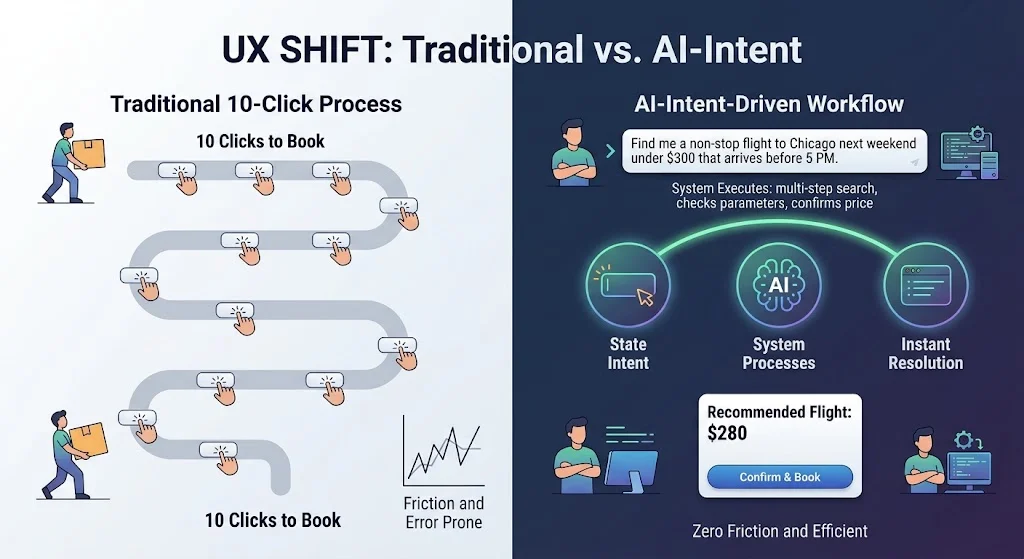
The global landscape of user experience (UX) design is undergoing its most significant transformation since the commercialization of the graphical user interface in the early 1980s. As artificial intelligence and large language models (LLMs) achieve mainstream integration, the traditional "point-and-click" paradigm—defined by menus, forms, and nested navigation—is being systematically replaced by a philosophy known as Intent-Driven Design. This shift marks a move away from designing visible, static interfaces toward the creation of transparent, goal-oriented systems that interpret human intent to execute complex tasks autonomously.
For over four decades, software interaction has relied on the user’s ability to navigate a digital labyrinth. Whether booking travel, managing finances, or conducting research, users have been required to manually bridge the gap between their high-level goals and the mechanical steps required by the software. Industry experts now argue that the "contract" between humans and computers is changing. Driven by the efficiency of generative AI, a new generation of web tools is prioritizing the elimination of the interface itself, aiming to fulfill the vision established by human-computer interaction (HCI) pioneers who argued that the most effective interface is one that is invisible.

A Chronology of User Interface Evolution
To understand the magnitude of the current shift, it is necessary to examine the historical trajectory of computing interfaces. The evolution of the web has moved through three distinct eras, each reducing the friction between human thought and machine execution.
The first era, defined by Command Line Interfaces (CLI), required users to learn specialized syntax to communicate with machines. This era was accessible only to technical experts. The second era began with the commercialization of the Graphical User Interface (GUI), pioneered by the Xerox Star in 1981 and brought to the masses by the Apple Macintosh in 1984. The GUI introduced the "WIMP" model (Windows, Icons, Menus, Pointers), which allowed users to interact with visual representations of data. This democratization of computing led to the modern web, where "point-and-click" became the universal standard for digital interaction.
The third era, which began to take shape with the release of sophisticated LLMs in late 2022, is defined by the Natural Language Interface (NLI) and Intent-Driven Design. In this current phase, the computer is no longer a passive container of data waiting for manual instruction; instead, it acts as an active agent capable of interpreting abstract goals. This timeline suggests that the industry is moving toward a "post-UI" future, where the primary role of the designer shifts from creating buttons to managing the logic of intent resolution.
The Mechanics of Intent-Driven Design
The transition to intent-driven systems is built upon three core pillars that differentiate it from traditional UX approaches: high-level goal capture, generative UI, and autonomous execution.
In traditional UX, user input is characterized by micro-actions. A user looking for a flight must select a departure city, an arrival city, dates, and various filters through a series of dropdowns and toggles. This "10-click process" treats the human as an orchestrator of parameters. Conversely, intent-driven design utilizes natural language to capture high-level goals. A single prompt—"Find me a non-stop flight to Chicago next weekend under $300"—allows the system to execute the search, comparison, and filtering in the background, presenting only the final resolution.
The second pillar, Generative UI, represents a departure from static layouts. Historically, every user visiting a specific URL would see the same interface regardless of their intent. Intent-driven platforms utilize dynamic rendering to create interface components on the fly. If a user expresses a need to analyze financial data, the system generates a custom calculator or chart; once the task is complete, the interface recedes. This ensures that the screen real estate is exclusively dedicated to the user’s current objective.
The third pillar involves execution by AI agents. Traditional interfaces are designed around prevention, often using confirmation modals to ensure users do not make mistakes. Intent-driven systems shift the focus from error prevention to easy reversibility. Because AI agents act on behalf of the user, the design prioritizes "Undo" functions, transparent audit logs, and frictionless rollback mechanisms, allowing for a more fluid and less interrupted workflow.
Market Adoption and Supporting Data
The shift toward intent-driven design is already reflected in the market performance and user adoption rates of AI-native platforms. Perplexity AI, a search engine that synthesizes answers rather than providing a list of links, reported reaching 10 million monthly active users within its first year of operation. By bypassing the traditional "tab-heavy" research process, the platform demonstrates a clear consumer preference for synthesized outcomes over manual data aggregation.
Similarly, in the software development and design sector, Vercel’s v0 platform has gained traction by allowing users to generate functional UI components through text prompts. According to market analysis from Bloomberg Intelligence, the generative AI market is expected to grow to $1.3 trillion by 2032, with a significant portion of that growth driven by AI-integrated software that automates routine design and coding tasks.
Data from the Nielsen Norman Group suggests that this shift represents a new paradigm in computing. Their research indicates that for the first time in 60 years, the fundamental interaction model has changed from "command-based" (where the user tells the computer what to do step-by-step) to "intent-based" (where the user tells the computer what outcome they want). This change is projected to increase productivity for high-complexity tasks by up to 40% in sectors like research, travel planning, and administrative management.
Case Studies: From Theory to Application
Several platforms currently serve as benchmarks for the successful implementation of intent-driven design:
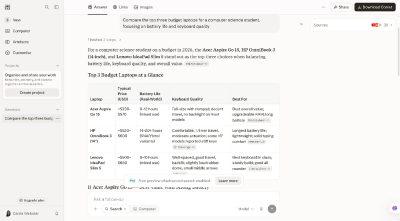
- Perplexity AI: Unlike Google, which functions as a directory of links, Perplexity acts as an answer engine. It interprets the intent behind a query, skims multiple sources, and provides a cited summary. This eliminates the need for users to open multiple browser tabs and manually cross-reference information.
- Vercel v0: This tool replaces the manual "drag-and-drop" or "code-from-scratch" workflow. By inputting a description of a dashboard or landing page, the system generates the underlying code and the visual interface simultaneously, allowing designers to focus on high-level architecture rather than pixel-pushing.
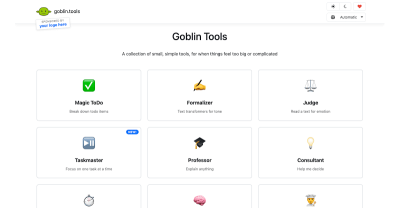
- Goblin.tools: Specifically designed to assist with executive function, this suite of tools takes a single overwhelmed thought (e.g., "I need to prepare for a job interview") and breaks it down into a granular, actionable checklist. It removes the friction of "starting" by automating the planning phase of a project.
Professional and Ethical Implications
The move toward invisible interfaces is not without significant risk. Designers and ethicists have raised concerns regarding the "Black Box Problem" and the "Illusion of Control." When software interprets intent rather than following direct commands, the potential for misinterpretation increases. If a system makes a mistake in a high-stakes environment—such as financial planning or medical research—the lack of visible steps makes it difficult for the user to diagnose where the error occurred.
The Google PAIR (People + AI Research) Guidebook emphasizes the necessity of transparent feedback loops. To maintain trust, systems must explicitly state their interpretation of the user’s intent. For instance, an AI agent should display a status message such as "Searching for non-stop flights under $300" to allow the user to correct the system before it reaches a final decision.
Furthermore, the Center for Humane Technology has cautioned against "manipulative defaults." As interfaces become more autonomous, there is a risk that platforms may steer users toward outcomes that benefit the service provider rather than the individual. Maintaining human agency in an automated environment remains one of the primary challenges for the next generation of UX professionals.
The Changing Role of the UX Designer
As buttons and menus recede, the role of the UX designer is being redefined. The traditional focus on visual aesthetics and layout organization is shifting toward "intent mapping" and "agent orchestration." Designers are now tasked with defining the boundaries of AI autonomy, ensuring that generative components are accessible, and creating robust systems for error recovery.
The industry is moving toward a standard where success is no longer measured by engagement metrics like "time spent in app" or "click-through rates." Instead, the new benchmark for excellence is "time to resolution." The ultimate goal of modern web design is to solve the user’s problem as efficiently as possible and then "get out of the way."
Broader Impact and Conclusion
The "Death of the Button" represents more than a change in aesthetic preference; it is a fundamental realignment of how humans interact with digital information. By moving from a model of manual management to one of seamless completion, the web is becoming more accessible to those who find traditional interfaces overwhelming or complex.
However, the transition requires a rigorous re-evaluation of design ethics and technical transparency. The industry must balance the convenience of automation with the necessity of human oversight. As we enter this era of invisible interfaces, the value of a digital product will be determined not by the beauty of its buttons, but by its ability to render those buttons unnecessary. The future of the web is not more interaction, but the quiet, efficient fulfillment of human intent.

