
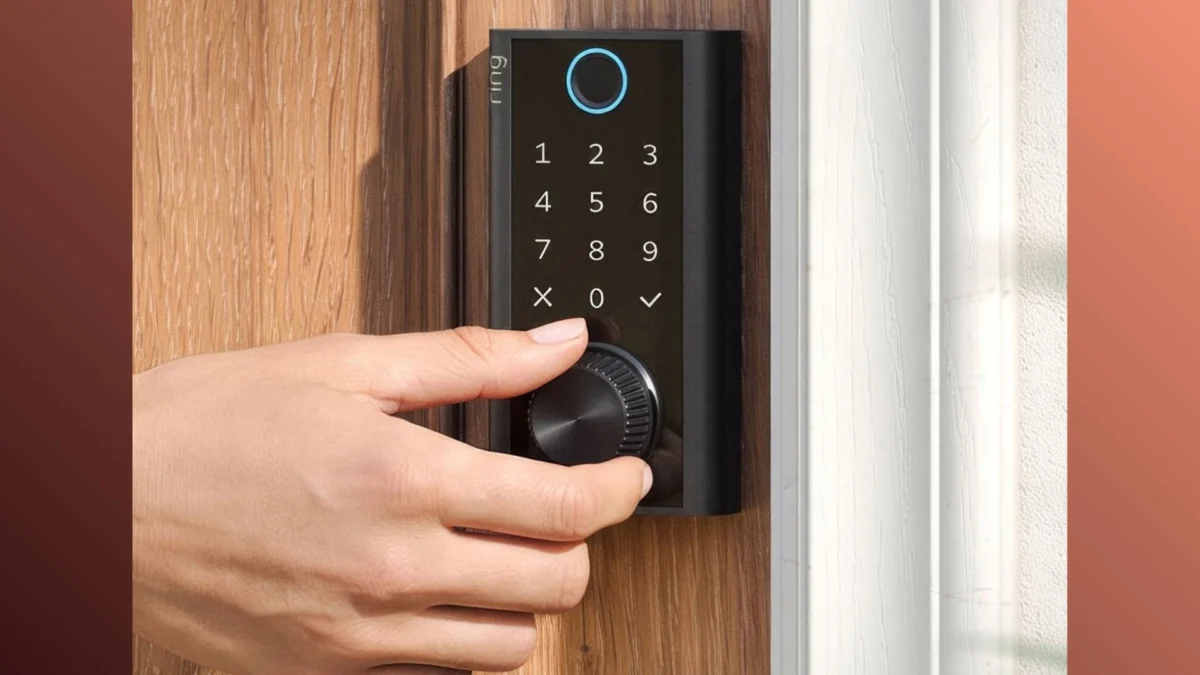
Ring, a company synonymous with smart home security, is poised to redefine user confidence in connected door locks with the upcoming launch of its latest Smart Lock. This innovative device tackles a perennial concern for smart lock adopters: the fear of being locked out due to a depleted battery. In a move that is both unconventional and remarkably practical, Ring has integrated a manual hand-crank mechanism, designed to generate enough power to grant access in the direst of low-power scenarios. This feature, championed by Ring founder Jamie Siminoff, aims to alleviate a significant psychological barrier that has historically deterred some consumers from embracing the convenience of smart home technology.
The genesis of this unique power solution stems directly from Siminoff’s personal insights into consumer anxieties. "Concerns about losing access when a smart lock runs out of power can put people off buying one," Siminoff reportedly stated, highlighting the core problem the new lock is engineered to solve. The solution is elegantly simple yet profoundly effective: a discreetly integrated wheel on the exterior of the lock. When the primary power source is critically low, a few deliberate turns of this hand crank are sufficient to provide a temporary power boost, ensuring that users can regain entry through their preferred authentication method.
The Mechanics of Emergency Access
The operational principle behind the hand-crank is rooted in fundamental physics and engineering. According to Ring’s technical disclosures, the act of turning the wheel engages a small, integrated motor. This motor, in turn, charges a supercapacitor, a high-capacity energy storage device that can rapidly absorb and discharge electrical energy. A mere three to four firm rotations are estimated to generate approximately three volts. This surge of power is enough to activate the lock’s core functions for around 30 seconds. This crucial window of time is designed to be ample for users to employ any of the lock’s primary access methods. These include the highly convenient fingerprint reader, the traditional PIN code entry via the keypad, unlocking remotely through the intuitive Ring app, or utilizing voice commands via Alexa integration.
This approach bypasses the conventional limitations of battery-powered devices. Instead of a slow decline into a restricted low-power mode, which might render certain functions inoperable, the hand crank provides an immediate, albeit temporary, restoration of full functionality. This is a critical distinction, as it ensures that the user’s ability to enter their home is not compromised by a gradual power drain, but rather by a deliberate, user-initiated action.
Addressing a Critical Pain Point: Battery Anxiety
The longevity of the Ring Smart Lock’s internal battery is projected to be substantial, with estimates suggesting up to a year of operation on a single charge. This impressive endurance means that the hand-crank feature is, for the vast majority of users, a safeguard against an infrequent, albeit highly stressful, event. However, the psychological impact of knowing such a backup exists is considerable. In an era where reliance on digital systems is pervasive, the prospect of being completely immobilized by a dead battery is a significant concern. The Ring Smart Lock’s innovative solution directly addresses this anxiety, offering a tangible and reliable fallback that does not depend on external resources like spare batteries, charging cables, or the availability of a nearby power outlet.
Expanding Use Cases and Potential Applications
Beyond its primary function of alleviating battery-related lockout fears for everyday homeowners, the hand-crank technology presents intriguing possibilities for more specialized applications. Jamie Siminoff himself has highlighted the potential utility of this feature in remote or infrequently visited locations. Consider a secluded cabin, a vacation home, or even a storage unit where regular power checks are not feasible. In such scenarios, the ability to generate emergency power on demand, without requiring a prior visit to ensure battery levels, could be invaluable. This aspect of the design underscores a commitment to robust functionality and user empowerment, even in challenging environments.
Product Specifications and Market Positioning
The upcoming Ring Smart Lock will feature a single-cylinder deadbolt, a standard and widely accepted mechanism for home security. A significant advantage is its design, which will not necessitate additional wiring, simplifying the installation process for homeowners. This plug-and-play approach aligns with Ring’s broader strategy of making smart home technology accessible and user-friendly.
Aesthetically, the lock will be available in three classic finishes: Black, Silver, and Brass, allowing consumers to select an option that complements their home’s exterior design. The projected retail price for the Ring Smart Lock is set at $249. This pricing positions the device competitively within the premium smart lock market, where features, reliability, and brand reputation are key differentiators.
While a precise launch date has not yet been officially confirmed, Ring is targeting the first few months of 2027 for the Smart Lock’s release. Siminoff has expressed a preference for an earlier release, ideally closer to January rather than March, indicating an eagerness to bring this innovative product to market. Interested consumers can already register their interest, signaling a strong anticipation for the device.
A Broader Ecosystem of Smart Home Innovation
The introduction of the hand-crank powered Smart Lock is not an isolated development within Ring’s product roadmap. The company is simultaneously preparing to unveil a suite of four new 4K cameras, further bolstering its comprehensive smart home security ecosystem. These new additions include the Outdoor Cam 4K Plus, Spotlight Cam 4K Plus, Floodlight Cam 4K Plus, and Indoor Cam 4K. These cameras promise enhanced visual clarity and advanced features, reflecting Ring’s commitment to providing high-resolution surveillance solutions.
In addition to the 4K camera lineup, Ring is also introducing a novel Pan-Tilt Indoor Cam 2K. This camera is distinguished by a base capable of a full 360-degree rotation and a 175-degree tilt, enabling comprehensive indoor monitoring. Notably, this camera will feature automatic movement tracking, allowing it to follow activity within the home, adding a dynamic layer to its surveillance capabilities.
The Strategic Significance of the Hand-Crank Lock
While the new camera offerings represent an expansion of Ring’s existing product categories, the Smart Lock’s unique backup power system stands out as a more disruptive innovation. The concept of a smart lock that can self-generate emergency power might initially seem like an over-engineered solution to a niche problem. However, its true value lies in its ability to systematically address one of the most persistent hesitations consumers have when considering the transition from traditional mechanical locks to connected alternatives.
The implications of this design choice are significant. By proactively mitigating a key fear, Ring is not only enhancing the user experience of its own product but also potentially accelerating broader consumer adoption of smart lock technology across the industry. The success of this feature could set a new benchmark for reliability and user-centric design in the smart home security sector. It demonstrates a company willing to think outside the box to solve fundamental user pain points, thereby reinforcing its position as a leader in the connected home space.
The integration of the hand crank is more than just a technical feature; it is a statement of intent. It signifies Ring’s understanding that convenience must be underpinned by unwavering reliability. In a market increasingly crowded with connected devices, Ring’s emphasis on this dual approach—offering advanced functionality alongside robust, failsafe mechanisms—positions it favorably for continued growth and consumer trust. The forthcoming launch of the Ring Smart Lock, with its distinctive power generation capability, is poised to be a compelling addition to the smart home security landscape.

