
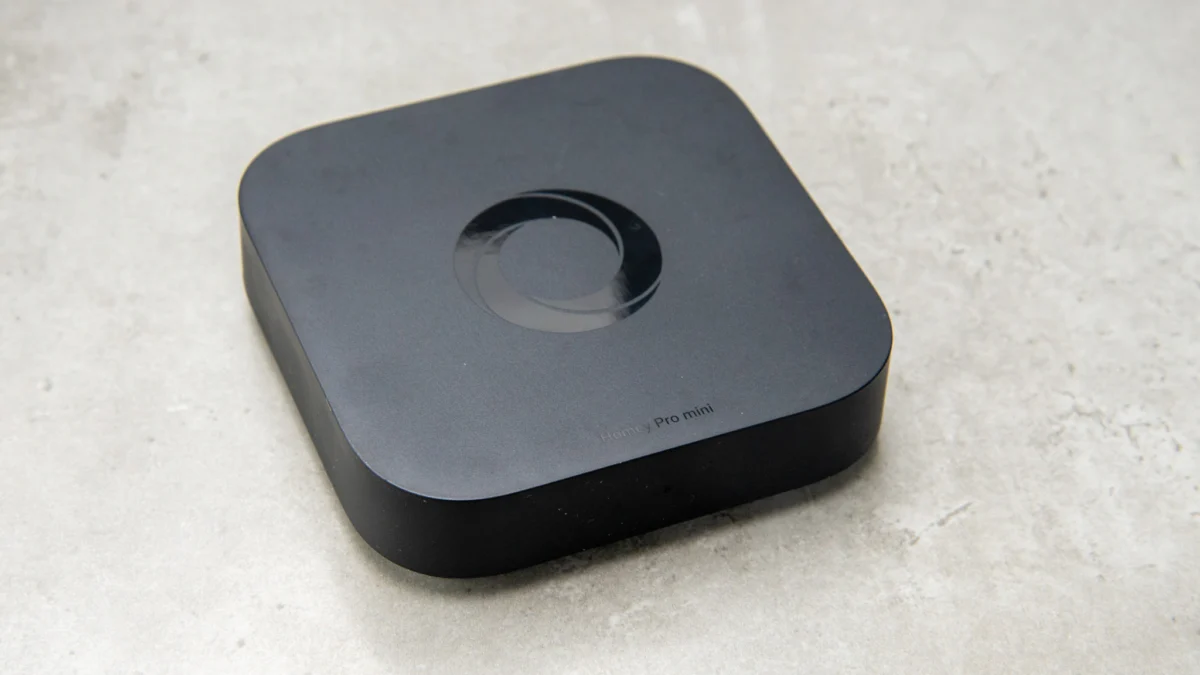
The smart home landscape, once a niche domain for early adopters, has rapidly evolved into a complex ecosystem of interconnected devices and platforms. At the forefront of this revolution stands Homey, a robust automation system developed by Athom B.V. While the flagship Homey Pro has long been lauded for its comprehensive capabilities, its premium price point presented a significant barrier to entry for many consumers. Recognizing this, Athom has introduced the Homey Pro mini, a strategically positioned device designed to democratize access to its powerful smart home automation platform without compromising core functionality. This evolution, bolstered by strategic investment from LG, signals a maturing market and a concerted effort to make advanced home automation more accessible.
The Homey Pro mini represents a deliberate scaling down of its more advanced sibling, offering a streamlined yet potent solution for the average household. By carefully balancing processing power, memory, and protocol support, Athom has created a device that delivers the essential smart home experience at a significantly reduced cost. For a substantial segment of consumers looking to build or expand their connected homes, the Homey Pro mini emerges as a compelling and cost-effective gateway.
Redefining Accessibility: Design, Installation, and Protocol Support

The core operational philosophy of the Homey ecosystem remains intact with the Pro mini, building upon the established strengths of its predecessors. The key differentiators lie in its internal specifications and the breadth of wireless protocols it natively supports. The Homey Pro mini is equipped with a 1.5GHz processor, a component shared with the more powerful Homey Pro. However, its RAM allocation is set at 1GB, which is half that of the original Homey Pro and a quarter of the capacity found in the most recent Pro model (often referred to as the 2026 Pro).
This adjustment in RAM directly impacts the number of applications, or "Flows" as they are known within the Homey ecosystem, that can be concurrently run. The Homey Pro mini can comfortably manage between 20 and 25 applications, a figure that, while lower than the 60 supported by the original Pro and over 100 by the latest Pro, is generally more than sufficient for the typical smart home setup. This deliberate limitation ensures that the device remains responsive and stable for the majority of users, avoiding the performance degradation that could occur with an overwhelming number of active automations.
Another significant distinction lies in the radio hardware. The Homey Pro mini boasts robust support for Thread, Zigbee, and Matter, three of the most prevalent and forward-looking smart home communication standards. Crucially, it omits native support for Z-Wave, Bluetooth, 433MHz, and Infrared (IR) protocols. While these omissions might be noted by advanced users or those with extensive collections of older, non-standard devices, they are unlikely to be missed by the average consumer. The smart home market is progressively consolidating around these key protocols, making the Pro mini’s native capabilities highly relevant for contemporary device integration.
For users who find themselves requiring the capabilities of the omitted protocols, Athom offers an elegant and cost-effective solution: the Homey Bridge. This supplementary device can be seamlessly integrated with the Homey Pro mini to unlock Z-Wave, Bluetooth, and other functionalities. Impressively, the combined cost of a Homey Pro mini and a Homey Bridge remains lower than purchasing a standalone Homey Pro, offering a flexible upgrade path without a prohibitive investment.

From an aesthetic standpoint, the Homey Pro mini deviates from the distinctive cylindrical form factor of the Homey Pro, adopting a more compact and unobtrusive square design with softly rounded edges. This new form factor allows for greater placement flexibility. On its rear, the device features a USB-C port for power and an Ethernet port. The inclusion of an Ethernet port is a notable advantage, as it provides a stable and reliable wired connection, a preference for many users seeking optimal network performance for their smart home hubs. While the larger Homey Pro lacks a built-in Ethernet port (requiring an adapter), the Pro mini makes it a standard feature. Conversely, the Pro mini does not include built-in Wi-Fi, necessitating a wired connection for network access. This choice prioritizes a stable, hardwired connection, often considered more reliable for critical home automation infrastructure.
Further enhancing its practical design, the underside of the Homey Pro mini incorporates mounting anchors, enabling discreet wall installation and freeing up valuable surface space. The initial setup process is designed for user-friendliness. Upon connecting the device, the Homey app guides users through the creation of their virtual "home," including the meticulous mapping of all available rooms. For those looking to manage multiple Homey devices, the HomeyLink app provides a unified interface, allowing users to view and control devices across different hubs, albeit with some limitations on the complexity of automations that can be orchestrated across separate units.
Unlocking Advanced Automation: Features and Performance
The Homey platform has undergone significant maturation since its earlier iterations, with Athom consistently enhancing its capabilities and device compatibility. The platform’s ability to integrate a vast array of smart home devices, whether through official partnerships or the extensive network of community-developed applications, is a testament to its robust architecture and active developer community.

The integration of Matter support has been a particularly significant development, streamlining the process of adding compatible devices and enabling direct control over an expanding catalog of products. For devices that predate Matter or lack native direct integration, Homey continues to offer cloud-based control through partnerships with numerous manufacturers. This dual approach ensures that users can connect a wide spectrum of smart home products, old and new.
A practical example of this enhanced compatibility can be seen with the Ring Alarm system. Previously, integrating individual Ring Alarm sensors might have been restricted to specific protocols like Z-Wave. However, with the official Ring integration, Homey now supports cameras and doorbells directly. Furthermore, through the community-developed Ring Security app, users can connect their Ring Base Station via the cloud. This allows for seamless control of the alarm system through Homey and, crucially, enables the Ring alarm status to serve as a trigger for complex automations within the Homey ecosystem. This allows for sophisticated scenarios, such as automatically arming the alarm when all occupants leave the house, detected by presence sensors linked to Homey.
The seamless integration of devices like the Aqara Valve Controller T1 is another illustration of Homey’s evolving capabilities. Connecting this device via its M200 hub proved to be a straightforward process, mirroring the ease of integrating Tado X devices. These integrations highlight Homey’s commitment to staying at the forefront of smart home standards and facilitating a frictionless user experience.
Where Homey truly distinguishes itself from many other major smart home platforms, such as Apple’s HomeKit, is in the depth and granularity of its automation features. While HomeKit often provides only basic triggers for its automations, Homey empowers users to leverage a comprehensive range of device parameters for creating sophisticated "Flows." For instance, with Tado X devices, users can construct automations based on multiple conditions, including on/off states, precise temperature thresholds, humidity levels, and even scheduled events. A compelling example is the ability to initiate a Flow that activates heating only if the ambient temperature has remained below 18°C for a sustained period of 20 minutes, ensuring comfort without unnecessary energy expenditure.

The "And" option within Homey’s Flow builder is a particularly powerful feature, allowing for the creation of automations triggered by the confluence of multiple independent conditions. This enables highly granular control over smart home devices. For instance, a motion sensor can be configured to activate Hue lights only when all of the following criteria are met: motion is detected, the ambient light level falls below a predetermined threshold, and the time of day is between sunset and sunrise. This intelligent logic prevents lights from unnecessarily illuminating during daylight hours, even if motion is detected.
Furthermore, Homey’s "Else" functionality allows for distinct actions to be executed based on different outcomes of a trigger. For example, upon locking an office door, a Flow could be set to simultaneously close the blinds and deactivate a smart plug. Concurrently, and only if it is after sunset, the garden lights could be activated, providing a safe path from the garden back into the house. This level of conditional logic and multi-faceted automation far surpasses the capabilities of most competing platforms, offering users unparalleled flexibility in tailoring their smart home experience to their specific needs and routines. This sophistication makes Homey a truly powerful and adaptable smart home hub, setting it apart from many mainstream alternatives.
Implications and Future Trajectory
The introduction of the Homey Pro mini is more than just a new product launch; it represents a strategic pivot by Athom to capture a broader market share within the increasingly competitive smart home sector. By offering a more accessible entry point to its premium automation platform, the company is effectively lowering the barrier to sophisticated home control. This move is particularly significant given the growing consumer interest in energy efficiency, convenience, and enhanced home security, all of which are core benefits of advanced smart home automation.

The investment from LG further validates the potential of the Homey platform and signals a commitment to its future development and expansion. This backing could lead to increased resources for research and development, further refinement of the user interface, and potentially deeper integrations with other smart home ecosystems or even LG’s own product lines. The broader implications for the smart home market are significant. A more accessible and powerful platform like Homey could accelerate the adoption of smart home technology among mainstream consumers, driving demand for compatible devices and fostering further innovation across the industry.
The Homey Pro mini’s success will likely be measured not only by its sales figures but also by its ability to foster a thriving community of users who actively contribute to its ecosystem through custom apps and shared automations. The platform’s inherent flexibility and power, now within reach of a wider audience, are poised to unlock new levels of personalized home automation. As the smart home market continues to evolve, devices like the Homey Pro mini are crucial in democratizing advanced technology and making the promise of a truly connected and intelligent home a reality for more households worldwide. The long-term impact will be a more interconnected and responsive living environment, where technology seamlessly integrates into daily life to enhance comfort, security, and efficiency.

