
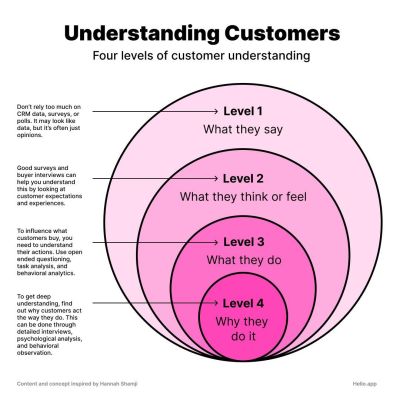
The gap between what consumers say and what they actually do remains one of the most significant challenges in modern product development and user experience (UX) design. While many organizations operate under the assumption that they possess a deep understanding of their target audience, industry data suggests that these insights are frequently built upon "hunches" rather than empirical evidence. To address this discrepancy, researchers and designers are increasingly adopting a multi-layered approach to human behavior, moving beyond surface-level feedback to uncover the hidden motivations that drive decision-making. By utilizing frameworks such as the Four Levels of Customer Understanding, pioneered by researcher Hannah Shamji, companies can transition from speculative design to evidence-based strategy.
The Structural Framework of Customer Understanding
The foundational challenge in UX research is that human reality is often messy, noisy, and contradictory. To navigate this complexity, the Four Levels of Customer Understanding provides a nested hierarchy of insights, ranging from external expressions to internal drivers.
The first level, "What they say," is the most accessible but also the most prone to bias. This includes verbal feedback, survey responses, and direct statements made during interviews. The second level, "What they think or feel," delves into the cognitive and emotional states that precede action. The third level, "What they do," focuses on observable behavior—the actual clicks, scrolls, and navigation paths users take when interacting with a product. Finally, the fourth and deepest level, "Why they do it," seeks to identify the root causes and underlying motivations that unify the previous three layers.
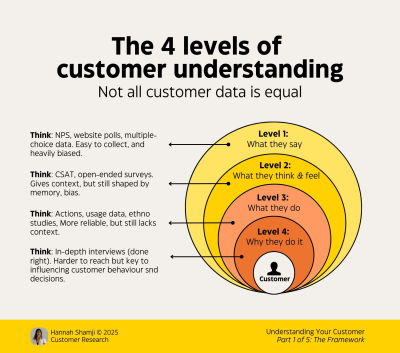
Industry analysts suggest that the failure to distinguish between these levels often leads to the "Say-Do Gap," a phenomenon where users express a preference for a feature but fail to utilize it in practice. Triangulating data across these four levels allows organizations to reconcile conflicting information and build a more accurate profile of their user base.
The Fallacy of Direct Questioning in Market Research
One of the most persistent myths in product design is that the most effective way to learn what a customer wants is to ask them directly. However, prominent design theorists, including Erika Hall, have long argued that direct questioning is often the least effective method for obtaining actionable insights. Human beings are frequently unaware of their true motivations and are prone to several cognitive biases that skew their verbal responses.
When asked about their needs, users often focus on "edge cases"—unrealistic or rare scenarios—rather than their daily routine. Furthermore, people tend to prioritize short-term goals over long-term benefits and may exaggerate their interest in a product to please the interviewer, a phenomenon known as social desirability bias. For instance, a user might state they "absolutely need" a complex product comparison table, yet when their behavior is tracked, they may find their answers through simple search queries or third-party reviews.
The linguistic nuance of user feedback also introduces significant variability. Research into verbal probability terms indicates that words like "possible," "likely," or "maybe" are interpreted differently across demographics and cultures. A study on Dutch verbal probability terms highlighted that while extreme terms have some consensus, mid-range descriptors lead to a wide spread of interpretations. This suggests that relying solely on the "What they say" level can lead to expensive miscalculations in product roadmaps.

The Evolution of UX Methodology: Observation Over Validation
A significant shift in the professional landscape is the move away from "validation" toward "diagnosis." In many corporate environments, user testing is framed as a way to validate existing assumptions or confirm that a design is "correct." Experts such as Nikki Anderson argue that this mindset is inherently flawed, as it seeks to prove a hypothesis rather than explore a reality.
Instead of validation, modern researchers advocate for a diagnostic approach. This involves observing users in their natural environment without external influence or interruptions. A common technique in the past was the "think-aloud protocol," where users were asked to narrate their thought process while completing a task. However, contemporary analysis suggests this can be disruptive. The act of speaking requires cognitive load that can obscure the user’s natural emotional response and behavior.
Current best practices emphasize silent observation. By monitoring where a user hovers with a mouse, where they scroll repeatedly, or where they pause in confusion, researchers can gather "Level 3" (What they do) data that is far more reliable than a post-task survey. Only after the user has completed the task or reached a point of total stagnation do researchers intervene with clarifying questions.
The Role of Empathy and the Spectrum of Engagement
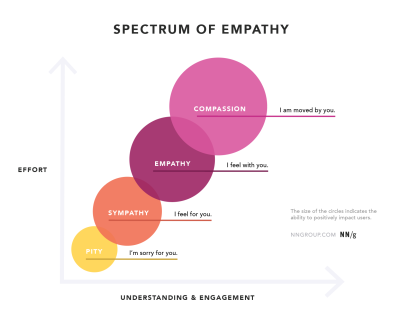
Understanding the emotional layer of the customer experience requires a nuanced approach to empathy. Sarah Gibbons of the Nielsen Norman Group identifies a "Spectrum of Empathy" that ranges from pity and sympathy to empathy and compassion. In the context of UX, moving toward empathy involves not just understanding a user’s pain points but internalizing their perspective to inform better design solutions.
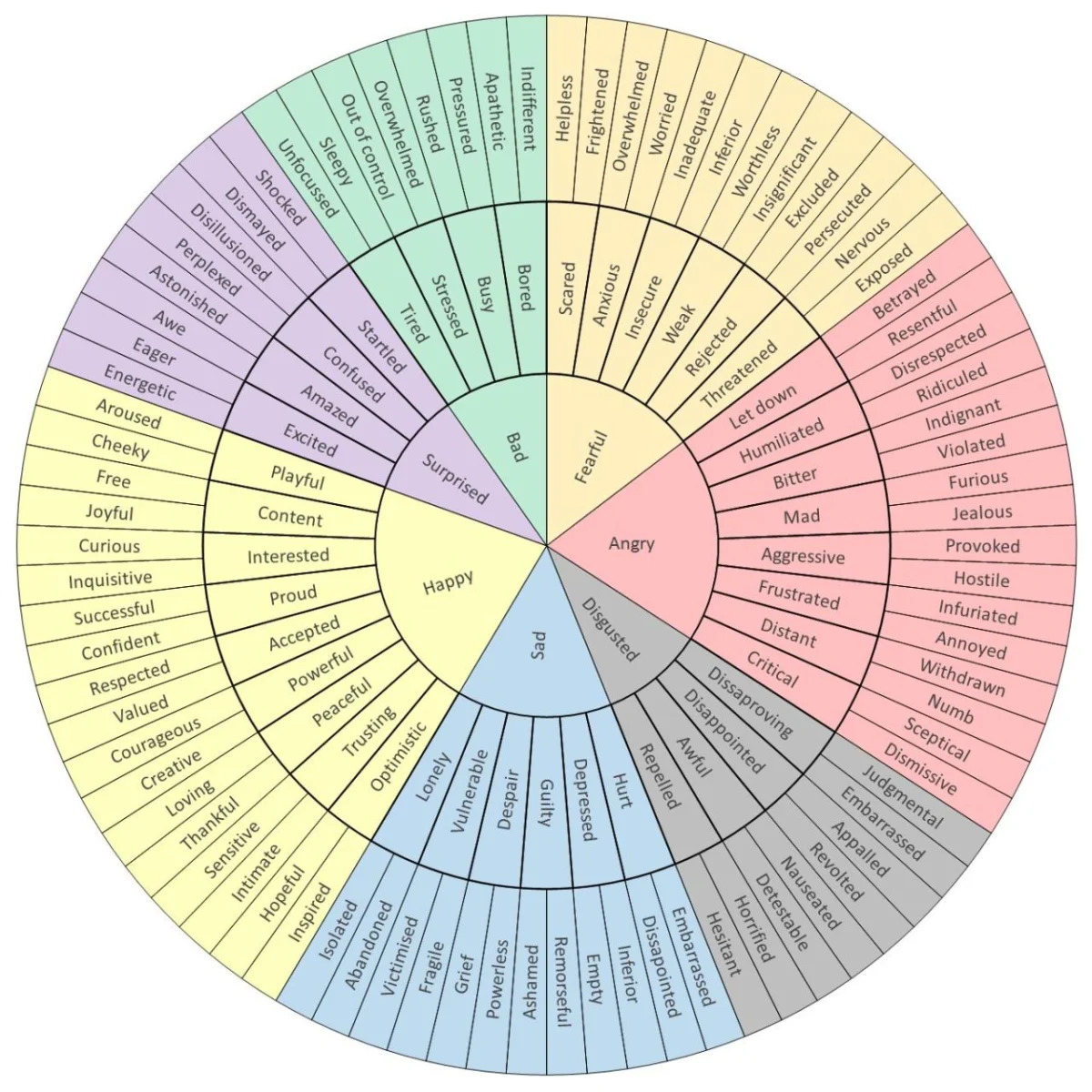
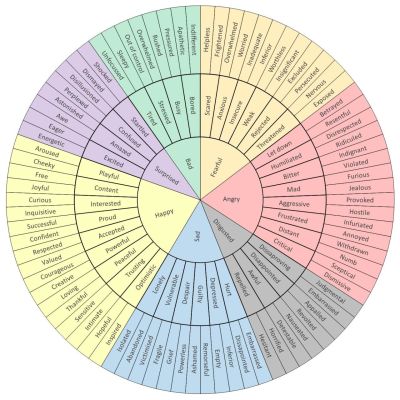
To assist in this process, tools like the "Emotion Wheel" are used to help users and researchers articulate specific sentiments. Rather than settling for vague descriptors like "good" or "bad," the Emotion Wheel allows for the identification of more precise feelings such as "frustrated," "overwhelmed," or "confident." This precision is vital for identifying the "Level 2" (What they think or feel) insights that drive long-term brand loyalty.
However, the emphasis on empathy is not without its critics. Some industry professionals, such as Alin Buda, argue that the goal of design is not to "emote" but to solve problems. This perspective suggests that while emotions are valuable signals, they should not be the sole focus of the research. The primary objective remains diagnosing the "mess" of the user’s problem and implementing a functional solution. This debate highlights the importance of balancing emotional intelligence with rigorous behavioral analysis.
Practical Strategies for Organizational Integration
For the Four Levels of Customer Understanding to be effective, the insights gathered must be disseminated across the entire organization, from engineering to marketing. Many companies fail not because they lack data, but because that data remains siloed within the research department.
To bridge this gap, several low-cost, high-impact strategies have emerged:
- The "Struggle" Newsletter: A monthly internal publication that highlights specific areas where users are failing or experiencing friction.
- Short-Form Video Clips: Sharing 30-second clips of user sessions during all-hands meetings to provide a visceral look at the user experience.
- The "Wall of Pain": A physical or digital space where customer complaints and struggle points are visualized for all employees to see.
- Mirroring and Paraphrasing: During interviews, researchers use mirroring—repeating the user’s last few words—to encourage them to provide more depth without leading the conversation.
These initiatives ensure that the "Level 4" (Why they do it) understanding becomes part of the company’s collective consciousness, reducing the reliance on "hunches" and "big assumptions."
Data-Driven Implications and the Cost of Misunderstanding
The economic implications of failing to understand the four levels of customer behavior are substantial. Industry reports suggest that up to 70% of software features are rarely or never used, representing a massive waste of development resources. This is often the direct result of building based on what users "said" in a focus group rather than what they "did" during a behavioral study.

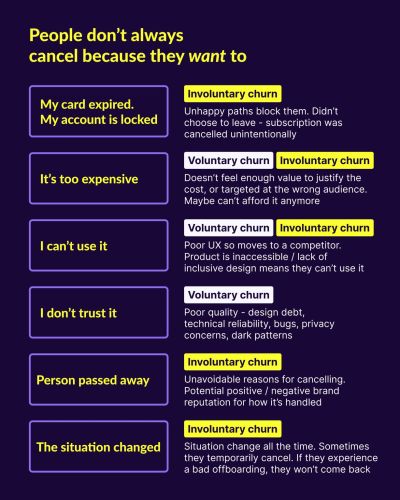
Furthermore, customer churn is often misunderstood. Data on subscription cancellations shows that "involuntary churn"—such as expired credit cards or technical failures—is frequently conflated with "voluntary churn," where a user actively decides to leave. Without a deep-level diagnosis, a company might attempt to fix a perceived "value" problem when the actual issue is a "transactional" friction point.
By triangulating across the four levels, companies can improve their Return on Investment (ROI) for UX activities. According to Forrester Research, every dollar invested in UX brings a return of up to $100. This massive ROI is only possible when the research goes beyond surface-level feedback to address the root motivations of the user.

Conclusion: Beyond Feedback to Genuine Research
The transition from listening to feedback to conducting genuine research is the hallmark of a mature, customer-centric organization. While surveys and Net Promoter Scores (NPS) provide a high-level snapshot of sentiment, they rarely offer the depth required to innovate or solve complex usability issues.
To make a lasting impact, organizations must be willing to look past the obvious reasons and explore the complex layers of reality that shape human action. This requires a commitment to observing actual behavior, building trustworthy relationships with users, and maintaining a relentless focus on the "why" behind the "what." Without this depth of understanding, product development remains a high-stakes gamble based on assumptions that may never reflect the true needs of the market. The Four Levels of Customer Understanding serves as a vital roadmap for navigating this journey, ensuring that design decisions are grounded in the messy, noisy, but ultimately rewarding reality of the human experience.

