
In the contemporary digital economy, the efficiency of a user interface has transcended the realm of aesthetic preference to become a primary determinant of corporate financial health. Industry data suggests that the cost of friction-heavy interfaces is no longer measured merely in lost clicks, but in millions of dollars of wasted engineering capital and forfeited business value. As digital products evolve, business leaders have undergone a significant paradigm shift, transitioning from viewing design as a cosmetic luxury to recognizing user experience (UX) as a fundamental engine of business survival and long-term growth.
This shift is rooted in the realization that UX design is as much an analytical and research-driven discipline as it is a creative one. Hard data has emerged as the most effective tool for bridging the gap between the design studio and the corporate boardroom, proving that UX is a non-negotiable requirement for a healthy bottom line. Despite this, UX is frequently undervalued in high-level decision-making rooms, often dismissed as a visual role. However, clinical, data-backed pillars of financial growth are dismantling these myths, establishing UX as a rigorous science of human behavior and economic optimization.
The Financial Framework of Early-Phase Design
One of the most compelling financial arguments for robust UX investment is the 1:100 rule, a principle of "engineering insurance" that dictates the cost-efficiency of software development. Research conducted by the IBM Systems Science Institute and supported by Sugue Technologies indicates that fixing a software error after a product has been fully developed and launched can be up to 100 times more expensive than addressing the same issue during the initial design and prototyping phase.

When a fundamental navigation flaw or usability hurdle is discovered post-launch, the enterprise incurs multiple layers of debt. These include technical debt, the cost of lost developer time that could have been allocated to new features, and the direct revenue loss sustained while users struggle with a broken workflow. By validating every interaction before a single line of code is written, UX researchers provide a buffer against the high costs of corrective maintenance, ensuring that development resources are utilized with maximum efficiency.
Chronology of Performance and Consumer Expectations
The history of the digital marketplace reveals a tightening window for consumer patience. In the early 2010s, "mobile-first" was a burgeoning trend; by 2026, it has become a baseline requirement where performance serves as the essential foundation of the user experience. A beautiful interface is effectively non-existent if the user abandons the site before it renders.
Current performance statistics illustrate a harsh reality for slow-loading platforms:
- 47% of users expect a web page to load in two seconds or less.
- A one-second delay can result in a 20% reduction in conversions and a 16% drop in customer satisfaction.
- Retail businesses collectively lose an estimated $2.6 billion annually due to slow load times.
- When mobile load times increase from one to three seconds, the bounce rate increases by 32%.
- By the third second of loading, conversion rates typically plummet from an average of 40% to 29%.
However, this volatility also provides a lever for growth. Micro-improvements in speed yield outsized financial returns. A 0.1-second improvement in site speed has been shown to lift retail conversions by 8.4% and travel site conversions by 10.1%. As of June 2025, approximately 67% of websites have achieved significant benchmarks in Largest Contentful Paint (LCP), with those improving LCP by 31% seeing a direct 8% increase in sales.

The Psychological Landscape of First Impressions
The human brain is hardwired for rapid aesthetic judgment, a survival mechanism that dictates digital engagement. Research into human automaticity indicates that users form a definitive opinion about a website’s visual appeal in approximately 50 milliseconds. This split-second "gut feeling" determines whether a user remains to explore a brand’s value proposition or exits immediately.
In the modern market, 94% of first impressions are strictly design-related. If an interface appears dated, cluttered, or "off," users subconsciously project that perceived lack of quality onto the entire product or service. In an era where attention spans have dropped to roughly eight seconds, the visual design must earn the right to the user’s attention within the first few frames of interaction.
Cognitive Load and the Paradox of Choice
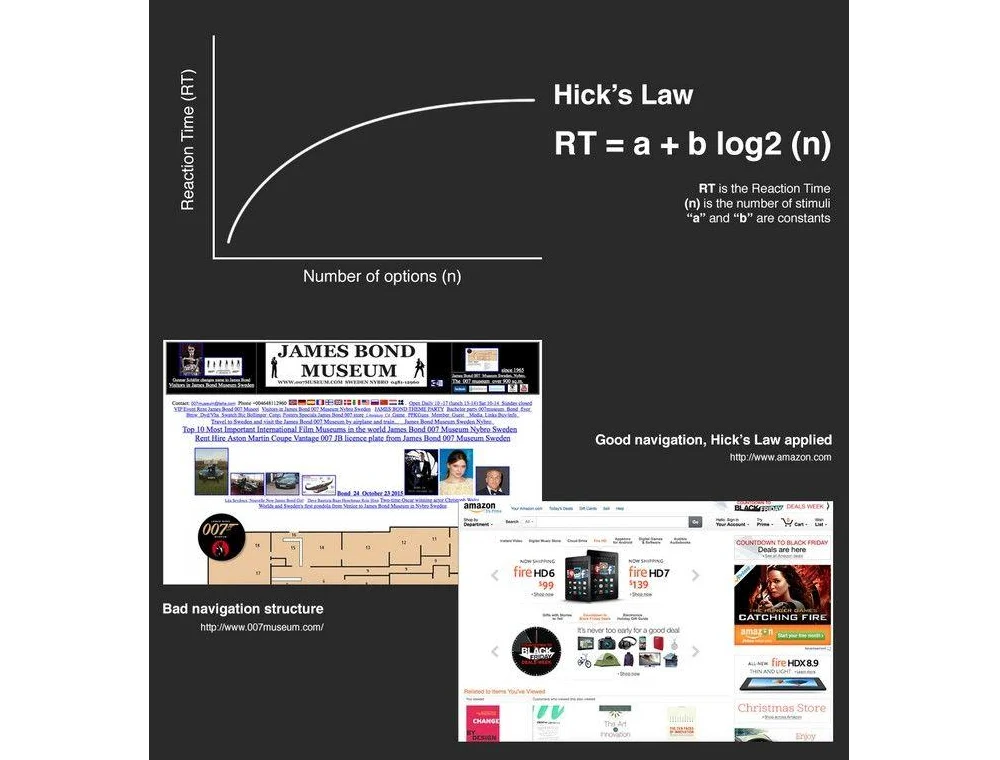
A common misconception among corporate stakeholders is that a greater number of options equates to greater value for the customer. However, the psychological principle known as Hick’s Law proves the opposite: the time required to make a decision increases logarithmically with the number and complexity of choices.
Every additional menu item, form field, or call-to-action acts as a "cognitive tax" on the user. Top-performing digital platforms now achieve conversion rates exceeding 11% by applying personalization and optimization strategies that simplify the experience. In contrast, average performers struggle below 3% as they overwhelm users with unnecessary complexity. Reducing the friction in a checkout flow—such as deleting a single non-essential form field—can result in immediate and measurable revenue increases.

Strategic Use of White Space and Readability
"White space," often mischaracterized by non-designers as wasted real estate, is a vital tool for cognitive focus. Strategic layout spacing can increase a user’s content comprehension by up to 20%. By preventing cognitive load from reaching a breaking point, white space guides the user’s eyes toward high-value elements, such as "Buy" or "Sign Up" buttons.
This focus on legibility extends to typography. Proper line spacing (leading) and paragraph width are conversion tools. Optimal line height—generally 1.5 times the font size—reduces visual noise and allows the brain to process information with less effort. When users struggle with tight spacing or small fonts, their "perceived effort" increases, leading to higher bounce rates. In the current landscape, if a product is hard to read, it is functionally hard to buy.
The Goal Gradient Effect and Momentum
UX design also leverages the Goal Gradient Effect, a psychological phenomenon where users are more likely to complete a task if they believe they have already made progress. Digital onboarding processes that show a progress bar starting at 15%—even if that progress is merely for the act of account creation—can increase completion rates by over 40%. By managing the user’s sense of momentum and dopamine response, designers can guide consumers through complex workflows that might otherwise lead to abandonment.
The Efficiency of Small-Scale User Testing
While some organizations allocate six-figure budgets to massive user studies involving hundreds of participants, data suggests a more cost-effective approach. Testing with just five users typically uncovers 85% of usability problems. This mathematical "sweet spot" allows for rapid iteration. Beyond the fifth user, the return on investment diminishes as researchers spend more to find fewer new bugs. Competitive advantage in 2026 belongs to firms that conduct small, frequent testing cycles—testing with five people, iterating, and testing again.

Quantifying the Macro-Level ROI of Design Maturity
The cumulative effect of these UX principles results in a staggering financial return. On average, every $1 invested in UX returns $100, representing a 9,900% ROI. This return is driven by a combination of increased conversion rates—which can improve by up to 400% with a fully optimized design—and a significant reduction in customer support costs. When a product is intuitive and self-explanatory, the need for extensive call centers and support documentation is drastically minimized.
Furthermore, companies with high "design maturity" see 32% higher revenue growth and 56% higher total returns to shareholders compared to their less design-focused peers. This discrepancy arises because mature UX organizations move beyond "user delight" and into "user efficiency." For instance, shaving 30 seconds off an internal workflow for a team of 1,000 employees can reclaim hundreds of thousands of dollars in annual productivity.
The Experience Gap and Market Opportunity
Despite the clear benefits of UX, a significant "experience gap" persists in the global market. Approximately 80% of companies believe they deliver a "superior experience," yet only 8% of customers agree. This disconnect represents a massive market opportunity. By bridging this gap through continuous user testing and performance optimization, forward-thinking companies can capture market share that competitors are leaving on the table.
The Role of AI in the UX Evolution
As the industry moves through the latter half of the 2020s, Artificial Intelligence has begun to accelerate these UX solutions without replacing the fundamental rules of human psychology. AI is currently being utilized to:

- Generate personalized interfaces in real-time based on individual user behavior.
- Predict and mitigate friction points before they result in a bounce.
- Automate the analysis of user testing data to identify patterns more rapidly.
While AI can enhance the speed of delivery, the core requirements for human-centric design—such as the need for white space, the impact of 50ms judgments, and the F-pattern scanning behavior (where users only read 20% to 28% of text)—remain unchanged.
Implications for Future Business Strategy
The line between design and business strategy has effectively vanished. Organizations that lead in design now outperform their competitors by 1.7x in revenue growth. UX design is no longer a peripheral function hired to "make things look nice"; it is a research-driven, data-backed discipline that ensures a digital product serves as a revenue-generating machine rather than a cost center.
In conclusion, the transition from subjective opinion to factual, data-led design has redefined the competitive landscape. The evidence is clear: fixing issues early is 100 times cheaper, every tenth of a second in load time impacts the bottom line, and simplicity is the ultimate driver of conversion. As businesses look toward the end of the decade, the primary question is no longer whether to invest in UX, but how quickly they can align their digital strategy with these proven psychological and economic truths.

