
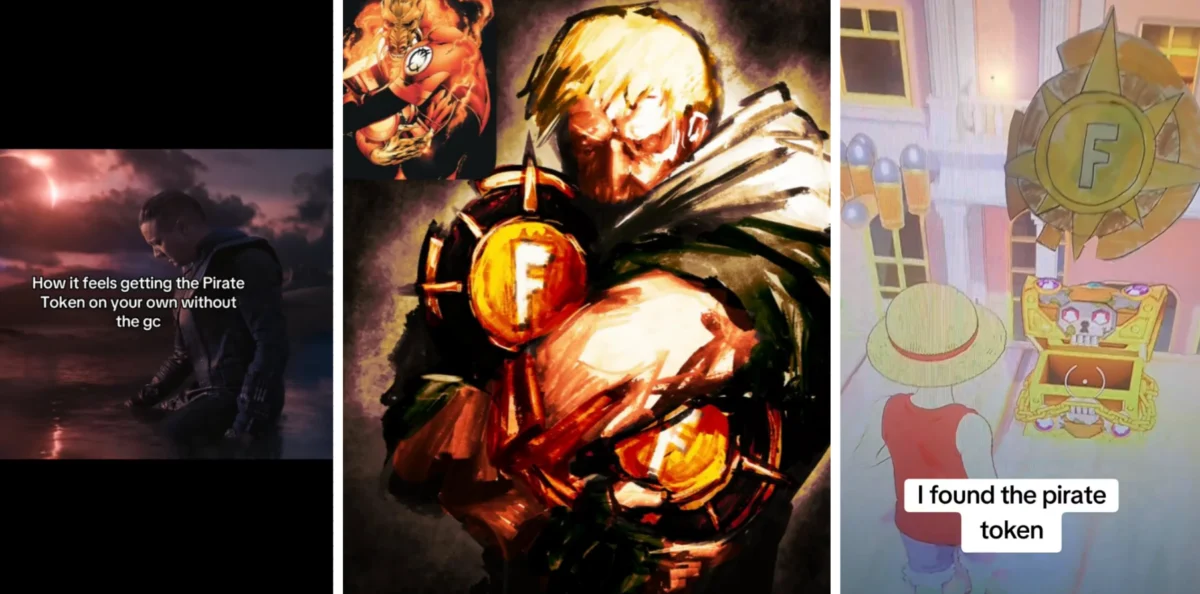
The landscape of modern live-service gaming is frequently defined by limited-time events and high-rarity digital assets, but few items in recent years have captured the collective obsession of the gaming community quite like the Fortnite Pirate Token. Officially designated by Epic Games as "Pirate Shop Access," the item emerged in early November 2026 as a cornerstone of the Treasure Hunters mini-season. This specific event was notable not only for its gameplay adjustments but also for its high-profile collaboration with the globally renowned anime and manga franchise, One Piece. The Pirate Token, colloquially referred to by players as the Pirate Coin or Pirate Shop Token, has since become a symbol of extreme digital scarcity, sparking a viral hunt across social media platforms and fundamentally shifting player behavior during the event’s duration.
The Genesis of the Treasure Hunters Event
The introduction of the Pirate Token was preceded by a strategic marketing campaign that began on October 27, 2026. Epic Games released a cinematic trailer on its official YouTube channel, teasing a crossover with One Piece—a partnership that fans had anticipated for years. The trailer, which garnered over 1.5 million views within its first ten days, introduced the concept of the "Pirate Shop Access" item. Visually, the token is depicted as a shimmering gold coin featuring an intricate compass rose design with the iconic Fortnite "F" emblem at its center, bridging the aesthetic worlds of traditional maritime lore and the game’s modern branding.
When the Treasure Hunters mini-season officially launched on November 1, 2026, the mechanics of the token were revealed. Unlike standard seasonal rewards or Battle Pass progression items, the Pirate Token was integrated directly into the core gameplay loop of the Battle Royale and Zero Build modes. The item was not a guaranteed reward for completing challenges; instead, it was placed within the general loot pool of chests found across the island. This decision transformed every chest opening into a high-stakes moment of anticipation, driving player engagement to unprecedented levels for a mid-season update.
Mechanical Utility and Economic Value
The fervor surrounding the Pirate Token is rooted in its significant in-game utility. According to official game documentation, any player fortunate enough to discover the token is granted two separate 14-day windows of unrestricted access to the Fortnite Item Shop. During these periods, the player can claim the majority of featured cosmetic items—including character skins, harvesting tools (pickaxes), emotes, and gliders—without the expenditure of V-Bucks, the game’s premium currency.
While certain restrictions apply—specifically excluding real-money bundles, gift purchases for other players, and Battle Pass rewards—the potential economic value of a Pirate Token is substantial. Given that a single legendary-tier skin typically costs 2,000 V-Bucks (approximately $18.00 USD), a player utilizing the token over a 28-day period could theoretically acquire thousands of dollars worth of digital assets. Once claimed, these items remain permanently tied to the player’s account, even after the Treasure Hunters season concludes. This "free-to-own" mechanic represents a departure from Epic Games’ traditional monetization strategies, contributing to the item’s legendary status.
Statistical Rarity and the Odds of Discovery
The defining characteristic of the Pirate Token is its mathematical scarcity. Shortly after the event’s launch, the community began attempting to calculate the drop rate based on crowdsourced data. Initial estimates from dedicated player forums suggested a rarity as low as 1 in 700,000, leading to a sense of hopelessness among some casual players. However, Epic Games eventually provided clarity, confirming that the actual drop rate was 1 in 137,500 per chest.
To put this into perspective, a standard match of Fortnite features hundreds of chests distributed across the map. Even if a single player managed to open 50 chests in a single match—a difficult feat under the pressure of shrinking safe zones and enemy combatants—their statistical chance of finding a token would remain infinitesimally small. This rarity tier places the Pirate Token in the same category as some of the most elusive items in gaming history, such as the "Golden Frying Pan" in Team Fortress 2 or certain world-boss mounts in World of Warcraft.
The Viral Trajectory on Social Media
The search for the Pirate Token quickly transcended the game itself, manifesting as a dominant trend on social media, particularly TikTok. The platform became a repository for "hunt" content, ranging from genuine celebrations of discovery to comedic dramatizations of the exhausting search process.
On November 2, 2026, just one day after the launch, user @ebihazul posted a reaction video that served as an early catalyst for the trend. The video, which used popular audio cues to convey a sense of euphoric achievement, reached over 1.3 million views in a week. This was followed by a wave of content that focused on the psychological toll of the hunt. On November 7, a video by @tw.amnishi.legend highlighted the "grind" culture associated with the token; the user claimed to have stayed awake for 24 hours in a continuous cycle of matches, searching for the coin. The video resonated deeply with the community, amassing 4.9 million views and over 1.1 million likes in just 48 hours.
The "We Will Succeed" movement also emerged during this period, exemplified by a motivational post from user @zqusk. This subset of content reframed the low drop rate not as a deterrent, but as a communal challenge. The persistence of these memes indicates a high level of "sticky" engagement, where the pursuit of the item became a self-sustaining narrative within the community.
Chronology of Key Events
The timeline of the Pirate Token phenomenon illustrates how a single digital item can dominate the gaming conversation over a concentrated period:
- October 27, 2026: Official trailer release. Speculation begins regarding the "One Piece" collaboration and the mystery of the "Pirate Shop Access" coin.
- November 1, 2026: Treasure Hunters mini-season begins. The first Pirate Tokens are reported found, and the "Pirate Shop Token" nickname is coined by the community.
- November 2–4, 2026: Viral surge on TikTok. Players begin sharing "strategies" for maximizing chest openings per hour, such as landing at secluded locations like "The Yacht" or "Shark Island."
- November 6, 2026: Epic Games releases a hotfix to address minor stability issues, leading to rumors (later debunked) that the drop rate had been increased.
- November 7–9, 2026: Peak "FOMO" (Fear Of Missing Out) period. Search interest for "Fortnite Pirate Token location" and "Pirate Shop Access odds" reaches an all-time high.
- November 10, 2026: Compilation videos and "success montages" begin to dominate YouTube and TikTok, solidifying the token’s place in the game’s cultural history.
Analytical Implications for the Gaming Industry
The Pirate Token event provides a compelling case study in the efficacy of scarcity marketing within digital ecosystems. By introducing an item with such low probability but high reward, Epic Games successfully incentivized a significant portion of its player base to increase their "time on device." The Treasure Hunters season saw a marked increase in concurrent players during off-peak hours, as the "hunt" became a primary motivator for logging in.
Furthermore, the event highlights the power of "earned" versus "purchased" status. In the Fortnite community, skins are often viewed through the lens of social capital. However, the Pirate Token represents a different kind of prestige—one tied to luck and extreme dedication rather than direct financial investment. This shifts the social dynamics of the game, as owning a skin obtained via a Pirate Token carries a unique narrative of "beating the odds."
From a developer’s perspective, the Pirate Token also served as a stress test for the Item Shop’s infrastructure. Managing a system where thousands of players could suddenly claim items for free requires robust backend management to ensure account persistence and prevent exploits. The success of the rollout suggests that Epic Games is increasingly comfortable with experimental reward structures that disrupt traditional commerce.
Conclusion and Future Outlook
As the Treasure Hunters mini-season approaches its conclusion, the legacy of the Pirate Token remains a topic of intense discussion. While many players will ultimately finish the season without ever seeing the gold compass coin, the event has successfully revitalized interest in the exploration mechanics of Fortnite. It has proven that in an era of predictable Battle Pass tiers and scheduled content drops, the element of surprise and the allure of the "impossible find" still hold immense power.
Whether Epic Games will implement similar ultra-rare rewards in future seasons remains to be seen. However, the Pirate Token has set a new benchmark for how crossovers can be integrated into gameplay in a way that feels both rewarding and culturally relevant. For now, the hunt continues, and for the lucky few who find the "F" embossed coin, the rewards are as legendary as the pirates who inspired them.

