
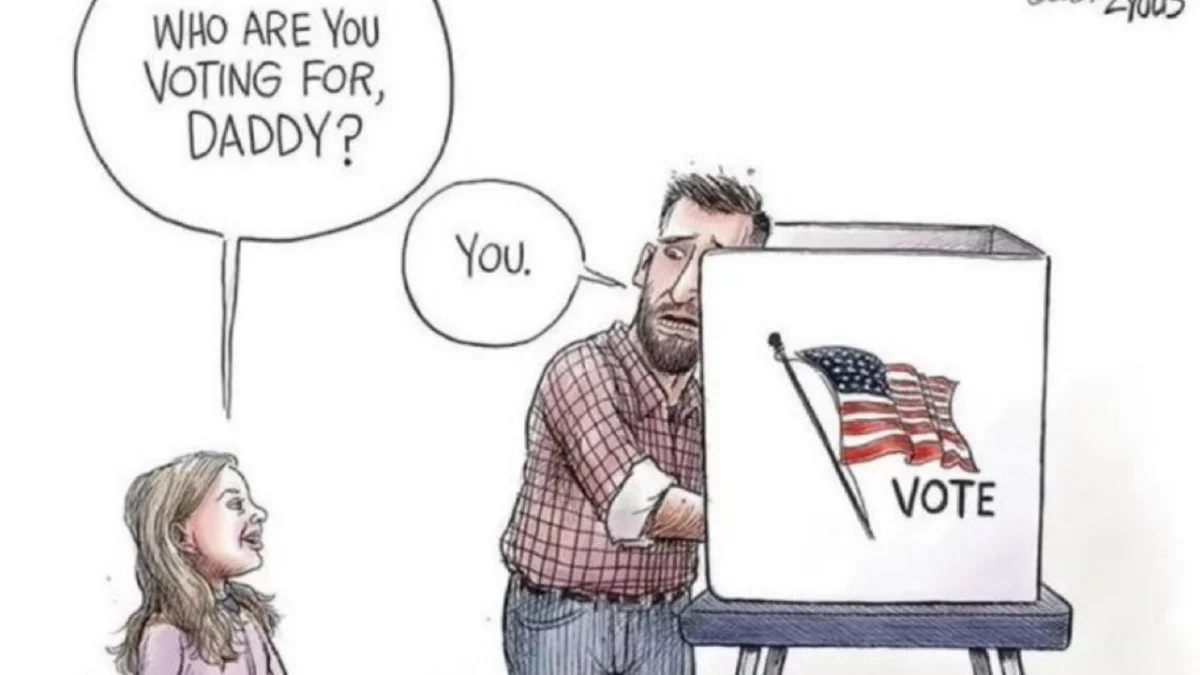
The intersection of political cartooning and digital meme culture has reached a new flashpoint during the 2026 U.S. midterm election cycle, centered on a single exploitable image that has evolved from a poignant social commentary into a vessel for both high-stakes political messaging and absurdist internet humor. Originally penned by Pulitzer Prize-winning cartoonist Adam Zyglis for The Buffalo News, the comic titled "Who Are You Voting For, Daddy?" has become a case study in how viral sentiment can strip a work of its original intent, replacing it with a kaleidoscopic array of subverted meanings ranging from international separatist movements to surrealist internet tropes.
The Genesis of a Political Icon
The original illustration was first published in 2024, during the lead-up to the United States presidential election. Adam Zyglis, known for his sharp editorial eye and minimalist yet evocative style, created the piece to highlight the stakes of the election for future generations. The comic depicts a young daughter looking up at her father, asking the eponymous question: "Who are you voting for, daddy?" The father, standing before a ballot box, provides a one-word answer: "You."
In its initial context, the comic was a straightforward piece of political advocacy. It suggested that a vote is not merely a preference for a candidate, but a protective measure for the rights and futures of one’s children. At the time of its release, the comic resonated deeply with voters concerned about reproductive rights, education, and climate policy, seeing the "You" as a commitment to a world where the daughter’s agency and safety remain intact. The image was widely shared across traditional social media platforms, serving as a signature piece of visual rhetoric for the 2024 Democratic platform and various progressive advocacy groups.
The 2026 Midterm Resurgence and the Shift to Exploitable Format
While many political cartoons fade from the public consciousness after an election cycle, "Who Are You Voting For, Daddy?" saw an unexpected and massive resurgence in October 2026. As the U.S. midterm elections approached, the comic was rediscovered by a new wave of digital creators. However, rather than simply resharing the original, the internet’s "exploitable" culture took hold. An exploitable meme is a template where certain elements—usually dialogue or characters—are removed so that others can fill in the blanks with new, often contradictory, information.
The transition from a sincere political message to an exploitable template began in earnest in early October 2026. One of the earliest documented deviations from the original intent occurred on October 13, 2026, when Facebook user Terry Newman adapted the comic to address the Alberta separatist referendum in Canada. In this version, the dialogue was modified to reflect the local political climate of the Canadian province, where citizens were deciding whether to remain part of the federation. This indicated a shift in the comic’s utility: it was no longer just about U.S. presidential politics, but a universal template for the concept of "voting for the sake of the next generation," regardless of the specific cause.
The Rise of AI-Generated Iterations and Artist Backlash
As the comic’s popularity grew, it intersected with the burgeoning and controversial field of generative Artificial Intelligence (AI). Throughout October 2026, various social media accounts began circulating "polished" or "stylized" versions of the comic created by AI tools. These versions often maintained the father-daughter composition and the "You" punchline but replaced Zyglis’s hand-drawn lines with hyper-realistic or "Pixar-style" 3D aesthetics.
This trend prompted a significant response from the original creator. On October 15, 2026, Adam Zyglis took to social media to denounce the AI-generated recreations of his work. In a statement that garnered over 5,600 reactions on Facebook within a month, Zyglis expressed a mixture of appreciation for the message’s reach and disdain for the technology used to replicate it. "I love that people are resonating with the original message," Zyglis wrote, "but using AI to tailor an artist’s work to a different audience bastardizes it and makes it soulless."
Zyglis’s critique tapped into a broader cultural debate regarding the ethics of AI in the arts. He argued that the "butchered" versions stripped the work of its human element, encouraging his followers to report AI-altered versions of the comic. This stance highlighted the tension between traditional editorial cartoonists, who rely on a specific voice and style, and the "remix culture" of the internet, which often views images as public-domain raw material for further iteration.
Transition into Absurdism and Post-Ironic Humor
By late October 2026, the meme had moved beyond political and AI-related debates into the realm of the "post-ironic." In internet subcultures, a meme often follows a lifecycle that begins with sincerity, moves to parody, and ends in total abstraction. "Who Are You Voting For, Daddy?" reached this final stage rapidly.
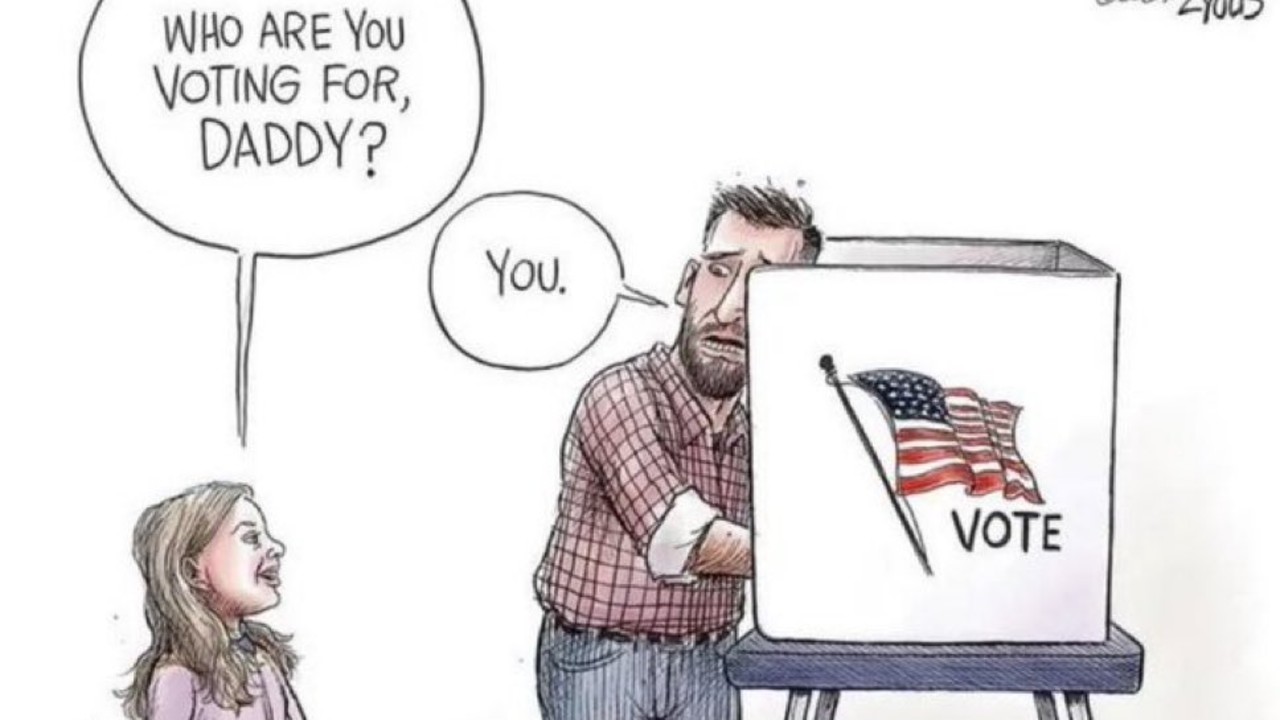
On October 26, 2026, the Instagram user "issabreh" posted an edit where the father’s response was changed from "You" to "Big Chungus," a reference to a popular and long-running internet meme involving an oversized version of the cartoon character Bugs Bunny. This version received over 3,000 likes, signaling that the comic had become a "template for nonsense."
The trend of replacing the father’s answer with absurd candidates accelerated through early November. On November 4, 2026, a version posted by X user @benji_bacon replaced the punchline with a reference to the "Solo Polyamorous Hijabi Amputee" meme—a complex, layered piece of internet lore. This specific iteration gained over 126,000 likes and 7,400 reposts in just 48 hours, demonstrating the massive reach of the comic when utilized by high-engagement meme accounts.
Other notable edits included:
- TheBurntPeanut: A version where the father votes for a popular Twitch streamer, gaining 5,500 likes on X.
- Ye: An edit by Instagram user "soulofye" where the father votes for Kanye West, reflecting the rapper’s perennial presence in political meme cycles.
- Nuke Cleveland: A surrealist version where the father’s "vote" is a call for the destruction of a specific American city, a common trope in "edge-posting" communities.
Statistical Reach and Engagement Analysis
The data surrounding the "Who Are You Voting For, Daddy?" meme suggests a significant impact on digital discourse during the 2026 election cycle. Analysis of search interest and social media metrics reveals several key trends:
- Cross-Platform Saturation: The meme performed exceptionally well on X (formerly Twitter) and Instagram, platforms that favor visual "punchline" content. On X, the top five edits of the comic collectively garnered over 300,000 likes in the week leading up to the midterms.
- Demographic Variance: While the original comic by Zyglis was primarily shared by users aged 35–55 (the traditional demographic for editorial cartoons), the "absurdist" edits were almost exclusively shared and liked by users in the 18–25 age bracket.
- Search Engine Optimization: During the first week of November 2026, search queries for "Who are you voting for daddy meme" and "Adam Zyglis voting comic" saw a 400% increase compared to the previous month, indicating that the viral edits were driving traffic back to the original work and the artist’s profile.
The Broader Impact on Political Discourse
The evolution of the "Who Are You Voting For, Daddy?" comic reflects a broader shift in how political messaging is consumed in the mid-2020s. Political scientists and digital media analysts point to several implications of this phenomenon.
First, the "meme-ification" of serious political art can be seen as a form of "political numbing." When a sincere message about a daughter’s rights is equated with "Big Chungus" or "nuking Cleveland," the original emotional weight of the image is diluted. Critics argue that this process turns vital social issues into mere aesthetics, potentially reducing the urgency of the message.
Conversely, some digital theorists argue that the exploitable nature of the comic actually increased its efficacy. By becoming a template, the comic remained in the public eye far longer than a standard editorial cartoon would have. Even in its absurdist forms, the visual of a father standing at a ballot box with his daughter remained a constant, subconsciously reinforcing the act of voting as a paternal and protective duty.
Conclusion: The Artist in the Age of the Meme
As the 2026 midterms conclude, the "Who Are You Voting For, Daddy?" saga serves as a reminder of the lack of control artists have over their work once it enters the digital stream. Adam Zyglis’s struggle against AI and the "bastardization" of his art highlights a new frontier for intellectual property and creative integrity. While the artist maintains the moral high ground regarding the "soul" of his work, the internet has demonstrated that it values the "utility" of an image—its ability to be bent, broken, and remade—just as much as its original meaning.
The comic remains a landmark in the 2026 digital landscape, a rare piece of media that successfully bridged the gap between traditional print journalism and the chaotic, fast-moving world of internet memes. Whether viewed as a touching tribute to parental responsibility or a template for the latest "shitpost," the image has secured its place in the history of political iconography.

