
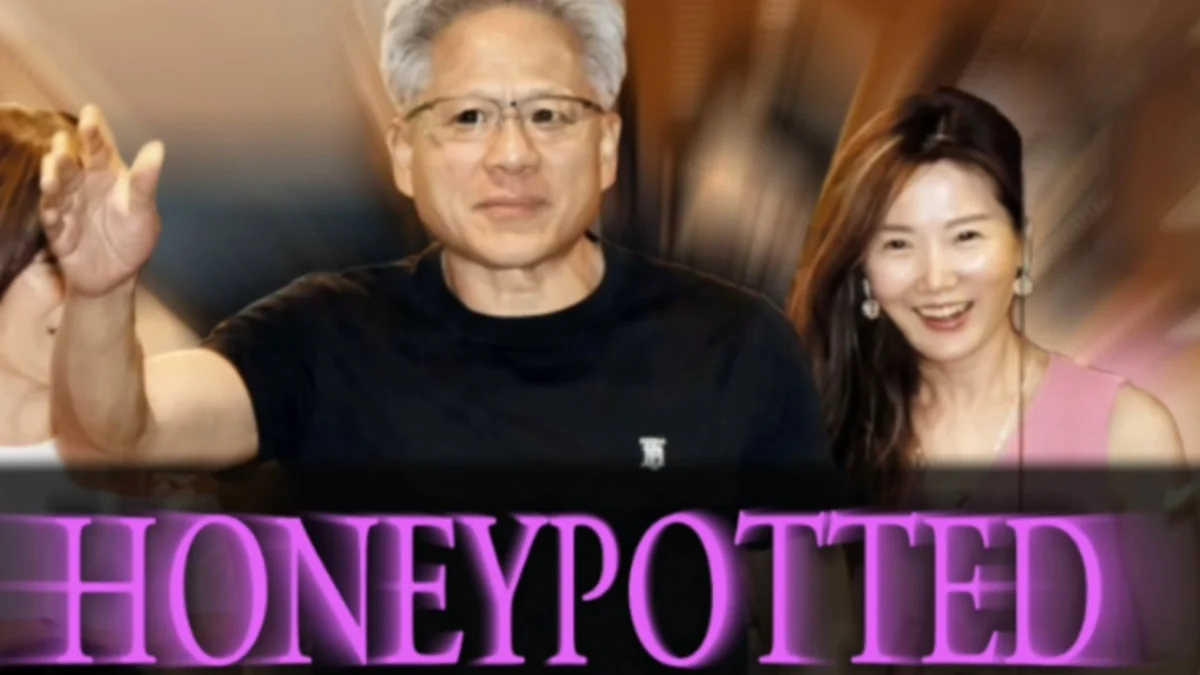
The global technology sector and the international intelligence community were upended in late 2026 following revelations involving Jensen Huang, the co-founder and CEO of Nvidia, and an alleged espionage operation orchestrated by the Chinese government. What began as a report on corporate misconduct quickly escalated into a national security crisis, involving allegations of a "honeypot" trap, the illicit transfer of sensitive artificial intelligence (AI) technology, and a public admission of infidelity by one of the world’s most prominent tech figures. The controversy, which first surfaced in late October 2026, has since triggered an internal investigation by Nvidia’s Board of Directors, a significant downturn in the company’s market valuation, and a firestorm of digital discourse and satirical commentary.
The Genesis of the Allegations: The Megaspeed Connection
The controversy began on October 29, 2026, when the New York Times published an investigative report detailing a clandestine relationship between Jensen Huang and Alice Huang, a high-ranking executive at Megaspeed. Megaspeed, a Singapore-based data center and infrastructure company, had long been under the scrutiny of U.S. intelligence agencies. Investigators alleged that the firm served as a conduit for the Chinese Communist Party (CCP) to bypass stringent U.S. export controls on advanced semiconductors.
According to the report, U.S. intelligence identified Alice Huang as a Chinese intelligence asset tasked with cultivating a close personal relationship with Jensen Huang. The objective was allegedly to gain insight into Nvidia’s internal roadmaps for next-generation AI chips and to influence the distribution of hardware to Chinese entities. Intelligence briefings suggested that the relationship provided Beijing with a window into U.S. policy discussions regarding the AI sector. Notably, the report claimed that former President Donald Trump had been briefed on these concerns as early as 2025, though no immediate executive action was taken at that time.
While Nvidia initially denied that any sensitive information had been compromised through its dealings with Megaspeed, the investigation revealed that the Singaporean firm had purchased billions of dollars in high-end AI equipment. This hardware was reportedly repurposed to provide massive computing power to Chinese tech giants, including Alibaba, effectively circumventing the Department of Commerce’s restrictions on direct sales to China.
Public Admission and Corporate Fallout
The situation reached a breaking point on November 8, 2026, when Jensen Huang issued an emotional and candid statement to Nvidia’s global workforce. In the memorandum, titled "A Message to Our Company," Huang admitted to a period of personal infidelity, confirming an extramarital affair that had severely impacted his family and his professional standing.
"I owe my family and all of you an apology. I was unfaithful to my wife," Huang wrote, taking full responsibility for the personal fallout. However, the statement also addressed the more pressing corporate and national security concerns. Huang confirmed that Nvidia’s Board of Directors had launched an independent investigation into his conduct and the nature of his relationship with Alice Huang. He emphasized his commitment to U.S. national security, stating, "I am committed to protecting Nvidia and supporting America’s national security. I am proud and grateful to be an American."
Simultaneously, the Nvidia Board of Directors released a separate statement confirming the appointment of a committee of independent directors, assisted by outside legal counsel, to oversee the inquiry. The board clarified that while there was currently no definitive evidence that trade secrets or national security had been compromised, the gravity of the "foreign intelligence effort" necessitated a comprehensive audit of all communications and transactions involving Megaspeed and Alice Huang.
Market Reaction and Economic Impact
The financial markets responded with immediate volatility. On November 9, 2026, the day following Huang’s admission and the announcement of the formal investigation, Nvidia shares experienced a precipitous decline. The stock plummeted by over 12% in a single trading session, erasing hundreds of billions of dollars in market capitalization.
The ripple effect was felt across the broader NASDAQ and the AI-focused exchange-traded funds (ETFs). Investors expressed concern that a potential leadership change at Nvidia—a company that had become the backbone of the global AI revolution—could stall innovation and disrupt the supply chain for H-series and B-series Blackwell chips. Analysts noted that Nvidia’s dominance was built largely on Huang’s vision and personal leadership; the prospect of his removal or a government-mandated restructuring posed an existential risk to the company’s premium valuation.
National Security and Geopolitical Implications
The controversy has reignited the debate over the vulnerability of high-tech executives to "honeypot" operations—a classic espionage tactic where romantic or sexual relationships are used to compromise targets. Security experts suggest that Alice Huang’s alleged role at Megaspeed provided the perfect cover for such an operation, allowing for frequent business interactions that could mask a more clandestine agenda.
The U.S. Department of Justice and the House Select Committee on the Strategic Competition Between the United States and the Chinese Communist Party have reportedly expressed interest in the findings of Nvidia’s internal probe. The primary concern remains whether Alice Huang successfully steered Nvidia’s strategic decisions or gained access to the proprietary architecture of the company’s "sovereign AI" initiatives. If it is proven that AI chips were funneled to Beijing through Megaspeed with Huang’s knowledge—or through his negligence—Nvidia could face severe federal penalties, including the revocation of export licenses and heavy fines under the Export Control Reform Act (ECRA).
Digital Discourse and the "Honeypotted" Phenomenon
As news of the scandal dominated headlines, it simultaneously took over social media platforms, evolving into a significant cultural moment. The term "honeypotted" became a viral catchphrase, used to describe the CEO’s alleged entrapment. On platforms like X (formerly Twitter) and Instagram, memes proliferated, ranging from AI-generated parodies to satirical edits of popular media.
A notable example included an AI-generated video of Jensen Huang and Alice Huang at a public event, captioned with the phrase, "If she’s a 10, you’re an asset." This sentiment reflected a mixture of shock and dark humor among the tech-savvy public. On Reddit, the "r/memes" community saw high engagement with posts referencing the "Succulent Chinese Meal" viral video, reimagined to mock the "Succulent Chinese Spy" controversy.
Prominent digital commentators, including YouTuber Moist Critikal (penguinz0), provided coverage that reached millions of viewers. In his video titled "He Fell for the Oldest Trick in the Book," the influencer characterized the situation as a monumental lapse in judgment for a man of Huang’s intellect, further cementing the story’s place in the zeitgeist of 2026.
Chronology of Key Events
To understand the scope of the controversy, a timeline of the events is essential:
- Mid-2025: U.S. intelligence agencies reportedly brief the President on Alice Huang’s ties to the CCP and her relationship with Jensen Huang.
- October 29, 2026: The New York Times breaks the story, detailing the espionage allegations and Megaspeed’s role in circumventing chip restrictions.
- November 8, 2026 (Morning): Jensen Huang sends an internal email to Nvidia employees admitting to infidelity and apologizing to his family and the company.
- November 8, 2026 (Afternoon): The Nvidia Board of Directors announces an independent investigation into potential security breaches and foreign intelligence interference.
- November 8, 2026 (Evening): Media outlets confirm Alice Huang is the subject of a U.S. government surveillance operation.
- November 9, 2026: Nvidia stock plummets as investors react to the uncertainty surrounding the company’s leadership and legal future.
- November 10, 2026: Widespread viral memes and influencer commentary bring the scandal to a global mainstream audience.
Analysis of Future Outlook
The resolution of this controversy will likely depend on the findings of the independent counsel. If the investigation concludes that the affair was a personal matter with no transfer of proprietary data, Huang may retain his position, albeit with a tarnished reputation. However, should the inquiry find evidence of "technology steering" or the disclosure of classified AI capabilities, the pressure for his resignation will be immense.
Furthermore, this incident is expected to lead to stricter security protocols for executives in the semiconductor and AI industries. The "Jensen Huang Scandal" serves as a cautionary tale regarding the intersection of personal conduct and national security in an era where AI has become the most valuable commodity in the world. As the investigation continues, the tech industry remains on edge, waiting to see if the architect of the AI age can survive the fallout of a scandal that is as much about geopolitical maneuvering as it is about personal indiscretion.

