
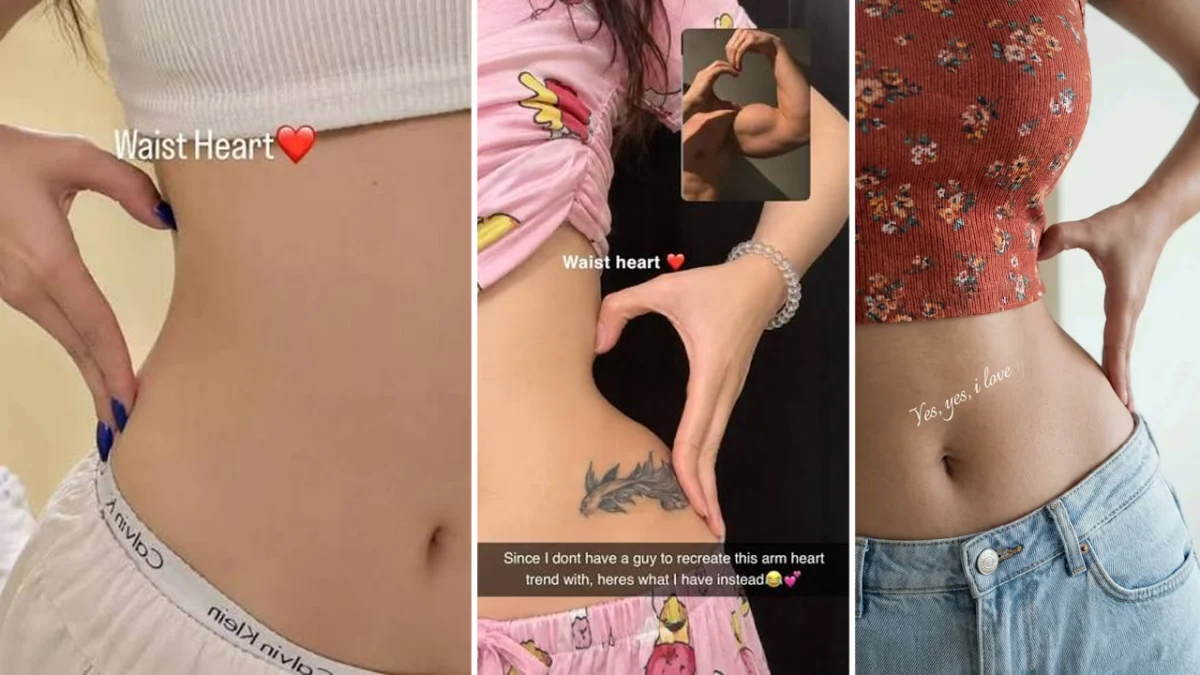
The digital landscape of late 2026 has been significantly reshaped by a series of viral anatomical challenges, the most prominent of which is the Waist Heart Trend. This social media phenomenon, also referred to as the Waist Heart Pose or the Waist Heart Hand Trend, has proliferated across major short-form video platforms including TikTok and Instagram Reels. The trend involves a specific physical maneuver where a participant forms a "C" shape with one hand and positions it against their waist. By utilizing the natural curvature of the hip and the oblique muscles, the participant creates a visual representation of a heart. Typically categorized within the "thirst trap" and fitness subcultures, the trend often features participants with exposed midriffs to emphasize the anatomical alignment required to complete the heart shape.
While seemingly a standalone aesthetic choice, the Waist Heart Trend is a sophisticated iteration of digital call-and-response culture. It emerged in early November 2026 as a direct counterpoint to the Bicep Heart Trend, which had gained traction only days prior. This progression highlights a shifting dynamic in how fitness and physique are performatively displayed on social media, moving from traditional displays of muscular strength to more curated, aesthetic representations of the human silhouette.
The Genesis of Anatomical Hearts: From Biceps to Waists
To understand the rise of the Waist Heart Trend, one must examine its precursor: the Bicep Heart Trend. This earlier iteration began on October 31, 2026, when TikTok creator kavithageorge uploaded a video titled "Have you ever heard of a bicep heart?" In the footage, she demonstrated a technique of flexing the bicep while placing the opposite hand in a specific orientation to form a heart using the peak of the muscle. The video acted as a catalyst, amassing over 5.3 million views within its first week and establishing a new template for "fitness-flexing" content.
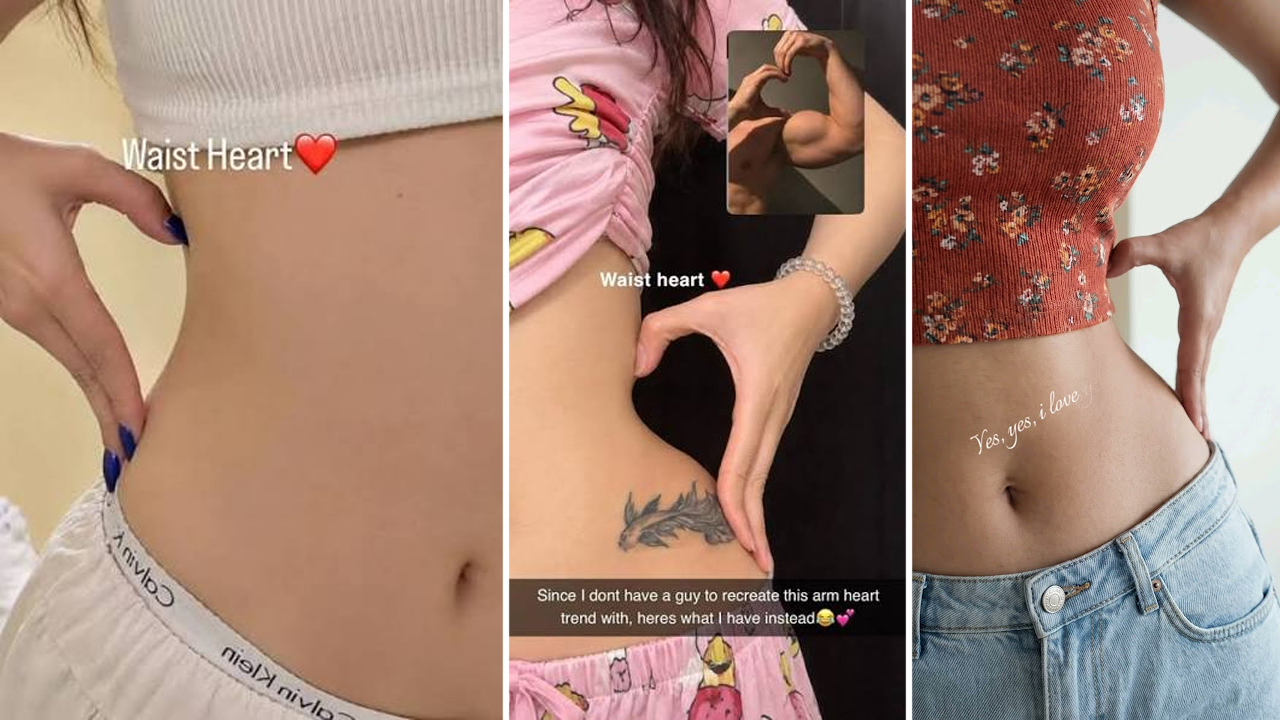
As the Bicep Heart Trend became a staple of the "GymTok" community, a gendered and stylistic response began to form. While the bicep version was largely associated with bodybuilding and upper-body strength—traditionally masculine-coded traits, though performed by all genders—the Waist Heart Trend emerged as a feminine-coded alternative. By November 3, 2026, the transition was formalized by Indian Instagram user berrii_merrii. In a post that garnered over 15,300 likes, the user urged followers to request "waist heart" photos from their peers, effectively pivoting the focus from the arm to the torso. This shift marked the beginning of a broader movement where the waist heart was framed as the "female version" or the "answer" to the bicep heart.
Chronological Expansion and Virality Metrics
The period between November 4 and November 10, 2026, saw an exponential increase in participation. On November 4, Instagram influencer bh00milifevibes posted a definitive version of the pose with the caption, "Now it’s time for our ‘waist heart.’" The inclusion of the word "our" signaled a collective identity among participants, framing the trend as a community-driven response to the male-dominated fitness trends of the previous month. This specific post achieved massive engagement, recording over 101,100 likes and nearly a thousand comments in less than five days.
The trend’s spread was further facilitated by "crossover" content. Creators began filming videos that featured both the bicep heart and the waist heart in a single frame. On November 6, 2026, TikTok user kriezel14 showcased a collaborative version of the trend, placing her waist heart alongside her partner’s bicep heart. This evolution transformed the trend from a solo "thirst trap" into a "couples’ challenge," a transition that is historically a key indicator of a trend’s longevity and mainstream saturation. The video received over 87,500 likes, demonstrating the high demand for content that blended fitness with relational aesthetics.
The Integration of Artificial Intelligence
A unique characteristic of the Waist Heart Trend compared to previous fitness fads is the early and prominent integration of Artificial Intelligence (AI). On November 5, 2026, the AI-generated influencer bymihika.khanna shared a hyper-realistic rendering of the waist heart pose. The post garnered over 6,100 likes, sparking a debate within the comments regarding the blurring lines between human physical achievement and algorithmic perfection.
The involvement of AI influencers suggests that the Waist Heart Trend is not merely about physical fitness but about an idealized aesthetic standard. Analysts suggest that the trend’s reliance on specific body ratios—specifically the "hourglass" or "pear" shape—makes it an ideal candidate for AI replication. This has raised concerns among digital ethicists regarding the potential for heightened body dysmorphia, as AI versions of the trend can achieve "perfect" heart shapes that may be anatomically impossible for many human participants to replicate without specific lighting, angles, or physical manipulation.
Satire and the "Behind-the-Scenes" Meta-Trend
As with most viral phenomena, the Waist Heart Trend eventually moved into a satirical phase. By November 8, 2026, users began posting "expectation vs. reality" content. A notable example came from Instagram user _jintee1, who uploaded a humorous skit showing the physical effort required to manufacture the "perfect" waist heart. In the video, a friend is seen literally pulling and squeezing the creator’s waist to achieve the necessary curvature.
This satirical turn served two purposes: it provided a comedic relief to the often-serious "thirst trap" nature of the trend, and it humanized the participants. The post was an overwhelming success, generating over 172,100 likes in a 24-hour period. The high engagement on satirical posts indicates that while the audience enjoys the aesthetic of the trend, there is an equal appetite for content that deconstructs the "fake" nature of social media perfection.
Sociological and Fitness Industry Implications
The Waist Heart Trend represents more than a passing digital fad; it is a reflection of how the fitness industry and social media users interact with the concept of the "body-as-art." From a sociological perspective, the trend commodifies specific body parts—the obliques and the iliac crest—turning them into tools for digital expression.
- The Gamification of Anatomy: By turning the body into a shape-making tool (a heart), the trend gamifies physical fitness. It encourages users to view their muscle definition not just in terms of health or strength, but in terms of its ability to conform to viral templates.
- Platform Algorithmic Bias: The rapid spread of the trend on TikTok and Instagram Reels highlights how these platforms prioritize high-contrast, visually simple, and human-centric imagery. The "heart" is a universally recognized symbol, making it highly "clickable" across different languages and cultures.
- Market Impact: Observations of the trend have shown a secondary impact on the fitness apparel market. There has been a recorded uptick in the promotion of high-cut gym wear and "waist-snatching" athletic gear, as these items facilitate the visibility required for the Waist Heart Pose.
Expert Reactions and Behavioral Analysis
Psychologists and social media analysts have weighed in on the rapid succession of the Bicep and Waist heart trends. Dr. Aris Thorne, a digital behaviorist, notes that these trends function as "low-barrier entry points" into fitness communities. "You don’t need a gym membership or expensive equipment to make a waist heart," Thorne states. "You only need a body and a camera. This accessibility is what drives the numbers, but the competitive nature of ‘who has the best shape’ is what drives the virality."
However, health advocates have expressed caution. The focus on the waist as a "heart" can inadvertently promote "body checking"—a behavior where individuals obsessively monitor their reflection or measurements. Because the trend relies on a "snatched" waistline, it may exclude individuals with different body types, potentially reinforcing narrow beauty standards.
Future Outlook: The Trend’s Legacy
As mid-November 2026 approaches, the Waist Heart Trend shows signs of stabilizing. While the initial surge of novelty has passed, the pose has integrated itself into the standard repertoire of social media "fitness influencers." It is likely to remain a recurring motif in "thirst trap" photography, much like the "peace sign" or the "duck face" of previous eras.
The legacy of the Waist Heart Trend will likely be its role in bridging the gap between human fitness and AI-generated content. It served as a litmus test for how audiences respond to physical challenges that can be easily mimicked by digital entities. As social media continues to evolve, the "anatomical heart" series (biceps, waists, and potentially other muscle groups in the future) serves as a case study in the power of simple, symbolic gestures to command global attention in the digital age.
In summary, the Waist Heart Trend is a multifaceted cultural event. It began as a creative response to a bicep-flexing challenge, blossomed into a global viral sensation through the power of algorithmic discovery, and eventually matured into a subject of both AI experimentation and satirical critique. Its success lies in its simplicity: the universal symbol of the heart, mapped onto the human form, creating a visual language that transcends borders and platforms.

