
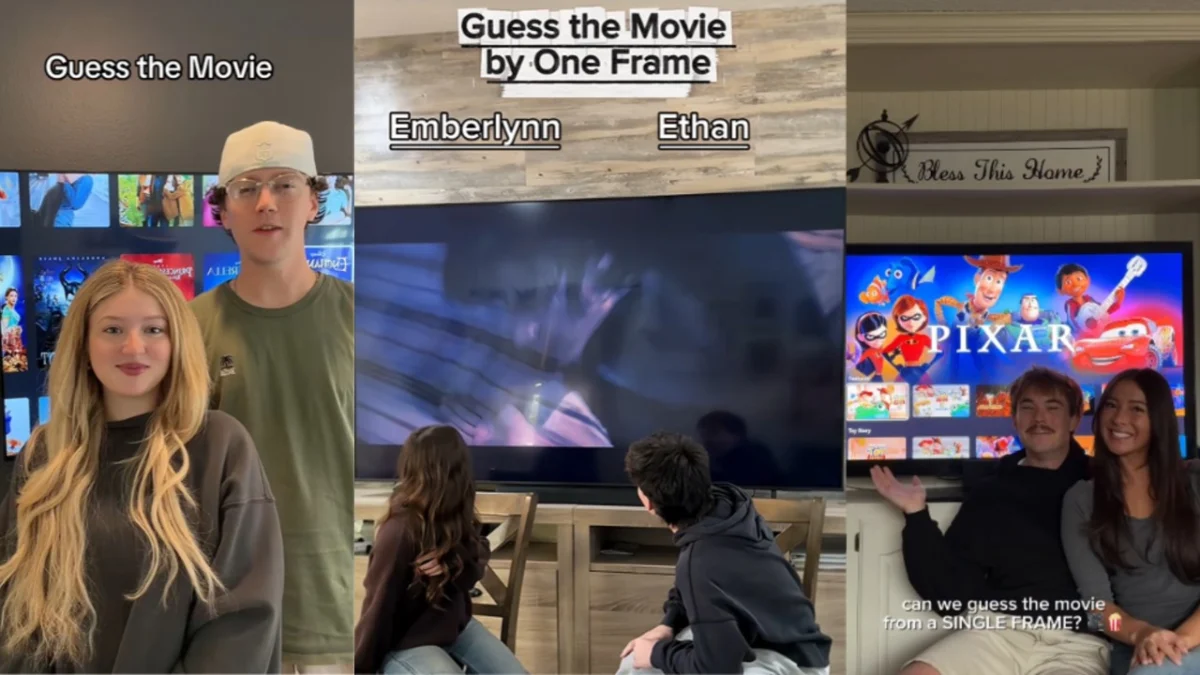
The digital landscape has witnessed the rapid ascent of a new interactive social phenomenon known as Guess the Movie By the Frame, or alternatively, Time Stamp. This social game, which transitioned from a niche content format to a global viral trend in late 2026, leverages the intersection of cinematic trivia, creator-audience interaction, and the algorithmic mechanics of short-form video platforms. The premise is deceptively simple: one participant is presented with a single, often obscure frame from a motion picture and must identify the film. In its most popular iteration, the game incorporates a secondary layer of difficulty where a "guesser" provides a random timestamp, and the "host" navigates to that exact second of a pre-selected film, forcing the guesser to rely on visual cues, color palettes, and set design to make an identification.
The Mechanics of a Viral Guessing Game
The Guess the Movie By the Frame challenge operates on the principles of gamification and expertise-based entertainment. Unlike traditional movie trivia, which often relies on dialogue or plot points, this trend emphasizes visual literacy. Participants are required to recognize the "visual DNA" of a director or studio. For instance, a frame from a Disney animated feature is often identified by its specific line work or lighting style, while a live-action film might be recognized by its color grading or the presence of a specific character actor in the background.
The "Time Stamp" variation adds a performative element that has proven highly effective for engagement on platforms like TikTok and Instagram Reels. By allowing a second party—either a co-creator or the audience via comments—to dictate the timestamp (e.g., "1 hour, 12 minutes, and 4 seconds"), the game removes the suspicion of "cherry-picking" easy or iconic frames. This perceived authenticity has been a significant driver of the trend’s credibility and subsequent spread.
Chronological Evolution: From Concept to Cultural Phenomenon
The genesis of the trend can be traced back to August 17, 2026, when the content creation duo known as The Kaiser Boys (@kaiserboysgames) uploaded a video titled "Time Stamp!" to TikTok. In this foundational video, the creators established the rules: one player selects a movie, the other provides a random timestamp, and the movie must be identified solely from the resulting frame. While the initial video garnered a respectable 316,000 views over three months, it served as the blueprint for what would eventually become a dominant format in the entertainment vertical of social media.
The trend remained relatively localized within the film-enthusiast community until late October 2026. On October 23, the creator @soellegirls posted a rendition of the game that served as the primary catalyst for mass adoption. Her video, which showcased a high level of cinematic intuition, resonated with viewers, accumulating over 2.6 million views within a fortnight. This surge in interest prompted a wave of replication across the platform.
By late October and early November, the trend began to fragment into specialized niches. On October 29, 2026, TikToker @miarace_ introduced a Disney-specific version of the challenge, which capitalized on the brand’s massive and loyal fanbase. This video earned 3.5 million views in two weeks, demonstrating that the format was highly adaptable to specific genres or studios. The subsequent "Pixar version" posted by the same creators on Instagram further solidified the trend’s cross-platform appeal, garnering over 110,000 likes in a matter of days.
The trend reached its peak in the first week of November 2026. A video posted on November 5 by @neeniesteenie, focused again on the Disney catalog, achieved explosive growth, surpassing 8.6 million views in just five days. This period also saw the rise of "meta-commentary" and parody versions of the trend, such as a video by Instagram user brosaidcinema, who intentionally misidentified a classic film as the comedy Grown Ups 2, signaling that the trend had reached a level of ubiquity where its tropes could be satirized.
Statistical Analysis of Viral Trajectory
The rapid growth of Guess the Movie By the Frame can be quantified through engagement metrics that outpace standard social media growth models. Analysis of the top five most-viewed videos in this category reveals an average engagement rate (likes, comments, and shares relative to views) of approximately 12%, significantly higher than the platform average of 4-6% for entertainment content.
Data suggests that the "save" rate for these videos is particularly high. Viewers often save the videos to use as templates or to challenge friends later, which tells the platform’s algorithm that the content has high utility. Furthermore, the "watch time" for these videos is boosted by the suspense inherent in the game; viewers typically stay until the very end to see if the guesser is correct, which drastically improves the video’s likelihood of being pushed to the "For You" page.
Psychological Drivers and Audience Sentiment
The appeal of the Time Stamp trend lies in several psychological factors. First is the "Goldilocks Zone" of difficulty: the game is hard enough to be impressive when someone succeeds, but accessible enough that the audience feels they can participate from their own screens. This creates a "second-screen" experience where the viewer is actively playing along with the creator.
Second, the trend taps into nostalgia. By utilizing films from the 1990s and 2000s—particularly Disney and Pixar titles—creators trigger "core memories" in their audience. The comments sections of these videos are often filled with users reminiscing about the specific scenes identified, turning a simple game into a community-driven discussion about cinema.
Third, there is an element of "parasocial validation." When a creator correctly guesses a movie from an obscure frame, the audience views them as an expert. This builds a sense of authority and trust, which is a valuable currency for influencers looking to sustain long-term engagement.
Implications for the Entertainment and Streaming Industries
The Guess the Movie By the Frame trend has broader implications beyond social media metrics. For the film industry and streaming services, this phenomenon acts as a form of "organic marketing" for back-catalog content. When a movie like The Lion King or a niche indie film goes viral as part of a challenge, it often leads to a measurable uptick in searches and streams for that title.
Streaming platforms have begun to take notice of these "micro-trends." In early November 2026, industry analysts observed that movies featured in viral TikTok challenges saw a 15-20% increase in viewership on platforms like Disney+ and Netflix within the 48 hours following a viral post. This suggests that "gamified discovery" may be a more effective way to drive users to older content than traditional recommendation algorithms.
Furthermore, the trend highlights a shift in how the younger demographic (Gen Z and Gen Alpha) consumes and interacts with film. For these audiences, a movie is not just a static piece of media to be watched from beginning to end; it is a repository of assets to be remixed, challenged, and shared.
Conclusion: The Future of Interactive Social Content
As Guess the Movie By the Frame continues to evolve, it serves as a case study for the future of interactive digital media. The transition from passive consumption to active participation is a hallmark of the current social media era. While the "Time Stamp" game may eventually see a decline in its current form, the underlying mechanics—randomization, expertise-based challenges, and community interaction—are likely to be integrated into future trends.
The success of creators like The Kaiser Boys and @neeniesteenie demonstrates that there is a profound appetite for content that respects the viewer’s intelligence and invites them to be part of the narrative. Whether through cinema, geography, or art history, the "guess the frame" format has established a new standard for educational and entertainment-based social gaming, proving that even a single second of film can capture the attention of millions.

