
The European Commission has recently finalized and published comprehensive transparency guidelines under the European Union Artificial Intelligence Act, marking a pivotal shift in how digital content must be disclosed to the public. As the global digital economy prepares for the full implementation of these rules on August 2, 2026, organizations worldwide are facing a new regulatory reality that mandates the clear identification of artificially generated or manipulated content. This framework, specifically centered on Article 50 of the AI Act, seeks to eliminate consumer confusion and combat the rise of misinformation by ensuring that AI-generated media—ranging from deepfakes to realistic text and imagery—is explicitly labeled in a way that is "clear and distinguishable."
The Core Mandate of Article 50
The new guidelines clarify that the responsibility for transparency is shared between AI "providers," who develop the technology, and "deployers," who utilize the tools to generate content for public consumption. Under Article 50(4) of the AI Act, the legal requirement for labeling applies to several specific categories of AI output. Primarily, any AI system designed to interact with humans, such as chatbots or virtual assistants, must be disclosed as such unless it is obvious from the context. Furthermore, AI-generated content that resembles real people, places, or events—commonly referred to as deepfakes—must be labeled to prevent deception.
The regulation also encompasses text generation that is published with the intent to inform the public on matters of public interest. This includes AI-generated content regarding health, safety, the environment, fundamental rights, and political processes. The overarching goal is to ensure that when a citizen consumes media that could reasonably be mistaken for human-created or authentic documentary evidence, the artificial nature of that media is disclosed immediately and persistently.

A Chronology of AI Regulation in the European Union
The path toward the 2026 enforcement date has been a multi-year legislative journey, reflecting the rapid evolution of generative AI technology.
- April 2021: The European Commission first proposed the AI Act, establishing a risk-based approach to regulation.
- December 2023: After intense negotiations between the European Parliament and the Council, a political agreement was reached, specifically strengthening transparency requirements for generative AI.
- May 2024: The AI Act was officially adopted, setting a staggered timeline for implementation.
- August 2024: The Act officially entered into force, initiating the grace periods for different tiers of AI systems.
- February 2025: Prohibitions on "unacceptable risk" AI systems (such as social scoring) begin to apply.
- August 2026: The full suite of transparency obligations, including the mandatory labeling of AI-generated content, becomes legally enforceable across all member states.
This timeline provides companies with a two-year window to audit their current AI implementations and redesign user interfaces to comply with the incoming standards. Failure to comply can result in severe financial penalties, mirroring the structure of the General Data Protection Regulation (GDPR), with fines reaching up to €35 million or 7% of a company’s total worldwide annual turnover, whichever is higher.

Distinguishing Between AI-Generated and AI-Assisted Content
One of the most significant points of clarification in the new guidelines is the "fine line" between content that is purely AI-generated and content that has been assisted by AI but remains under human editorial control. The European Commission has noted that the disclosure obligation does not apply where the AI-generated text has undergone substantive human review and editing. In such cases, a named person or entity must take editorial responsibility for the final output.
The guidelines provide specific examples of what does and does not constitute "AI generation" requiring a label. Minor assistive edits, such as the use of AI for spellchecking, grammar correction, formatting, or basic color correction in photography, do not trigger the labeling requirement. Similarly, AI-generated translations are generally exempt, provided they are used as a tool for communication rather than as a primary source of deceptive content.

Conversely, AI-generated summaries of complex documents, composite imagery where elements are added or removed, and substantive rewrites of text are considered AI-generated. The Commission has been explicit: a human "skimming" a document before publication does not constitute an editorial review. For a piece of content to bypass the labeling requirement, the human intervention must be meaningful and the individual must be prepared to stand behind the accuracy and intent of the work.
The Technical Requirements: Beyond the Sparkle Icon
A major critique addressed in the new guidelines is the industry-wide reliance on the "sparkle" icon (✨) to denote AI features. Design researchers and accessibility advocates have long argued that the sparkle symbol is too ambiguous; it is frequently used to represent "new features," "magic," or "cleanliness," rather than specifically signaling the presence of synthetic media.

To standardize the user experience, the European Commission has introduced an official EU AI icon set. This set includes three distinct variants designed to communicate basic AI presence, fully AI-generated content, and partially modified content. The guidelines stipulate that an icon alone is insufficient for legal compliance. A compliant disclosure must be:
- Clearly Visible: It cannot be buried in a footer or a "Terms of Service" page.
- Persistent: The label must remain attached to the content even when it is downloaded or shared on other platforms.
- Accessible: The label must be readable by assistive technologies, such as screen readers, ensuring that visually impaired users are also informed of the content’s nature.
- Plain Language: The icon should be paired with a clear text label, such as "AI-generated" or "Synthetically modified."
Global Implications and the Brussels Effect
While these rules originate in the EU, their impact is global. Due to the "Brussels Effect"—the process by which EU regulations become the de facto global standard—any company worldwide that serves EU citizens must comply with the AI Act. This includes major technology firms based in the United States and Asia. If an AI-powered service is accessible to a user in Paris or Berlin, the provider must adhere to Article 50, regardless of where the company is headquartered.

This move by the EU is not an isolated event. Similar regulatory frameworks are emerging globally:
- United States: Several states, including California and Utah, have passed laws requiring disclosure for "synthetic performers" and AI used in political advertising.
- China: The Cyberspace Administration of China (CAC) has implemented rules requiring that "deep synthesis" services provide clear marks to avoid public confusion.
- International Standards: Organizations like the C2PA (Coalition for Content Provenance and Authenticity) are developing technical metadata standards to embed "nutrition labels" for digital content directly into file headers.
Industry Reactions and Compliance Strategies
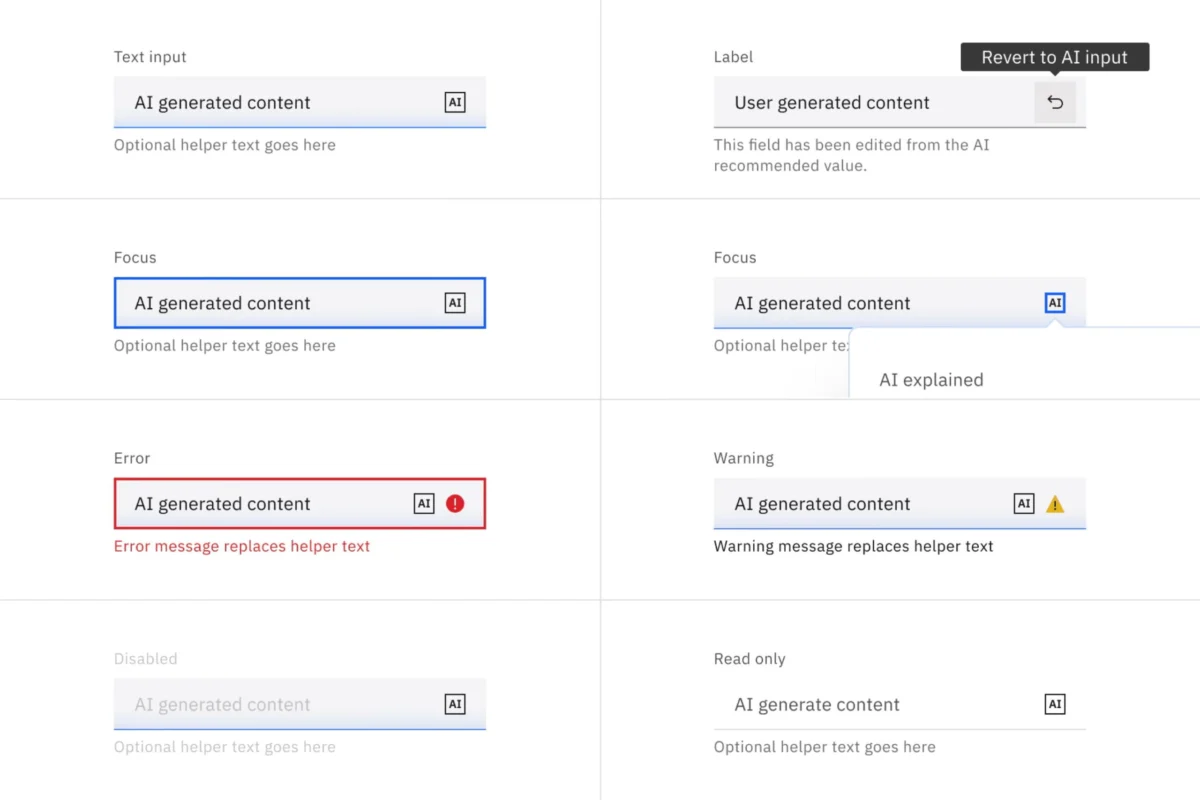
The reaction from the tech industry has been a mix of caution and proactive adaptation. Major players like IBM, through its Carbon Design System, have already begun implementing standardized AI labels that align with the EU’s transparency goals. These systems use "explainability panels" that not only label content as AI-generated but also provide users with information on the data sources used and the confidence level of the AI’s output.

However, some industry groups have expressed concern regarding "label fatigue." There is a risk that if every minor AI interaction is labeled, users may begin to ignore the disclosures, defeating the purpose of the regulation. To mitigate this, the EU guidelines emphasize a risk-based approach, focusing the strictest requirements on "realistic" content that has the highest potential to deceive.
For businesses, the roadmap to 2026 involves several key steps:

- Inventory AI Usage: Identifying every point in the product lifecycle where generative AI is utilized.
- Establish Editorial Workflows: Creating clear "human-in-the-loop" processes for content that is intended to be published without an AI label.
- UI/UX Redesign: Integrating the official EU icons and plain-language labels into digital interfaces.
- Metadata Integration: Implementing technical solutions to ensure that labels persist across platforms.
Analysis of Broader Societal Impact
The implementation of mandatory AI labeling represents a significant step in the evolution of digital literacy. By forcing a distinction between human and machine-generated content, the EU is attempting to preserve the integrity of the information ecosystem. In an era where "AI slop"—low-quality, mass-produced synthetic content—threatens to overwhelm search engines and social feeds, these transparency rules provide consumers with a tool to filter and evaluate the information they encounter.
Furthermore, these regulations may protect the economic value of human creativity. By clearly marking what is AI-generated, the market can better differentiate and value human-authored journalism, art, and literature. While the "panic" regarding "huge fines" captured headlines this week, the reality of the guidelines is a pragmatic attempt to bring order to a rapidly advancing field. As 2026 approaches, the success of the AI Act will depend on whether these labels become a meaningful part of the digital experience or merely another checkbox in the landscape of regulatory compliance.

