
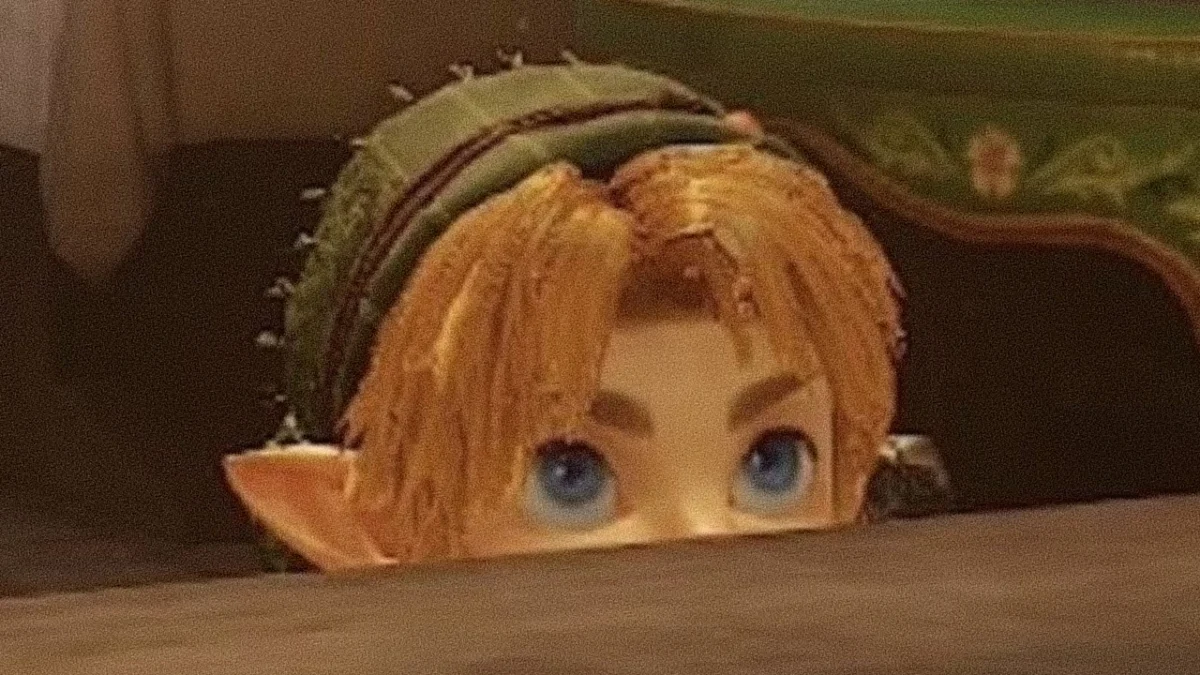
The digital landscape of late 2026 has been significantly reshaped by the emergence of a viral reaction image known as Young Link Looking Over a Table. Depicting the protagonist of the highly anticipated The Legend of Zelda: Ocarina of Time remake, the image has transcended its origins as a video game screenshot to become a universal shorthand for childhood vulnerability, short-stature relatability, and the persistent curiosity of the "iPad Kid" generation. The image features the youthful iteration of Link peeking over a wooden countertop, with only the upper half of his face visible—his wide eyes conveying a mixture of innocence and expectation. This visual composition has struck a chord with millions of users across X (formerly Twitter), Instagram, and Threads, sparking a wave of creative derivatives and cultural commentary.
The Genesis of a Digital Phenomenon
The origin of the meme can be traced back to November 6, 2026, a period coinciding with the peak post-launch discourse surrounding the Ocarina of Time remake. An X user operating under the handle @SILENTPRINCESS shared a high-definition screenshot of the game, capturing Young Link in a shop environment. The character’s height, a central mechanic in the game’s time-travel narrative, results in him being dwarfed by standard-sized furniture. The user paired the image with the caption, "you got games on your phone?"—a phrase that has become synonymous with the stereotypical behavior of young children in social settings.
The post immediate resonated with the platform’s audience, garnering over 40,000 likes and 4,500 reposts within five days. The synergy between the high-fidelity graphics of the 2026 remake and the nostalgic "iPad Kid" catchphrase created a perfect storm for virality. By the time the creator cross-posted the screenshot to Instagram, it had already begun its transition from a gaming-specific joke to a broader cultural template, earning an additional 22,500 likes on that platform.
Chronology of Viral Propagation
Following the initial post on November 6, the image underwent a rapid evolution as users began to apply it to a variety of relatable social scenarios. On November 8, 2026, the meme took a turn toward the "helpless child" trope when X user @AlexaRayC posted the image with the caption, "I can’t fight Ganondorf I frewed up." This specific phrasing references a long-standing internet meme involving children reporting illness to their parents in the middle of the night. By replacing the traditional "Mom" with the game’s antagonist, Ganondorf, the post highlighted the absurdity of a child-hero facing an ancient evil while dealing with mundane childhood ailments. This iteration secured 14,000 likes in 72 hours, signaling the meme’s versatility.
The timeline continued to accelerate as the image moved into the realm of everyday observational humor. Later that same day, @TheColeBrew utilized the image to describe the anxiety of being left alone at a grocery store checkout line. The caption, "How I looked at the cashier as my mom went to get the ziplocks or milk she forgot," tapped into a nearly universal childhood experience. While the X post saw modest engagement, the Instagram version exploded, collecting over 15,600 likes and demonstrating the image’s high "shareability" across different demographics.
By November 10, 2026, the meme had reached Threads, where user cauldronbrewed introduced a sub-genre of the meme: the "short adult" perspective. By editing the image to show Link offering rupees to a shopkeeper and captioning it, "Me age 33 and 4’9” trying to pay for my alcohol," the user shifted the focus from childhood to the lived experience of short-statured adults. This post garnered 9,500 likes in a single day, proving that the image’s appeal was not limited to those interested in the Zelda franchise.
Cultural and Technical Context: The 2026 Remake
To understand why Young Link Looking Over a Table became a dominant meme, one must consider the technical and cultural weight of the The Legend of Zelda: Ocarina of Time 2026 remake. As a reimagining of what many critics consider the greatest video game of all time, the remake was subject to intense scrutiny. The 2026 version utilized advanced lighting and character modeling that gave Young Link a more expressive, emotive face than previous iterations.
The specific "peeking" animation or camera angle captured in the meme highlights the developers’ attention to scale. In the game, the world is designed to feel overwhelming to the child version of Link, emphasizing his growth into the Adult Link persona. This disparity in scale is exactly what makes the image effective as a meme; it visually communicates a lack of agency or a need for assistance, which are core themes in both the game and the humorous captions paired with the image.
Statistical Engagement and Demographic Reach
Data harvested from social media analytics tools indicates that the meme’s reach is most concentrated among two primary demographics: "Millennial Gamers" (ages 30–45) who grew up with the original 1998 title, and "Gen Z/Gen Alpha" users (ages 13–25) who resonate with the "iPad Kid" and "frew up" aesthetic.
The engagement metrics for the first week of the meme’s existence show a high "save" rate on Instagram, suggesting that users are keeping the image as a reaction tool for future use. On X, the "quote-tweet" to "like" ratio remained healthy, indicating that the image was being used as a conversational starter rather than just passive content. The search interest for "Young Link table meme" saw a 400% spike in the 48 hours following @SILENTPRINCESS’s post, according to preliminary search engine data.
Analysis of the "Exploitable" Format
The success of Young Link Looking Over a Table can be attributed to its status as an "exploitable" format. In internet culture, an exploitable is an image that is easy to modify, either through text or by adding other visual elements. The simplicity of the background—a plain wooden table and a neutral wall—allows users to "Photoshop" different items onto the counter.
Various examples from mid-November 2026 show Link looking at:
- A pack of cigarettes (referencing 90s childhood errands).
- A "Roblox" logo (referencing modern gaming preferences).
- A bowl of soup (referencing the "We only sell soup" internet skit).
- A drawing he made (referencing the desire for parental validation).
This flexibility ensures longevity. While the "iPad Kid" joke may eventually lose its luster, the core image of a small individual looking up at a world too big for them remains a foundational human experience, allowing the meme to pivot into new contexts as they arise.
Broader Implications for the Gaming Industry
The viral success of this meme represents a significant, albeit unplanned, marketing victory for Nintendo. In an era where traditional advertising often fails to reach younger audiences, "organic virality" through memes is invaluable. The image of Young Link has permeated non-gaming circles, introducing the character and the aesthetic of the 2026 remake to millions of potential consumers who may not have been following the game’s development.
Furthermore, the meme highlights a shift in how players interact with modern games. The use of "Photo Mode" and the ability to capture high-resolution screenshots have turned every player into a potential content creator. The fact that a simple shop interaction could become a global talking point underscores the importance of character design and environmental storytelling in contemporary game development. If a character’s idle animation or height-relative camera angle can spark a cultural moment, it validates the immense resources spent on the "micro-details" of AAA titles.
Conclusion
Young Link Looking Over a Table is more than a fleeting internet joke; it is a synthesis of 1990s nostalgia and 2020s digital humor. By bridging the gap between the legendary status of The Legend of Zelda and the mundane realities of modern life—from grocery shopping to childhood illness—the meme has secured its place in the archives of digital history. As the Ocarina of Time remake continues its lifecycle, this image will likely remain a staple of reaction-based communication, serving as a reminder of the power of a single, well-captured frame to resonate across the global internet. The phenomenon reinforces the idea that in the vast, complex world of 2026 media, sometimes the most effective way to capture the public’s attention is through the simple, wide-eyed gaze of a hero who is just a few inches too short for the counter.

