
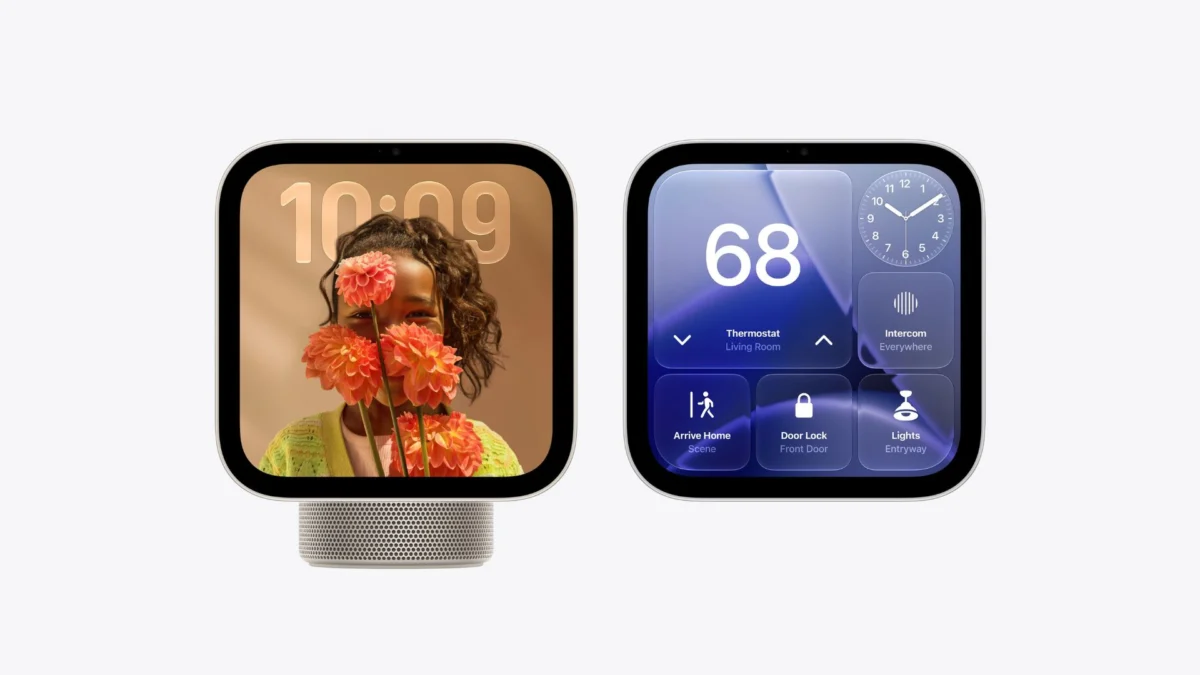
Newly uncovered software code for Apple’s upcoming HomeView smart home hub suggests the device may extend its capabilities beyond mere smart device control to include integrated home security camera features, potentially offering a compelling all-in-one solution for connected households. The revelations, meticulously detailed by code researcher pdfu, point towards robust support for HomeKit Secure Video, a feature that could empower users to monitor their homes and capture footage directly through the HomeView device. While Apple has yet to officially confirm these camera-centric functionalities, the discovered software strings strongly indicate that HomeView might incorporate capabilities traditionally reserved for dedicated security cameras.
Unveiling Hidden Capabilities: The HomeKit Secure Video Connection
The core of these emerging insights lies in the analysis of HomeView Software version 27.2. Within this software, pdfu identified specific references that explicitly mention HomeKit Secure Video. This integration is significant as HomeKit Secure Video is designed to provide a secure and private way to view and record video from compatible cameras. By leveraging this framework, Apple’s HomeView could offer users the ability to stream live video feeds from their homes and store recorded footage securely in iCloud. This would mark a substantial expansion of the smart home hub’s utility, transforming it from a central control point into a proactive home monitoring system.
The implications of this potential dual functionality are far-reaching. Consumers often invest in separate smart home hubs and dedicated security cameras, leading to increased cost and complexity. If HomeView successfully integrates these roles, it could simplify the smart home ecosystem for users, offering a more streamlined and potentially cost-effective solution. The ability to manage lighting, thermostats, entertainment systems, and home security all from a single device would represent a significant advancement in the convenience and integration of smart home technology.
Deconstructing the Camera Modes and User Controls
Further examination of the discovered code has shed light on the granular control users might have over HomeView’s potential camera features. The software references four distinct camera modes: "Off," "Detect Activity," "Stream," and "Stream & Allow Recording." This tiered approach suggests a flexible system designed to cater to various user needs and privacy preferences.
- Off: This mode would presumably disable all camera functionality, ensuring complete privacy when not needed.
- Detect Activity: In this mode, the HomeView device would likely employ its camera to sense motion or other forms of activity within its field of view. This could trigger notifications or other smart home automations without necessarily initiating continuous recording.
- Stream: This mode would allow users to view live video feeds from the HomeView device in real-time. This is ideal for quick checks on pets, children, or to monitor activity within the home.
- Stream & Allow Recording: This is the most comprehensive mode, enabling both live streaming and the automatic recording of video footage. This mode would be crucial for security purposes, providing a record of events.
Adding another layer of sophistication, the code hints at the ability for users to schedule different camera settings based on their presence at home, away, or asleep. This intelligent scheduling could automatically engage recording modes when the household is empty or asleep, while disabling them when individuals are present, thus enhancing both security and privacy. This level of customizable automation is a hallmark of advanced smart home systems and would further solidify HomeView’s position as a sophisticated hub.
Technical Specifications and Performance Expectations
Beyond the operational modes, specific technical details within the software code provide further insight into the expected performance of HomeView’s camera capabilities. A key discovery points to a HomeView-specific configuration supporting 1080p video resolution at 30 frames per second (fps). This resolution is considered standard for modern home security cameras, offering a clear and detailed image. The 30fps frame rate is also typical, providing smooth video playback.
Furthermore, the code mentions microphone input for HomeKit Secure Video sessions. This implies that HomeView will not only capture video but also audio, a critical component for comprehensive home monitoring and security. The integration of audio recording within a smart home hub further blurs the lines between entertainment, control, and surveillance devices, underscoring Apple’s strategy of creating integrated, multi-functional hardware.
Prioritizing Privacy: Apple’s Stated Commitment
A recurring theme in the discovered code is Apple’s emphasis on user privacy, a cornerstone of the company’s brand. The software strongly suggests that access to camera streams and recordings will be restricted to members of a household, reinforcing the concept of a private, personal security system. This is a critical differentiator in the smart home market, where concerns about data privacy are paramount.
To further enhance transparency and user control, the code indicates the presence of a visible green indicator light and an audible sound that will alert individuals whenever streaming or recording begins. This immediate and unambiguous notification serves as a clear signal that the camera is active, allowing occupants to be aware of its operation. Additionally, users are expected to receive notifications whenever camera settings are changed. This proactive alert system makes it significantly harder for someone to enable recording without the knowledge of other household members, mitigating potential misuse or unauthorized surveillance.
Navigating Limitations and Future Integrations
Despite the promising revelations, the discovered code also outlines certain limitations that will likely govern HomeView’s camera functionality at launch. Notably, while an "away mode" is referenced, the software suggests that streaming and recording can only be actively enabled directly on the HomeView device when someone is physically present at home. This constraint might be a deliberate privacy measure to prevent accidental or unnoticed activation of recording when no one is around to monitor it.
More advanced features, such as facial recognition and activity zones, are expected to be managed through the dedicated Home app on an iPhone. This approach allows for more complex configuration and analysis to be handled on a more powerful mobile device, while the HomeView hub focuses on real-time capture and basic control. Facial recognition, for instance, could enable personalized alerts when specific family members or known individuals are detected, while activity zones would allow users to define specific areas within the camera’s view to monitor for motion, reducing false alarms.
Innovative Preview Refresh Feature
An intriguing discovery within the code points to a HomeView-specific feature designed to automatically capture still images to refresh its camera preview whenever a household member opens the Home app. This intelligent preview functionality would ensure that users are presented with the most up-to-date visual information without necessarily initiating a full live stream. The same green privacy indicator is reportedly designed to appear during these still image captures, maintaining transparency even during these brief, automated operations. This feature could significantly enhance the user experience by providing immediate visual context upon opening the Home app, making it easier to assess the current state of their home.
The Road Ahead: Launch and Unanswered Questions
The discovery of these advanced camera-related features within HomeView’s software code is compelling, but it is important to reiterate that their presence in the software does not definitively guarantee their availability at the device’s official launch. Apple is known for its iterative development process, and features discovered in early software builds may be refined, altered, or even postponed for future updates.
However, with HomeView officially scheduled to arrive on November 13, starting at a price point of $299, the anticipation for its full feature set is mounting. This price point positions HomeView as a premium smart home hub, and the inclusion of robust security camera capabilities would significantly bolster its value proposition. The market will be closely watching to see if Apple’s smart home hub can indeed serve as a viable alternative to dedicated indoor security cameras, further consolidating Apple’s ecosystem and its commitment to delivering integrated, intelligent home solutions. The success of this integrated approach could set a new precedent for the future of smart home devices, prioritizing convenience, security, and privacy in a single, elegant package.

