
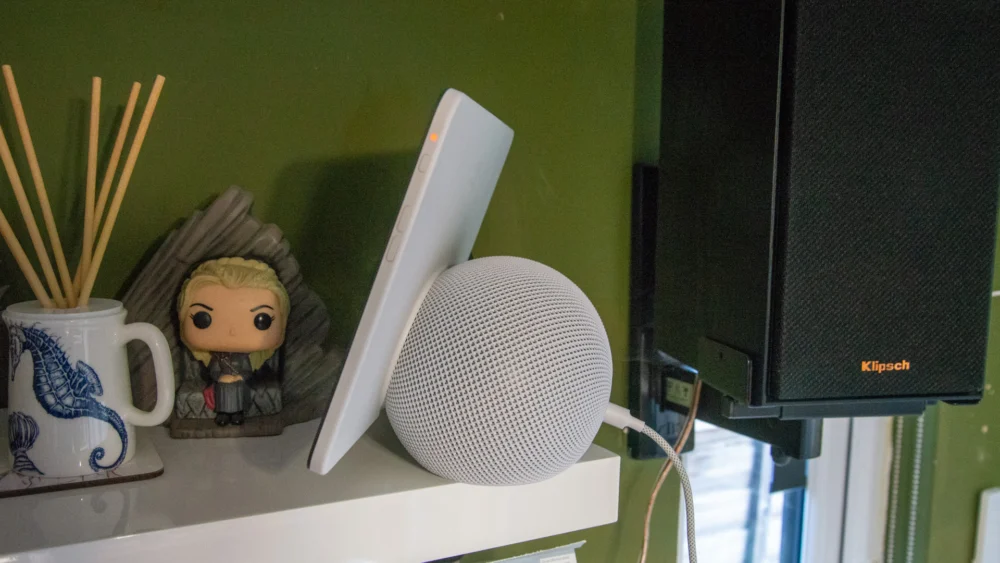
A recent leak from prototype collector Kosutami, who claims to have personally inspected an early iteration of Apple’s long-rumored smart home display, has offered the most detailed glimpse yet into the device, tentatively dubbed "HomePad." The revelations point towards a strategic departure from existing smart display paradigms, suggesting a permanent fixture within the home environment with a strong emphasis on Apple’s nascent AI capabilities. Key among the reported features are a MagSafe-style magnetic wall-mounting system and integrated doorbell functionality, signaling a fundamental shift in how users might interact with and install such a device. This information surfaces after years of persistent speculation and internal development, with no definitive launch window having been publicly confirmed by Apple.
The purported snap-to-wall capability is particularly noteworthy, indicating Apple’s intention to position the HomePad not as a portable gadget but as an integral, almost architectural, component of a smart home. This design philosophy starkly contrasts with established competitors like Amazon’s Echo Show and Google’s Nest Hub, both of which are designed to rest on flat surfaces and lack built-in hardware for wall mounting. The implication is that the HomePad is envisioned for strategic placement in high-traffic areas of the home, such as kitchens, living rooms, or hallways, where its display and smart home control features can be readily accessed. This approach suggests a deliberate move to embed the device more deeply into the fabric of daily life, akin to a smart thermostat or a dedicated video intercom system.
Central to Kosutami’s account is the device’s profound reliance on Apple Intelligence, the company’s advanced AI framework that is gradually being rolled out across its ecosystem of iPhones, iPads, and Macs. The leak suggests that Apple Intelligence will form the core interaction layer of the HomePad, moving beyond the traditional touch-and-app interface that characterizes most current smart displays. This AI-first approach implies a more intuitive, context-aware, and personalized user experience, where the device anticipates needs, understands complex voice commands, and proactively offers relevant information or controls. Instead of users actively navigating menus or launching specific applications, the HomePad may engage in more naturalistic conversations and predictive actions, driven by its understanding of user behavior and environmental context.
The reported specifications of the HomePad further solidify its intended role. It is said to feature a 7-inch square display and a front-facing camera. This form factor is consistent with Apple’s established design language, reminiscent of the iPad mini, suggesting a device that is both functional and aesthetically cohesive with other Apple products. The inclusion of a display and camera positions the HomePad to excel in various applications, including high-quality video calls, providing glanceable information such as weather forecasts, calendar appointments, or news headlines, and serving as a central hub for managing and monitoring smart home devices. The square aspect ratio, while less common for displays, could be optimized for specific smart home interfaces or visual elements within Apple’s software.
A History of Iteration and Strategic Delays
The development of the HomePad, or a device with similar functionality, has reportedly been ongoing within Apple for several years. This extended gestation period, according to industry observers, is not necessarily indicative of hardware development challenges but rather a strategic decision tied to the maturation of Apple Intelligence. The company appears to be prioritizing the development of a robust and capable AI foundation before finalizing the hardware, ensuring that the device’s intended functionality is not compromised by nascent AI capabilities. This approach aligns with Apple’s known modus operandi of meticulous product development, often characterized by lengthy internal testing and refinement cycles.
The timeline for the HomePad’s eventual release has been subject to multiple revisions, underscoring the complexity of its development and Apple’s commitment to delivering a polished product. Initially rumored for an early 2025 release, the projected launch window has reportedly been pushed back twice. The most recent internal estimates, as per Kosutami’s leak, now point towards an autumn 2026 release. This period, typically encompassing September through December, is Apple’s busiest annual release cycle, often marked by the unveiling of new iPhone models, Apple Watches, and other significant product updates.
An autumn 2026 launch would strategically place the HomePad alongside other highly anticipated Apple announcements. It is highly probable that the iPhone 18 Pro models will be unveiled in September of that year, potentially followed by redesigned MacBook Pro models later in the quarter. This dense release schedule across multiple product categories suggests Apple aims to generate significant consumer interest and media attention by clustering major product introductions, allowing the HomePad to debut within a period of heightened anticipation for new Apple hardware and software.
The Significance of the MagSafe-Style Mounting System
The incorporation of a MagSafe-style magnetic wall-mounting system is a pivotal detail that speaks volumes about Apple’s vision for the HomePad. MagSafe technology, originally introduced with the iPhone 12 series, utilizes magnets to precisely align and securely attach accessories. Applying this concept to a wall mount for a smart display suggests a user-friendly and aesthetically pleasing installation process. Users would likely be able to simply bring the HomePad close to a wall-mounted magnetic plate, and it would snap into place, ensuring a stable and flush fit. This eliminates the need for complex drilling or bracket installation, making the device accessible to a broader range of users and environments.
This feature also reinforces the notion of the HomePad as a permanent fixture. Unlike portable devices that are frequently moved, the wall-mounted HomePad is designed to remain in a designated location, serving as a constant point of interaction and control within the home. This permanence allows for deeper integration with home automation systems and a more consistent user experience. For instance, the device could be strategically placed near a front door for doorbell integration, in a kitchen for recipe assistance and smart appliance control, or in a living area for media management and communication.
Doorbell Integration: A Convergence of Smart Home Functions
The reported doorbell integration further broadens the HomePad’s functionality and its potential as a central smart home hub. This suggests that the HomePad could serve as a visual interface for a smart doorbell system, allowing users to see and communicate with visitors at their doorstep directly from the device’s screen. This functionality would likely extend to remote viewing via the user’s iPhone or iPad when they are away from home, mirroring the capabilities of existing smart doorbell systems but integrated within Apple’s cohesive ecosystem.
The convergence of a smart display with doorbell functionality is a strategic move that streamlines the smart home experience. Instead of managing separate devices for security and information display, users could rely on a single, integrated unit. This could also pave the way for advanced features, such as AI-powered visitor identification, package delivery notifications, and even the ability to remotely unlock doors for trusted individuals. The front-facing camera, crucial for video calls, would also be instrumental in capturing footage from the doorbell.
Apple Intelligence: The AI Backbone
The heavy reliance on Apple Intelligence is perhaps the most significant aspect of the HomePad leak. Apple Intelligence represents a comprehensive suite of AI features designed to understand and generate language and images, process context, and take actions across Apple’s platforms. For the HomePad, this could translate into a range of sophisticated capabilities:
- Personalized Content Delivery: The device could learn user preferences and deliver tailored news, music, or entertainment suggestions.
- Contextual Awareness: It might understand the user’s current activity or location within the home and adjust its behavior accordingly. For example, dimming lights and playing calming music in the evening.
- Advanced Voice Control: Natural language understanding would allow for more complex and nuanced voice commands, eliminating the need for rigid phrasing.
- Proactive Assistance: The HomePad could anticipate needs, such as reminding users to leave for an appointment based on traffic conditions or suggesting recipes based on available ingredients.
- Enhanced Smart Home Automation: AI could enable more sophisticated automation routines, allowing the HomePad to learn user patterns and optimize home settings over time.
- Seamless Ecosystem Integration: Apple Intelligence is designed to work across devices, meaning the HomePad could seamlessly hand off tasks or share information with an iPhone or iPad.
The commitment to on-device processing for many of Apple Intelligence’s functions also addresses privacy concerns, a hallmark of Apple’s product strategy. Processing sensitive data locally enhances user privacy and reduces reliance on cloud infrastructure for everyday tasks.
Potential Market Impact and Competitive Landscape
The HomePad, if it materializes with these rumored features, could significantly disrupt the existing smart display market. While Amazon and Google have established a strong presence with their respective Echo Show and Nest Hub lines, the HomePad’s unique selling propositions – magnetic wall mounting, doorbell integration, and a deeply integrated AI experience – could offer a compelling alternative for Apple loyalists and those seeking a more seamless and sophisticated smart home solution.
The device’s success will likely hinge on its ability to deliver on the promise of Apple Intelligence, offering tangible benefits and a user experience that feels genuinely intuitive and advanced. The premium pricing often associated with Apple products will also be a factor, potentially positioning the HomePad as a high-end smart home device.
Uncertainty Surrounding the "HomePad" Name
It is important to note that Kosutami has indicated that "HomePad" is an internal codename and that Apple may opt for a different moniker for the commercial product. This is not uncommon for Apple, which often uses placeholder names during the development phase. Regardless of the final name, the underlying functionality and design principles revealed in the leak paint a picture of a device poised to redefine Apple’s presence in the smart home arena, blending elegant hardware design with cutting-edge artificial intelligence. The prolonged development cycle, coupled with the strategic focus on AI, suggests that Apple is aiming for a product that is not just an iteration but a significant leap forward in smart home technology. The autumn 2026 release window, while distant, could mark a pivotal moment for the smart home industry, with Apple potentially setting a new benchmark for what users can expect from their connected living spaces.

