
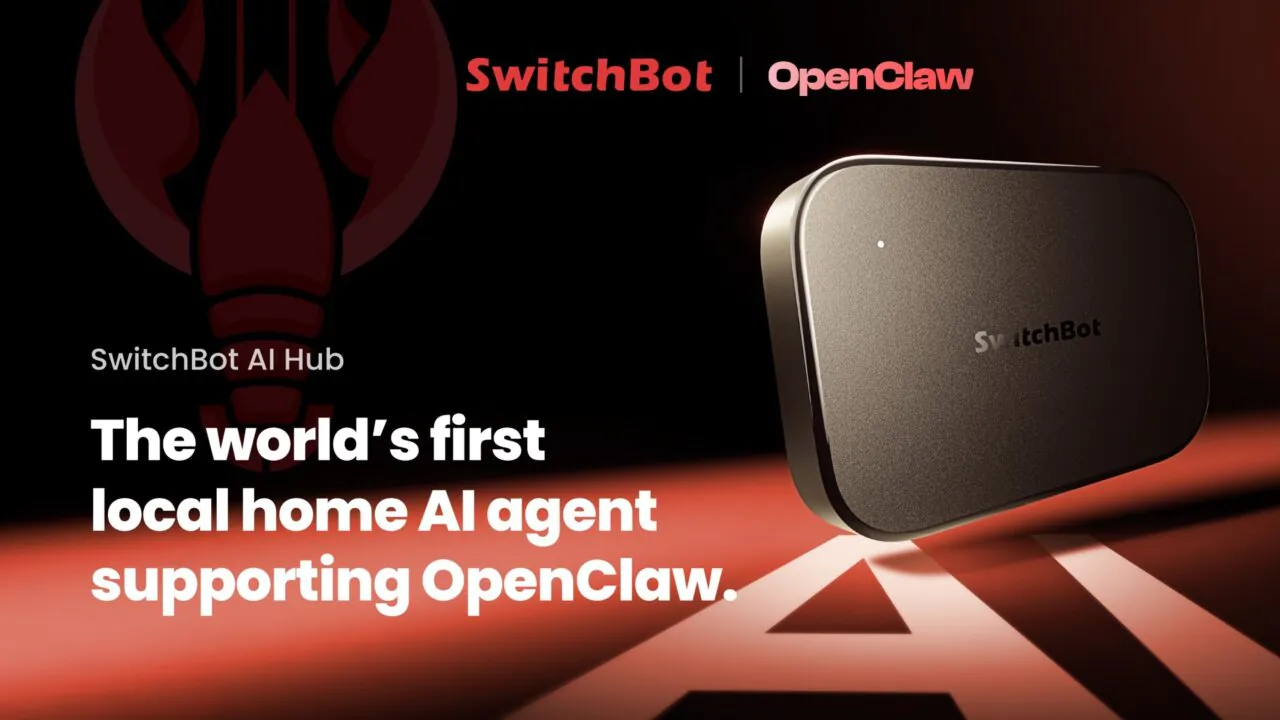
SwitchBot’s forthcoming AI Hub represents a significant advancement in smart home technology, poised to redefine user interaction and automation capabilities. The device’s integration of native OpenClaw support, an open-source AI assistant designed for practical, real-world applications, promises to elevate smart home management to an unprecedented level of intuitiveness and sophistication. This development moves beyond the fragmented app-based control that has characterized smart homes, offering a unified, conversational interface accessible through everyday communication platforms. The AI Hub’s forthcoming over-the-air (OTA) update, slated for late February, will transform the device into a powerful, localized home AI agent. This enables users to connect with various large language models (LLMs), facilitating comprehensive automation of domestic systems, from lighting and security to appliance management.
The strategic decision by SwitchBot to embed OpenClaw’s capabilities directly into the AI Hub addresses a critical need for streamlined smart home control. Traditionally, users have navigated a complex ecosystem of disparate applications, each controlling specific devices or services. This often leads to a disjointed user experience, requiring users to recall which app controls which device or to set up intricate, and often confusing, routines. The AI Hub, by contrast, aims to consolidate this control into a single, intelligent interface. Users will be able to issue commands and receive information through natural language messages sent via popular platforms such as WhatsApp, iMessage, or Discord. This approach democratizes smart home control, making it accessible to a broader audience, including those who may find traditional smart home interfaces daunting.
The OpenClaw Advantage: Localized Intelligence and Enhanced Privacy
The integration of OpenClaw is a cornerstone of the AI Hub’s enhanced functionality. OpenClaw is an open-source initiative focused on developing AI assistants capable of performing tangible, everyday tasks. By bringing this technology directly into the AI Hub, SwitchBot is positioning the device as a central, intelligent node for the home. The key benefit of this integration is the establishment of a powerful, local home AI agent. This means that many AI processing tasks will occur directly on the hub itself, rather than relying solely on cloud-based servers. This localized processing offers several advantages, including reduced latency, enhanced privacy, and increased reliability, as the system can continue to function even if internet connectivity is temporarily disrupted.
The AI Hub’s architecture is designed to securely contain OpenClaw’s deep system-level access. This containment is a crucial aspect of SwitchBot’s commitment to user security and privacy. By isolating the AI’s operational environment within the dedicated hub, the company ensures that sensitive smart home data and control mechanisms are protected. This localized approach mitigates many of the security concerns associated with cloud-dependent smart home systems, where data breaches or unauthorized access to cloud servers could have far-reaching consequences. Users can therefore be more confident in the security of their AI-driven home operations.
Beyond Text: Visual AI for Proactive Home Awareness
The innovation within SwitchBot’s AI Hub extends beyond its text-based AI capabilities. The device is also the first edge hub to incorporate Visual Language Model (VLM) functionality. VLMs are a cutting-edge advancement in artificial intelligence, enabling systems to not only process and understand text but also to interpret and analyze visual information. This gives the AI Hub an almost humanlike ability to perceive and comprehend events occurring within the home environment.
When paired with SwitchBot’s range of cameras and video doorbells, the VLM capabilities unlock a new dimension of smart home awareness. The system can now recognize specific real-world occurrences. For instance, it can detect if a person has fallen, if a pet has escaped, or if an unusual situation is unfolding. Upon detection, the AI Hub can immediately send context-rich alerts to the user. These alerts are not mere notifications of generic motion; they are intelligent summaries of observed events, providing users with crucial information at a glance.
This sophisticated event recognition marks a significant leap beyond traditional motion detection systems. Basic motion sensors trigger alerts based on any movement, often leading to a barrage of non-critical notifications. The VLM, however, can learn and understand routines. For example, it might recognize a familiar face approaching the front door. In such scenarios, the AI Hub could proactively suggest or even initiate an action, such as unlocking the smart lock, anticipating the user’s needs and streamlining entry. This proactive approach transforms the smart home from a reactive system into a truly intelligent and helpful companion.
A Powerful NVR and Data Hub for the Tech-Savvy User
For users with more advanced needs, particularly those focused on home security and data management, the AI Hub offers robust Network Video Recorder (NVR) functionalities. This feature is bolstered by built-in Frigate integration, a popular open-source NVR software known for its efficiency and AI-powered object detection. The AI Hub can support up to eight cameras, providing comprehensive surveillance coverage. A key feature of this NVR capability is local data storage, allowing users to retain their video footage on the device itself. Storage capacity can be significantly expanded, with support for up to 16 TB of local data.
Navigating through extensive video footage can be a time-consuming task. The AI Hub addresses this challenge with AI-powered video search. This intelligent search function allows users to quickly locate specific moments within their recordings by querying based on events, objects, or even recognized individuals. This dramatically reduces the time and effort required to find critical evidence or simply to review past events. Furthermore, the AI Hub provides daily home reports. These reports offer a concise summary of significant events and system activities, keeping users informed without overwhelming them with constant, granular notifications. This balance between comprehensive information and notification management is a testament to the hub’s thoughtful design.
Bridging Ecosystems: Seamless Cross-Platform Automation
A critical development for the future of smart home integration is the planned integration of SwitchBot’s Skills platform with OpenClaw, scheduled for March. This integration will unlock sophisticated cross-platform automation capabilities, enabling seamless interaction with major smart home ecosystems such as Home Assistant, Apple Home, and Google Home. This means users will be able to control devices and initiate complex routines across these different platforms using simple, conversational commands directed at the AI Hub.
This inter-ecosystem compatibility is a significant step towards a truly unified smart home experience. Previously, users often found themselves locked into specific ecosystems or had to employ complex workarounds to achieve interoperability. The AI Hub’s ability to act as a bridge between these platforms, powered by OpenClaw’s natural language processing and SwitchBot’s extensive device support, promises to simplify automation significantly. For example, a user could say, "When I leave for work tomorrow morning, turn off all the lights, lock the doors, and set the thermostat to away mode," and the AI Hub would orchestrate these actions across their various connected devices and platforms.
The AI Hub’s extensive device support is another key aspect of its central role in the smart home. It is designed to work with over 100 SwitchBot devices, ensuring broad compatibility with the company’s existing product line. Furthermore, it functions as a Matter bridge for up to 30 products. Matter, the new connectivity standard, aims to simplify smart home device interoperability, and the AI Hub’s role as a bridge allows older or non-Matter-certified devices to participate in this new standard. With dual-band Wi-Fi support for robust connectivity, the AI Hub is engineered to be the undisputed central brain of any modern smart home, capable of managing a diverse array of devices and services.
The Future of Smart Home Interaction: Conversational, Proactive, and Effortless
SwitchBot’s AI Hub represents a paradigm shift in how we interact with and manage our homes. By brilliantly combining the power of OpenClaw’s conversational AI with advanced visual analysis and seamless cross-platform automation, the device transcends the definition of mere hardware. It evolves into a truly conversational and proactive assistant, making smart home management feel genuinely effortless.
The implications of this development are far-reaching. For consumers, it promises a more intuitive, accessible, and powerful smart home experience. The ability to control complex systems through natural language, coupled with the proactive insights provided by visual AI, reduces friction and enhances convenience. For the smart home industry, it sets a new benchmark for intelligence and interoperability, potentially driving further innovation in AI integration and user experience design.
The commitment to local processing and robust security measures addresses persistent user concerns, building greater trust in smart home technology. As the AI Hub rolls out its updates and integrations throughout early 2024, it is poised to become a cornerstone of the intelligent home, transforming passive environments into responsive, aware, and genuinely helpful living spaces. The journey from single-purpose smart devices to a truly integrated, AI-powered home has taken a significant stride forward with the advent of SwitchBot’s AI Hub.

