
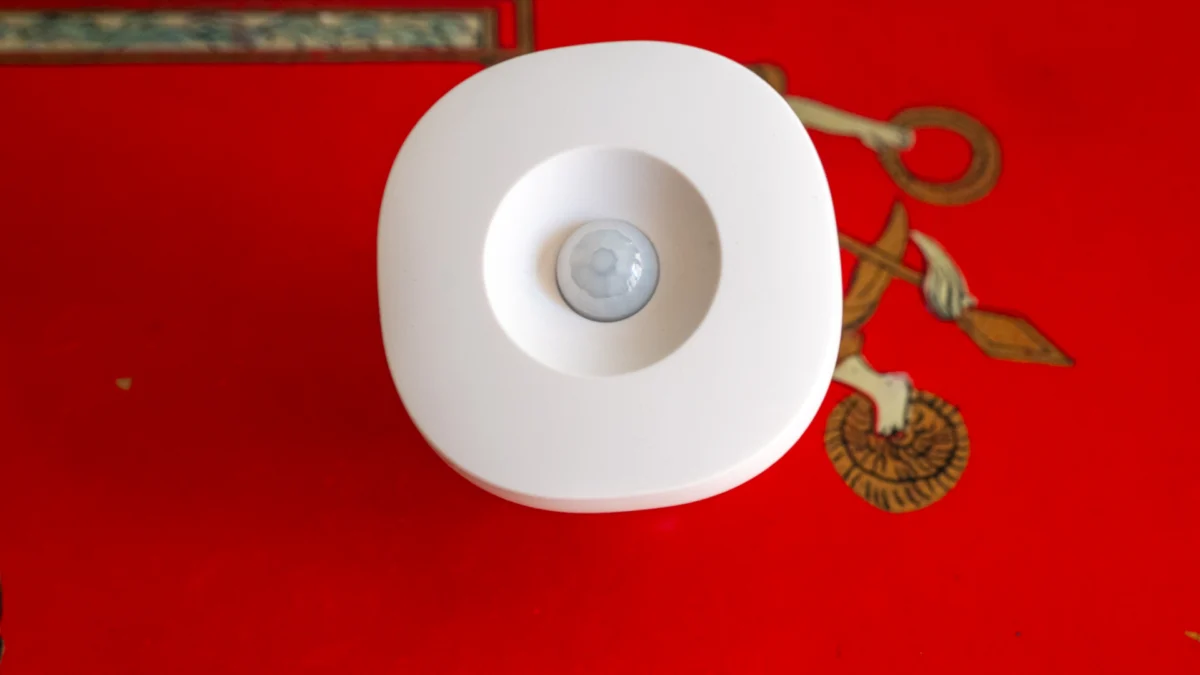
The Aeotec Motion Sensor, a device with roots tracing back to the SmartThings ecosystem, presents a familiar yet evolving option for smart home enthusiasts seeking to integrate motion detection into their automated routines. While offering straightforward functionality and an integrated temperature sensor, its current market positioning raises questions about its value proposition when compared to more advanced alternatives. This review delves into the sensor’s design, features, performance, and ultimately, its place in the increasingly sophisticated landscape of smart home technology.

The lineage of the Aeotec Motion Sensor is a crucial starting point for understanding its identity. Originally launched under the SmartThings brand, the hardware portfolio was subsequently transferred to Aeotec, a company with a long-standing presence in the smart home arena. This transition signifies a continuity of product development rather than a radical reimagining. For users already invested in the SmartThings ecosystem or those migrating to Aeotec’s rebranded offerings, the Motion Sensor represents a direct continuation of a known entity. However, for those new to the brand or seeking the latest in smart home innovation, a closer examination is warranted.
Designed with a minimalist aesthetic, the Aeotec Motion Sensor boasts a compact, square form factor with gently curved edges, allowing it to blend unobtrusively into various home décors. Its physical installation is facilitated by a robust 3M adhesive pad, offering a convenient, screw-free mounting solution for walls or ceilings. While the absence of a screw-in option might be a minor inconvenience for some, the included adhesive is designed for secure and lasting adhesion.

A key design element is the magnetic ball-joint mount. This feature allows for effortless repositioning of the sensor, enabling users to precisely direct its detection field. This adjustability is particularly useful for optimizing its placement to capture motion in specific areas or to avoid false triggers. Furthermore, the magnetic attachment simplifies the process of removing the sensor for routine battery changes. The device is powered by a single CR2 battery, with the manufacturer projecting a lifespan of at least one year under typical usage conditions, a common benchmark for such devices in the market.
Beyond its primary function as a motion detector, the Aeotec Motion Sensor incorporates a secondary temperature sensor. This dual-functionality adds a layer of versatility, allowing users to incorporate ambient temperature readings into their smart home automations. For instance, automations could be triggered based on temperature fluctuations, such as adjusting thermostats or activating ventilation systems. However, in an era where many smart home devices, including smart thermostats, smart displays, and even some smart bulbs, already include integrated temperature sensors, the utility of this additional sensor may be redundant for some users, depending on their existing smart home setup.

Connectivity is established via the Zigbee protocol, a widely adopted standard in the smart home industry known for its low power consumption and mesh networking capabilities. This makes the Aeotec Motion Sensor compatible with a broad spectrum of Zigbee hubs, extending its utility beyond the confines of the Aeotec Smart Home Hub. The review specifically highlights successful integration with the Homey Pro (2026), demonstrating its interoperability with third-party smart home controllers. This open approach to connectivity is a significant advantage, allowing users to maintain their preferred hub ecosystem without being locked into a single manufacturer’s proprietary network. The release date of the original SmartThings Motion Sensor was 2019, placing this device within a generation of smart home technology that predates some of the more advanced sensing capabilities now common.
The core functionality of the Aeotec Motion Sensor revolves around detecting motion. When movement is registered, the sensor signals its status to the connected hub, initiating pre-programmed automations. This can range from turning on lights in a room upon entry to triggering alerts when unexpected movement is detected. The temperature sensor can also be utilized in conjunction with motion detection, allowing for more nuanced automations. For example, lights could be activated only if motion is detected and the temperature falls below a certain threshold, indicating a potential need for heating.

However, the sensor’s "basic" nature becomes apparent when contrasted with more sophisticated presence detection technologies. Unlike advanced sensors that can differentiate between subtle movements and sustained occupancy, the Aeotec Motion Sensor relies on distinct physical motion to register presence. This limitation can lead to scenarios where the sensor fails to register activity, particularly for users engaged in sedentary tasks. The review notes a practical example: sitting at a desk and typing may not generate enough movement to keep the lights on, necessitating an exaggerated gesture to prevent the automation from deactivating the illumination. This highlights a fundamental distinction between motion detection and true presence detection, where the latter can infer occupancy even without overt movement.
In the competitive smart home market, pricing is a critical factor. The Aeotec Motion Sensor, with a UK RRP of £29.99 and a US RRP of $29.99, occupies a price point that warrants careful consideration. When compared to contemporary devices offering more advanced capabilities, such as the SwitchBot mmWave Presence Sensor or the Aqara Presence Multi-Sensor FP300, both of which provide sophisticated presence detection at comparable or only slightly higher price points, the Aeotec sensor’s value proposition becomes less compelling. The Philips Hue Motion Sensor, another popular option, also offers advanced features and integration within its ecosystem, often at a similar price bracket. This price comparison underscores the sensor’s positioning as a budget-friendly option for basic motion detection, but it struggles to justify its cost against competitors that offer a more comprehensive sensing suite.

The broader implications of the Aeotec Motion Sensor’s capabilities and limitations are significant for the evolution of smart home automation. As the industry moves towards more intuitive and seamless user experiences, the reliance on overt motion for triggering events can feel increasingly anachronistic. True presence detection, which can infer occupancy through a variety of means including radar, thermal sensing, or even Wi-Fi signal analysis, offers a more fluid and less intrusive approach to home automation. These advanced sensors can differentiate between a person and a pet, or between a brief pass-through and sustained occupancy, leading to more refined and energy-efficient automations. The Aeotec Motion Sensor, by contrast, represents a foundational level of smart home sensing. Its continued relevance will likely depend on its ability to be acquired at a significant discount, positioning it as an entry-level option for users just beginning to explore smart home automation and for whom advanced features are not yet a priority.
The testing methodology employed by The Ambient, as outlined in their "How we test" section, emphasizes a long-term, real-world approach to evaluating smart home devices. The review process involves integrating the product into a daily living environment, allowing for a comprehensive understanding of its performance, reliability, and integration capabilities over an extended period. This contrasts with short-term testing, which may not adequately reveal potential issues or the nuanced performance characteristics of a device. The commitment to objective, unbiased reviews, free from direct payment from manufacturers, further lends credibility to the assessments. This rigorous testing protocol ensures that the insights provided are based on practical experience, offering valuable guidance to consumers navigating the complex smart home market.

The integration of the Aeotec Motion Sensor into the broader smart home ecosystem is further enhanced by its compatibility with Matter, provided the user’s hub acts as a Matter Bridge. Matter, the new industry-unifying standard, aims to simplify interoperability between smart home devices from different manufacturers. This backward compatibility, where applicable, ensures that the Aeotec Motion Sensor can potentially be incorporated into future Matter-enabled smart home setups, extending its lifespan and utility.
In conclusion, the Aeotec Motion Sensor is a functional and reliable device for basic motion detection, augmented by a useful temperature sensor. Its easy setup and broad Zigbee compatibility make it accessible to a wide range of users. However, its primary limitation lies in its reliance on overt motion for detection, which can be a significant drawback compared to more advanced presence detection technologies available on the market, often at similar price points. While it remains a capable option for straightforward automation tasks, potential buyers should carefully consider their specific needs and the evolving capabilities of competing smart home sensors before making a purchase. For those seeking a foundational motion sensing solution and can acquire it at a competitive price, the Aeotec Motion Sensor serves its purpose effectively. However, for users demanding more sophisticated and nuanced occupancy sensing, exploring alternative, more advanced solutions would be advisable. The enduring legacy of its SmartThings origins is evident, but in the rapidly advancing smart home landscape, staying competitive requires more than just a familiar name and basic functionality.

