
The global software development landscape has undergone a seismic shift over the last 24 months, transitioning from a period of experimental curiosity regarding Large Language Models (LLMs) to a phase of deep institutional integration. As organizations like Work & Co lead the charge in embedding AI-driven agents into daily workflows, a new professional standard is emerging: the "responsible developer." This framework prioritizes the strategic use of tools such as GitHub Copilot, Cursor, Claude, and ChatGPT to accelerate delivery while maintaining rigorous standards for security, privacy, and code integrity. The shift represents a move away from simple autocompletion toward "agentic" workflows, where AI acts as a collaborative partner in navigating complex legacy codebases, triaging breaking changes, and modernizing antiquated build processes.
The Evolution of AI in the Engineering Workflow: A Three-Year Chronology
The trajectory of AI in software engineering can be traced through several distinct phases. In 2021, the launch of GitHub Copilot introduced the concept of the "AI pair programmer," primarily focused on boilerplate generation and line-level suggestions. By late 2022, the release of ChatGPT provided a conversational interface that allowed developers to debug logic and explain snippets in plain English.
In 2023 and 2024, the industry witnessed the rise of specialized Integrated Development Environments (IDEs) like Cursor, which index entire codebases to provide context-aware assistance. During this period, engineering teams at major digital agencies began moving beyond trial phases. According to internal reports from industry leaders, the integration process typically involves an initial period of skepticism followed by "aha moments"—points where the AI successfully solves a complex configuration error or refactors a large module in seconds. By 2025, the focus has shifted to the "responsible" application of these tools, ensuring that the speed of AI does not compromise the long-term maintainability of the software.
Defining the Responsible Developer Framework
The "responsible developer" is defined by a commitment to delivering high-quality code that does not create a technical or administrative burden for stakeholders. This role requires a sophisticated understanding of the limitations inherent in generative AI. Key pillars of this framework include:
- Corporate and Legal Compliance: Adhering to employer-approved tools to avoid intellectual property risks.
- Data Sovereignty: Ensuring that sensitive secrets, Customer Proprietary Network Information (CPNI), and Personally Identifiable Information (PII) are never transmitted to external LLM providers.
- Verification Protocols: Treating AI-generated code with the same scrutiny as code provided by an unverified third party, necessitating rigorous manual testing and peer review.
- Peer Accountability: Ensuring that pull requests (PRs) remain legible and do not overwhelm colleagues with "AI slop"—vast quantities of unverified or redundant code.
Navigating Legacy Systems and Breaking Changes
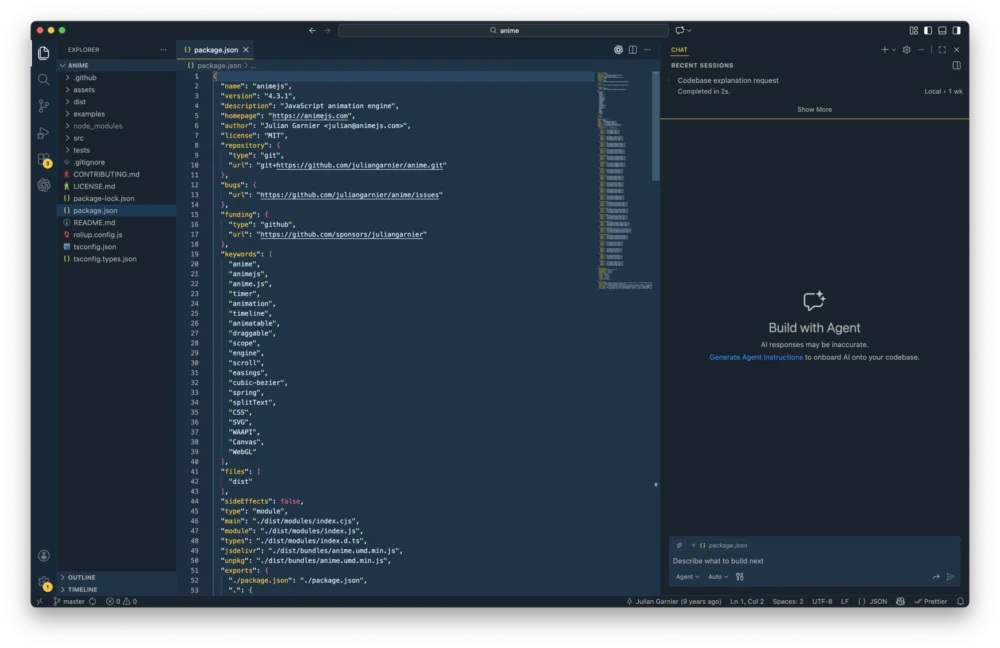
One of the most significant value propositions for AI agents lies in "triaging" and understanding unfamiliar or legacy codebases. For developers joining established projects, AI can serve as a high-speed architectural consultant. By prompting an agent to provide a high-level overview of entry points, routing, and authentication layers, developers can reduce the onboarding time from weeks to days.
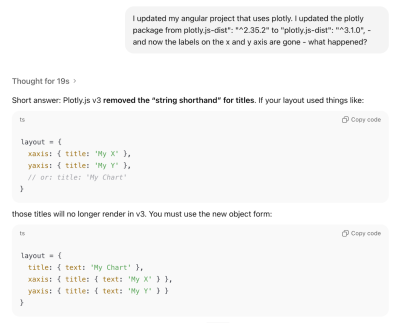
A practical example of this utility was observed during the recent migration of the data visualization library Plotly.js. When upgrading from version 2 to version 3, many developers encountered regressions in axis labeling. While traditional documentation searches can be time-consuming, AI agents can identify specific breaking changes—such as the transition from string shorthands to object-based title configurations—in seconds. However, the responsible developer uses this output as a hypothesis, verifying the solution against official migration guides before implementation.
Similarly, AI has proven indispensable for modernizing "ancient" tech stacks. In one documented case, a project built a decade ago using RequireJS and an obsolete version of Node.js was successfully migrated to a lean 2025 Vite-based stack. The AI agent handled the tedious task of rewriting the build process and SCSS compilation, allowing the human developer to focus on fixing functional bugs that had accumulated over time.
Quantitative Impact: Productivity and Efficiency Data
Supporting data from the industry suggests that the impact of these tools is measurable and substantial. A study by McKinsey & Company found that AI coding assistants can enable developers to complete tasks up to twice as fast, particularly in the realms of documentation, code generation, and refactoring. GitHub’s own research indicates that developers using Copilot are 55% faster at completing specific tasks than those who do not.
Furthermore, AI’s ability to replicate refactors across multiple files has drastically reduced the manual labor involved in code consolidation. By providing the AI with the context of a refactored component in one file, developers can prompt the agent to "roll out" those changes across the rest of the directory, ensuring consistency without the risk of manual copy-paste errors.
Advanced Problem Solving: Cross-Language Implementation
The utility of AI extends into the implementation of features in unfamiliar or specialized programming languages. A notable instance involved the creation of a complex 3D shader using GLSL (OpenGL Shading Language). For a web developer primarily focused on JavaScript, the steep learning curve of GLSL usually presents a barrier to meeting tight deadlines.
By using ChatGPT to iteratively build a standalone HTML canvas environment and then refining the shader logic through successive prompts, a developer was able to deliver a high-performance animated gradient on a 3D object within a two-day window. This "step-wise" refinement process demonstrates how AI can bridge the gap between a developer’s conceptual intent and the technical requirements of a specialized language.
Automated Testing and Internal Tooling
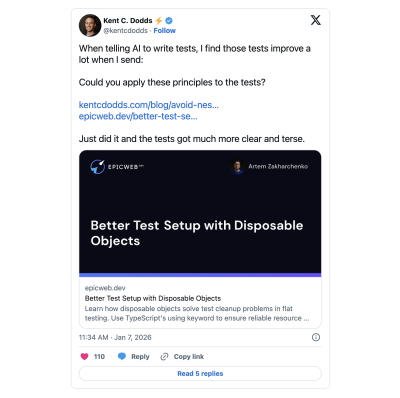
Testing remains one of the most under-resourced aspects of software development. AI agents are now being used to "outsource" the writing of unit and integration tests. By passing testing principles—such as those advocated by industry experts like Kent C. Dodds—into the AI prompt, developers can generate Jest or Vitest suites that cover happy paths, edge cases, and failure modes.
Beyond application code, AI is transforming internal tooling. Developers have reported using AI to create custom scripts for analyzing code duplication. In one instance, an AI-generated script compared codebases before and after a refactor, exported the data to Excel, and calculated the "delta" in duplication percentages. This level of data-driven analysis, which would previously have been too time-consuming for a standard sprint, is now becoming a routine part of the development lifecycle.
Official Responses and Industry Concerns
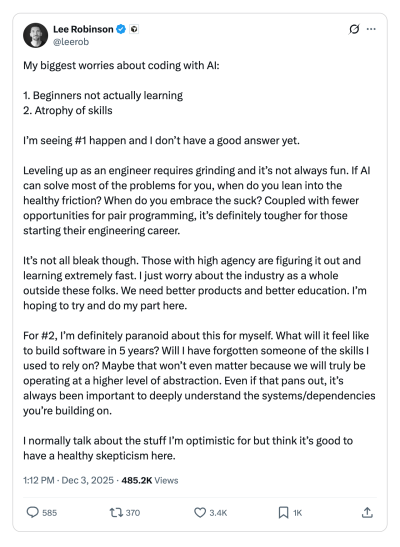
Despite the productivity gains, industry leaders have voiced concerns regarding the long-term implications of AI-heavy workflows. Lee Robinson, a prominent figure in the React ecosystem and an executive at Vercel, has raised questions about "skill atrophy" and the education of junior developers. Robinson notes that the "grind"—the painful process of debugging and manual problem-solving—is often where deep engineering expertise is forged. If AI removes this "healthy friction," the industry may face a future shortage of senior engineers capable of solving problems that the AI cannot.

Armin Ronacher, creator of the Flask framework, has similarly warned of "Agent Psychosis," where developers "turn off their brains" and allow AI to produce what he terms "slop." The consensus among these experts is that while AI is a powerful multiplier, it cannot replace the critical thinking required for system design and high-level planning.
Broader Impact and Future Implications
The integration of AI into software development is not merely a change in tools; it is a change in the definition of the craft. The role of the developer is shifting from a "writer of code" to a "reviewer and orchestrator of systems."
Looking forward, the evolution of "agentic" tools—AI that can not only suggest code but also run tests, check logs, and deploy fixes—will further automate the "grunt work" of the industry. This will likely lead to:
- Reduced Barriers to Entry: Allowing developers to work across the full stack and experiment with unfamiliar technologies like WebGL or Rust with lower risk.
- Increased Focus on Architecture: Freeing up mental capacity for developers to focus on performance optimization, accessibility, and user experience.
- The Premium on Human Verification: As AI-generated code becomes more prevalent, the ability to critically audit and verify that code will become the most valuable skill in an engineer’s toolkit.
In conclusion, the era of the responsible developer is one of "trust but verify." By leveraging AI for its strengths—speed, pattern recognition, and breadth of knowledge—while maintaining human oversight for quality and security, the software engineering profession is poised for a new era of unprecedented productivity. However, the success of this transition depends entirely on the developer’s ability to remain the "first critical reviewer" of their own work, ensuring that the machines remain a helpful ally rather than a source of unmanaged complexity.

