
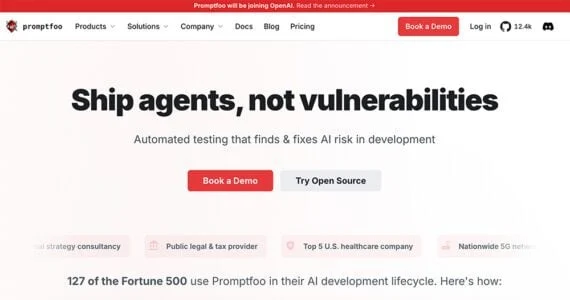
The artificial intelligence landscape is on the cusp of a significant transformation, with predictions suggesting that AI agents will soon transition from theoretical concepts to active participants in complex business workflows. These agents are anticipated to handle tasks such as dynamic advertising budget adjustments, real-time product listing updates, and the authorization of customer refunds. However, this burgeoning capability raises critical questions about security and control. Before businesses can confidently delegate such influential responsibilities, they must establish robust assurances that these AI agents will operate predictably and safely. This pressing concern for AI reliability and security is a key driver behind OpenAI’s recent announcement of its intent to acquire Promptfoo, a startup specializing in tools for the testing and securing of artificial intelligence applications.
The Rise of AI Agents and the Need for Robust Testing
The prospect of AI agents performing "real" work signifies a paradigm shift in how businesses operate. These intelligent systems, capable of understanding context, planning actions, and interacting with external systems, promise to unlock unprecedented levels of efficiency and automation. Imagine an AI agent meticulously managing an e-commerce platform’s inventory, automatically reordering stock when levels dip below a predefined threshold, adjusting product pricing based on real-time market demand, and even initiating targeted promotional campaigns – all without direct human intervention for every micro-decision. This level of autonomy, however, necessitates a rigorous validation process. The potential consequences of an errant AI agent, especially one with access to financial controls or customer data, are far more severe than a simple factual error from a conversational AI.
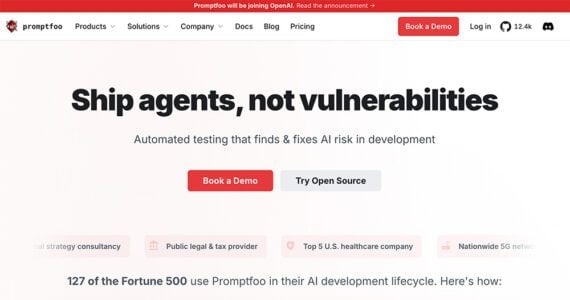
This is precisely where Promptfoo’s expertise becomes invaluable. Founded with the vision of empowering developers to thoroughly evaluate AI models, Promptfoo began as an open-source framework. Its core function was to enable the systematic testing of prompts – the instructions given to AI models – and the subsequent responses generated by these models. Over time, Promptfoo evolved into a sophisticated testing environment, designed to simulate thousands, even millions, of AI interactions before an application or agent is deployed into a live production environment. This iterative testing process is crucial for uncovering potential weaknesses that traditional software testing methodologies might miss.
Uncovering Vulnerabilities: The Role of Promptfoo
Traditional software quality assurance (QA) typically involves verifying code against a set of predefined, deterministic outcomes. Developers write test cases that expect specific outputs for given inputs. However, AI systems, particularly large language models (LLMs), operate on probabilistic principles. Their responses can vary based on subtle changes in input, the model’s internal state, and the vastness of the data they were trained on. This inherent variability means that standard QA approaches are insufficient.
Promptfoo addresses this challenge by providing a framework that can probe AI systems across a wide spectrum of potential inputs and edge cases. This includes:
- Prompt Injection Attacks: Testing how an AI agent might be tricked into executing unintended commands or revealing sensitive information by embedding malicious instructions within seemingly innocuous prompts.
- Data Poisoning: Evaluating the AI’s resilience against datasets that have been subtly manipulated to introduce biases or inaccuracies.
- Jailbreaking: Identifying vulnerabilities that allow users to bypass the AI’s safety guardrails and elicit harmful or inappropriate content.
- Hallucinations and Factual Inaccuracies: Quantifying the frequency and severity of instances where the AI generates false or misleading information.
- Bias Detection: Assessing whether the AI exhibits unfair biases in its responses, particularly concerning sensitive attributes like race, gender, or socioeconomic status.
By automating the process of generating diverse prompts and analyzing the AI’s outputs, Promptfoo acts as an AI quality assurance framework. It allows engineers to identify and rectify issues before they manifest as costly errors, security breaches, or reputational damage in a live operational environment.
A Shifting Landscape: From Chatbots to Actionable Agents
The Promptfoo acquisition by OpenAI signals a broader industry trend: a move beyond basic AI chatbots and knowledge assistants towards more complex and actionable AI agents. For years, enterprise AI deployments have largely focused on applications like customer service chatbots that answer frequently asked questions or internal tools that retrieve information from vast databases, often employing techniques like Retrieval-Augmented Generation (RAG). RAG systems enhance LLMs by allowing them to access and process external, up-to-date information, thus improving the accuracy and relevance of their responses.
However, the next wave of AI development involves agents capable of not just retrieving information, but also planning tasks, interacting with external software tools, and executing multi-step workflows. Examples of these advanced agents are beginning to emerge across various sectors:

- E-commerce Automation: AI agents that can manage product listings, adjust pricing dynamically, process orders, and even initiate targeted marketing campaigns based on sales data and customer behavior.
- Financial Management: Agents that can monitor market trends, execute trades, manage investment portfolios, and automate aspects of accounting and financial reporting.
- Customer Relationship Management (CRM) Enhancement: Agents that can proactively engage with customers, schedule appointments, resolve support tickets, and personalize customer journeys.
- Supply Chain Optimization: Agents that can track shipments, predict demand fluctuations, optimize logistics, and manage supplier relationships.
These emerging agents are designed to interact directly with critical business systems such as CRMs, inventory management databases, and e-commerce platforms. This direct integration dramatically expands the scope of what an AI agent can achieve, promising significant productivity gains. Concurrently, it introduces a heightened level of risk, as these agents will have the authority to modify data, initiate transactions, and influence business outcomes.
Industry-Wide Recognition of AI Agent Security Imperatives
OpenAI’s strategic acquisition of Promptfoo is not an isolated event; it is part of a larger industry recognition that AI agents are becoming increasingly prominent and that their security is paramount. Another significant indicator of this trend comes from Meta, which recently acquired Moltbook, a startup developing a platform that facilitates communication and coordination among autonomous AI agents. Moltbook’s technology is designed to create a kind of "social network" for AI agents, enabling them to interact, share information, and collaborate on tasks.
The Moltbook acquisition suggests a future where AI agents not only interact with humans but also with each other. This multi-agent ecosystem could lead to sophisticated distributed systems where various specialized agents work in concert to achieve complex goals. For instance, an AI agent responsible for customer service might coordinate with an AI agent managing inventory to resolve a product availability issue, or a marketing AI agent might collaborate with a sales AI agent to identify and pursue leads.
Taken together, the strategic moves by OpenAI and Meta highlight two critical facets of the evolving AI agent ecosystem:
- Inter-Agent Communication and Coordination (Meta’s focus): Enabling AI agents to effectively communicate and collaborate with one another to form complex, intelligent networks.
- Behavioral Predictability and Safety (OpenAI’s focus): Ensuring that individual AI agents behave in a secure, reliable, and predictable manner, especially when granted access to sensitive systems and data.
This dual focus from leading tech giants strongly implies an anticipation of a future populated by software agents that interact seamlessly with both human users and other AI entities, creating a dynamic and interconnected digital environment.
The Escalating Security Concerns with AI Agents
The security implications of AI agents operating with system access are considerably more profound than the occasional "hallucination" from a conversational AI. While an incorrect answer from a chatbot might be an inconvenience or a minor factual error, an AI agent with the ability to alter databases, initiate financial transactions, or control critical infrastructure can create significant and potentially catastrophic problems.
A prime example of this risk is the vulnerability to prompt-injection attacks. In such scenarios, a malicious actor could craft specific prompts designed to manipulate an AI agent into performing unintended actions. The potential consequences include:
- Unauthorized Data Access or Modification: An agent could be tricked into divulging sensitive customer information, proprietary business data, or even altering critical records in a company’s database.
- Fraudulent Transactions: An agent might be persuaded to initiate unauthorized financial transfers, process fraudulent orders, or manipulate pricing information to its own benefit or the benefit of an attacker.
- System Disruption: In more critical applications, a compromised agent could be directed to disrupt operations, disable services, or even damage physical systems through connected interfaces.
- Reputational Damage: Unpredictable or malicious behavior from an AI agent can severely damage a company’s reputation, leading to a loss of customer trust and business.
To mitigate these risks, businesses require robust guardrails that prevent manipulation and ensure predictable, safe behavior. Promptfoo appears to offer precisely this capability. By integrating sophisticated testing tools directly into its enterprise AI platform, OpenAI is positioning itself to help developers identify and remediate potential vulnerabilities before deploying agents into production environments. This proactive approach is essential for building trust and ensuring the safe integration of AI agents into the fabric of business operations.
The Evolving Challenge of Fraud Prevention in Agentic Commerce
The security considerations for AI agents extend beyond internal system integrity to encompass the critical domain of fraud prevention. As AI agents become more autonomous and capable of interacting with each other, the nature of online commerce and potential fraudulent activities will inevitably transform.
Jeff Otto, Chief Marketing Officer at Riskified, a leading fraud prevention platform, emphasizes this point. He notes that the emergence of AI agents capable of interacting with one another, as envisioned by Meta’s Moltbook acquisition, signals a significant shift. "Meta’s decision to house a social network for AI agents within Superintelligence Labs is a strong signal that agentic commerce is moving from theory to reality," Otto stated. "Moltbook’s agents were built on the OpenClaw framework, which enables autonomous agents to interact, coordinate, and potentially transact on behalf of human users."
This vision of "agentic commerce" – a future where software agents, not just humans, engage in shopping and transactions – presents a new frontier for fraud detection. If this trend accelerates, traditional fraud detection methods, which are largely designed to identify suspicious human behavior or known bot patterns, will become insufficient.
Otto further elaborates on the implications: "That shift sets the stage for a high-stakes machine-versus-machine environment. For retailers, the traditional rules-based fraud playbook is no longer sufficient. When bots are the ones clicking ‘buy,’ merchants need a defense layer that can distinguish between a legitimate AI assistant and a malicious agent in milliseconds." This necessitates the development of advanced fraud detection systems capable of analyzing the behavior and provenance of AI agents with unprecedented speed and accuracy. The challenge lies in discerning legitimate automated transactions from those orchestrated by malicious entities aiming to exploit the system. This requires sophisticated machine learning models that can identify subtle anomalies indicative of fraudulent intent, even when executed by highly sophisticated automated agents.
The Future of Agentic Commerce: Implications for Businesses
With their strategic acquisitions in the AI agent space, both OpenAI and Meta are clearly making significant investments in what they perceive as the next evolution of digital interaction and commerce. If this future indeed includes widespread "agentic commerce," businesses will need to fundamentally rethink their operational strategies and customer engagement models.
The concept of agentic commerce implies an environment where software agents act as proxies for consumers and businesses, independently navigating online marketplaces, comparing prices, making purchases, and managing logistics. This shift presents both immense opportunities and significant challenges for merchants:
- Opportunities: Increased sales volume through AI-driven purchasing, enhanced customer reach as AI agents can operate 24/7, and more efficient transaction processing.
- Challenges: The need to adapt fraud prevention systems, the potential for AI agents to engage in price wars or exploit system vulnerabilities, and the imperative to build trust and transparency in agent-to-agent and agent-to-human interactions.
Businesses will need to develop robust infrastructure and policies to manage this new reality. This includes:
- Enhanced Security Protocols: Implementing advanced security measures to protect against AI-driven fraud and ensure the integrity of transactions.
- Clear Agent Guidelines: Establishing ethical guidelines and operational parameters for AI agents interacting with their platforms.
- Data Privacy and Governance: Ensuring compliance with data privacy regulations as AI agents handle increasing amounts of personal and transactional data.
- Competitive Adaptation: Understanding how competitors are leveraging AI agents and adapting strategies to remain competitive in an agent-driven marketplace.
The proactive measures taken by companies like OpenAI and Meta in acquiring specialized AI testing and coordination technologies underscore the critical importance of addressing the security and operational challenges associated with advanced AI agents. As these intelligent systems become increasingly integrated into the business world, ensuring their safety, predictability, and ethical conduct will be paramount to unlocking their full potential and navigating the complexities of the emerging agentic economy. The journey from simple AI assistants to powerful, autonomous agents is well underway, and the implications for businesses and consumers alike are profound.

