
Navigating the complexities of time-sensitive promotions on Google Ads presents a persistent challenge for advertisers. While the platform allows for the submission of specific text and creative assets, the ultimate decision of which elements are displayed rests with Google’s sophisticated algorithms. This is further complicated by the advent of AI Max for Search campaigns, which possess the capability to generate their own assets, potentially overriding or altering advertiser-intended messaging. Consequently, a meticulously crafted date-specific ad message does not inherently guarantee its appearance. However, by strategically employing a suite of available tools and tactics, advertisers can significantly enhance the probability of their time-sensitive offers resonating with potential customers at critical junctures.
The Power of Urgency: Countdown Customizers
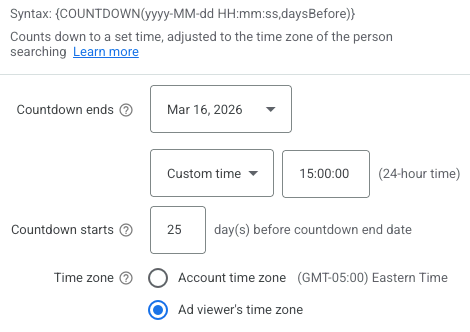
One of the most direct and effective methods for injecting urgency into Google Ads is through Countdown Customizers. Historically, achieving this required the implementation of custom scripts, a process that, while effective, demanded a degree of technical proficiency. Google has since streamlined this functionality, integrating Countdown Customizers directly into the ad copy creation process. This feature dynamically displays the remaining time until a promotion concludes, fostering a palpable sense of urgency among users viewing the advertisement.
Advertisers are required to input the precise end date and time of the countdown, along with the designated start date and the relevant time zone. This ensures the countdown is accurate and reflects the promotional period as intended. As the promotion draws nearer, the countdown becomes increasingly granular, transitioning from days to hours and minutes on the final day. This escalating countdown effectively prompts immediate action from interested consumers who are motivated by limited-time offers.

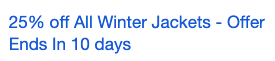
A common and highly effective strategy for utilizing Countdown Customizers involves pinning specific headlines. Typically, advertisers will pin the core promotional offer, such as "25% Off All Winter Jackets," to Headline Position 1. The Countdown Customizer, displaying something like "Offer Ends in 10 Days," is then pinned to Headline Position 2. This "one-two punch" instructs Google’s system to prioritize displaying these two headlines in that specific order whenever both are eligible to show. Furthermore, pinning ensures that the crucial offer message is consistently visible, even in instances where Google might opt to display only a single pinned headline.
While pinning headlines can, in theory, slightly impede the natural workings of Google Ads’ algorithm—potentially leading to fewer overall impressions compared to non-pinned ads—the impact on conversion metrics is often minimal. In fact, an advertiser might observe that a non-pinned ad within the same ad group could garner more impressions. Conversely, pausing a non-pinned ad could inadvertently reduce the impressions for its pinned counterpart, highlighting the interconnectedness of ad elements within an ad group. The strategic use of pinned headlines, particularly in conjunction with countdowns, demonstrably bolsters the effectiveness of time-sensitive campaigns by ensuring the urgency is always front and center.
Enhancing Visibility with Promotion Assets
Google Ads has transitioned its terminology, now referring to extensions as "assets." Among these, the Promotion Asset plays a crucial role in highlighting specific offers. This asset provides an additional 25-character line that can be appended to an ad, designed to draw attention to a particular promotion. Crucially, these assets can incorporate specific dates, thereby reinforcing the time-sensitive nature of the offer.
Advertisers utilizing Promotion Assets can specify the type of promotion (e.g., percentage discount, fixed amount off, free shipping), the item being promoted, and the promotion itself. While the inclusion of promotion dates is optional, their incorporation is highly recommended for maximizing urgency. The ability to schedule these promotions to begin and end automatically eliminates the manual effort and potential oversight associated with manually activating and deactivating offers. This automation is particularly valuable for businesses running multiple concurrent promotions or those with significant seasonal sales events.
An example of a Promotion Asset might read: "25% Off All Winter Jackets. Ends Mar 13." This concise message clearly communicates the value proposition and the deadline, encouraging immediate engagement. The visual prominence of this additional line within the ad unit ensures that potential customers are immediately aware of the limited-time opportunity.
Concise Messaging with Callout Assets
Callout Assets serve as non-clickable highlights that appear alongside an ad’s main text. They are designed to convey key benefits, features, or promotional details in a succinct manner. Each callout is limited to a maximum of 25 characters, necessitating the use of punchy and impactful messaging. Examples of effective callouts for time-sensitive promotions include:
- "Limited Time Offer"
- "Sale Ends Sunday"
- "Flash Sale Now"
- "Shop Before It’s Gone"
- "Don’t Miss Out"
Similar to Promotion Assets, Callout Assets can be scheduled to run during specific periods, aligning perfectly with promotional calendars. While up to ten callouts can be displayed simultaneously, Google typically shows between two and four. The presence of more callouts can dilute the impact of any single message, including offer-specific ones. Therefore, advertisers running a significant time-sensitive promotion should consider pausing less critical or evergreen callouts to ensure their offer-focused messaging receives maximum exposure. This strategic curation of callouts ensures that the most relevant and urgent information is presented to the user.
Driving Traffic with Sitelink Assets
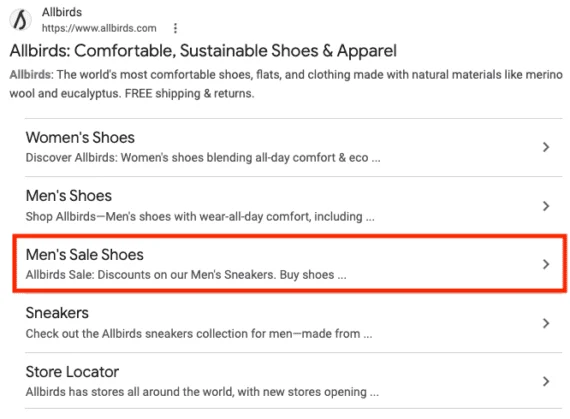
Sitelink Assets, like Promotion and Callout Assets, provide additional text within an ad unit. However, unlike callouts, sitelinks are clickable and can direct users to specific pages on a website. They can also include description lines, offering more detailed information about the linked content. Sitelinks are highly effective for promoting specific sales, product categories, or landing pages directly related to a time-sensitive offer.
For instance, an advertiser running a "Spring Clearance Sale" could create sitelinks such as:
- "Shop Spring Dresses"
- "Men’s Clearance"
- "Up to 50% Off"
- "Last Chance Deals"
These sitelinks can be scheduled to coincide with the promotion’s duration, ensuring that users clicking on the ad are taken directly to relevant sections of the website where they can take advantage of the offer. As with callouts, the potential for multiple sitelinks to appear simultaneously means that the overall impact of a single, time-sensitive offer might be diminished if too many sitelinks are active. Advertisers should carefully select sitelinks that directly support the current promotion, prioritizing those that lead to sale pages or highlight discount percentages. The visual real estate occupied by sitelinks can significantly enhance the user experience by providing direct pathways to relevant content, thereby streamlining the path to conversion during a promotional period.
The Evolving Landscape of Google Ads and AI
The increasing integration of artificial intelligence within Google Ads, particularly with AI Max for Search, signifies a paradigm shift in campaign management. While AI aims to optimize ad delivery based on user intent and performance data, it can also introduce unpredictability for advertisers focused on precise timing and messaging. The platform’s algorithms continuously learn and adapt, and while this generally leads to improved campaign performance, it requires advertisers to remain agile and informed.
The core challenge lies in balancing the automation and optimization capabilities of AI with the specific control required for time-sensitive campaigns. Strategies like Countdown Customizers and scheduled assets provide a crucial bridge, allowing advertisers to embed time-bound elements directly into their ads. These tools empower advertisers to communicate urgency effectively and guide the AI’s decision-making process towards showcasing time-sensitive offers when they are most relevant.

Data-Driven Insights and Strategic Implementation
To truly maximize the impact of time-sensitive promotions, advertisers must leverage data and insights. Monitoring campaign performance metrics, such as click-through rates (CTR), conversion rates, and cost per acquisition (CPA) during promotional periods is essential. A/B testing different ad copy variations, asset combinations, and bidding strategies can reveal what resonates most effectively with the target audience. For example, data might indicate that a countdown timer significantly boosts CTR compared to a static "Sale Ends Soon" message, or that a specific combination of sitelinks and promotion assets leads to higher conversion volumes.
Historical data from previous sales events can provide valuable benchmarks. For instance, if a particular product category consistently sees a surge in demand during a specific promotional period, advertisers can allocate a larger budget or refine their targeting for that segment. Understanding seasonal trends and consumer purchasing habits is also paramount. A Black Friday sale, for instance, requires a different strategic approach than a mid-season clearance event.
The implication of these evolving strategies is clear: advertisers who embrace these tools and adopt a data-informed approach will be better positioned to capture attention and drive sales during critical promotional windows. The ability to dynamically communicate urgency and provide direct pathways to offers, while working in concert with Google’s AI, represents the future of effective digital advertising for time-bound campaigns. As Google continues to refine its AI capabilities, staying abreast of new features and best practices will be crucial for maintaining a competitive edge in the dynamic world of online advertising. The emphasis remains on a symbiotic relationship between advertiser intent and algorithmic execution, with these specialized tools serving as the vital connectors.

