
The advent of Artificial Intelligence (AI) in search engines has ushered in a new era of information discovery, promising instant answers and synthesized knowledge. However, for businesses and SEO professionals, this innovation has also presented a significant challenge: the absence of native performance reporting for AI-generated search features. Unlike traditional search engine results pages (SERPs) that offer granular data on organic visibility, current AI overviews and summaries largely lack the metrics needed to strategize and optimize for this emerging channel. While Google’s Search Console attempts to blend AI Overviews with organic listings in its "Performance" section, creating ambiguity about which channel drives traffic and visibility, and ChatGPT reportedly shares metrics only with content licensors, Bing has taken a notable step towards transparency with its newly launched "AI Performance Report" within Webmaster Tools.
This development marks a crucial moment for understanding how content is surfacing and being utilized within AI-powered search experiences. The report, released a few weeks after Bing published its "guide to AEO and GEO," aims to provide website owners with insights into their content’s performance within Microsoft’s AI ecosystem, including Microsoft Copilot and other AI partner integrations. This proactive move by Bing could potentially set a new standard for transparency in the rapidly evolving field of AI search.
The Emergence of AI Performance Reporting
Historically, search engine optimization (SEO) has relied on a robust set of metrics provided by search engines themselves. Tools like Google Search Console and Bing Webmaster Tools have been indispensable for tracking keyword rankings, impressions, clicks, click-through rates (CTR), and overall organic traffic. These metrics allow businesses to understand user search behavior, identify content gaps, and refine their strategies to improve their visibility in organic search results.
The integration of AI into search, exemplified by features like Google’s AI Overviews and Microsoft’s Copilot, fundamentally alters the user’s interaction with search results. Instead of a list of links, users are presented with direct, synthesized answers, often drawing information from multiple sources. While this offers convenience to the end-user, it creates a blind spot for content creators and marketers. The traditional metrics are no longer sufficient to gauge success in this new paradigm. The core question becomes: how can businesses ensure their content is recognized, cited, and ultimately contributes to these AI-generated responses?
The current landscape is characterized by a lack of standardized reporting. Google’s approach of combining AI and organic data in its performance reports forces optimizers to make educated guesses about the impact of AI overviews on their overall visibility and traffic. This ambiguity hinders the development of effective AI SEO strategies. Similarly, the limited data sharing by platforms like OpenAI, which reportedly reserves detailed metrics for licensed publishers, further exacerbates this information asymmetry.

Bing’s introduction of the "AI Performance Report" represents a significant departure from this trend. By offering dedicated reporting for AI-driven citations, Bing is providing a much-needed tool for businesses to begin understanding their presence in this new search frontier. This initiative signals a growing recognition within the industry that transparency is essential for fostering trust and enabling effective optimization in the age of AI search.
Deconstructing Bing’s AI Performance Report
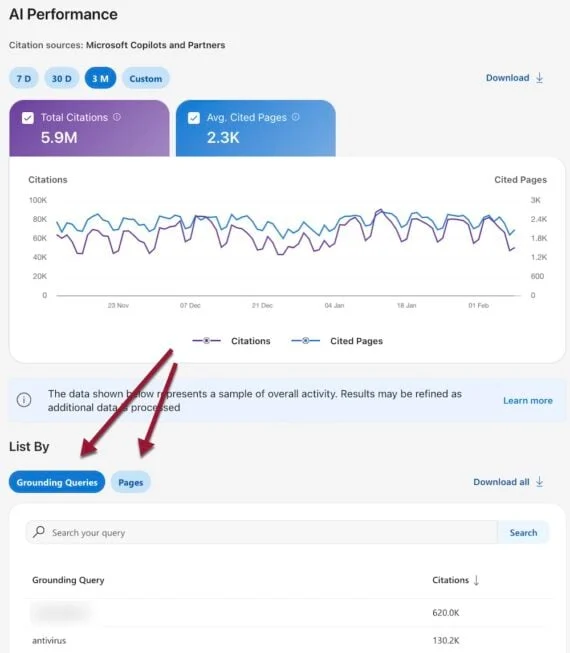
The newly launched "AI Performance Report" in Bing Webmaster Tools is designed to shed light on how a website’s content is being leveraged within Microsoft’s AI search products. The report tracks citations across Microsoft Copilot, AI-generated summaries within Bing, and select AI partner integrations. While the report provides valuable initial insights, it currently operates with certain limitations, such as the inability to filter by a single AI surface or identify specific integration partners and their roles.
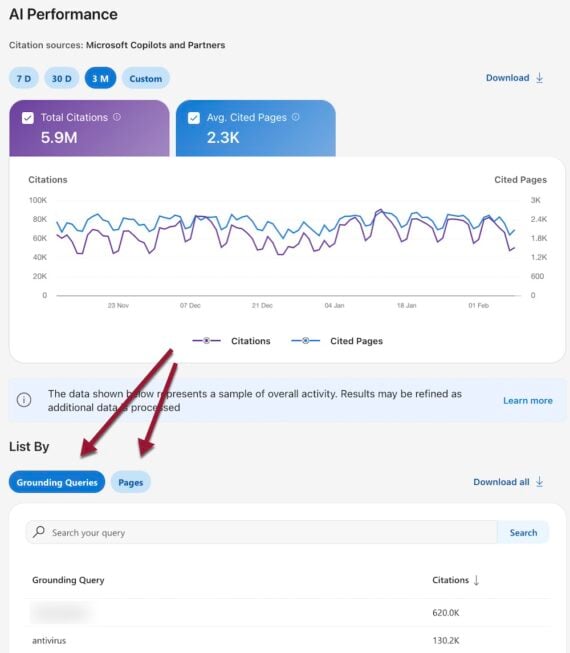
At its core, the report quantizes a website’s presence in AI-generated answers by focusing on "Total Citations" and "Average Cited Pages" over a selected period. This provides a high-level overview of how frequently the site’s content is being referenced. The report further breaks down this visibility through two key tabs: "Grounding Queries" and "Pages."
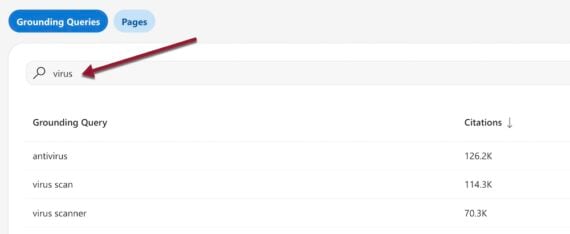
The "Grounding Queries" tab lists the specific search queries that led to AI-generated answers citing the website’s content. This is a crucial element, as it helps businesses understand the actual user intent and the types of questions their content is helping to answer. By analyzing these queries, optimizers can gain insights into the semantic connections AI is making between user questions and their published material.
Complementing this, the "Pages" tab showcases the specific URLs from the website that have been cited in AI responses. This allows businesses to identify which pieces of content are most frequently being referenced by AI, enabling them to understand what types of information are most valuable in the AI context.
Each of these tabs is accompanied by additional visibility data, offering a more nuanced view of the content’s performance. This data may include metrics related to the frequency of citations, the diversity of queries leading to those citations, and the specific AI surfaces where the citations occurred. However, a notable omission is the absence of direct traffic or click-through data. This means that while the report can indicate that a page was cited, it doesn’t directly inform how many users clicked through to the website from that AI citation. This lack of direct conversion metrics is a significant limitation for businesses seeking to measure the ROI of their AI visibility efforts.
Furthermore, the report does not provide granular clarity into which specific "Grounding Queries" triggered which specific citations. This level of detail would be invaluable for fine-tuning content and SEO strategies, allowing for more precise optimization based on the precise way AI is interpreting and utilizing the content.
Despite these limitations, Bing’s AI Performance Report represents a significant step forward. It provides a foundational understanding of AI-driven visibility, moving beyond the guesswork that has characterized this space until now. The report’s definition, as stated by Bing, is to show "how your site’s content is used in AI-generated answers across Microsoft Copilot and partner experiences by highlighting which pages are cited, how visibility trends change over time, and the grounding queries associated with your content." This statement underscores the report’s ambition to provide actionable insights for website owners.
Strategies for Maximizing Value from the AI Performance Report
While the AI Performance Report offers valuable initial data, its true utility lies in how businesses leverage it to adapt their optimization strategies. The author of the original article suggests several methods for making the report more useful. One key approach involves analyzing the "Grounding Queries" to identify common themes and patterns. By looking for recurring modifiers within these queries, such as "virus" in the provided example, businesses can gain a deeper understanding of how AI agents are identifying and categorizing their content in response to user searches. This analysis can inform content creation and keyword targeting, ensuring that content is aligned with the language and intent of AI-driven queries.
Another strategy involves cross-referencing the data with traditional SEO metrics. While the AI report doesn’t provide click data, understanding which pages are cited in AI responses can be combined with existing data on organic traffic and engagement for those same pages. If a page is frequently cited in AI and also performs well organically, it suggests that the content is robust and relevant to a broad range of user intents, both traditional and AI-driven. Conversely, if a page is highly cited in AI but has low organic traffic, it might indicate an opportunity to optimize that page for traditional search as well.
Furthermore, the report can be used to proactively identify content gaps. If certain types of queries are not resulting in citations for a website, it may signal an opportunity to create new content or update existing content to address those information needs. By anticipating the types of questions AI is being asked and ensuring relevant content is available, businesses can position themselves to be cited more frequently.
The author also emphasizes the importance of building a comprehensive understanding of AI search by integrating Bing Webmaster Tools with existing SEO workflows. The process of setting up Bing Webmaster Tools is straightforward, especially for those already utilizing Google Search Console. The "Import your sites from GSC" option simplifies the setup, allowing for data to be collected and reported within approximately 24 hours. This ease of integration further encourages adoption and the utilization of the AI Performance Report.
Broader Implications and the Future of AI SEO
Bing’s introduction of the AI Performance Report is more than just a new feature; it’s a potential catalyst for change in the entire AI search ecosystem. The lack of native reporting has been a significant impediment to the development of robust AI SEO strategies. By offering even a basic level of transparency, Bing is setting a precedent that other search engines and AI platforms may feel compelled to follow.
The implications for businesses are substantial. As AI continues to integrate more deeply into search, visibility within AI-generated answers will become increasingly critical. Websites that can effectively optimize for this channel will likely see improved brand awareness, increased traffic (even if indirect), and a stronger overall digital presence. Conversely, those that fail to adapt may find their content becoming less discoverable in the future.
The current limitations of Bing’s report—the lack of granular filtering and specific partner identification—highlight areas for future development. As AI search matures, we can expect to see more sophisticated reporting tools that offer greater detail on the nuances of AI citations. This could include metrics on the sentiment of AI responses, the depth of content usage, and the impact of citations on user behavior beyond direct clicks.
The long-term impact of AI search on website traffic and user behavior is still unfolding. While some predict a decline in traditional clicks as users receive direct answers, others argue that AI will drive more qualified traffic by better matching user intent with relevant content. The data provided by Bing’s report will be crucial in understanding these dynamics and shaping future SEO strategies.
The competitive landscape of AI search is still nascent, and the transparency offered by Bing’s AI Performance Report is a welcome development. It signifies a move towards a more data-driven approach to AI search optimization, empowering businesses to navigate this new frontier with greater confidence and strategic insight. As AI continues to evolve, the ability to measure and understand performance within these new search paradigms will be paramount for success. The ongoing development and refinement of tools like Bing’s AI Performance Report will be critical in shaping the future of digital visibility.

