
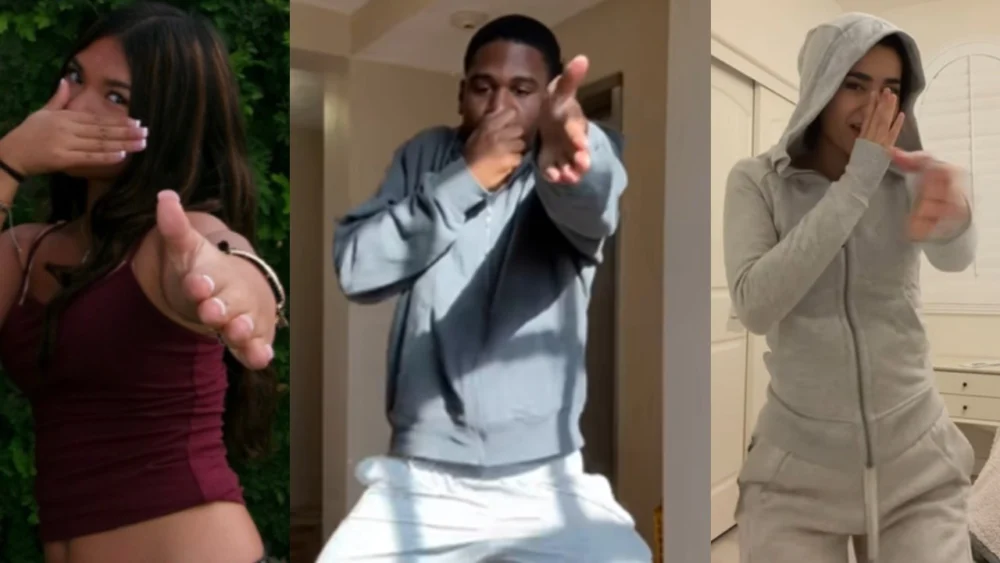
The Scuba Dance has emerged as a defining cultural movement within the digital landscape of late 2025 and early 2026, transitioning from a localized TikTok trend into a multi-platform sensation embraced by professional athletes, corporate mascots, and digital animators. Created by the rapper and YouTuber Desean Hawk Logan-Russell, known professionally as h5wk, the dance has become inextricably linked to his track "Scuba Juke (It Stank)." Characterized by a distinctive set of synchronized movements—including the plugging of the nose with one hand, the rhythmic waving of the free arm, and the rapid opening and closing of the knees—the Scuba Dance exemplifies the modern lifecycle of viral content, where music, physical comedy, and social media challenges intersect to create a global trend.
Technical Composition and Creative Origins
The technical execution of the Scuba Dance is foundational to its viral appeal. The performer typically uses their thumb and forefinger to pinch their nostrils shut, a gesture historically associated in hip-hop and street dance with "stank" or "funk," implying that the beat or the move is so "filthy" it requires a sensory defense. Simultaneously, the performer extends their free arm forward, waving the hand in a lateral "shimmering" motion, while their lower body engages in a "juke" style movement, rapidly splaying and closing the knees in time with the percussion.
The trend’s official genesis occurred on October 5, 2025. Desean Hawk Logan-Russell uploaded the inaugural video to his TikTok account, @h5wk_, featuring the dance set to his original composition, "Scuba Juke." The video was captioned "me because god woke me up," grounding the high-energy dance in a relatable sentiment of morning gratitude. Within five months, this original post secured over 74,000 likes, serving as the blueprint for millions of subsequent iterations. The song’s heavy bass and repetitive rhythmic structure provided the ideal auditory backdrop for a movement that was both easy to learn and visually striking.
Integration into Professional Sports and Cheerleading
By November 2025, the Scuba Dance had transcended the confines of individual mobile screens and entered the arena of professional sports. The National Football League (NFL) became a primary vehicle for the dance’s mainstream legitimization. Following the precedent set by previous viral dances like the "Griddy," multiple NFL players began incorporating the Scuba Dance into their post-touchdown celebrations. On November 10, 2025, the TikTok account @jettasnfl published a compilation of these professional celebrations, which amassed over 950,000 views in just four months. The adoption by elite athletes signaled that the Scuba Dance had achieved a level of cultural "cool" that appealed to a demographic far broader than the initial Gen Z TikTok audience.
Simultaneously, the dance found a home in the world of competitive and school spirit athletics. On November 20, 2025, a video posted by @prettylil_c.bandzzzz showcased a group of high school cheerleaders performing the Scuba Dance in unison. This video garnered 1.9 million views, highlighting the dance’s versatility as both an individual freestyle move and a coordinated group routine. The visual impact of a synchronized cheer squad performing the "nose-plug and juke" movements provided a rhythmic complexity that resonated with viewers, further cementing the dance’s status as a late-year phenomenon.
The Flip the Camera Controversy and Ethical Debates
As the Scuba Dance gained momentum, it became the centerpiece of the "Flip the Camera" trend, a controversial social media challenge that emerged in late October 2025. In this specific iteration of the trend, a user would ask an unsuspecting person—often a stranger, a peer, or a family member—to film them performing the Scuba Dance. The performer would hand over their phone with the screen facing outward, suggesting that the front-facing camera was being used to record. However, as the performer approached the phone during the dance, they would surreptitiously flip the camera settings to the rear-view, capturing the face of the person holding the phone without their consent.
The trend was frequently set to the song "Mari Glock" by Lil Noonie and Lil Sy. One of the earliest and most prominent examples was posted by @jaycrudddy on October 29, 2025, reaching 1.5 million views in a fortnight. While many participants viewed the "Flip the Camera" challenge as a harmless prank, it sparked a significant backlash among digital ethicists and social media commentators. Critics argued that the trend was a form of cyberbullying, as the "reveal" of the recorder’s face was often intended to mock their appearance or their confused expression. The juxtaposition of the energetic Scuba Dance with the involuntary recording of a bystander created a tension that highlighted the darker side of viral engagement and the pursuit of "clout" at the expense of others’ privacy.
The Second Wave: Mascots and the March 2026 Resurgence
Viral trends often experience a "second wave" when they are adopted by non-human or costumed characters, which adds a layer of surrealism and physical comedy. In February 2026, the Scuba Dance saw a massive uptick in engagement when professional mascots began participating. On February 28, 2026, TikToker @y4yuro_ posted a video of a Chuck E. Cheese mascot performing a highly polished version of the dance. The sight of a giant animatronic-style mouse plugging its nose and juking proved irresistible to the algorithm, resulting in over one million views in two weeks.
This momentum carried into March 2026, marked by a significant moment at Universal Studios Florida. On March 6, TikToker @regi._.mac uploaded a video featuring the mascot for Alex the Lion from the "Madagascar" film franchise. The mascot’s oversized paws and exaggerated "hand flop" during the Scuba Dance struck a chord with the global audience, earning 7.5 million views in less than a week. These mascot performances underscored the dance’s durability; by early 2026, it was no longer just a "TikTok song" but a recognizable piece of physical vocabulary used in theme parks and family entertainment venues.
The Nick Wilde AI Controversy and Digital Media Evolution
The most complex chapter of the Scuba Dance’s history involves the intersection of artificial intelligence and traditional artistry. In early March 2026, an AI-generated GIF of the character Nick Wilde from Disney’s "Zootopia" performing the Scuba Dance went viral. The animation, which perfectly mimicked h5wk’s original movements, was widely shared on TikTok and Instagram Reels.
However, the GIF’s popularity ignited a fierce debate on X (formerly Twitter). A traditional animator took the initiative to manually recreate the Scuba Dance with hand-drawn frames, attempting to "reclaim" the character from the AI-generated version. The ensuing discourse saw users split between those who praised the effort and soul of traditional animation and those who claimed the AI version actually looked "smoother" or more "authentic" to the dance’s rhythm. This controversy elevated the Scuba Dance from a simple meme to a case study in the ongoing tension between human creativity and generative AI in the 21st century.
Analytical Perspective: The Lifecycle of Modern Virality
Analyzing the trajectory of the Scuba Dance reveals several key factors that contribute to modern virality. First, the "audio-visual synergy" created by h5wk was essential. The lyrics of "Scuba Juke (It Stank)" provided a literal instruction for the movements, making the barrier to entry for participants extremely low. Second, the dance benefited from "institutional adoption." When the NFL and cheerleading squads began performing the move, it transitioned from a niche internet subculture into the broader American cultural fabric.
Furthermore, the Scuba Dance demonstrates the "evolutionary adaptation" of memes. It started as a dance, transformed into a prank (Flip the Camera), became a mascot staple, and finally served as a battleground for the AI vs. Art debate. Each phase of its lifecycle targeted a different demographic and kept the trend relevant long after most TikTok dances would have faded into obscurity.
Conclusion and Future Implications
As of mid-2026, the Scuba Dance remains a potent symbol of how quickly a single creative spark can ignite a global conversation. From the humble beginnings of Desean Hawk Logan-Russell’s October 2025 post to the multi-million view mascot videos and the high-level debates over AI animation, the Scuba Dance has proven to be more than a fleeting trend. It has provided a soundtrack and a movement for a generation that prizes physical expression and digital participation.
The success of "Scuba Juke (It Stank)" has also solidified h5wk’s position as a significant influencer in the music-to-meme pipeline, suggesting that future artists may increasingly design their tracks with specific, "loopable" physical movements in mind. While the controversies surrounding the "Flip the Camera" trend serve as a reminder of the ethical complexities of social media, the overarching story of the Scuba Dance is one of rhythmic innovation and the unyielding power of the viral algorithm to turn a simple gesture into a worldwide phenomenon. Moving forward, the Scuba Dance will likely be remembered alongside the "Renegade" and the "Orange Justice" as a foundational pillar of the 2020s dance culture.

