
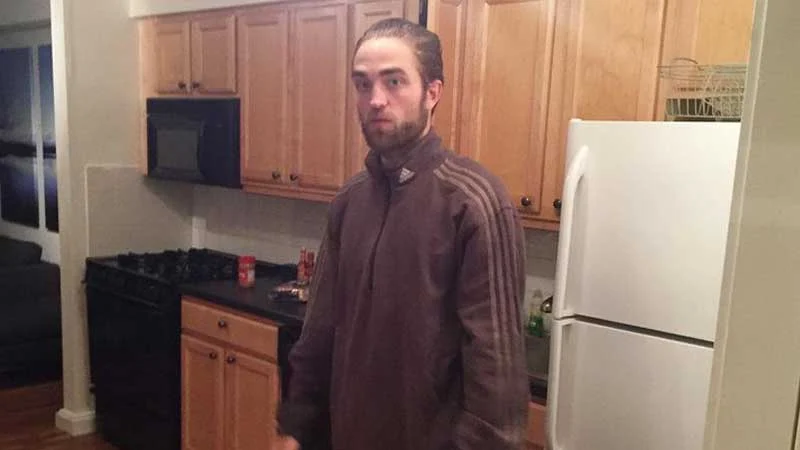
The digital phenomenon known as Tracksuit Robert Pattinson, alternatively referred to as Track Jacket Robert Pattinson, represents a significant intersection between independent cinema, celebrity persona, and the idiosyncratic nature of internet meme culture. This reaction image macro features a behind-the-scenes photograph of the English actor Robert Pattinson, captured during the production of the 2017 crime thriller Good Time. In the image, Pattinson is depicted standing in a domestic kitchen, wearing a distinctive brown track jacket and camouflage trousers. His posture, combined with the candid, unpolished nature of the photograph, has allowed the image to transcend its original promotional context, becoming a versatile tool for social media users to convey feelings of social awkwardness, unexpected presence, or "chaotic" energy.
The Cinematic Origins and Early Documentation
The genesis of the image dates back to the production cycle of the film Good Time, directed by Josh and Benny Safdie. On August 9, 2017, Josh Safdie uploaded the photograph to his official Instagram account. The caption provided by the filmmaker identified the look as "Proto-Connie," referring to an early iteration of Pattinson’s character, Connie Nikas. Safdie noted that the photo represented a very early stage of character development, shared just as the film was preparing for its limited release in New York and Los Angeles.
At the time of its initial posting, the image was received primarily by fans of the Safdie brothers and cinephiles interested in the film’s gritty, naturalistic aesthetic. It garnered approximately 1,700 likes over the ensuing three years—a modest figure compared to the viral heights it would later reach. The photograph captures a specific "low-fidelity" aesthetic that would eventually become a hallmark of "cursed images" or "relatable" meme content, though its potential as a viral asset remained dormant for several years.
The Chronology of Viral Proliferation
The transition of the "Proto-Connie" photo from a production still to a global meme occurred in distinct waves, beginning roughly two years after its initial publication.
The 2019 Catalyst
The first notable shift toward meme status occurred on November 19, 2019. A Twitter user, operating under the handle @sktekitchen, posted the image with the caption, "i’m telling my kids that this was fez from euphoria." This post leveraged the then-popular "I’m telling my kids" meme format, which involved intentionally misidentifying historical or cultural figures. By comparing Pattinson’s disheveled, tracksuit-clad appearance to the character Fezco from the HBO series Euphoria, the tweet highlighted the specific "street-level" aesthetic of the image. This post earned over 3,100 likes and 490 retweets, marking the image’s first significant departure from its original cinematic context.
The 2020 Surge
The image’s true explosion into the cultural mainstream occurred in 2020, a year defined by the COVID-19 pandemic and a subsequent increase in social media consumption. On April 10, 2020, the Twitter account @pattinsonbats included the photograph in a compilation titled "POV: your stuck in quarantine with robert pattinson." This framing utilized the "Point of View" (POV) storytelling technique popular on platforms like TikTok and Twitter. The post resonated with audiences experiencing the isolation of lockdowns, gaining over 4,500 likes.
However, the definitive turning point for the meme occurred in August 2020. On August 5, a Twitter user posted the image with the caption, "my bf came over LOL he’s so crazy!!" The juxtaposition of the mundane, slightly unsettling image of Pattinson with the lighthearted caption struck a chord with the internet’s collective sense of humor. The tweet amassed over 136,000 likes and 13,000 retweets within a week. Two days later, another user, @VeryFineHat, applied the image to a domestic scenario: "’Help your cousin get more folding chairs from the garage’ / The cousin:". This iteration, which highlighted the "awkward relative" energy of the photo, received over 183,000 likes, cementing the image as a staple of digital communication.
Psychological and Aesthetic Analysis of the Meme
The enduring popularity of Tracksuit Robert Pattinson can be attributed to several overlapping factors, ranging from the actor’s public reputation to the specific visual qualities of the photograph.
The "Cursed" Aesthetic
In digital culture, a "cursed image" is one that evokes a sense of unease, confusion, or mystery, often due to poor lighting, an unusual setting, or the subjects’ expressions. The Tracksuit Pattinson photo fits this criteria perfectly. The harsh, overhead kitchen lighting, the slightly blurry quality of the shot, and Pattinson’s vacant yet intense expression create a sense of "liminal space" energy. He looks both entirely out of place and deeply embedded in the environment, a contradiction that makes the image ripe for comedic reinterpretation.

The Subversion of Celebrity
Robert Pattinson’s career trajectory has seen him move from the hyper-polished stardom of the Twilight franchise to a series of experimental, often grimy roles in independent films like The Lighthouse and Good Time. This shift has been accompanied by a public persona defined by eccentric interviews and a perceived lack of "Hollywood" pretension. The tracksuit image serves as the ultimate visual representation of this "unconventional" celebrity. Unlike a typical red-carpet photo, this image shows a world-famous actor looking like an average, perhaps slightly suspicious, individual one might encounter in a communal kitchen. This relatability—or "anti-celebrity" vibe—is a key driver of its usage.
Supporting Data and Market Impact
While it is difficult to quantify the exact economic impact of a meme, the viral success of Tracksuit Robert Pattinson coincided with a period of heightened interest in the actor’s work and the studio behind Good Time, A24.
Data from Google Trends indicates a sharp spike in search interest for "Robert Pattinson tracksuit" and "Robert Pattinson kitchen" during August 2020, reaching peak popularity levels that far outstripped searches for the film Good Time during its original release window. This suggests that memes can provide a "long-tail" marketing effect for independent films, reintroducing them to new audiences years after their theatrical run.
Furthermore, the meme became so pervasive that it was eventually acknowledged by the fashion and entertainment industries. The "brown track jacket" became a sought-after aesthetic, and the image is frequently cited in retrospectives of "quarantine culture." The meme’s influence even extended to the marketing of Pattinson’s subsequent role as Bruce Wayne in The Batman (2022), as fans frequently used the tracksuit image to contrast his gritty onscreen persona with his perceived "chaotic" real-life energy.
Institutional and Cultural Responses
The Safdie brothers have often leaned into the internet’s fascination with their films’ aesthetics. By sharing behind-the-scenes content that prioritizes grit over glamour, they have inadvertently provided a wealth of material for digital subcultures. While Pattinson himself has not issued a formal statement regarding this specific meme, he has frequently discussed his awareness of his "meme-able" nature in interviews, often expressing a mixture of bewilderment and amusement at how the public perceives him.
Social media analysts suggest that the Tracksuit Robert Pattinson meme represents a shift in how fans interact with actors. Rather than maintaining a distance, the "POV" and "relatable" framing of these memes creates a sense of parasocial intimacy. The actor is no longer just a distant star; he is "the cousin in the garage" or "the boyfriend who is so crazy."
Broader Implications for Digital Communication
The trajectory of the Tracksuit Robert Pattinson meme illustrates the unpredictable lifecycle of digital content. A photograph intended for a director’s personal social media feed, documenting a technical stage of character development, eventually became a global shorthand for a specific emotional state.
This phenomenon underscores the power of the "user-generated" narrative. The internet took a specific piece of film history and stripped away its original meaning—a story about a desperate man on a crime spree—replacing it with a narrative about domestic awkwardness and eccentric behavior. In the modern media landscape, the "official" meaning of an image is often secondary to the meaning assigned to it by the collective digital consciousness.
As the image continues to appear in various forms—ranging from transparent PNG templates used in photoshopped collages to references in mainstream journalism—it stands as a testament to the "indie-to-internet" pipeline. It highlights how the aesthetic choices of independent filmmakers can resonate with digital natives, creating a lasting cultural footprint that extends far beyond the cinema screen. Tracksuit Robert Pattinson remains a premier example of how a single, candid moment can capture the imagination of millions, proving that in the age of the internet, even the most mundane kitchen setting can become a stage for global stardom.

