
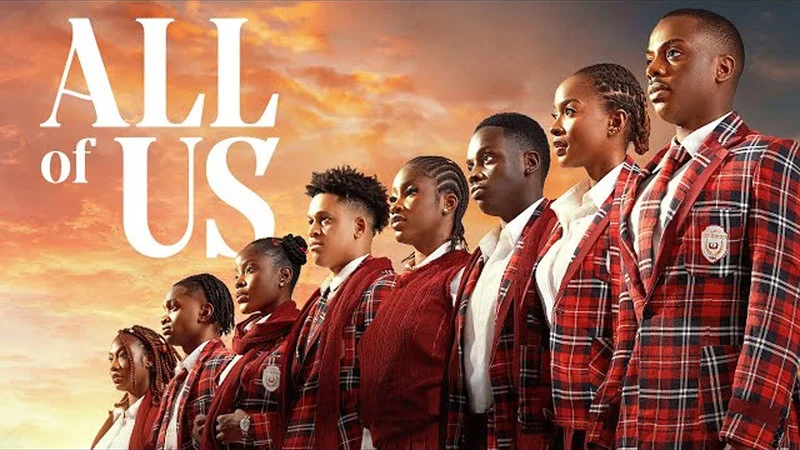
The digital landscape of 2026 has been significantly shaped by an unlikely source of cultural currency: a promotional thumbnail for a Nigerian web series titled All Of Us. What began as a marketing asset for a high school drama has transformed into a ubiquitous reaction image, known alternatively as the None Of Us meme. This visual format, featuring a line of students against a vast sky, has transcended its original context to become a primary tool for social commentary, collective agreement, and ironic rejection across global social media platforms, most notably TikTok and Tenor. The meme’s journey from a localized trailer on YouTube to a centerpiece of international "sticker culture" illustrates the unpredictable nature of viral content in the mid-2020s and the increasing influence of African digital media on the global stage.
The Genesis of a Visual Icon: Made By Eni and the Nigerian Digital Wave
The origin of the meme is rooted in the high-production world of Nigerian digital content creation. On August 30, 2024, the web series All Of Us premiered on the YouTube channel "Made By Eni." The project was spearheaded by Enioluwa Adeoluwa, a prominent Nigerian influencer, actor, and media personality known for his significant following and ability to bridge the gap between traditional Nollywood and modern digital storytelling. The series was designed to explore the multifaceted lives of secondary school students in Nigeria, tackling themes of friendship, academic pressure, and social hierarchy.
To ensure the series’ success, Adeoluwa assembled a star-studded cast that included some of the most recognizable names in the Nigerian film industry, such as Kate Henshaw, Chioma Akpotha, Iyabo Ojo, Shaffy Bello, and Jemima Osunde. The promotional strategy centered on high-quality visuals, including a trailer released on August 6, 2024. The thumbnail for this trailer—a wide shot of the young cast members standing in a disciplined row, looking toward the horizon under a clear sky with the title "All Of Us" superimposed above them—would eventually become the blueprint for the meme. At the time of its release, the trailer garnered over 700,000 views, a testament to the show’s local popularity, though few could have predicted its eventual transformation into a global linguistic shorthand two years later.
Chronology of Virality: From Promotion to Participation
While the series enjoyed a successful run in late 2024 and 2025, the transition of its promotional imagery into a meme did not occur until mid-2026. This delay is common in the lifecycle of modern memes, where "dormant" content is often rediscovered by niche communities before being propelled into the mainstream.
In June 2026, the image began appearing in TikTok comment sections. Unlike traditional memes that are shared as standalone posts, All Of Us found its primary home as a "sticker"—a small, repeatable graphic used to react to video content. The first documented instance of significant memetic manipulation occurred on June 23, 2026, when a TikTok creator known as youssef.the.triplet utilized generative AI tools, specifically ChatGPT’s integrated image editing capabilities, to alter the original text. By changing "All Of Us" to "None Of Us," the creator provided the internet with a tool for collective dissent. This video alone reached nearly 140,000 views within weeks, signaling the start of a broader trend.
By June 25, 2026, the image had been officially indexed on Tenor, the world’s largest GIF and sticker database, by user Hashem11120. This allowed users across various messaging apps, including WhatsApp and Discord, to access the image instantly. As the format moved into July 2026, the "exploitable" nature of the image became its defining characteristic. Users began removing characters to create the "Just You" variant (indicating a singular, often unpopular opinion) or the "Half Of Us" variant (indicating a divided consensus).
The FIFA World Cup 2026 and Global Scaling
The meme’s growth coincided with the 2026 FIFA World Cup, held across Canada, Mexico, and the United States. During June and July 2026, football fans began editing the All Of Us thumbnail to reflect the fortunes of their national teams. In these iterations, the faces of the Nigerian students were replaced with those of world-renowned athletes such as Lionel Messi and Jude Bellingham.
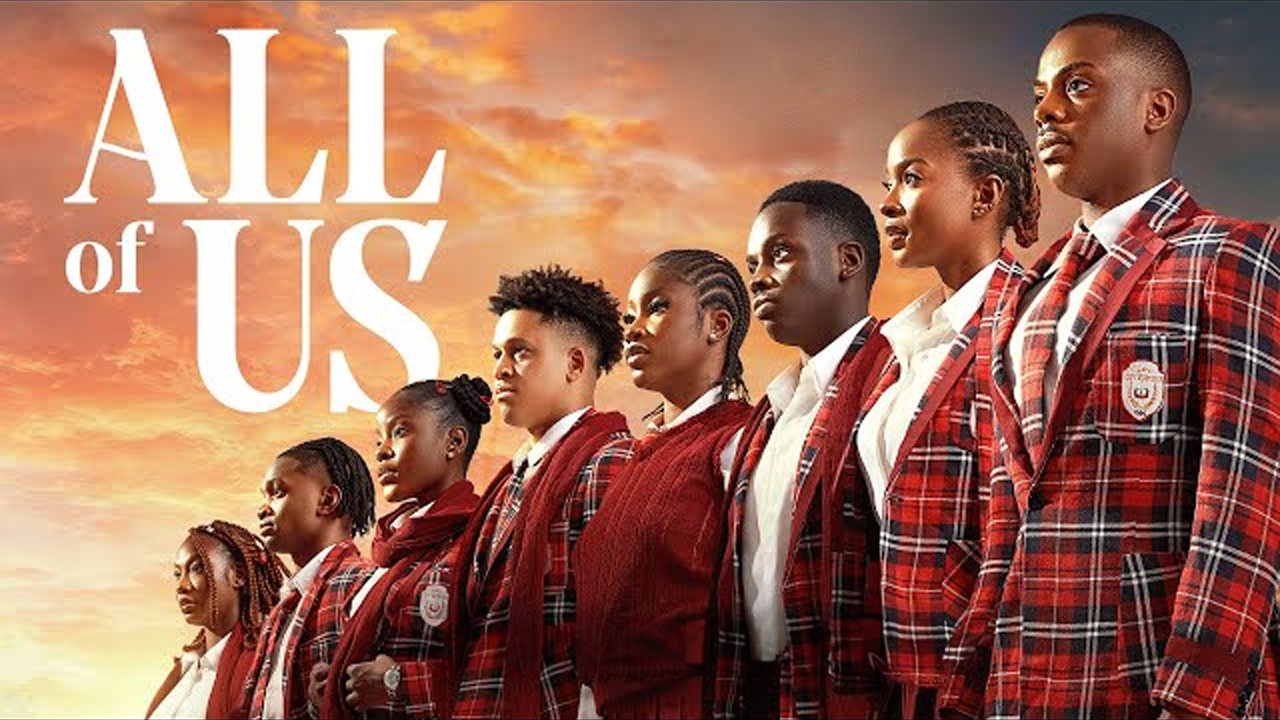
On July 18, 2026, a TikTok post by user messithabet showcased a complex edit featuring players from various national teams, using the "All Of Us" text to signify a global consensus on the greatness of certain players. This crossover between sports fandom and sticker culture acted as a catalyst, moving the meme beyond its initial Nigerian and Gen Z demographics and into the mainstream sports discourse. The synergy between a major global event and a flexible visual template allowed the meme to maintain its relevance throughout the summer of 2026.
Structural Analysis of the Meme: Why It Works
The success of the All Of Us format can be attributed to several semiotic and technical factors:
- Visual Symmetry: The original image possesses a clean, symmetrical composition. The line of students provides a "grid" that is easy for amateur editors to manipulate, allowing them to swap faces or remove figures without needing advanced graphic design skills.
- Linguistic Flexibility: The phrase "All of Us" is a universal collective pronoun. By changing a single word—All to None, Some, or Just—the entire meaning of the image is inverted. This makes it an ideal "exploitable" macro.
- The Sky as a Canvas: The large amount of negative space in the sky above the students allows for the placement of additional text, logos, or icons, making the image highly adaptable to different contexts.
- Sticker Integration: TikTok’s interface in 2026 prioritized the use of stickers in comments to drive engagement. The All Of Us image, with its clear silhouettes, remained legible even when shrunk to a small thumbnail size in a crowded comment section.
Backlash and the "Spam" Cycle: The Cost of Ubiquity
As with many viral phenomena, the rapid ascent of the All Of Us meme led to eventual "meme fatigue." By mid-July 2026, the sticker had become so prevalent in TikTok comment sections that a counter-movement began. Users started posting videos criticizing the "spamming" of the sticker, arguing that it had become a low-effort way to "beg" for likes or engagement.
On July 11, 2026, creator wavycarmelo67 posted a POV (Point of View) skit depicting the frustration of encountering the sticker on every video. This sentiment was echoed by other creators like bachymyeoooon, who on July 22 labeled the meme "unfunny" and "corny" due to its oversaturation. This stage of the meme’s lifecycle—where the reaction against the meme becomes a meme in itself—is a well-documented phase in internet culture, often signaling that the trend has reached its peak and is moving toward obsolescence or "post-ironic" usage.
Broader Implications: Nigerian Soft Power and Digital Trends
Beyond its status as a social media joke, the All Of Us phenomenon highlights the growing "soft power" of the Nigerian creative economy. The fact that a thumbnail from a Nigerian web series could become a global standard for digital communication speaks to the borderless nature of modern media. Enioluwa Adeoluwa and the cast of the series, while originally targeting a domestic audience, inadvertently created a visual language that resonated with millions of people who may have never seen a single episode of the show.
Furthermore, the role of AI in the meme’s evolution cannot be overlooked. The ability for average users to use tools like ChatGPT to "remix" professional media assets in real-time has shortened the distance between a piece of content being released and it being transformed into a community-owned asset. This shift challenges traditional notions of copyright and brand control, as the "All Of Us" brand became inseparable from the "None Of Us" parodies.
Conclusion: The Legacy of a Digital Artifact
As 2026 progresses, the All Of Us meme remains a case study in the power of the "reaction sticker." While the initial wave of spamming may subside, the various templates created during this period—the "Just You" and "None Of Us" variations—have been added to the permanent lexicon of internet reactions. The series All Of Us has also benefited from this secondary fame, with its original YouTube trailer continuing to receive comments from global users who discovered the show through the meme.
In the final analysis, the All Of Us phenomenon is more than a fleeting trend; it is a reflection of a globalized digital culture where a group of Nigerian students, standing in a row under a wide sky, can come to represent the collective voice of the internet. Whether used to express unity during a World Cup match or to mock a controversial opinion in a comment section, the image has secured its place in the history of 21st-century visual communication.

