
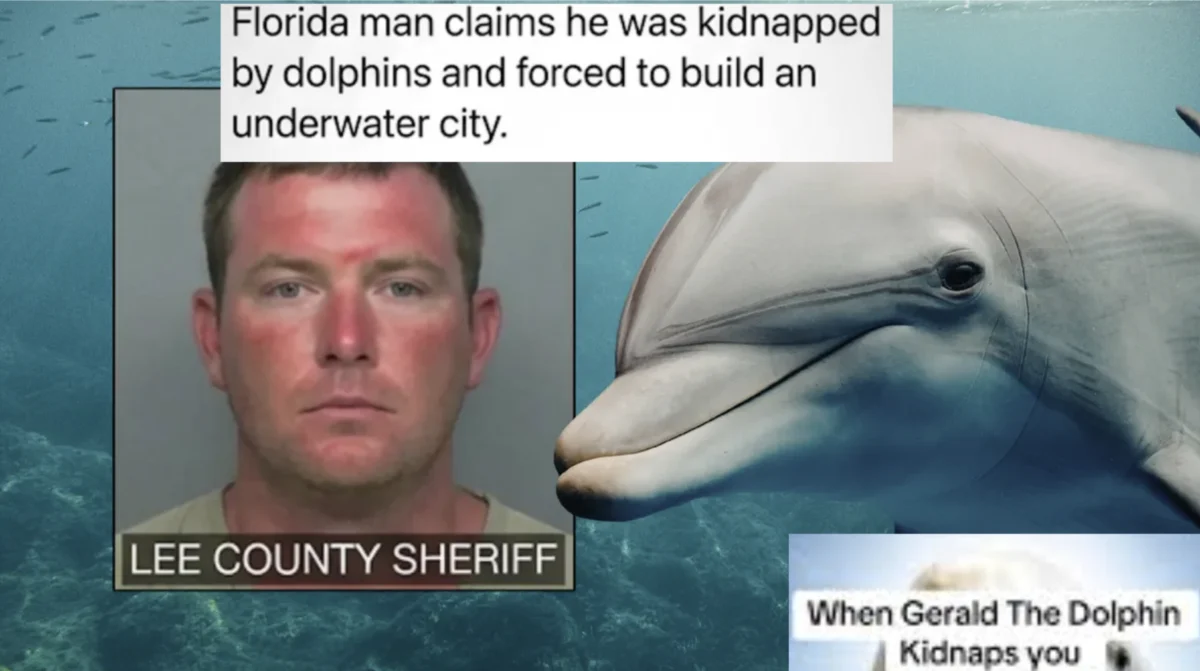
Gerald the Dolphin and the Florida Man Hoax of 2026 became a global digital phenomenon in early March, illustrating the complex intersection of satirical social media content, the "Florida Man" cultural trope, and the rapid velocity of misinformation on short-form video platforms. What began as a clearly labeled parody on a niche Facebook page transformed within days into a widespread conspiracy theory involving alleged interspecies kidnapping, advanced underwater civil engineering, and a shadowy aquatic figure known only as "Gerald." The incident highlights the decreasing barrier between satire and perceived reality in a digital ecosystem where algorithmic amplification often outpaces fact-checking efforts.
The Genesis of the Gerald Narrative
The "Gerald the Dolphin" narrative originated on March 4, 2026, through a post on "The Dude Humor Report," a Facebook account specializing in satirical and parody news stories. The post detailed a bizarre encounter involving a 33-year-old man named Ricky James Hollowell, who was purportedly discovered by Lee County Sheriff’s deputies on the Sanibel Causeway in Fort Myers, Florida. According to the satirical report, Hollowell was found "soaking wet and drawing blueprints in the sand" after being missing for three days.
The original satire was meticulously crafted to mimic the structure of a standard police report, which contributed to its initial believability. It claimed Hollowell was "escorted" by a pod of dolphins to a site 40 feet below the ocean’s surface to assist in the construction of an underwater city. The fictional protagonist alleged that the dolphins communicated through a series of clicks and that the project’s "foreman" was a dolphin named Gerald. The post included specific, absurd details designed to signal its satirical nature—such as Hollowell claiming he didn’t ask how he breathed underwater because "you don’t question Gerald"—yet these very details became the foundation for the viral legend that followed.
Chronology of Viral Escalation
The transition from a localized parody to a global viral sensation occurred in distinct phases, primarily driven by the migration of the content from Facebook to TikTok and Reddit.
Phase One: The Satirical Spark (March 4–6, 2026)
Following the initial post on March 4, the story garnered over 8,100 reactions and 5,900 shares on Facebook within a fortnight. On March 6, the Lee County Sheriff’s Office attempted to intervene by posting a humorous debunking on their official page. The department jokingly confirmed that the "underwater real estate market" had not yet been tapped and claimed their "Underwater Construction Investigation Team" found no evidence of the crime. While intended to end the rumor, the official acknowledgment inadvertently provided more "lore" for social media users to exploit.
Phase Two: The TikTok Explosion (March 9–12, 2026)
The narrative shifted significantly on March 9, when TikTok user @breaking0527 uploaded a video styled as a legitimate breaking news report. This video utilized AI-generated imagery and professional-sounding voiceovers to present the kidnapping as a factual event. The post achieved massive reach, accumulating more than 19.4 million views and 2.3 million likes in seven days. At this stage, the story began to lose its satirical context, as many viewers—unaware of the Facebook origin—accepted the report as a genuine, albeit bizarre, news item.
Phase Three: Narrative Expansion and Lore Building (March 11–14, 2026)
By mid-March, the internet community began "crowdsourcing" additional details to make the story more compelling. A prominent addition to the mythos was the claim that Ricky James Hollowell was not just a random swimmer, but a highly intelligent graduate of the Massachusetts Institute of Technology (MIT) specializing in underwater engineering. This detail was likely added to explain why dolphins would specifically target him for a construction project. On March 11, user @briburritoo posted a video expressing a firm belief in the story, which gained nearly half a million views, signaling that the hoax had successfully transitioned into a modern urban legend.
Analytical Context: The "Florida Man" Trope
The success of the Gerald the Dolphin hoax cannot be understood without the context of the "Florida Man" meme. Since the early 2010s, "Florida Man" has served as a journalistic shorthand for headlines involving eccentric, often nonsensical criminal activity in the state of Florida. This cultural backdrop creates a "credibility floor" for absurd stories; because genuine Florida news often involves alligators in kitchens or high-speed chases involving lawnmowers, the public is conditioned to believe that almost any headline beginning with "Florida Man" could be true.
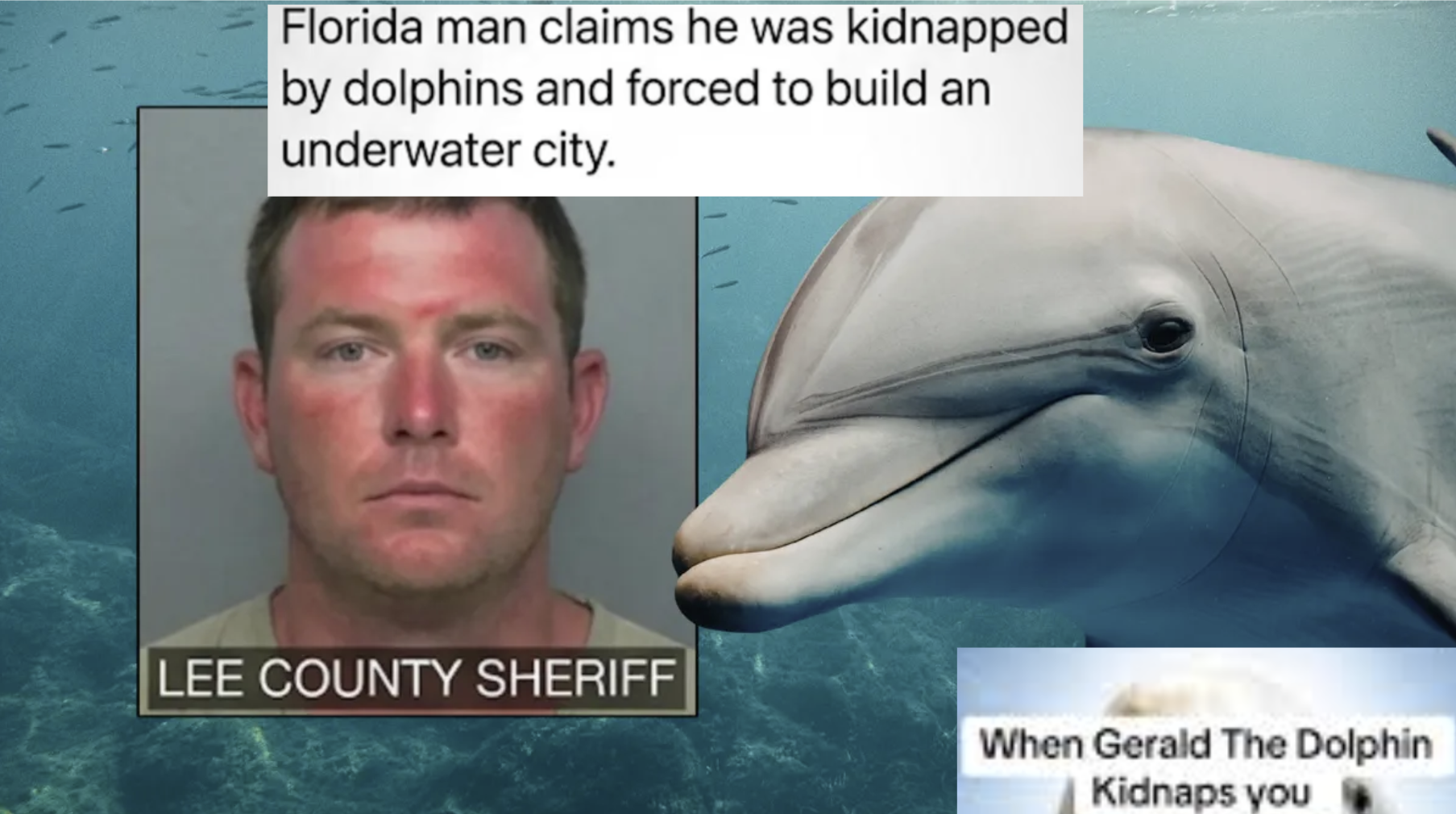
Furthermore, Florida’s robust public records laws, known as the "Sunshine Laws," make police blotters and arrest photos easily accessible to the media. This leads to a higher volume of "weird news" from the state, reinforcing the stereotype that Florida is a hub for the surreal. The Gerald story utilized this existing bias, making the idea of a man being kidnapped by dolphins seem like just another Tuesday in Lee County.
Statistical Impact and Social Media Reach
The scale of the "Gerald" phenomenon is reflected in the engagement metrics across multiple platforms. The primary TikTok videos associated with the hashtag #GeraldTheDolphin and #FloridaManKidnapped amassed a combined total of over 50 million views within the first ten days of the trend.
On Reddit, the story permeated subreddits dedicated to both humor and high-strangeness. On March 13 and 14, threads appeared in /r/UrbanMyths and /r/conspiracy. While the /r/UrbanMyths community largely treated the story as a fascinating example of modern folklore, the /r/conspiracy threads showed a subset of users genuinely debating the possibility of "cetacean intelligence" and the government’s potential role in hiding advanced dolphin civilizations.
Official Responses and Fact-Checking
The Lee County Sheriff’s Office was the primary official body to address the rumor. Their March 6 statement was a strategic attempt at "pre-bunking"—using humor to neutralize a false narrative before it gains too much traction. However, the subsequent explosion on TikTok demonstrated the limits of traditional law enforcement communication in the face of decentralized, algorithmically-driven content.
Fact-checking organizations and mainstream news outlets eventually stepped in as the story moved beyond social media. Reports from digital literacy groups noted that the Gerald hoax was a textbook example of "context collapse," where content created for one audience (satire enthusiasts) is consumed by another audience (general social media users) without the necessary markers of its original intent.
Broader Implications and Psychological Factors
The Gerald the Dolphin hoax provides valuable insight into the psychology of modern misinformation. Several factors contributed to its persistence:
- Poe’s Law: This internet adage suggests that without a clear indicator of the author’s intent, it is impossible to create a parody of extreme views so obviously exaggerated that it cannot be mistaken by some readers for a sincere expression of the views being paraded.
- The "Kernel of Truth": Dolphins are scientifically recognized as some of the most intelligent non-human animals on Earth, possessing complex language and social structures. The hoax leaned on this scientific reality to bridge the gap toward the impossible.
- Algorithmic Bias: TikTok’s "For You" page (FYP) prioritizes high-engagement content. Because the Gerald story was highly shareable and prompted thousands of comments, the algorithm pushed it to users who were not part of the original satirical community, further stripping away the context.
- Visual Confirmation: The use of AI-generated "blueprints" and "sketches" in the sand provided a visual anchor for the story. In the age of generative AI, the ability to create "evidence" for a hoax has never been easier or more convincing.
Conclusion: The Legacy of Gerald
As of late March 2026, the story of Gerald the Dolphin has largely settled into the annals of internet history as a classic example of a "viral hoax." While the initial panic and genuine belief have subsided, the character of "Gerald" persists as a meme, often used to mock the gullibility of social media users or to reference the general chaos of the modern news cycle.
The incident serves as a stark reminder of the challenges facing digital literacy in the mid-2020s. When a satirical post about an underwater city can command the attention of tens of millions and prompt official responses from law enforcement, it underscores the need for more robust critical thinking skills among digital consumers. Gerald the Dolphin may not be building a city beneath the waves, but the story of his "kidnapping" has built a lasting monument to the power of a well-timed, absurd, and perfectly targeted digital fiction.

