
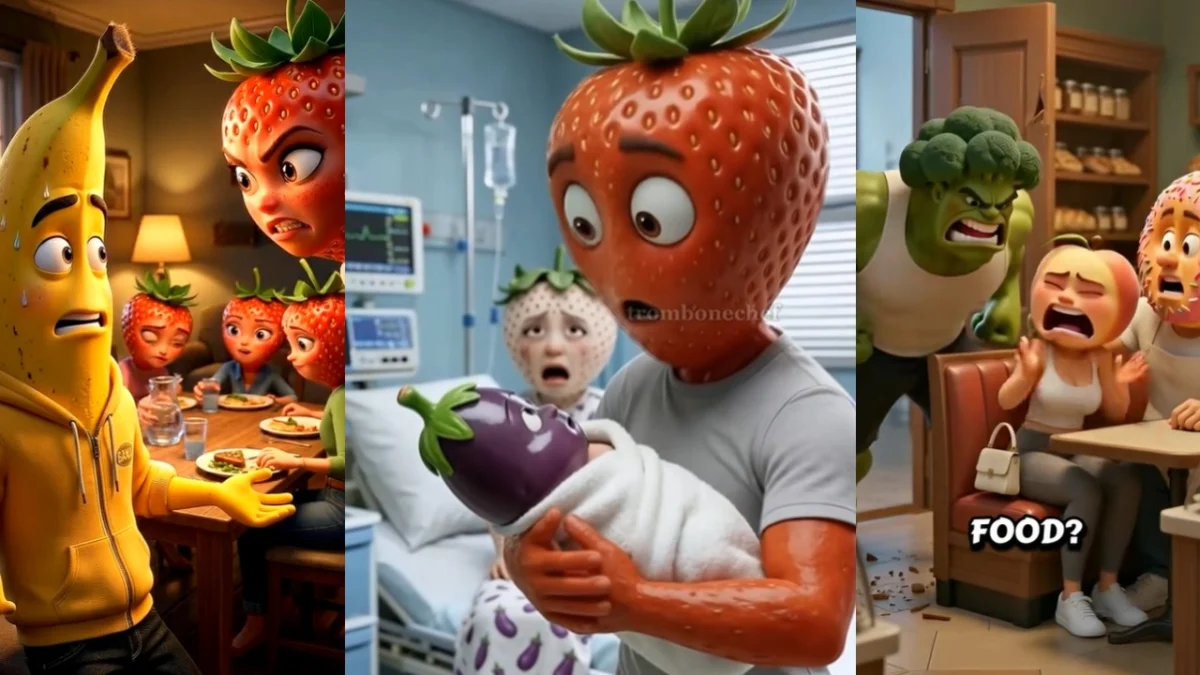
The digital landscape of early 2026 has been marked by a peculiar and highly viral phenomenon known as Cheating AI Fruit, a trend that utilizes advanced generative artificial intelligence to craft intricate, melodramatic narratives involving anthropomorphic produce. This movement, which blends the aesthetics of synthetic media with the tropes of traditional soap operas, has captured the attention of millions, signaling a shift in how algorithmic storytelling is consumed and produced on short-form video platforms. By centering complex human conflicts—specifically infidelity, betrayal, and familial collapse—within the visual framework of hyper-realistic fruit characters, creators have tapped into a unique form of digital surrealism that resonates with a broad demographic of users.
The Genesis of Botanical Melodrama
The inception of the Cheating AI Fruit trend can be traced to February 28, 2026, when the TikTok creator @trombonechef uploaded an AI-generated video that would serve as the blueprint for the genre. The narrative followed a strawberry woman who, while married to a strawberry husband, engaged in an illicit affair with her superior at work, an eggplant. The video utilized AI to generate a sequence of images and motion clips depicting the strawberry woman’s deception, her eventual pregnancy, and the climactic "reveal" in the delivery room. When the newborn was revealed to be an eggplant, the husband’s discovery of the infidelity provided a high-stakes emotional hook.
This initial video garnered over 2.9 million views within a fortnight, demonstrating an immediate appetite for what many users termed "food sad stories." The success of the first installment prompted @trombonechef to expand the narrative into a multi-part series, which significantly accelerated the trend’s momentum. On March 1, 2026, the second part of the saga was released, achieving an unprecedented 24 million views in just two weeks. This installment escalated the drama, introducing a retaliatory affair by the strawberry husband with an orange woman, culminating in the original wife and her eggplant child being rendered homeless. The narrative’s rapid escalation and use of stark, emotional imagery became the hallmark of the trend.
Chronological Expansion and Iterative Storytelling
As the original strawberry-eggplant saga progressed toward its 12th installment by mid-March 2026, the trend began to diversify through the participation of other content creators. This period saw the emergence of a standardized narrative template: the use of fruit as stand-ins for human archetypes to explore themes of socio-economic struggle and domestic turmoil.
On March 1, 2026, TikToker @brhealt introduced a variation featuring a blueberry woman and a banana man, further cementing the "fruit infidelity" trope. A subsequent video by the same creator on March 2, featuring a blueberry woman and a zucchini, garnered 1.2 million views. By March 8, the creator @hasl_story introduced a raspberry-blueberry-lemon love triangle, which attracted 450,000 views in eight days. These iterations demonstrated the trend’s scalability; the "Cheating AI Fruit" framework allowed creators to swap characters and produce types while maintaining the same core emotional resonance.
The timeline of the trend highlights a rapid saturation of the "For You" page (FYP) on TikTok:
- February 28, 2026: Origin of the strawberry-eggplant narrative.
- March 1–5, 2026: Massive viral spike; Part 2 reaches 24 million views.
- March 8–12, 2026: Diversification of "cast" members (blueberries, raspberries, lemons).
- March 13, 2026: Emergence of meta-content and reaction videos.
Technical Foundations and the Synthetic Aesthetic
The Cheating AI Fruit trend is a direct product of the democratization of high-fidelity AI video generation tools. In the 2026 technological context, these tools allow for the creation of consistent characters (character persistence) across multiple scenes, a feat that was challenging in earlier iterations of generative AI. The aesthetic of these videos is characterized by a "hyper-real" yet "uncanny" quality—the fruit often possess human-like eyes, expressive facial features, and are situated in mundane human environments, such as offices, hospitals, or desolate street corners.
The use of AI in this context serves several functional purposes for creators:
- Cost-Effective Production: Creators can produce complex, multi-character dramas without the need for actors, sets, or physical equipment.
- Visual Metaphor: By using fruit, creators can depict intense emotional scenes that might feel overly graphic or cliché if performed by human actors. The abstraction provides a layer of "psychological distance" that allows the audience to engage with the melodrama as a form of dark comedy or surrealist art.
- Algorithmic Optimization: The vibrant colors and unusual imagery of anthropomorphic fruit are highly effective at capturing user attention within the first few seconds of a scroll, a critical metric for TikTok’s recommendation engine.
Audience Reception and the "Brainrot" Classification
The reception of Cheating AI Fruit has been polarized, categorized by a mix of genuine emotional engagement and ironic detachment. A significant portion of the audience refers to this content as "brainrot"—a colloquial term used to describe low-effort, high-stimulation digital content that is perceived as nonsensical or surreal. However, despite this label, the engagement metrics suggest a deep fascination with the storylines.
On March 13, 2026, TikToker @u.f.i67 posted a reaction video captioned "How those cheating ai fruits got us feeling at 3am," featuring footage of men crying to the audio of a fruit drama. This video, which gained 160,000 views in three days, highlights a secondary layer of the trend: the "meta-reaction." Users are not only watching the fruit dramas but are also participating in a collective performance of being "emotionally devastated" by the plight of a CGI strawberry. This irony is a central component of modern internet culture, where the absurdity of the medium is as much a part of the experience as the message itself.
Socio-Psychological Analysis of the Trend
From a sociological perspective, the Cheating AI Fruit trend reflects the universal nature of "cringe" and "pathos" in the digital age. The narratives utilize classic soap opera archetypes—the cheating spouse, the cruel boss, the vengeful ex-partner, and the struggling single mother—but strips them of human identity. This allows viewers to project their own understandings of morality and justice onto the characters without the complications of real-world social baggage.
Furthermore, the trend highlights the evolution of the "talking food" trope, which has roots in early internet animations but has been transformed by AI into something far more sophisticated and somber. While earlier versions of talking food (such as the "Annoying Orange") were primarily comedic, the 2026 AI iterations are decidedly tragic. This shift suggests an increasing comfort with using synthetic media to explore complex, "adult" themes in a way that is both accessible and highly shareable.
Implications for the Future of Content Creation
The success of Cheating AI Fruit provides a glimpse into the future of episodic content on social media. It demonstrates that narrative coherence and emotional stakes are more important to audience retention than the physical reality of the characters. As AI tools continue to evolve, we can expect to see:
- Automated Series: The potential for AI to generate entire seasons of content based on a single prompt or character set.
- Interactive Narratives: Future iterations may allow viewers to vote on the "fruit’s" decisions, leading to branching storylines.
- Niche Saturation: The "Cheating Fruit" template will likely be applied to other objects, such as household appliances or office supplies, as creators look for the next viral "brainrot" hook.
In conclusion, the Cheating AI Fruit trend is more than a fleeting internet meme; it is a manifestation of the intersection between advanced technology and fundamental human storytelling. By turning a strawberry into a tragic heroine and an eggplant into a corporate villain, creators have redefined the boundaries of digital drama. As the trend continues to evolve through March 2026 and beyond, it remains a potent example of how AI is not just changing how we make art, but also how we perceive the emotional potential of the inanimate.

